Kirjojen hintavertailu. Mukana 11 627 378 kirjaa ja 12 kauppaa.

Kirjahaku

Etsi kirjoja tekijän nimen, kirjan nimen tai ISBN:n perusteella.

1000 tulosta hakusanalla Keats Ezra Jack

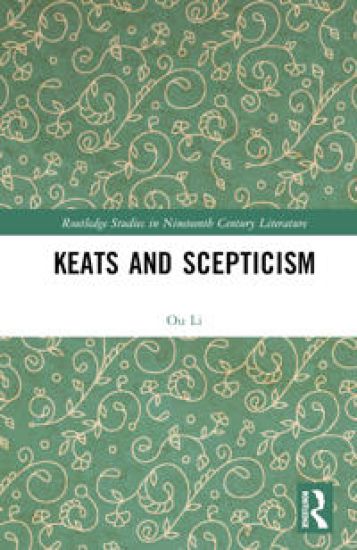
Keats and Scepticism

Keats and Scepticism

Li Ou

TAYLOR FRANCIS LTD
2023
sidottu
Keats and Scepticism explores Keats’s affinity with the philosophical tradition of scepticism and reads Keats’s poetry anew in the light of this affinity. It suggests Keats’s links with the origin of scepticism in ancient Greece as recorded in Sextus Empiricus’s Outlines of Scepticism. It also discusses Keats’s connections with Montaigne, the most important Renaissance inheritor of Pyrrhonian scepticism; Voltaire, the Enlightenment philosophe whose sceptical ideas made an indelible impact on Keats; and Hume, the most thoroughgoing sceptic after antiquity. Other than Keats’s affinitive ideas with these sceptical thinkers, this book is particularly interested in Keats’s experiments with the peculiar language, forms, modes, and genres of poetry to convey the non-dogmatic philosophy. In this light, it re-reads Isabella, ‘La Belle Dame sans Merci’, the 1819 odes, the two Hyperions, King Stephen, and Lamia, all of which reveal Keats’s self-reflexive and radical sceptical poetics in challenging poetic dogmas and conventions. This book is for Keats lovers, students, teachers, scholars, or non-academic readers who are interested in Romanticism, nineteenth-century studies, or poetry and philosophy in general. This original, accessible interdisciplinary study aims to offer the reader a fresh perspective to read Keats and appreciate the quintessential Keatsian poetics.
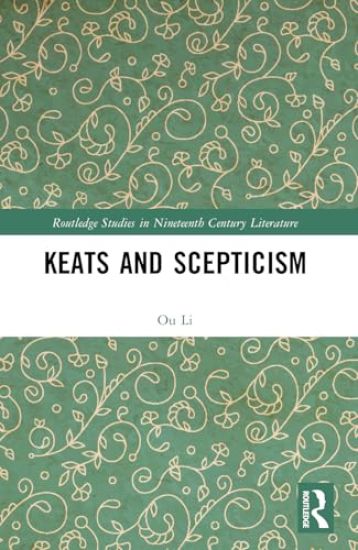
Keats and Scepticism

Keats and Scepticism

Li Ou

TAYLOR FRANCIS LTD
2024
nidottu
Keats and Scepticism explores Keats’s affinity with the philosophical tradition of scepticism and reads Keats’s poetry anew in the light of this affinity. It suggests Keats’s links with the origin of scepticism in ancient Greece as recorded in Sextus Empiricus’s Outlines of Scepticism. It also discusses Keats’s connections with Montaigne, the most important Renaissance inheritor of Pyrrhonian scepticism; Voltaire, the Enlightenment philosophe whose sceptical ideas made an indelible impact on Keats; and Hume, the most thoroughgoing sceptic after antiquity. Other than Keats’s affinitive ideas with these sceptical thinkers, this book is particularly interested in Keats’s experiments with the peculiar language, forms, modes, and genres of poetry to convey the non-dogmatic philosophy. In this light, it re-reads Isabella, ‘La Belle Dame sans Merci’, the 1819 odes, the two Hyperions, King Stephen, and Lamia, all of which reveal Keats’s self-reflexive and radical sceptical poetics in challenging poetic dogmas and conventions. This book is for Keats lovers, students, teachers, scholars, or non-academic readers who are interested in Romanticism, nineteenth-century studies, or poetry and philosophy in general. This original, accessible interdisciplinary study aims to offer the reader a fresh perspective to read Keats and appreciate the quintessential Keatsian poetics.
Keats's Boyish Imagination

Keats's Boyish Imagination

Richard Marggraf Turley

Routledge
2015
nidottu
For many readers, John Keats's achievement is to have attainted a supreme poetic maturity at so young an age. Canonical poems of resignation and acceptance such as 'To Autumn' are traditionally seen as examples par excellence of this maturity. In this highly innovative study, however, Marggraf Turley examines how, for Keats, an insistence on 'boyishness' in the midst of apparent mature imagery is the very essence of his political contestation of the literary establishment.
Keats and Philosophy

Keats and Philosophy

Shahidha Bari

Routledge
2017
nidottu
John Keats remains one of the most familiar and beloved of English poets, but has received surprisingly little critical attention in recent years. This study is a fresh contribution to Keats criticism and Romantic scholarship, positioning Keats as a figure of philosophical interest who warrants renewed attention. Exploring Keats’s own Romantic accounts of feeling and thinking, this study draws a connection between poetry and the phenomenological branches of modern philosophy. The study takes Keats’s poetic evocation of touching hands, wandering feet, beating hearts and breathing bodies as a descriptive elaboration of consciousness and a phenomenological account of experience. The philosophical terms of analysis adopted here challenge the orthodoxies of Keats scholarship, traditionally characterised by the careful historicisation of a limited canon. The philosophical framework of analysis enhances the readings put forward, while Keats’s poems, in turn, serve to give fuller expression of those ideas themselves. Using Keats as a particular case, this book also demonstrates the ways in which theory and philosophy supplement literary scholarship.
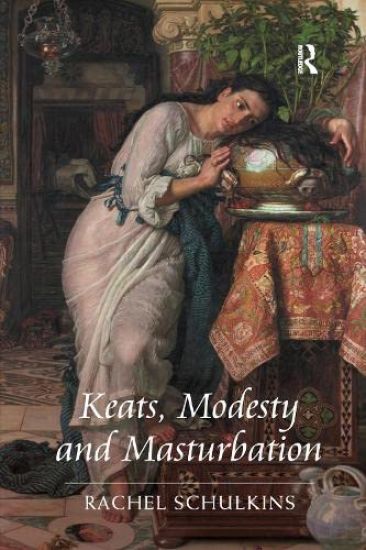
Keats, Modesty and Masturbation

Keats, Modesty and Masturbation

Rachel Schulkins

Routledge
2016
nidottu
Examining John Keats’s reworking of the romance genre, Rachel Schulkins argues that he is responding to and critiquing the ideals of feminine modesty and asexual femininity advocated in the early nineteenth century. Through close readings of Isabella; or the Pot of Basil, The Eve of St. Agnes, Lamia and ’La Belle Dame sans Merci,’ Schulkins offers a re-evaluation of Keats and his poetry designed to demonstrate that Keats’s sexual imagery counters conservative morality by encoding taboo desires and the pleasures of masturbation. In so doing, Keats presents a version of female sexuality that undermines the conventional notion of the asexual female. Schulkins engages with feminist criticism that largely views Keats as a misogynist poet who is threatened by the female’s overwhelming sexual and creative presence. Such criticism, Schulkins shows, tends towards a problematic identification between poet and protagonist, with the text seen as a direct rendering of authorial ideology. Such an interpretation neither distinguishes between author, protagonist, text, social norms and cultural history nor recognises the socio-sexual and political undertones embedded in Keats’s rendering of the female. Ultimately, Schulkins’s book reveals how Keats’s sexual politics and his refutation of the asexual female model fed the design, plot and vocabulary of his romances.
Keats, Hermeticism, and the Secret Societies
Jennifer Wunder makes a strong case for the importance of hermeticism and the secret societies to an understanding of John Keats's poetry and his speculations about religious and philosophical questions. Although secret societies exercised enormous cultural influence during the late eighteenth and early nineteenth centuries, they have received little attention from Romantic scholars. And yet, information about the societies permeated all aspects of Romantic culture. Groups such as the Rosicrucians and the Freemasons fascinated the reading public, and the market was flooded with articles, pamphlets, and books that discussed the societies's goals and hermetic philosophies, debated their influence, and drew on their mythologies for literary inspiration. Wunder recovers the common knowledge about the societies and offers readers a first look at the role they played in the writings of Romantic authors in general and Keats in particular. She argues that Keats was aware of the information available about the secret societies and employed hermetic terminology and imagery associated with these groups throughout his career. As she traces the influence of these secret societies on Keats's poetry and letters, she offers readers a new perspective not only on Keats's writings but also on scholarship treating his religious and philosophical beliefs. While scholars have tended either to consider Keats's aesthetic and religious speculations on their own terms or to adopt a more historical approach that rejects an emphasis on the spiritual for a materialist interpretation, Wunder offers us a middle way. Restoring Keats to a milieu characterized by simultaneously worldly and mythological propensities, she helps to explain if not fully reconcile the insights of both camps.
The Poetical Works of John Keats. Edited by William B. Scott. with an Introductory Memoir.

The Poetical Works of John Keats. Edited by William B. Scott. with an Introductory Memoir.

Keats John; Scott William Bell

British Library, Historical Print Editions
2011
pokkari
Title: The Poetical Works of John Keats. Edited by William B. Scott. With an introductory memoir.Publisher: British Library, Historical Print EditionsThe British Library is the national library of the United Kingdom. It is one of the world's largest research libraries holding over 150 million items in all known languages and formats: books, journals, newspapers, sound recordings, patents, maps, stamps, prints and much more. Its collections include around 14 million books, along with substantial additional collections of manuscripts and historical items dating back as far as 300 BC.The POETRY & DRAMA collection includes books from the British Library digitised by Microsoft. The books reflect the complex and changing role of literature in society, ranging from Bardic poetry to Victorian verse. Containing many classic works from important dramatists and poets, this collection has something for every lover of the stage and verse. ++++The below data was compiled from various identification fields in the bibliographic record of this title. This data is provided as an additional tool in helping to insure edition identification: ++++ British Library Keats, John; Scott, William; 1894.]. xxxii. 351 p.; 8 . 11612.ee.14.
Keats, Hunt and the Aesthetics of Pleasure

Keats, Hunt and the Aesthetics of Pleasure

Ayumi Mizukoshi

Palgrave Macmillan
2001
nidottu
This book tackles the age-old interpretative problem of 'pleasure' in Keat's poetry by placing him in the context of the liberal, leisured and luxurious culture of Hunt's circle. Challenging the standard narrative which attribute Keat's astonishing poetic development to his separation from Hunt, the author cogently argues that Keats, profoundly imbued with Hunt's bourgeois ethic and aesthetic, remained a poet of sensuous pleasure through to the end of his short career.
Keats-Shelley; the Bookman Memorial Souvenir
This work has been selected by scholars as being culturally important, and is part of the knowledge base of civilization as we know it. This work was reproduced from the original artifact, and remains as true to the original work as possible. Therefore, you will see the original copyright references, library stamps (as most of these works have been housed in our most important libraries around the world), and other notations in the work.This work is in the public domain in the United States of America, and possibly other nations. Within the United States, you may freely copy and distribute this work, as no entity (individual or corporate) has a copyright on the body of the work.As a reproduction of a historical artifact, this work may contain missing or blurred pages, poor pictures, errant marks, etc. Scholars believe, and we concur, that this work is important enough to be preserved, reproduced, and made generally available to the public. We appreciate your support of the preservation process, and thank you for being an important part of keeping this knowledge alive and relevant.
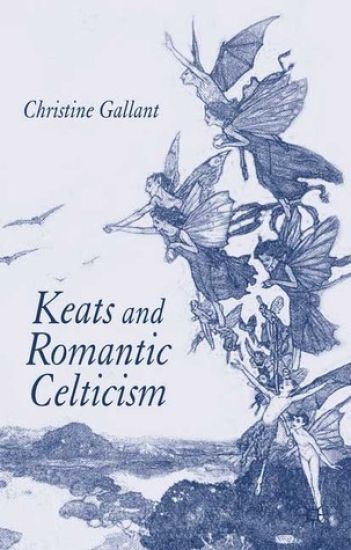
Keats and Romantic Celticism

Keats and Romantic Celticism

C. Gallant

Palgrave Macmillan
2005
sidottu
The Celtic Revival began more than a century before Yeats and the Irish Literary Renaissance. Keats and Romantic Celtism is the first book to consider the pervasive influence of period Celticism upon Keats's work, from the Druidism that underlies his unfinished epics to the Celtic-derived folklore that his poetry draws upon. Christine Gallant shows that more than two hundred and fifty traditional folklore motifs of the faerie fill his major poems, as well as minor epistolary ones that have been critically neglected.
Keats and Negative Capability

Keats and Negative Capability

Li Ou

CONTINUUM PUBLISHING CORPORATION
2009
sidottu
Offers a clear analysis of this key concept in literary studies and aesthetics, which is essential to the study of Romanticism and English poetic tradition in general. 'Negative capability', the term John Keats used only once in a letter to his brothers, is a well-known but surprisingly unexplored concept in literary criticism and aesthetics. This book is the first book-length study of this central concept in seventy years. As well as clarifying the meaning of the term and giving an anatomy of its key components, the book gives a full account of the history of this idea. It traces the narrative of how the phrase first became known and gradually gained currency, and explores its primary sources in earlier writers, principally Shakespeare and William Hazlitt, and its chief Modernist successors, W. B. Yeats and T. S. Eliot. Meanwhile, the term is also applied to Keats' own poetry, which manifests the evolution of the idea in Keats' poetic practice. Many of the comparative readings of the relevant texts, including "King Lear", illuminate the interconnections between these major writers. The book is an original and significant piece of scholarship on this celebrated concept.