Trapped in the past Having traveled over four thousand years into the past, Rebecca Evans, her husband Jeffrey, and their companions find themselves stranded by a malfunctioning time machine just days before the greatest catastrophe in the history of the earth: the worldwide Flood Accompanied by a technologically-enhanced language specialist, a mysterious, wolf-like giant, a hovering utility droid, and several others, Rebecca and Jeffrey fight against the odds to save their relationship, their lives, and their souls. The travelers are caught in a race against time to fix the machine in order to escape the coming destruction. However, help proves difficult to find in this strange world that is both foreign, yet disturbingly familiar. Desperate, Rebecca and her companions seek out the one man who might be able to help them: the ancient Patriarch of all mankind, Noah. Escaping the Cataclysm is the exciting conclusion to the Origins Trilogy. Filled with intense action, fascinating locations, spiritual warfare, frightening villains, and realistic characters, it keeps readers riveted while at the same time presenting scientifically-based and carefully-researched material about the Flood of Noah and its effects on the earth.
Back in the day, record labels didn't have a network of blogs, artist websites, and social media to help market new music. They only had FM radio, cash 'payola' to DJs and, if the budget allowed, advertisements in a handful of music rags like Creem, Trouser Press, and Rolling Stone to help provide hype for a new release. Much like album cover artwork, advertisements created for new album releases were often works of art in themselves. Creative record label graphic designers often came up with ads that cleverly promoted the artist and their work; just as often, corporate hacks cranked out copy with little or no relation to the album being promoted. With this second volume of Fossils, award-winning rock critic and music historian Rev. Keith A. Gordon takes another look at these "relics," album advertisements found in frayed and graying copies of cherished old music magazines. Offering insightful and informative commentary on nearly four-dozen ads, the 'Reverend of Rock 'n' Roll' explores this overlooked artistic aspect of the classic rock era.
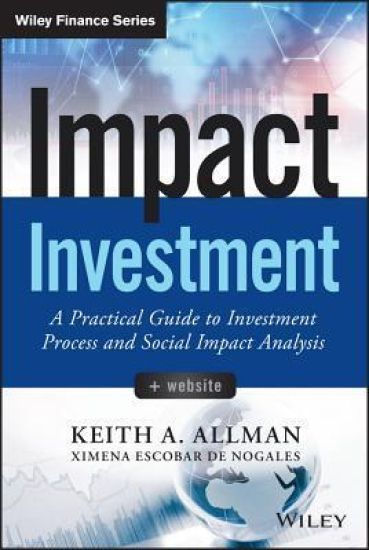
Apply a rigorous investment process and integrate social impact analyses to successfully select and invest in social impact investments Impact Investment: A Practical Guide to Investment Process and Social Impact Analysis is a must-read guide for investors and wealth managers entering the social finance investment space known as "impact investing." This book walks readers through the demanding task of properly executing an impact investment strategy, providing solutions to some of the most vexing challenges that arise when investing for both financial return and social impact. Readers will learn how impact investing is different from other strategies, how the organization's mission affects investment decisions and structures, and what to look for in an organization prior to investing. A running example of a village distribution company illustrates the methods and concepts in action, and a full-fledged case study utilizing downloadable professional level analytical tools consolidates all examples into a real-world setting. Impact investing is generating significant momentum, but many individuals operating in this space come from alternative backgrounds and lack the knowledge to form a rigorous investment process. Disparate funding sources, immature markets, variations in fund economics, and the need to generate and report social impact all complicate the industry even further, creating a barrier for curious investors. This book is a guide to applying standard investment processes and social impact analyses to impact investing, helping readers: Adjust standard analysis techniques to suit the particularities of impact investingDiscover how social mission influences the entire investment from entry to exitPlan and execute a robust custom impact investment strategyUnderstand social impact entities and the management of impact investments Investing with the goal of social impact doesn't remove the need for rigorous investment techniques and diligent processes. Impact Investment: A Practical Guide to Investment Process and Social Impact Analysis is a guide to putting it all together, for a more targeted approach to impact investing.
Inverse Heat Conduction A comprehensive reference on the field of inverse heat conduction problems (IHCPs), now including advanced topics, numerous practical examples, and downloadable MATLAB codes. The First Edition of the classic book Inverse Heat Conduction: III-Posed Problems, published in 1985, has been used as one of the primary references for researchers and professionals working on IHCPs due to its comprehensive scope and dedication to the topic. The Second Edition of the book is a largely revised version of the First Edition with several all-new chapters and significant enhancement of the previous material. Over the past 30 years, the authors of this Second Edition have collaborated on research projects that form the basis for this book, which can serve as an effective textbook for graduate students and as a reliable reference book for professionals. Examples and problems throughout the text reinforce concepts presented. The Second Edition continues emphasis from the First Edition on linear heat conduction problems with revised presentation of Stolz, Function Specification, and Tikhonov Regularization methods, and expands coverage to include Conjugate Gradient Methods and the Singular Value Decomposition method. The Filter Matrix concept is explained and embraced throughout the presentation and allows any of these solution techniques to be represented in a simple explicit linear form. Two direct approaches suitable for non-linear problems, the Adjoint Method and Kalman Filtering, are presented, as well as an adaptation of the Filter Matrix approach applicable to non-linear heat conduction problems. In the Second Edition of Inverse Heat Conduction: III-Posed Problems, readers will find: A comprehensive literature review of IHCP applications in various fields of engineeringExact solutions to several fundamental problems for direct heat conduction problems, the concept of the computational analytical solution, and approximate solution methods for discrete time steps using superposition of exact solutions which form the basis for the IHCP solutions in the textIHCP solution methods and comparison of many of these approaches through a common suite of test problems Filter matrix form of IHCP solution methods and discussion of using filter-form Tikhonov regularization for solving complex IHCPs in multi-layer domain with temperature-dependent material propertiesMethods and criteria for selection of the optimal degree of regularization in solution of IHCPs Application of the filter concept for solving two-dimensional transient IHCP problems with multiple unknown heat fluxesEstimating the heat transfer coefficient, h, for lumped capacitance body and bodies with temperature gradientsBias in temperature measurements in the IHCP and correcting for temperature measurement bias Inverse Heat Conduction is a must-have resource on the topic for mechanical, aerospace, chemical, biomedical, or metallurgical engineers who are active in the design and analysis of thermal systems within the fields of manufacturing, aerospace, medical, defense, and instrumentation, as well as researchers in the areas of thermal science and computational heat transfer.
Lacan, Althusser, Derrida, Foucault - the currency of these names in the world of modern thought is widespread. But all too often in the English-speaking world their work and ideas are considered without reference to the context in which they were produced, and this is the gap that this new study sets out to fill. The major revaluation of what constituted the 'political', set in train by the 1968 events is a key theme here, and the work of the best-known French intellectual figures of the time both illuminates and is illuminated by it. But it is not just a new reading of already familiar figures that the reader will find in this work. Writers little-known in the English-speaking world, or hitherto not extensively treated in English, receive similar contextualising attention, so that the recent upsurge in sociology or the impact of a dissident Marxist such as Henri Lefebvre take their place alongside better-known figures in the first book-length English-language survey of one of the most exciting, and often bewildering, periods in European intellectual history.
Are you tired of pessimistic and discouraging thoughts? Are you tired of experiencing temporary freedom? Are you tired of pretending as if everything is okay; when in fact, you are under massive warfare mentally? If you are tired, then I have the answer. This book has messages, scriptures, prayers, and statements of faith that will change the trajectory of your life. If you simply apply the principles prescribed in this book, then I guarantee that negative thinking will be eliminated from your life forever! The next 21 days will feel like boot camp, but when it is over, your thought pattern will shift, and you will finally think the way that God has intended for you to think.
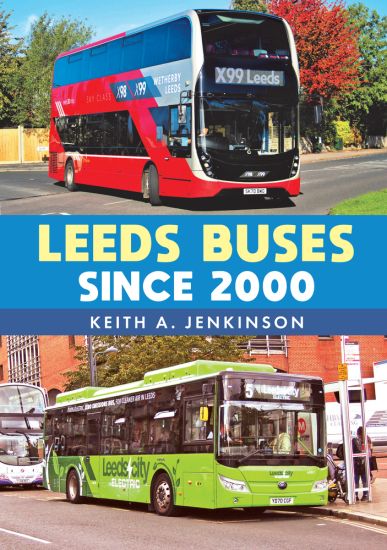
Following deregulation in 1986, the established bus operators suddenly found themselves being challenged by new independent operators, some of whom ultimately disappeared from the scene while others were swallowed up by the larger groups. After Yorkshire Rider, an arm of West Yorkshire PTE was privatised in 1988 and grew following its acquisition of former NBC subsidiary West Yorkshire Road Car Co. It was subsequently purchased by Badgerline/FirstBus, who became the dominant operator in the city. Arriva and Transdev also have a presence in Leeds. This book takes a look at all the transport developments and changes that have taken place within the city between 1986 and 2022 and, with many new liveries and vehicle types, illustrates the ever-fascinating scene.
Over the past hundred years, the scrapping of life-expired buses has changed in numerous ways. From being a physically demanding task, it is now undertaken with the use of sophisticated machinery and governed by ever-increasing environmental and health and safety regulations. While bus breaking was initially concentrated in certain areas across the UK, where metal recycling facilities were close at hand, it has ultimately become a nationwide activity. Here Keith Jenkinson remembers those buses that have disappeared from our daily road transport scene, evoking fond memories of bygone eras.
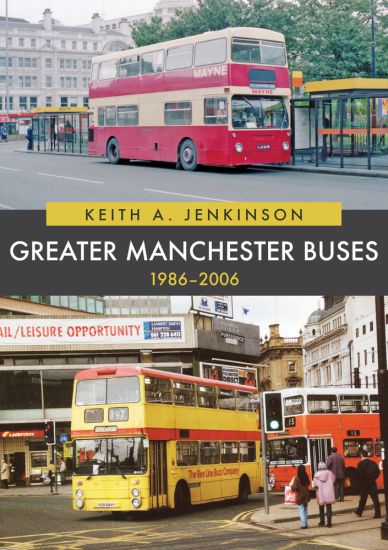
Manchester and its surrounds, such as Bolton, Wigan, Rochdale, Oldham and Stockport, have always been a haven for bus enthusiasts, with a wide variety of operators and liveries to be seen. Deregulation in 1986 changed the scene dramatically with the appearance of numerous independent companies – some of which were short-lived while others survived for many years or were swallowed up by the major national conglomerates such as Arriva, FirstBus and Stagecoach. Added to the mix is the Metrolink tramway system, which continues to grow and now reaches the airport where numerous buses can also be seen. Never failing to fascinate, and a city whose transport continually changes, Manchester is always worthy of a visit and can be recommended to all transport enthusiasts whether their interests are buses, rail or air.
Sheffield has seen an influx of new independent operators with a wide range of new and second-hand buses, diverse liveries, and, of course, trams and trambuses. Looking at Sheffield and its suburbs, this book will provide enthusiasts with an insight into an ever-changing scene, supported by numerous previously unpublished colour photographs.
Since deregulation in 1986, Merseyside has offered a wealth of variety to bus enthusiasts with numerous new independent operators entering the scene, and some soon departing again, while the major companies have gained strength through takeovers and area expansion. The area covered here includes Liverpool, the Wirral, St Helens and Southport, all of which have seen wide changes, particularly in the 1990s, and all are captured with a selection of previously unpublished colour photographs.
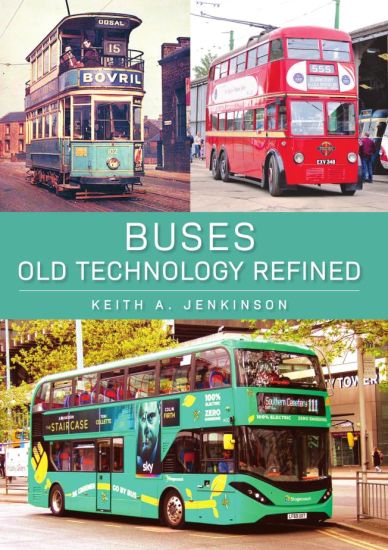
Despite all the current hype making people believe that electric and hybrid vehicles are a staggering present-day breakthrough in the quest for a carbon-zero future, both are, in fact, old technology introduced over 100 years ago that has been refined. This book takes a look at how gas, hybrid and electric propulsion has been redeveloped after disappearing during the twentieth century and is now regarded as ‘the future’. Although not intended to be a definitive history of public road transport in the UK, within its pages are several other technological and vehicle design developments that made their debut over a century ago and have made a return in recent years, all of which are illustrated and described to provide a fascinating insight into how things have continued to change.