This workbook is meant to accompany the book, "Open, Please A Consumer's Basic Guide to the Practice of Dentistry. Things your mother never told you about going to the Dentist." It provides a framework for choosing a new dental provider based on certain office and staff characteristics. Comparison of the results obtained will facilitate making the eventual choice and help ensure a long and satisfying doctor/patient relationship.
By 1861 Armando had lain cold in his grave for 45 years. The leaders of the territories had completed their propaganda blitz, which got people sufficiently riled-up to kill their neighbors from the southern states. Philosophical differences, perceived injustices, religious and ethnic rivalries were stoked to a point of explosive combustion. Biases and inflammatory contention were published daily in the newspapers. These false stories were believed by the northern and southern populace of the great nation of the United States of America. It took 40 years of propaganda before the first spark was ignited in a powder keg of man's creation. When the tinder box was first lit at Fort Sumter, South Carolina on April 12, 1861, all the hundreds of reasons that were used to justify the civil war, ignited as planned. The real reason for the war was disguised and well-hidden. That reason, when you stripped away the gaudy decorative clothing it wore, revealed the truth. It was greed, pure and simple. War supported industry and made room for the victorious to expand and grow. The vanquished became the slaves who fueled the labor forces needed for rapid expansion. Modern political leaders, and the Kings and Queens before them, knew this truth; that wars created prosperity for rich industrial barons and leaders of the armies. The only losers were the combatants who fought the battles and the villagers who were trampled underfoot.The previous hundred years had seen fair-skinned European immigrants fight with each other over the spoils of the vast North American continent. They conquered and defeated the Indigenous Native people into submission. The Native's land was stolen, and the remainder of their population was corralled onto reservations, conveniently located to suit the industrial needs of the new Americans. The Sentinel Hill mansion had grown throughout this period. The next 150 years would write a different outcome. The American Civil war was a classic example of neighbor against neighbor, brother against brother. Their patriarch Armando, who had built the mansion and established the thriving estate, had predicted this civil war sixty years before it started. This story follows the moral collapse of a nation's people, the prosperity of a few and the devastation of the majority, with Sentinel Hill at it's epicenter.Visit my website at: http: //kennethchamberlin.wixsite.com/author
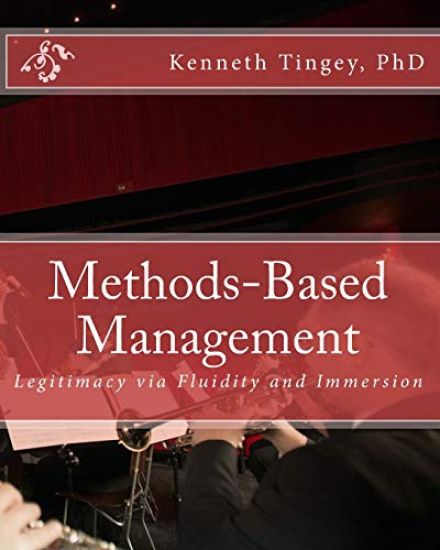
Methods-Based Management is the embodiment of the scientific method applied to organizations. No one has declared that a scientific approach to management of organizations was possible since Frederick W. Taylor, whose work was judged to fall short of that mark. Several developments outlined in this book support the idea that organizations can turn to science for resolution of their problems, from big to small. Quality models dating almost a century ago to Walter Shewhart, coupled with innovations over many decades in North America and Japan, resulted in development of quality/lean-oriented methodological approaches to improved behavior of organizations. These methods, based on the scientific method, are not universally recognized. Tingey adds two considerations to this mix. The first is an information-processing model that is within the reach of non-technologist logic designers. The second is network analysis, an approach that bridges between social and physical spheres to improve even on the results of quality/lean efforts. Together, these approaches can bring breakthrough performance to organizations, allowing organizations to make maximal use of their people as well as their technologies.
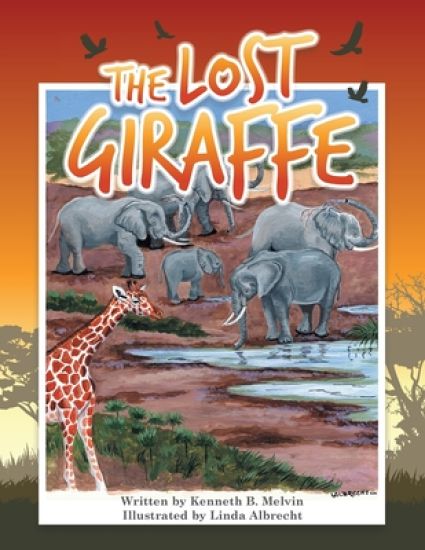
Written in verse, The Lost Giraffe tells the story of a young giraffe who is attacked by lions. He falls into a river, and is swept away. On his quest to rejoin his herd, he meets a number of different animals, some nice, some quirky, and some dangerous. He makes friends with a baby elephant and a young hippo, outwits a sneaky crocodile, and helps a confused water buffalo. He and his friends fight off a pack of hyenas. Finally, a helpful bushbaby leads him to his herd and a joyful reunion
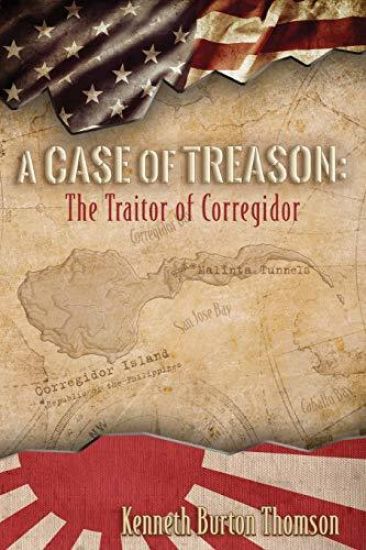
In April 1941, Burton C. "Stretch" Thomson, a twenty-six-year-old 1st Lieutenant in the U. S. Army's Veterinary Corps, sailed to his new duty station in the Philippine Islands. He is leaving a wife and 7-month old son in Iowa; he will be gone for two years. Arriving in Manila in May 1941 he learns that he has been assigned to the 4th Veterinary Hospital at Fort Stotsenburg in Luzon Province. He will take up his duties as a veterinarian with the 26th Cavalry Regiment. On August 1st, Stretch is transferred to Fort Mills, Corregidor Island. Corregidor is one of the five highly fortified islands at the entrance of Manila Bay. Stretch, as the sole veterinarian, will be responsible for the 25 mules on the island plus regular sanitary inspections. When war breaks out, Stretch is assigned an additional duty as mess officer for the station hospital now located in the confines of Malinta Tunnel. Corregidor's defenders finally surrender to the Japanese on May 6, 1942. Immediately, betrayal emerged from the ranks of Corregidor's defenders in the form of a U.S. Army Sergeant. A drawn-out process after the war would finally bring Sergeant John David Provoo before a jury of his peers in late 1952 to defend against the charge of treason. A prolonged investigation by the FBI, a questionable decision by the Department of Justice and an inartful prosecution of the case by the U.S. district attorney would lead to an appeal of the trial court's finding of guilty.
It's a song, can you sing it? My wife Roneesha Monique Gaston Tolbert passed away July, 9th 2014 13 months after our baby girl Kyla Amaree Tolbert was born from time to time my daughter will ask the question where is Mommy and I would say Heaven followed by attempts to remind her of memories of the many places we've gone to. This is an Ode to those times.
Within three years of release, about two-thirds (67.8 percent) of released prisoners were rearrested. Within five years of release, about three-quarters (76.6 percent) of released prisoners were rearrested, according to national statistics. Incarcerated Epistles: Soul Of Recidivism is an introspective and candid look into just that statistic. Have you ever wondered what it was like in jail? Many ask what is the difference between jail and prison? Do you have a family member in prison? What do people really go through in there? Is it like the movies? Many questions, perceptions and misconceptions permeate our minds about the Prison Industrial Complex; but do we really stop and ask about what goes on inside the soul of a man behind bob wire fences and the proverbial "23/1". This book is a look into the psyche of the author as a newly processed inmate from interstate extradition from Michigan Department of Corrections (MDOC) to Virginia Department of Corrections (VDOC), and his mentality through the beginning stages of recidivism. A compilation of letters written from different jails/prisons have been compiled alongside edifying writings during a two year period(10 years total) of incarceration as a cautionary tale for youth to not indulge or act on criminal thinking, instant gratification, and other catalyst of destructive behavior; in juxtaposition to inspire other felons to not re-offend and succumb to the vicious cycle of recidivism. These writings serve to be a testament that will stand the test of time for the youth, civilian, felons, law enforcement, courts, judges, and legislation to all learn and make the necessary changes for the greater good of the existence of humanity.
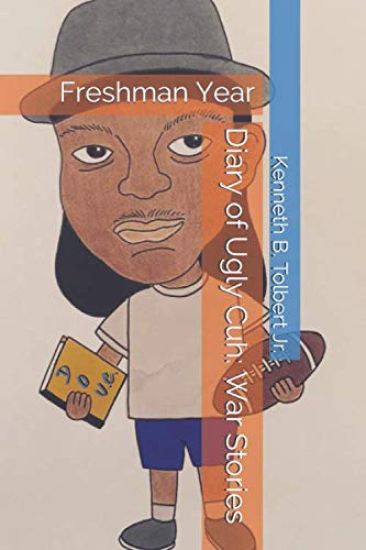
A book that details the life and going ons of a young gangster Y.G. in Los Angeles. Beginning with his first day of High School. An urban version of, "Diary Of Anne Frank." Filled with stories inspired by true events.
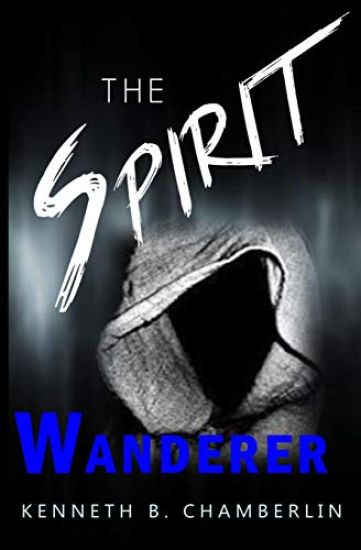
When a wrongfully-convicted death-row inmate commits suicide, his persona lives on in the form of a vengeful spirit who has extraordinary powers of mind-control. He infiltrates the minds of his persecutors to manipulate their thoughts and actions while they sleep. The Spirit Wanderer wages his ruthless personal vendetta without mercy, using diabolical methods to punish his victims. Warning to readers: You may never dream again without wondering if you were visited by a Spirit Wanderer.
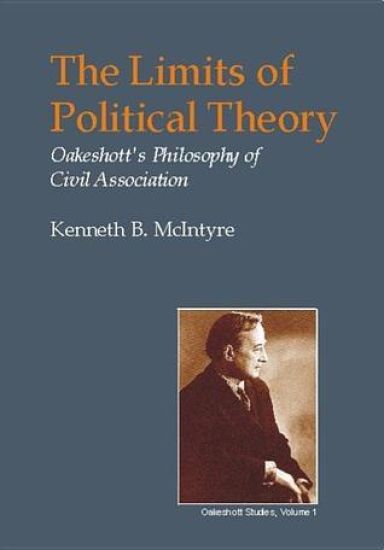
This book examines Oakeshott's political philosophy within the context of his more general conception of philosophical understanding. The book stresses the underlying continuity of his major writings on the subject and takes seriously the implications of understanding the world in terms of modality. The book suggests strongly that Oakeshott’s philosophy of political activity cannot be reduced to a branch of conservatism, liberalism, or postmodernism or a theory or set of doctrines which fit neatly into any conventional school, like that of Idealism or Skepticism. Rather, Oakeshott’s philosophy of political activity is a provocation to all of the currently dominant schools of political theory and political practice. It questions their presuppositions and exposes as ambiguous, arbitrary, or confused all of the supposed certainties which they take for granted. It does all this by offering profound insights into the character and limits of both political activity and political theory in the modern world.
Heart Love to Head Love is a daunting and unconventional coming-of-age story frame against the backdrop of managing loved ones with the onset of a debilitating neurocognitive disorder. Two blended families find themselves forced to face and conquer the reality of caregiving in its rawest form. Their collective creativity and resilience intersect beautifully to untangle the complexities of their new normal, particularly in relation to two major characters who start out as strangers and end up connected in the most unusual way. Family dynamics, memory care issues, health decisions, planning for the future, and day-to-day survival, mixed in with good old-fashioned fun, are topics that evolve through this American love story. The work is hard but the balancing act is a story worth telling.
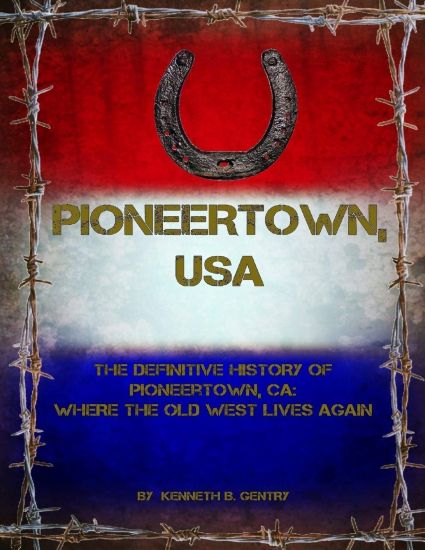
Pioneertown, USA: Where the Old West Lives Again The first extensive, comprehensive and definitive account of Pioneertown's unique western history IN FULL COLOR. Pioneertown was established in 1946 by the infamous Dick Curtis along with his friends an co-stars, Roy Rogers, Dale Evans, Russell Hayden, Lillian Porter "Mousie" Hayden and The Sons of the Pioneers as a "living breathing movie set" in southern California. They were soon joined by actors, producers and directors like Gene Autry, Philip N. Krasne, Frank McDonald, Spencer Bennet, Rex Blair, Armand Schaefer, John English, John Sturges, George Archainbaud, Duncan Renaldo, Leo Carrillo, Minna Gombelle, Pat Buttram, Smiley Burnette, Gail Davis, Frank Richards, Gloria Henry, Robert Livingston, Jack O'Mahoney, Barbara Stanwyck, Barry Sullivan, Ralph Meeker, Peggy Stewart, Dickie Moore, William Fawcett, Kirby Grant, James Griffith, Lew Ayres, Teresa Wright, Thurston Hall, Harry Lauter, Anne James and many, many more. Over the 7o+ years of Pioneertown's history, many stories of the High Desert town have been lost, embellished or even misreported. Pioneertown, USA is the result of over a year of thorough research and diligent cataloging to help accurately detail the deep and rich history of this hidden treasure in the Morongo Basin of San Bernardino County, California.
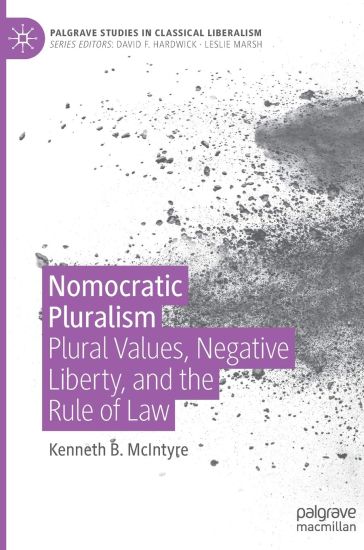
This book is a contribution to the ongoing conversation about value pluralism and its relation to political life. Its uniqueness lies in its insistence that the acceptance of value pluralism involves placing certain limitations on what is an acceptable form of government and what functions governments ought to be legitimately performing. In a new approach coined “nomocratic pluralism,” this volume argues that liberty under the rule of law, which is not merely liberty where the law is silent, is a key concept of liberty and cannot be subsumed by the other primary implications of the acceptance of value pluralism: that political communities must reject positive liberty as a political value, and place a high, but not absolute, priority on negative liberty as a political value. The concept of liberty under the rule of law is particularly suited to accommodate a great variety of individual and group conceptions of value and the moral good, and thus, along with negative liberty, should be a primary value for those who accept value pluralism.
In der heutigen Phantastik-Forschung findet man nur eine recht selektive und oft sparliche Behandlung des Hoffmannschen Werks. Zu Unrecht: E.T.A. Hoffmanns literarisch-asthetische Produktion bietet Moglichkeiten fur eine Neufassung des Begriffs des Phantastischen. Die Studie nimmt hier ihren Ausgangspunkt. Unter Berucksichtigung der literarischen Darstellungsmittel Ironie, Satire, Groteske und Parodie wird die Bedeutung, Reichweite und Aussagekraft der hoffmannschen Schreibweise im Rahmen des romantischen Denkens untersucht und theoretisch fruchtbar gemacht."
Enzyme Kinetics and Mechanisms takes the reader through the experimental techniques and the logic by which the mechanisms of enzyme-catalyzed reactions can be elucidated by the results of steady-state kinetics and related experiments. It is meant to make these investigations both satisfying and effective. In distinction to other available descriptions, the descriptions in enzyme Kinetics and Mechanisms are limited to more commonly utilized and useful models and techniques. The logic relating the chemical models to the mathematical models and the logic of relating the mathematical models to data is presented in rather concise text, figures and equations. The development of mathematical models from chemical models is done by a unique algorithm that is both simple and quick, and the same concept are utilized to develop models for the effects of a variety of reaction conditions on the initial velocity. In addition, the various relationships of data, mathematical models and the chemical models is illustrated with examples from the scientific literature.
Children’s literature has spent decades on the psychiatrist’s couch, submitting to psychoanalysis by scores of scholars and popular writers alike. Freud in Oz turns the tables, suggesting that psychoanalysts owe a significant and largely unacknowledged debt to books ostensibly written for children. In fact, Kenneth B. Kidd argues, children’s literature and psychoanalysis have influenced and interacted with each other since Freud published his first case studies.In Freud in Oz, Kidd shows how psychoanalysis developed in part through its engagement with children’s literature, which it used to articulate and dramatize its themes and methods, turning first to folklore and fairy tales, then to materials from psychoanalysis of children, and thence to children’s literary texts, especially such classic fantasies as Peter Pan and Alice’s Adventures in Wonderland. He traces how children’s literature, and critical response to it, aided the popularization of psychoanalytic theory. With increasing acceptance of psychoanalysis came two new genres of children’s literature—known today as picture books and young adult novels—that were frequently fashioned as psychological in their forms and functions.Freud in Oz offers a history of reigning theories in the study of children’s literature and psychoanalysis, providing fresh insights on a diversity of topics, including the view that Maurice Sendak and Bruno Bettelheim can be thought of as rivals, that Sendak’s makeover of monstrosity helped lead to the likes of the Muppets, and that “Poohology” is its own kind of literary criticism—serving up Winnie the Pooh as the poster bear for theorists of widely varying stripes.