Kirjojen hintavertailu. Mukana 12 459 402 kirjaa ja 12 kauppaa.

Kirjahaku

Etsi kirjoja tekijän nimen, kirjan nimen tai ISBN:n perusteella.

1000 tulosta hakusanalla Kenneth J. Arrow

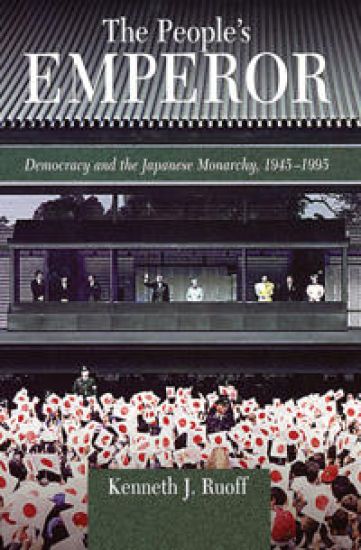
The People’s Emperor

The People’s Emperor

Kenneth J. Ruoff

Harvard University Press
2003
nidottu
Few institutions are as well suited as the monarchy to provide a window on postwar Japan. The monarchy, which is also a family, has been significant both as a political and as a cultural institution.This comprehensive study analyzes numerous issues, including the role of individual emperors in shaping the institution, the manner in which the emperor’s constitutional position as symbol has been interpreted, the emperor’s intersection with politics through ministerial briefings, memories of Hirohito’s wartime role, nationalistic movements in support of Foundation Day and the reign-name system, and the remaking of the once sacrosanct throne into a “monarchy of the masses” embedded in the postwar culture of democracy. The author stresses the monarchy’s “postwarness,” rather than its traditionality.
Japan’s Imperial House in the Postwar Era, 1945–2019

Japan’s Imperial House in the Postwar Era, 1945–2019

Kenneth J. Ruoff

Harvard University, Asia Center
2020
sidottu
With the ascension of a new emperor and the dawn of the Reiwa Era, Kenneth J. Ruoff has expanded upon and updated The People’s Emperor, his study of the monarchy’s role as a political, societal, and cultural institution in contemporary Japan. Many Japanese continue to define the nation’s identity through the imperial house, making it a window into Japan’s postwar history.Ruoff begins by examining the reform of the monarchy during the US occupation and then turns to its evolution since the Japanese regained the power to shape it. To understand the monarchy’s function in contemporary Japan, the author analyzes issues such as the role of individual emperors in shaping the institution, the intersection of the monarchy with politics, the emperor’s and the nation’s responsibility for the war, nationalistic movements in support of the monarchy, and the remaking of the once-sacrosanct throne into a “people’s imperial house” embedded in the postwar culture of democracy. Finally, Ruoff examines recent developments, including the abdication of Emperor Akihito and the heir crisis, which have brought to the forefront the fragility of the imperial line under the current legal system, leading to calls for reform.
Japan’s Imperial House in the Postwar Era, 1945–2019

Japan’s Imperial House in the Postwar Era, 1945–2019

Kenneth J. Ruoff

Harvard University, Asia Center
2020
nidottu
With the ascension of a new emperor and the dawn of the Reiwa Era, Kenneth J. Ruoff has expanded upon and updated The People’s Emperor, his study of the monarchy’s role as a political, societal, and cultural institution in contemporary Japan. Many Japanese continue to define the nation’s identity through the imperial house, making it a window into Japan’s postwar history.Ruoff begins by examining the reform of the monarchy during the US occupation and then turns to its evolution since the Japanese regained the power to shape it. To understand the monarchy’s function in contemporary Japan, the author analyzes issues such as the role of individual emperors in shaping the institution, the intersection of the monarchy with politics, the emperor’s and the nation’s responsibility for the war, nationalistic movements in support of the monarchy, and the remaking of the once-sacrosanct throne into a “people’s imperial house” embedded in the postwar culture of democracy. Finally, Ruoff examines recent developments, including the abdication of Emperor Akihito and the heir crisis, which have brought to the forefront the fragility of the imperial line under the current legal system, leading to calls for reform.
Realities and Relationships

Realities and Relationships

Kenneth J. Gergen

Harvard University Press
1997
nidottu
Recent attempts to challenge the primacy of reason—and its realization in foundationalist accounts of knowledge and cognitive formulations of human action—have focused on processes of discourse. Drawing from social and literary accounts of discourse, Kenneth Gergen considers these challenges to empiricism under the banner of “social construction.” His aim is to outline the major elements of a social constructionist perspective, to illustrate its potential, and to initiate debate on the future of constructionist pursuits in the human sciences generally and psychology in particular.
The Theology of John Wesley

The Theology of John Wesley

Kenneth J. Collins

Abingdon Press
2007
pokkari
This is a rich articulation of John Wesley's theology that is appreciative of the old and mindful of the new, faithful to the past and attentive to the present. This work carefully displays John Wesley's eighteenth century theology in its own distinct historical and social location, but then transitions to the twenty-first century through the introduction of contemporary issues. So conceived, the book is both historical and constructive demonstrating that the theology of Wesley represents a vibrant tradition. Cognizant of Wesley's own preferred vocabulary, Collins introduces Wesley's theological method beginning with a discussion of the doctrine of God. In this insightful exposition the leitmotif of holy love arises out of Wesley's reflection on the nature of the divine being as well as other major doctrines.
Empirical Dynamic Asset Pricing

Empirical Dynamic Asset Pricing

Kenneth J. Singleton

PRINCETON UNIVERSITY PRESS
2006
sidottu
Written by one of the leading experts in the field, this book focuses on the interplay between model specification, data collection, and econometric testing of dynamic asset pricing models. The first several chapters provide an in-depth treatment of the econometric methods used in analyzing financial time-series models. The remainder explores the goodness-of-fit of preference-based and no-arbitrage models of equity returns and the term structure of interest rates; equity and fixed-income derivatives prices; and the prices of defaultable securities. Singleton addresses the restrictions on the joint distributions of asset returns and other economic variables implied by dynamic asset pricing models, as well as the interplay between model formulation and the choice of econometric estimation strategy. For each pricing problem, he provides a comprehensive overview of the empirical evidence on goodness-of-fit, with tables and graphs that facilitate critical assessment of the current state of the relevant literatures. As an added feature, Singleton includes throughout the book interesting tidbits of new research. These range from empirical results (not reported elsewhere, or updated from Singleton's previous papers) to new observations about model specification and new econometric methods for testing models. Clear and comprehensive, the book will appeal to researchers at financial institutions as well as advanced students of economics and finance, mathematics, and science.
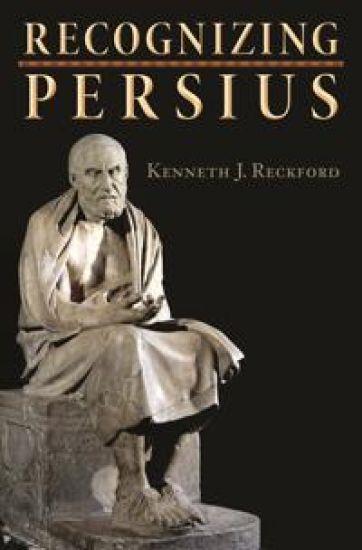
Recognizing Persius

Recognizing Persius

Kenneth J. Reckford

Princeton University Press
2009
sidottu
Recognizing Persius is a passionate and in-depth exploration of the libellus--or little book--of six Latin satires left by the Roman satirical writer Persius when he died in AD 62 at the age of twenty-seven. In this comprehensive and reflectively personal book, Kenneth Reckford fleshes out the primary importance of this mysterious and idiosyncratic writer. Reckford emphasizes the dramatic power and excitement of Persius's satires--works that normally would have been recited before a reclining, feasting audience. In highlighting the satires' remarkable honesty, Reckford shows how Persius converted Roman satire into a vehicle of self-exploration and self-challenge that remains relevant to readers today. The book explores the foundations of Roman satire as a performance genre: from the dinner-party recitals of Lucilius, the founder of the genre, through Horace, to Persius's more intense and inward dramatic monologues. Reckford argues that despite satire's significant public function, Persius wrote his pieces first and mainly for himself. Reckford also provides the context for Persius's life and work: his social responsibilities as a landowner; the interplay between his life, his Stoic philosophy, and his art; and finally, his incomplete struggle to become an honest and decent human being. Bringing the modern reader to a closer and more nuanced acquaintance with Persius's work, Recognizing Persius reinstates him to the ranks of the first-rate satirists, alongside Horace and Juvenal.
The Bank Investor's Handbook

The Bank Investor's Handbook

Kenneth J. Yellen; Nathan Tobik

Red River Research Inc
2017
nidottu
Quick Name an industry that touches people's lives on an everyday or frequent basis. Perhaps you thought of grocery stores or something sexy like internet retailing, but chances are you didn't think of banking. Yet, most likely you interact with a bank every time you're paid and when you pay your bills. Banks facilitate the flow of money through the economy and even if you don't interact with a bank daily, the businesses you deal with on a daily basis do. For all the interaction people have with banks, few understand how they work or why they work. Even fewer understand why they should consider including bank stocks in their investment portfolio. There are a lot of misconceptions about banks, including understanding what they are and what they do. For many people the word "bank" evokes images of receiving a toaster upon opening an account, or thoughts of security related to the storing of precious items in a safety deposit box. Others might go further and tap their inner Michael Moore and talk about how banks are greedy and evil. It's our belief that banks aren't just places to store idle savings (on which you receive virtually nothing in interest) or to cash checks, but that they should be an integral part of an investor's portfolio. The goal of this book is to provide you with a foundation and framework with which you can both begin to understand banks, but also learn the basic tools used to analyze banks as investments.
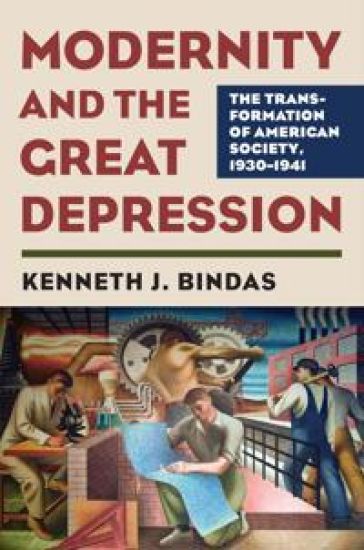
Modernity and the Great Depression

Modernity and the Great Depression

Kenneth J. Bindas

University Press of Kansas
2017
sidottu
Order, planning, and reason—in the depths of the Great Depression, with the nation teetering on the brink of collapse, this was what was needed. And this, Kenneth J. Bindas suggests, was what the ideas and ideals of modernity offered—a way to make sense of the chaos all around. In Modernity and the Great Depression, Bindas offers a new perspective on the provenance and power of modernist thought and practice in early twentieth-century America.
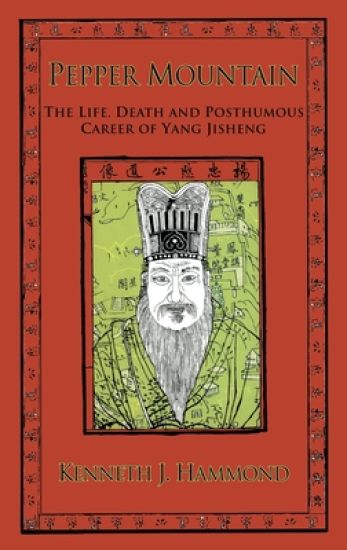
Pepper Mountain

Pepper Mountain

Kenneth J. Hammond

Kegan Paul
2007
sidottu
First published in 2007. The political history of late imperial/early modern China and the relationship between China's traditional political culture and the rapidly changing political environment of China today, are examined through this study of the iconic figure of Yang Jisheng. Born in 1516, Yang had a brief and traumatic career as a junior official in the middle Ming dynasty, before being executed in 1555 for criticising the politics of the imperial state. After his death, Yang was held up as a martyr to Confucian political morality. Over the ensuing 450 years, a variety of constituencies within China have appropriated and deployed Yang's memory in different ways to promote their own political agendas. In recent years, as China has sought to come to grips with the ideological decline of socialism and the need for a new foundation for public morality, there has been a revival of interest in figures like Yang Jisheng. A series of events including the rebuilding of his ancestral shrine, the rededication of a school he founded, and the republication of his writings, show how his legacy is once again being taken up by actors on the contemporary political scene. This is an important study of the power of political myth in China, past and present.
The Trouble with America

The Trouble with America

Kenneth J. Long

Lexington Books
2009
sidottu
The Trouble with America critiques the theory and practice of American government, focusing on the fatal flaws of America's core political arrangements. Institutionalized pluralism, the structural dispersal of power, generates government too weak to solve our public problems. American constitutionalism, the limitation of government power and authority, protects property rights far better than it defends our civil liberties, and it offers little or no protection for non-citizens. Capitalism is a hyper-competitive and grossly unfair economic system, which rewards pre-existing wealth far better than hard work or talent, and encourages petty materialist consumption of mostly low-quality goods, undermining taste as well as fairness. Taken together, pluralism, constitutionalism, and capitalism in America harm our society in a myriad of ways, leaving us with inadequate representation, poor leadership, social and political paralysis and irresponsibility, unrealistic self-images, and scandalously poor domestic and foreign policies. This book will prove a valuable supplement in American government courses, an alternative to the centrist material currently dominating textbooks on this subject.
The Trouble with America

The Trouble with America

Kenneth J. Long

Lexington Books
2009
nidottu
The Trouble with America critiques the theory and practice of American government, focusing on the fatal flaws of America's core political arrangements. Institutionalized pluralism, the structural dispersal of power, generates government too weak to solve our public problems. American constitutionalism, the limitation of government power and authority, protects property rights far better than it defends our civil liberties, and it offers little or no protection for non-citizens. Capitalism is a hyper-competitive and grossly unfair economic system, which rewards pre-existing wealth far better than hard work or talent, and encourages petty materialist consumption of mostly low-quality goods, undermining taste as well as fairness. Taken together, pluralism, constitutionalism, and capitalism in America harm our society in a myriad of ways, leaving us with inadequate representation, poor leadership, social and political paralysis and irresponsibility, unrealistic self-images, and scandalously poor domestic and foreign policies. This book will prove a valuable supplement in American government courses, an alternative to the centrist material currently dominating textbooks on this subject.

Working through Whiteness

Working through Whiteness

Kenneth J. Fasching-Varner

Lexington Books
2012
sidottu
White educators comprise between 85-92 percent of the current teaching force in the United States, yet in the race toward leaving no child behind, contemporary educational research often invests significant time and energy looking for ways to reach students who represent difference without examining the nature of those who do the work of educating the nation’s public school children. Educational research that has looked at racial identity is often void of earnest discussion of the identity of the teachers, how that identity impacts teacher beliefs about students and families, and ultimately how teachers frame their understanding of the profession. This book takes readers on a journey to explore the nature of pre-service teachers’ narratives as a means of better understanding racial identity and the way teachers enter the profession. Through a case study analysis approach, Examining White Racial Identity and Profession with Pre-service Teachers examines the nature of white racial identity as seen through the narratives of nine pre-service teachers as well as his own struggles with racial identity. This text draws on racial identity, critical race theory, and discourse and narrative analysis to reveal how participants in the study used discourse structures to present beliefs about race and their own understandings and ultimately how the teachers’ narratives display underdeveloped understandings of their choices to become educators. Fasching-Varner also critically examines his own racial identity auto-ethnographically, and ultimately proposes a new, non-developmental model for thinking about white racial identity. This text aims to help teacher educators and teachers to work against the privileges of whiteness so as to better engage students in culturally relevant ways.
Working through Whiteness

Working through Whiteness

Kenneth J. Fasching-Varner

Lexington Books
2014
nidottu
White educators comprise between 85-92 percent of the current teaching force in the United States, yet in the race toward leaving no child behind, contemporary educational research often invests significant time and energy looking for ways to reach students who represent difference without examining the nature of those who do the work of educating the nation’s public school children. Educational research that has looked at racial identity is often void of earnest discussion of the identity of the teachers, how that identity impacts teacher beliefs about students and families, and ultimately how teachers frame their understanding of the profession. This book takes readers on a journey to explore the nature of pre-service teachers’ narratives as a means of better understanding racial identity and the way teachers enter the profession. Through a case study analysis approach, Examining White Racial Identity and Profession with Pre-service Teachers examines the nature of white racial identity as seen through the narratives of nine pre-service teachers as well as his own struggles with racial identity. This text draws on racial identity, critical race theory, and discourse and narrative analysis to reveal how participants in the study used discourse structures to present beliefs about race and their own understandings and ultimately how the teachers’ narratives display underdeveloped understandings of their choices to become educators. Fasching-Varner also critically examines his own racial identity auto-ethnographically, and ultimately proposes a new, non-developmental model for thinking about white racial identity. This text aims to help teacher educators and teachers to work against the privileges of whiteness so as to better engage students in culturally relevant ways.
Collateral Damage

Collateral Damage

Kenneth J. Saltman

Rowman Littlefield Publishers
2000
nidottu
From schools advertising McDonald’s, Nike, and Shell oil to military generals appointed as superintendents; from corporate CEOs hailed as education experts to students suspended for wearing Pepsi tee shirts on Coke day; Collateral Damage sifts through a wide range of incidents to reveal how the rising corporatization of public schools needs to be understood as a part of a broader attack on the public sector. Uniquely, Collateral Damage considers the privatization of public education in relation to both globalization and local struggles over curriculum, schools, and culture. Saltman describes the dangers to democracy posed by educational policy debates increasingly framed by the language and logic of the market. He reveals how the language of school choice, competition, monopoly, and accountability shifts the grounds of debate to naturalize education along business models rather than for the public good. The commercialization and militarization of public schools, and media images of out of control teachers reveal how political and economic struggles over privatization involve culture, citizenship, nation, identity, and even bodies.
Autonomic Pharmacology

Autonomic Pharmacology

Kenneth J Broadley

Taylor Francis Ltd
1996
sidottu
This overview of autonomic pharmacology describes the anatomy, physiology and pharmacology of the autonomic involuntary nervous system. Covering the diverse group of drugs acting on the autonomous nervous system, their actions are reviewed together with their clinical uses, side effects, interactions and subcellular mechanisms of action. Information is organized in a logical flow, bringing together the latest advances in an integrated form on topics usually found only in a fragmented form.; This work is intended for all those researching in industry and academic institutions in pharmaceutical, pharmacological sciences, pharmacy, medical sciences, physiology, neurosciences, biochemistry and molecular biology.
London

London

Kenneth J. Panton

NPI Media Group
2005
nidottu
This voracious city has inspired an unquenchable interest in its 2000-year history. Kenneth Panton presents the characters, events, buildings, and institutions that have shaped London over the millennia, from the Roman settlement to the cosmopolitan center of culture and commerce it is today. In an accessible, comprehensive, illustrated dictionary format, this book can be used by armchair travellers and tourists alike.
Jane Carlyle

Jane Carlyle

Kenneth J. Fielding

Ashgate Publishing Limited
2004
sidottu
This new selection of the letters of Jane Welsh Carlyle presents a complete view of a remarkable Victorian woman, with a wide circle of friends, who enjoyed the company of distinguished thinkers, writers, politicians, feminists, eccentrics and radicals. This edition draws on many remarkable letters and papers not published before, in which she created a memorable epistolary voice - shrewd, vigorous, ironic, observant, humorous and passionate. Previous selections have often tamely followed the semi-mythical version of her life first given by Carlyle’s biographer, James Anthony Froude, showing her as the victimized angel in distress. This new selection gives a rounded picture of her complex character, showing her as a tormented yet forceful woman who was a strong personality in her own right. She now emerges as a self-conscious artist, adept at constructing images of herself that were designed to appeal to her particular correspondents. The account is written with close attention to Jane Carlyle's long-running jealousy of Lady Harriet Ashburton; and fresh letters include many to her mother and her vital response to her passionate lover or admirer Charlotte Cushman. Each letter is a tightly controlled performance, which justifies Thomas Carlyle’s belief that her letters equal and surpass whatever of best I know to exist in that kind.