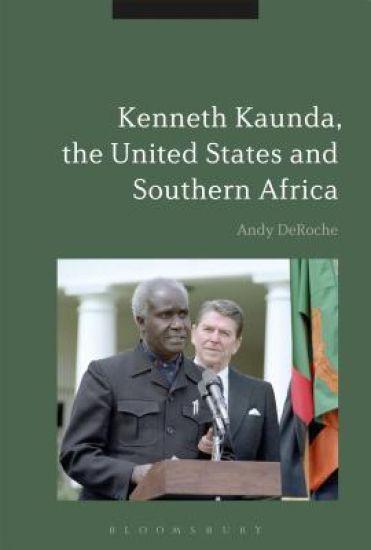
Kenneth Kaunda, the United States and Southern Africa carefully examines US policy towards the southern African region between 1974, when Portugal granted independence to its colonies of Angola and Mozambique, and 1984, the last full year of the Reagan administration’s Constructive Engagement approach. It focuses on the role of Zambian president Kenneth Kaunda, the key facilitator of international diplomacy towards the dangerous neighborhood surrounding his nation. The main themes include the influence of race, national security, economics, and African agency on international relations during the height of the Cold War. Andy DeRoche focuses on key issues such as the civil war in Angola, the fight against apartheid, the struggle for Namibia’s independence, the transition from Rhodesia to Zimbabwe, and bilateral US/ Zambian relations. The approach is traditional diplomatic history based on archival research in Zambia and the USA as well as interviews with key players such as Kaunda, Mark Chona, Siteke Mwale, Vernon Mwaanga, Chester Crocker, and Frank Wisner. The result offers an important new insight into the nuances of US policy toward southern Africa during the hottest days of the Cold War.
These three books reflect the beginnings of one of the most radical and exhilarating figures in modern literatureIncandescent Limbo recounts White's years in Paris. Many a writer in the modern era had made Paris a focal point of his or her activity, but probably no one made more of it or got more out of it than Kenneth White. While exploring a labyrinthine underworld, the book is fundamentally an autoanalysis and traces the birth of the writer as an intellectual nomad.Letters from Gourgounel takes us from the city to a wild part of south-eastern France, the Ardeche, where White undertakes a resourcing in an elementary context. Hailed in England as a 'fascinating curiosity of literature', this book not only made White famous overnight in France, it was seen there as a turning point in the contemporary situation.In the third book, Travels in the Drifting Dawn, the intellectual nomad begins his moves across territories and cultures. After passing through the London underground of the sixties, then delving into the ground of his native Scotland and neighbouring Ireland, we shift back to the Continent, accumulating experience on different levels in France, Spain, Belgium, Holland, before concluding the cycle in North Africa. The trilogy is not only a summary of White's itinerary in its initial stages, it opens up a whole intellectual and cultural programme.
Three collections of essays whose aim is to express the cartography and the experience of a live, open worldThese essays all explore Scottish subjects and the wider issues of geopetics. This volume starts with On Scottish Ground by delving into forgotten cultural resources. Ideas of Order at Cape Wrath explores more socio-political considerations before opening out to a larger space of cosmological meditation in The Wanderer and his Charts.
'The most detailed, amusing and accurate account ever of the post-war world of the English Establishment' William Shawcross, Daily Telegraph'Extremely entertaining' Jane Ridley, Literary ReviewKenneth Rose was one of the most astute observers of the establishment for over seventy years. The wry and amusing journals of the royal biographer and historian made objective observation a sculpted craft. His impeccable social placement located him within the beating heart of the national elite for decades. He was capable of writing substantial history, such as his priceless material on the abdication crisis from conversations with both the Duke of Windsor and the Queen Mother. Yet he maintained sufficient distance to achieve impartial documentation while working among political, clerical, military, literary and aristocratic circles. Relentless observation and a self-confessed difficulty 'to let a good story pass me by' made Rose a legendary social commentator, while his impressive breadth of interests was underpinned by tremendous respect for the subjects of his enquiry. Brilliantly equipped as Rose was to witness, detail and report, the first volume of his journals vividly portrays some of the most important events and people of the last century, from the bombing of London during the Second World War to the election of Margaret Thatcher, Britain's first woman Prime Minister, in 1979.
'The most detailed, amusing and accurate account ever of the post-war world of the English Establishment' William Shawcross, Daily Telegraph'Extremely entertaining' Jane Ridley, Literary ReviewKenneth Rose was one of the most astute observers of the establishment for over seventy years. The wry and amusing journals of the royal biographer and historian made objective observation a sculpted craft. His impeccable social placement located him within the beating heart of the national elite for decades. He was capable of writing substantial history, such as his priceless material on the abdication crisis from conversations with both the Duke of Windsor and the Queen Mother. Yet he maintained sufficient distance to achieve impartial documentation while working among political, clerical, military, literary and aristocratic circles. Relentless observation and a self-confessed difficulty 'to let a good story pass me by' made Rose a legendary social commentator, while his impressive breadth of interests was underpinned by tremendous respect for the subjects of his enquiry. Brilliantly equipped as Rose was to witness, detail and report, the first volume of his journals vividly portrays some of the most important events and people of the last century, from the bombing of London during the Second World War to the election of Margaret Thatcher, Britain's first woman Prime Minister, in 1979.
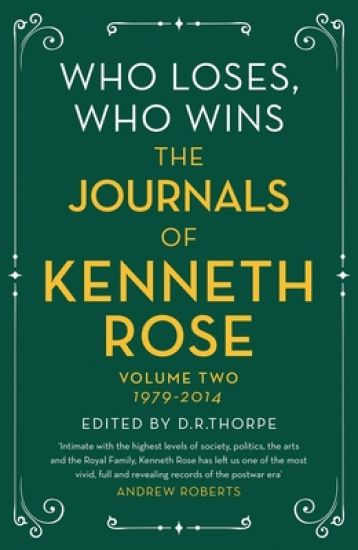
Kenneth Rose was one of the most astute observers of the post-war Establishment. The wry and amusing journals of the royal biographer and historian made objective observation a sculpted craft. His impeccable social placement located him within the beating heart of the national elite for decades. He was capable of writing substantial history, such as his priceless material on the abdication crisis from conversations with both the Duke of Windsor and the Queen Mother. Yet he maintained sufficient distance to achieve impartial documentation while working among political, clerical, military, literary and aristocratic circles. Relentless observation and a self-confessed difficulty 'to let a good story pass me by' made Rose a legendary social commentator, while his impressive breadth of interests was underpinned by tremendous respect for the subjects of his enquiry. Brilliantly equipped as Rose was to witness, detail and report, the second volume of his journals vividly portrays some of the most important events and people of the last century, from the election of Margaret Thatcher as Prime Minister in 1979 to Kenneth Rose's death in 2014.
Kenneth Rose was one of the most astute observers of the post-war Establishment. The wry and amusing journals of the royal biographer and historian made objective observation a sculpted craft. His impeccable social placement located him within the beating heart of the national elite for decades. He was capable of writing substantial history, such as his priceless material on the abdication crisis from conversations with both the Duke of Windsor and the Queen Mother. Yet he maintained sufficient distance to achieve impartial documentation while working among political, clerical, military, literary and aristocratic circles. Relentless observation and a self-confessed difficulty 'to let a good story pass me by' made Rose a legendary social commentator, while his impressive breadth of interests was underpinned by tremendous respect for the subjects of his enquiry. Brilliantly equipped as Rose was to witness, detail and report, the second volume of his journals vividly portrays some of the most important events and people of the last century, from the election of Margaret Thatcher as Prime Minister in 1979 to Kenneth Rose's death in 2014.
This book is a compilation of seriously exciting short stories which has been written by the same author of, 'In The Pulse of Time.'The short stories deal with the depth of the human condition from: old age, to sadness, greed, philosophy and hate... Secondly the last two short stories are humorous rewrites of history.
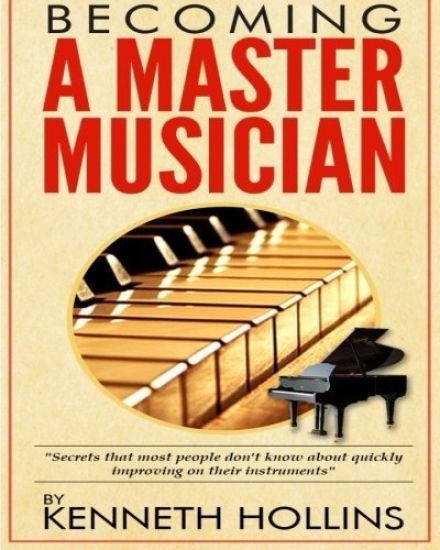
Becoming a Master Musician is an introspective view of what it really takes to become a highly skilled musician. Kenneth Hollins gives you several effective techniques that will cause you to break out of mediocrity and into musical excellence.
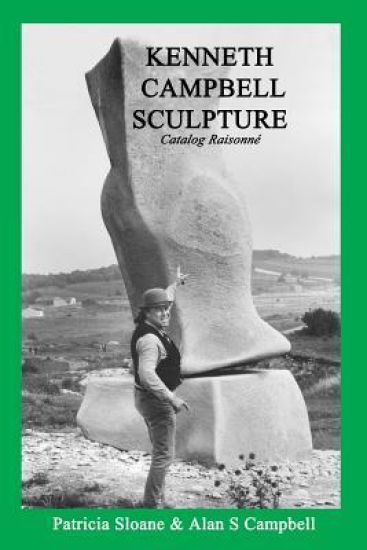
This catalog raisonn provides pictures and descriptions of the works of American sculptor Kenneth Campbell (1913-1986). Campbell's stone carvings are abstract expressions of motion and balance. They aim for a refinement of line which is essentially classical, but which also reflects the artist's interest in Oriental art and philosophy. Campbell worked directly, with hand tools, in American marbles from Georgia, Vermont, Tennessee, and Alabama. Many pieces are in a laminated technique that facilitates combining and contrasting stones of various colors. Campbell's smaller marble carvings are monolithic pieces twenty to forty inches high. Larger pieces, which can be disassembled, are from six to ten feet high, and consist of stacked units secured by concealed stainless steel pins. Campbell, a student of the three-dimensional arts of Egypt, India, and China, but also of megaliths, called the stacking technique Stone on Stone, the title used for most of his exhibitions. The artist executed four monumental site works, including the one pictured on this book cover in Austria, and envisioned most of his works being made on a monumental scale. Museums that have included Campbell's pieces in their collections are Whitney Museum of American Art, National Museum of American Art at the Smithsonian, Walker Art Center, Brooklyn Museum, Kalamazoo Art Institute, and Storm King Art Center.






![Crash Landing into a Field of Outhouses: The [Slightly Embellished] Stories of Kenneth A. Bauer](/covers/9781497453753.jpg)