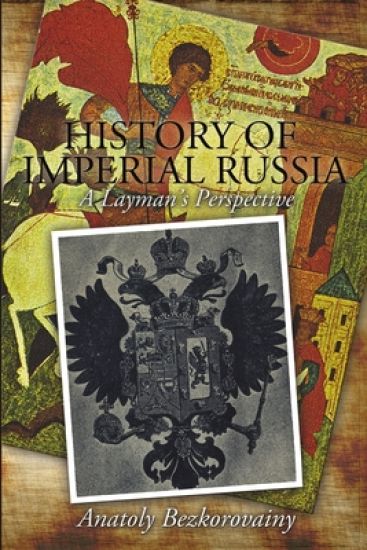
This book has been composed with non-professional historians in mind. It contains information on Russia's history gathered from standard Russian history texts from the times of Slavic migrations into Eastern Europe through the period of Kievan Rus and its component princedoms and the development of one of them. It also contains information not usually seen in standard texts by the use of monographs that describe events in Russian history in great detail. English and Russian-language newspaper and magazine articles were also utilized as were commentaries by various individuals including the author. The collapse of the Russian Empire in 1917 is described in some detail. The book mention anti-Russian attitudes of the American press that have existed in the U.S. since the mid-19th century and how they affected the demise of the Russian monarchy. The last chapter is concerned with the establishment of the Soviet regime in Russia and how its severity compares to the tsarist empire.
Legal writing in plain English. Law books using plain English which is easy to understand using clear concise plain wording. Welcome to my series of law textbooks for beginners. The Law of ContractEvery day we enter contracts, most of those contracts are subconsciously entered into and we are rarely aware of the intrinsic nature of a contract and all of the essential elements which must be fulfilled in order to have a legally binding and enforceable contract, we simply take the law of contract for granted. Simply buying a bottle of water or your morning coffee affords the same legal principles as buying a car or entering into a million euro business deal. Contracts do not need to be in writing to be enforceable, on the contrary, if you were to have a written contract every time you went to the shop for a paper or to buy a coffee there would be some very long queue's as you would have to write the terms of the contract down and sign it, time consuming and frivolous as very little actually selling would be done due to the time which it would take per person to put all of the essential elements of a contract in writing. There are some contracts which require a written and signed deed (written document or agreement) mainly the sale and purchase of land, property, commercial property and loans.If you are buying or selling something of course you can request that this sale or purchase be written down, you can set your own rules and as long as they are not breaching any legal rules or legislation and the other persons signs then you can pretty much set out whatever rules you want, however for most sales or purchases this is a formality and not a requirement for the contract to be binding on both parties. Agreements create obligations. Therefore, any agreement that is enforceable in a court of law is a contract and no person should be bound unless they have given their informed and true consent to the contract.What is a Contract?Formation of a ContractOfferDistinction between Offer and Invitation to TreatTermination of an offerAcceptanceThe Postal Rule (for acceptance)Intention to Create Legal Relations Family, Domestic or SocialCommercial ArrangementsConsiderationConsideration in Bilateral ContractsUnilateral ContractsExecuted and executory considerationExecuted ConsiderationExecutory Consideration Rules of ConsiderationMust be sufficient, but need not be adequateConsideration must not be 'past'Must not be more than the party already has to doDoctrine of privity of contractCapacityMinorsContracts which are always considered valid unless repudiatedContracts which are always considered voidPersons of unsound mindIntoxicationCompaniesContents of a ContractConditionWarrantyTerm or representationExpress termsImplied TermsMatter of FactOfficious Bystander TestMatter of LawImplied under StatuteTerms implied by the CourtsImplied by CustomThe Parol Evidence RuleInnominate termOnus of proofMistakeUnilateral or bilateral mistakeCommon MistakeSection 7 of the Sale of Goods Act 1893Mutual Mistake - Mutual misunderstandingUnilateral MistakeMistaken IdentityRemedies for MistakeDamagesRectificationRecissionSpecific PerformanceExemption ClausesThe legal effects of exemption/limitation clausesLimitation ClauseExclusion ClausesIncorporated by SignatureElectronic SignatureReasonable StepsReasonable NoticeIncorporation by Course of DealingsMain purpose ruleBars to exclusion/limitation clausesMisrepresentationCollateral UndertakingsUnconscionable BargainContra ProferentemVitiating factors, discharge and remedyDuressThreats of the person (force or violence)Threats to property (or goods)Threats to sueEconomic DuressPressureUnlawful pressureCausationRemedies for DuressBars to remediesUndue InfluencePresumed Undue InfluenceSpecial relationshipsUnconscionable BargainRemedies for Undue Influence
This Introduction to Irish law book is a handy little number, it is compiled so that the most difficult and challenging terminology, rules and principles are explained, leaving you to enjoy learning about the law in Ireland without the headache of first learning terminology and confounding principles.Torts are wrongdoings; done by one person against another. When one person wrongs another, the injured person may take civil action against the other person. In plain English, let's say while walking down the fruit and veg aisle of your local supermarket, you slip on a grape that had fallen from the shelf and injure yourself. You become the plaintiff, or injured party, and the supermarket is considered the tortfeasor or defendant, they are defined as the negligent party. When this happens you can take civil action against the supermarket to claim compensation for pain, suffering, medical bills and expenses incurred as a result of the fall. Negligence is just one tort category. This book will go through all of the different types.These books are written "as is", they are compiled for a novice, in basic introductory or note form with a breakdown of each subject, the language is casual and conversational, similar to how you would chat to your friends over lunch on the subject, with some truncated sentences, bullet style explanations and paragraphs, there are truncated case synopsis with occasional ellipses. Paragraph headers include examples and explanations with real life scenarios; for that reason, these books are not academic textbooks, merely informational.
God's plan for our salvation is in His Son Jesus Christ and He bestows on us various gifts and talents for us live in His Light while we live out our "Journey" to heaven.
Have you ever wondered: "Is there really a God? If God does exist, why can't I find him? Does God really answer my prayers?" These are questions we have all struggled with during our lives. The author shares his own journey in discovering the answers to these questions.In Search of Truth, A Layman's Guide to Catholic Spirituality is for people of all religious beliefs who are interested in developing a more personal relationship with God. The guide teaches you how to search for and how to find God. You'll learn the importance of developing a daily prayer life and gain insight into how scripture, the Blessed Mother, the saints, meditation, and fasting can help you build a stronger relationship with God. You will learn how Christ's church and its sacraments, especially the Eucharist, help you strengthen this relationship.Mr. Gross explores the true Catholic faith versus what people think Catholics believe. The book includes a layman's guide to the celebration of the Mass (Eucharist), and contains a section on daily prayers, and a glossary of religious terms."In Search of Truth" has been granted a Nihil Obstat and Imprimatur from the Catholic Church which means it is free of doctrinal or moral error.
I am a 71-year-old man. I have been a born-again conservative evangelical Christian for 60+ years so far. This book is about my 50 years of intense Bible study, and some of the AMAZING things I have learned on my own. Pick up my book and thumb through the Table of Contents. I believe you will be surprised by what I have learned. For example, we don't need a 3rd Temple being built to get Jesus Christ to return.
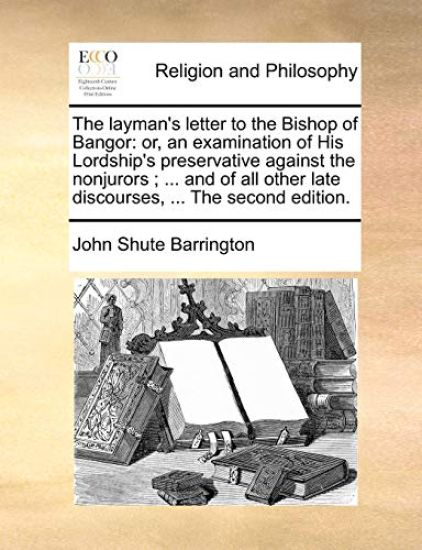
The 18th century was a wealth of knowledge, exploration and rapidly growing technology and expanding record-keeping made possible by advances in the printing press. In its determination to preserve the century of revolution, Gale initiated a revolution of its own: digitization of epic proportions to preserve these invaluable works in the largest archive of its kind. Now for the first time these high-quality digital copies of original 18th century manuscripts are available in print, making them highly accessible to libraries, undergraduate students, and independent scholars.The Age of Enlightenment profoundly enriched religious and philosophical understanding and continues to influence present-day thinking. Works collected here include masterpieces by David Hume, Immanuel Kant, and Jean-Jacques Rousseau, as well as religious sermons and moral debates on the issues of the day, such as the slave trade. The Age of Reason saw conflict between Protestantism and Catholicism transformed into one between faith and logic -- a debate that continues in the twenty-first century.++++The below data was compiled from various identification fields in the bibliographic record of this title. This data is provided as an additional tool in helping to insure edition identification: ++++British LibraryT124586Layman = John Shute Barrington, Viscount Barrington.London: printed: and sold by J. Roberts; J. Graves; and A. Dodd, 1716. 44p.; 4
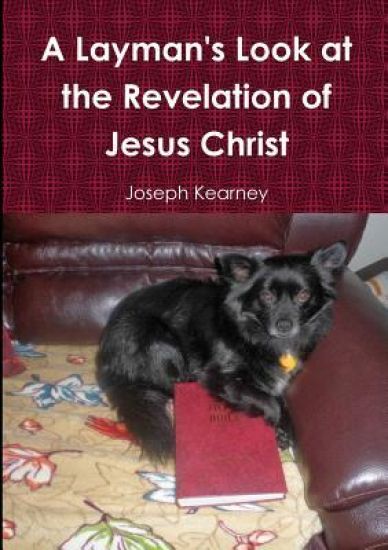
After studying the Revelation of Jesus Christ for several years I believe I have found the most truthful purpose of the Book, to show Jesus Christ as King of kings and Lord of lords.
I wrote this book out of a sense of frustration. None of my questions were being answered by the books I read. On the occasions when I stayed the course (even though my frustration mounted with every page) hoping that the reward for my perseverance would be a supreme moment of epiphany, I was invariably disappointed. But then I realised I wasn't being fair. These books were providing me with information, theories, esoteric data, ancient philosophical musings, dry and dusty logic. Loads of it. What they were not doing was drawing any definite conclusions because they seemed reluctant to commit themselves. Why, I don't know---maybe their publishers wouldn't allow it for financial or political reasons. After all, this is only to be expected when you have more than one interest involved in any project. And so I said to myself, well, all it takes is for one person to listen carefully to all of what these books are saying and then to form his own conclusions. Because people's lives are busy. They work long hours and need their rest and relaxation. They don't have the time to sit down and try to make sense of all the information thrown at them about the meaning of life. The now. The hereafter. The why. The religious take on it all. So I decided to take on the task. Because why should I be afraid to voice my conclusions if deep down I know I am only trying to be honest. Completely honest. And if anyone should take issue, for whatever reason, why, let them. They, too, are entitled to their opinions. All I will know is that I would have done my best And yes, so I decided to write my own book. My own, completely personal conclusions on life and death. What makes sense to me. The writing of this book has given me tremendous peace . It is tempting to say that it will do the same for you, but that wouldn't be honest. The truth is, I don't know what it will do for you. I cannot know this until I know you. And sadly, I will never know you, except perhaps from the feedback you might choose to give me. So be warned, this is not a feel-good book. I'm not going to patronise you by trying to inspire you, by telling you it's a wonderful life. I'm not here for you to find yourself, or to try and compose a message which is uplifting and will hopefully sell me a million copies and make me rich---there are plenty of other guys out there already doing a really good job of that. I'm going to tell you like it is. Rather, what I think it is like. You may agree. You may not. But if I manage to hold your attention long enough to finish this book, that'll be more than enough for me. I will have succeeded. What I will go as far to say is that there is a good chance that you will be uplifted. You will be satisfied. And you will be at peace, just as I am now. Especially if you, like me, believe that the truth will set you free. IMPORTANT INFORMATION This book was written for young people--young people who need to enjoy life and not worry about deep philosophical questions like the ones found in heavyweight, scholarly texts. So don