Kirjojen hintavertailu. Mukana 11 244 527 kirjaa ja 12 kauppaa.

Kirjahaku

Etsi kirjoja tekijän nimen, kirjan nimen tai ISBN:n perusteella.

1000 tulosta hakusanalla Lee Server

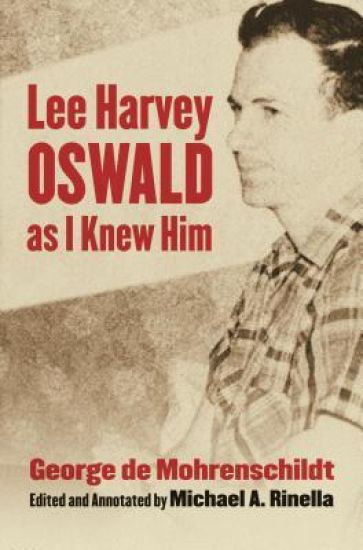
Lee Harvey Oswald As I Knew Him

Lee Harvey Oswald As I Knew Him

George de Mohrenschildt

University Press of Kansas
2014
sidottu
Let us hope that this book, poorly written and disjointed, but sincere, will help to clear up our relationship with our dear, dead friend Lee."" Thus concludes a largely forgotten manuscript appended to Volume XII of the House Select Committee on Assassinations. ""Lee,"" of course, was Lee Harvey Oswald, the man accused of having assassinated President John F. Kennedy in Dallas on November 22, 1963--and whose closest friend, many have argued, was Dallas resident George de Mohrenschildt. For years following Kennedy's assassination there were rumors and assumptions--some started by de Mohrenschildt himself--that this colorful, larger-than-life European émigré possessed a key to understanding Oswald's alleged actions. The reflections presented here, recorded between 1969 and his death in 1977, was de Mohrenschildt's attempt to recover the humanity of a friend he believed had been demonized as simply an ""insane killer."" In a series of recollections about his brief friendship with Oswald and his wife Marina between the fall of 1962 and the spring of 1963, de Mohrenschildt recalls conversations about Lee's time in Minsk, about political issues of the day, particularly Latin America, and the Oswalds' turbulent and troubled marriage. He discusses the assassination and its aftermath, including his lengthy 1964 Warren Commission testimony, appearance on NBC television, and concludes with his own speculations about the possibility of a conspiracy to assassinate Kennedy and the question of Oswald's involvement. Threaded throughout are de Mohrenschildt's reflections on the corrosive effects of his friendship with the Oswalds on his and his wife Jeanne's personal and professional lives, first in 1964 and then echoing right up to the completion of this manuscript in 1976. Deftly edited and annotated by Michael Rinella, whose introduction also supplies critical background information and context, this once unwieldy, grammatically quirky, and eccentrically organized text can now be seen for the valuable biographical, social, and historical document it actually is.
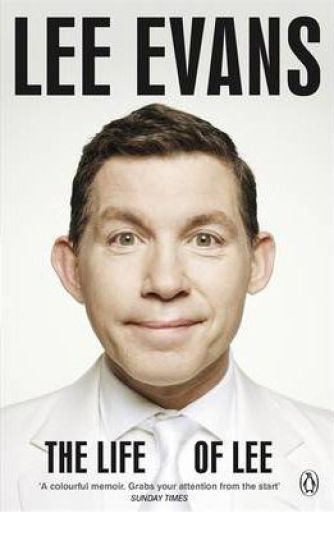
The Life of Lee

The Life of Lee

Lee Evans

Penguin Books Ltd
2012
pokkari
Lee Evans is one of the best-loved comedians in the country; a Hollywood star able to sell out arenas in the blink of eye. But he was not always such a roaring success. The Life of Lee is an utterly hilarious and very moving autobiography charting his ups and downs on the way to the top. Lee takes us on a darkly humorous journey through his childhood spent running wild on a Bristol housing estate, his unconventional school days and through a grim teenage period of numerous dead-end jobs. The book also reveals how as a boy Lee got his first taste of showbiz, accompanying his entertainer father around the rowdy, unforgiving working-men's club and theatre circuit. Desperately struggling to be accepted, this quiet young loner always saw himself as an outsider. But he finally met the love of his life and accidentally discovered the one place where he felt at home: the stage.
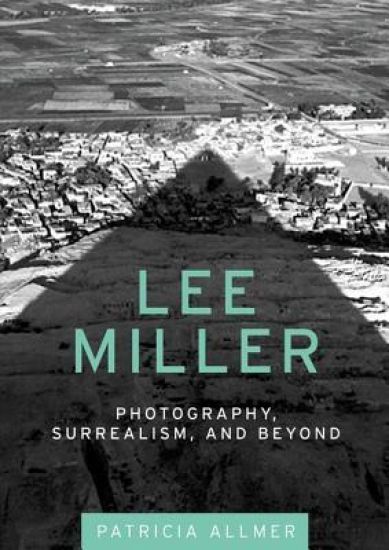
Lee Miller

Lee Miller

Patricia Allmer

Manchester University Press
2016
sidottu
Lee Miller: Photography, surrealism, and beyond offers a major new critical discussion of the work of one of the most significant twentieth-century photographers. Applying art-theoretical analyses and insights afforded by previously unseen material in archives and collections, Patricia Allmer undertakes revisionary readings of many of Miller’s works, including Portrait of Space, Severed Breast from Radical Mastectomy and the famous series of war photographs produced for Vogue. At the same time she sheds new light on Miller’s relations with surrealist groups and American avant-gardes, on her experiences in Paris, Egypt and World War II Europe and on her critically neglected post-war activities. Above all, Lee Miller: Photography, surrealism, and beyond focuses critical attention on the works themselves. As a result it will be of great interest to students and scholars of twentieth-century photography, modernism and surrealism.
Lee Miller

Lee Miller

Carolyn Burke

Bloomsbury Publishing PLC
2006
nidottu
_______________________ THE FIRST FULL-LENGTH BIOGRAPHY OF LEGENDARY PHOTOGRAPHER LEE MILLER _______________________ ‘Lee Miller was an astounding woman, brought memorably to life in this astounding book' - Daily Telegraph ‘Does its perplexingly complicated subject more than justice, adding welcome depths and nuances to the familiar legend' - Sunday Times 'A serious and gripping biography from Carolyn Burke' - Boyd Tonkin, Independent _______________________ Lee Miller was one of the most extraordinary photographers of the twentieth century, famous for her portraits and devastating photographs of World War Two, as well as for her legendary beauty. An art student and a Vogue model, she was a close friend of artists such as Picasso, Cocteau, Max Ernst and Paul Eluard, and became a muse of Man Ray and the Parisian surrealists. One of the few female photographers to enter Hitler's Germany, she was the first to access his Munich home and among the first to document the liberation of the concentration camps. Carolyn Burke captures Lee Miller in all her complexity, unveiling the glittering art world of the thirties and forties of which she was a central figure. Meticulously researched, beautifully written, this is an enthralling account of one of the most fascinating women of her era.
Lee Van Cleef

Lee Van Cleef

Mike Malloy

McFarland Co Inc
2005
pokkari
Cult film star Lee Van Cleef began his movie career in Hollywood, appearing as evil-eyed villains in such 1950s and '60s Westerns as High Noon, Gunfight at the O.K. Corral and How the West was Won. But Van Cleef didn't achieve full-blown fame until he began starring in Spaghetti Westerns overseas. He played opposite Clint Eastwood in The Good, the Bad and the Ugly and For a Few Dollars More before becoming a tough-guy star in his own right. By the 1980s, Van Cleef was aging and in weakened health, but he still managed to give thrilling performances in such films as Escape from New York and in a weekly martial-arts TV series, The Master. Film-by-film and show-by-show, this work fully details Van Cleef's career. Each movie entry includes cast and credits, studio, running times, year of release, a plot synopsis and a brief overview of Van Cleef's role. The background of the ABC series The Master is then given, followed by an episode guide that provides airdate, cast and credits, a synopsis and a comment on the episode. Comprehensive information on Van Cleef's other appearances in television concludes the work.
Lee Marvin

Lee Marvin

Robert J. Lentz

McFarland Co Inc
2006
pokkari
Lee Marvin did not receive his first starring film role until he was 40, but in three short years--following the successes of Cat Ballou (for which he won the Academy Award as Best Actor), The Professionals and especially The Dirty Dozen--he was the most popular film actor in America. Marvin was a fascinating man, a loving husband and father, and one of the most natural, effective actors of his time. This is a comprehensive reference of the Oscar-winning actor's work. It includes biographical information on Marvin, an analysis of each of his 64 movies, chapters on his two television shows (M Squad and Lawbreaker), a listing of his television appearances, and a complete filmography (which includes video availability). The work is supplemented with dozens of photographs and film stills.
Lee's Bold Plan for Point Lookout

Lee's Bold Plan for Point Lookout

Jack E. Schairer

McFarland Co Inc
2008
pokkari
In July 1864, while hemmed in by Grant at Richmond, General Robert E. Lee conceived a bold plan designed not only to relieve Lynchburg and protect the Confederate supply line but also to ultimately make a bold move on Washington itself. A major facet of this plan, with the addition of General Jubal Early's forces, became the rescue of the almost 15,000 Confederate prisoners at Point Lookout, a large Union prison camp at the confluence of the Potomac River and Chesapeake Bay. With international recognition hanging in the balance for the Confederacy, the failure of Lee's plan saved the Union and ultimately changed the course of the war. This work focuses on the many factors that contributed to this eventual failure, including Early's somewhat inexplicable hesitancy, a significant loss of time for Confederate troops en route, and aggressive defensive action by Union General Lew Wallace. It also discusses various circumstances such as Washington's stripped defenses, the potential release of imprisoned Southern troops and a breakdown of Union military intelligence that made Lee's gamble a brilliant, well-founded strategy.
Learn to Compose and Notate Music - Beginning Level: By Lee Evans and Martha Baker

Learn to Compose and Notate Music - Beginning Level: By Lee Evans and Martha Baker

Lee Evans; Martha Baker

Hal Leonard Publishing Corporation
1986
nidottu
(Evans Piano Education). The authors strongly believe that to achieve comprehensive musicianship more effectively and rapidly, all piano students should know how to notate music...and should therefore be given writing assignments at every lesson. A creative approach to the learning of writing skills will involve pupils in the activity of composing. This volume introduces fundamental compositional techniques - repetition, sequence, retrograde, and inversion - to the early level student.
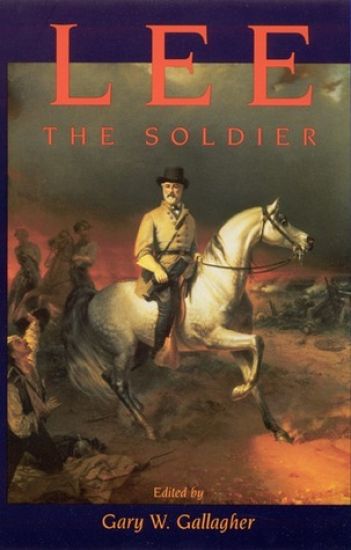
Lee the Soldier

Lee the Soldier

G Gallagher

University of Nebraska Press
1996
sidottu
'A first rate reader on Lee's military career ...Stimulating' - "Journal of Military History". 'A collection that is true to its title. "Lee the Soldier" tells the story of the man during the four years of bloody war that raised him to such prominence...[Gallagher] has done an excellent job assembling and editing these 26 essays' - "America's Civil War". 'A usefully diverse volume on Lee ...Gallagher is to be congratulated on a varied and important volume that is a major advance in Civil War military studies' - "Times Literary Supplement". 'Carefully crafted ...There is more than enough ammunition here for several generations of historians to take plenty of potshots at one another' - "Civil War History". '"Lee the Soldier" is ...designed specifically to be useful, to guide the reader through the development of the Lee legend, from the heroic imagery of the Lost Cause to the more critical assessments of Lee...This collection represents a substantial achievement, and is a valuable addition and guide to the literature on Lee' - "American Studies". 'The essays in Gallagher's volume are well chosen, balancing excerpts from published works with original essays written by a number of leading Civil War historians. The six new essays alone are worth the price of the book' - "Blue & Gray". Gary W. Gallagher is a professor of history at the University of Virginia. His many books include "The Confederate War" and "Lee and His Generals in War and Memory".
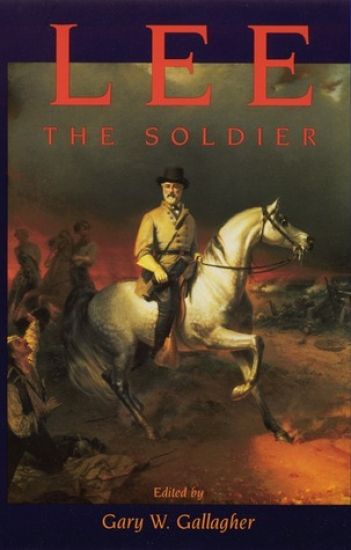
Lee the Soldier

Lee the Soldier

University of Nebraska Press
1999
pokkari
'A first rate reader on Lee's military career ...Stimulating' - "Journal of Military History". 'A collection that is true to its title. "Lee the Soldier" tells the story of the man during the four years of bloody war that raised him to such prominence...[Gallagher] has done an excellent job assembling and editing these 26 essays' - "America's Civil War". 'A usefully diverse volume on Lee ...Gallagher is to be congratulated on a varied and important volume that is a major advance in Civil War military studies' - "Times Literary Supplement". 'Carefully crafted ...There is more than enough ammunition here for several generations of historians to take plenty of potshots at one another' - "Civil War History".'"Lee the Soldier" is ...designed specifically to be useful, to guide the reader through the development of the Lee legend, from the heroic imagery of the Lost Cause to the more critical assessments of Lee...This collection represents a substantial achievement, and is a valuable addition and guide to the literature on Lee' - "American Studies".'The essays in Gallagher's volume are well chosen, balancing excerpts from published works with original essays written by a number of leading Civil War historians. The six new essays alone are worth the price of the book' - Blue & Gray. Gary W. Gallagher is a professor of history at the University of Virginia. His many books include "The Confederate War" and "Lee and His Generals in War and Memory".
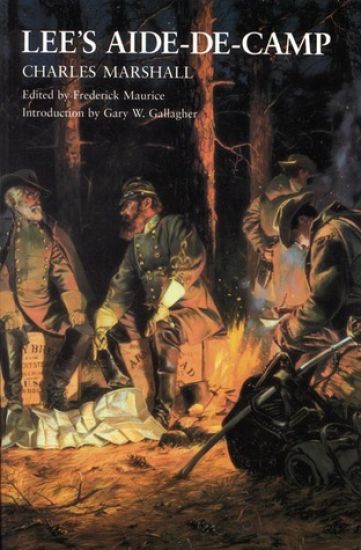
Lee's Aide–de–Camp

Lee's Aide–de–Camp

C Marshall

University of Nebraska Press
2000
nidottu
Charles Marshall was appointed aide-de-camp to Robert E. Lee on 21 March 1862, and from then until the surrender, he stood at the general's side. A military secretary, he compiled a remarkable, intimate account of the day-to-day wartime experience of the Confederacy's most celebrated - and enigmatic - military figure. Marshall's papers are of three sorts: those intended for a projected life of Lee, those intended for an account of the campaign at Gettysburg, and notes on events of the war. Collected here, these papers provide a unique firsthand look at Lee's generalship - from the most complete account ever given of the fateful orders issued to Jeb Stuart at Gettysburg, to the only testimony from a Southern witness of the scene in McLean's house at Appomattox. Marshall's commentary addresses some of the war's more intriguing questions: Whose idea was it to fight the second Manassas? What caused Jackson's delays in the Battles of the Seven Days? Who devised the flank march around Hooker at Chancellorsville? This book's insights into Robert E. Lee and his military strategy and its close-up report on the Confederacy's war qualify it as an indispensable part of America's historical record. Frederick Maurice was a British army officer and author who had a particular interest in the American Civil War. Gary W. Gallagher is John L. Nau III Professor in the History of the American Civil War at the University of Virginia and the author or editor of numerous books, including "Lee the Soldier", also available in a Bison Books edition.
Lee's Cavalrymen

Lee's Cavalrymen

Edward G. Longacre

University of Oklahoma Press
2012
nidottu
Since the first histories of the Civil War appeared after Appomattox, the cavalry has received intermittent, uneven, and even romanticized coverage. Historian Edward G. Longacre has corrected this oversight. Lee's Cavalrymen, not only details the organizational and operational history of the mounted arm of the Army of Northern Virginia but also examines the personal experiences of officers and men.Longacre chronicles the salient characteristics of the regiments, brigades, and divisions, and explores the evolution of cavalry leadership, with emphasis on the personalities, interpersonal relationships, and operational styles of J. E. B. Stuart, WadeHampton, Fitzhugh Lee, and other influential commanders. He has consulted dozens of collections of letters, diaries, and memoirs by cavalrymen of all ranks, and his careful study of North Carolina, Virginia, and Georgia newspapers unearthed rare cavalry-specific dispatches. Longacre also makes extensive use of an unpublished memoir of Gen. Wade Hampton, Stuart's second-in-command.A provocative analysis of the mounted army's organization, leadership, and tactics, Lee's Cavalrymen is a study that no Civil War enthusiast will want to miss.
Lee's Dispatches

Lee's Dispatches

LOUISIANA STATE UNIVERSITY PRESS
1994
nidottu
An important primary source for eighty years, Lee's Dispatches is now once again available to Civil War scholars, students, and enthusiasts. When first published in 1914, these letters, written between June 2, 1862, and April 1, 1865, put Lee's strategy in clearer perspective and shed new light on certain of his moves that had been in dispute. As Douglas Southall Freeman states in the Introduction, every written line of Lee's was a lesson in war. For example, the letters reveal that in 1862, when plans for the defense of Richmond were under review, the Confederate high command considered but rejected a bold proposal to strengthen Stonewall Jackson's army in the Shenandoah Valley, embark on a vigorous offensive campaign against the North, and, if necessary, abandon Richmond.Together these 215 dispatches offer a portrait of Lee that can otherwise be glimpsed only by sifting through hundreds of other letters scattered through the ponderous volumes of the Official Records. They fill many important details about the leadership of the South's greatest general, especially about his close and always cooperative relationships with President Davis.
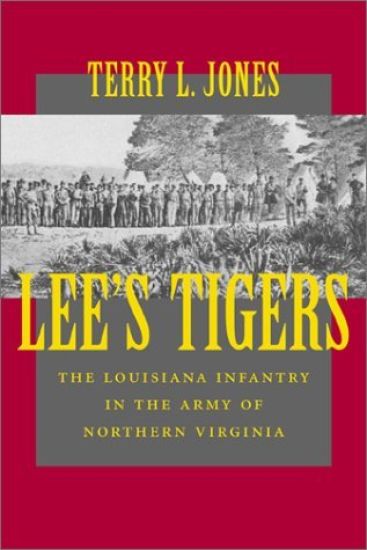
Lee's Tigers

Lee's Tigers

Terry L. Jones

Louisiana State University Press
2002
nidottu
Sometimes called the ""wharf rats from New Orleans"" and the ""lowest scrapings of the Mississippi,"" Lee's Tigers were the approximately twelve thousand Louisiana infantrymen who served in the Confederate Army of Northern Virginia from the time of the campaign at First Manassas to the final days of the war at Appomattox. Terry L. Jones offers a colorful, highly readable account of this notorious group of soldiers renowned not only for their drunkenness and disorderly behavior in camp but for their bravery in battle. It was this infantry that held back the initial Federal onslaught at First Manassas, made possible General Stonewall Jackson's famed Valley Campaign, contained the Union breakthrough at Spotsylvania's Bloody Angle, and led Lee's last offensive actions at Fort Stedman and Appomattox. Despite all their vices, Lee's Tigers emerged from the Civil War with one of the most respected military records of any group of southern soldiers. According to Jones, the unsavory reputation of the Tigers was well earned, for Louisiana probably had a higher percentage of criminals, drunkards, and deserters in its commands than any other Confederate state. The author spices his narrative with well-chosen anecdotes-among them an account of one of the stormiest train rides in military history. While on their way to Virginia, the enlisted men of Coppens' Battalion uncoupled their officers' car from the rest of the train and proceeded to partake of their favorite beverages. Upon arriving in Montgomery, the battalion embarked upon a drunken spree of harassment, vandalism, and robbery. Meanwhile, having commandeered another locomotive, the officers arrived and sprang from their train with drawn revolvers to put a stop to the disorder. ""The charge of the Light Brigade,"" one witness recalled, ""was surpassed by these irate Creoles.""Lee's Tigers is the first study to utilize letters, diaries, and muster rolls to provide a detailed account of the origins, enrollments, casualties, and desertion rates of these soldiers. Jones supplies the first major work to focus solely on Louisiana's infantry in Lee's army throughout the course of the war. Civil War buffs and scholars alike will find Lee's Tigers a valuable addition to their libraries.
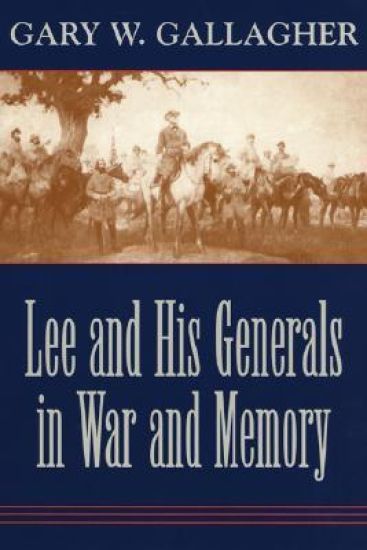
Lee and His Generals in War and Memory

Lee and His Generals in War and Memory

Gary W. Gallagher

Louisiana State University Press
2004
nidottu
In this collection, Civil War historian Gary W. Gallagher examines Robert E. Lee, his principal subordinates, the treatment they have received in the literature on Confederate military history, and the continuing influence of Lost Cause arguments in the late-twentieth-century United States. Historical images of Lee and his lieutenants were shaped to a remarkable degree by the reminiscences and other writings of ex-Confederates who formulated what became known as the Lost Cause interpretation of the conflict. Lost Cause advocates usually portrayed Lee as a perfect Christian warrior and Stonewall Jackson as his peerless ""right arm"" and often explained Lee's failings as the result of inept performances by other generals. Many historians throughout the twentieth century have approached Lee and other Confederate military figures within an analytical framework heavily influenced by the Lost Cause school.The twelve pieces in Lee and His Generals in War and Memory explore the effect of Lost Cause arguments on popular perceptions of Lee and his lieutenants. Part I offers four essays on Lee, followed in Part II by five essays that scrutinize several of Lee's most famous subordinates, including Stonewall Jackson, John Bankhead Magruder, James Longstreet, A.P. Hill, Richard S. Ewell, and Jubal Early. Taken together, these pieces not only consider how Lost Cause writings enhanced or diminished Confederate military reputations but also illuminate the various ways post--Civil War writers have interpreted the actions and impacts of these commanders.Part III contains two articles that shift the focus to the writings of Jubal Early and LaSalle Corbell Pickett, both of whom succeeded in advancing the notion of gallant Lost Cause warriors. The final two essays, which contemplate the current debate over the Civil War's meaning for modern Americans, focus on Ken Burns's documentary The Civil War and on the issue of battlefield preservation. Gallagher adeptly highlights the chasm that often separates academic and popular perceptions of the Civil War and discusses some of the ways in which the Lost Cause continues to resonate.Lee and His Generals in War and Memory will certainly attract those interested in Lee and his campaigns, the Army of Northern Virginia, the establishment of popular images of the Confederate military, and the manner in which historical memory is created and perpetuated.