Kirjojen hintavertailu. Mukana 11 717 486 kirjaa ja 12 kauppaa.

Kirjahaku

Etsi kirjoja tekijän nimen, kirjan nimen tai ISBN:n perusteella.

1000 tulosta hakusanalla Leo Herrmann

Leo Strauss on Political Philosophy

Leo Strauss on Political Philosophy

Leo Strauss

University of Chicago Press
2018
sidottu
Leo Strauss is known primarily for reviving classical political philosophy through careful analyses of works by ancient thinkers. As with his published writings, Strauss’s seminars devoted to specific philosophers were notoriously dense, accessible only to graduate students and scholars with a good command of the subject. In 1965, however, Strauss offered an introductory course on political philosophy at the University of Chicago. Using a conversational style, he sought to make political philosophy, as well as his own ideas and methods, understandable to those with little background on the subject. Leo Strauss on Political Philosophy brings together the lectures that comprise Strauss’s “Introduction to Political Philosophy.” Strauss begins by emphasizing the importance of political philosophy in determining the common good of society and critically examining the two most powerful contemporary challenges to the possibility of using political theory to learn about and develop the best political order: positivism and historicism. In seeking the common good, classical political philosophers like Plato and Aristotle did not distinguish between political philosophy and political science. Today, however, political philosophy must contend with the contemporary belief that it is impossible to know what the good society really is. Strauss emphasizes the need to study the history of political philosophy to see whether the changes in the understanding of nature and conceptions of justice that gradually led people to believe that it is not possible to determine what the best political society is are either necessary or valid. In doing so, he ranges across the entire history of political philosophy, providing a valuable, thematically coherent foundation, including explications of many canonical thinkers, such as Auguste Comte and Immanuel Kant, about whom Strauss did not write extensively in his published writings.
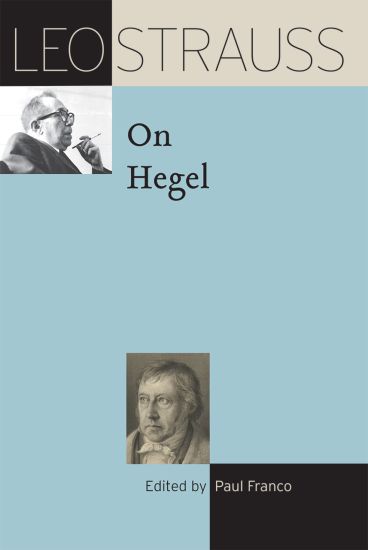
Leo Strauss on Hegel

Leo Strauss on Hegel

Leo Strauss

University of Chicago Press
2019
sidottu
In the winter of 1965, Leo Strauss taught a seminar on Hegel at the University of Chicago. While Strauss did not consider himself a Hegelian nor write about Hegel at any length, his writings contain intriguing references to the philosopher, particularly in connection with his studies of Hobbes, in his debate in On Tyranny with Alexandre Koje ve; and in his account of the "three waves" of modern political philosophy. Leo Strauss on Hegel reconstructs Strauss's seminar on Hegel, supplemented by passages from an earlier version of the seminar from which only fragments of a transcript remain. Strauss focused in his seminar on the lectures collected in The Philosophy of History, which he considered more accessible than Hegel's written works. In his own lectures on Hegel, Strauss continues his project of demonstrating how modern philosophers related to ancient thought and explores the development and weaknesses of modern political theory. Strauss is especially concerned with the relationship in Hegel between empirical history and his philosophy of history, and he argues for the primacy of religion in Hegel's understanding of history and society. In addition to a relatively complete transcript, Leo Strauss on Hegel also includes annotations, which bring context and clarity to the text.
Leo Strauss on Maimonides

Leo Strauss on Maimonides

Leo Strauss

University of Chicago Press
2013
sidottu
Leo Strauss is widely recognized as one of the foremost interpreters of Maimonides. His studies of the medieval Jewish philosopher led to his rediscovery of esotericism and deepened his sense that the tension between reason and revelation was central to modern political thought. His writings throughout the twentieth century were chiefly responsible for restoring Maimonides as a philosophical thinker of the first rank. Yet, to appreciate the extent of Strauss' contribution to the scholarship on Maimonides, one has traditionally had to seek out essays he published separately spanning almost fifty years. With "Leo Strauss on Maimonides", Kenneth Hart Green presents for the first time a comprehensive, annotated collection of Strauss' writings on Maimonides, comprising sixteen essays, three of which appear in English for the first time. Green has also provided careful translations of materials originally quoted in Hebrew, Arabic, Latin, German, and French; written an informative introduction highlighting the contributions found in each essay; and brought references to out-of-print editions fully up to date. The result will become the standard edition of Strauss' writings on Maimonides.
Leo Strauss On Plato's Symposium

Leo Strauss On Plato's Symposium

Leo Strauss

University of Chicago Press
2001
sidottu
In this volume Leo Strauss presents a coherent and complete interpretation of Plato's "Symposium", proceeding by meticulous reading, from beginning to end. Strauss, operating on the idea that commentary is an useful method of expounding the truth, sheds light on the meaning of the dialogue and its place in the Platonic corpus, and also on a host of other topics, including the nature of eros and its place in the overall economy of human life, the quarrel between poetry and philosophy, and the character of Socrates and the question of his trial.
Leo Strauss On Plato's Symposium

Leo Strauss On Plato's Symposium

Leo Strauss

University of Chicago Press
2003
nidottu
The first major piece of unpublished work by Leo Strauss to appear in more than 30 years, this volume offers the public the unprecedented experience of encountering this renowned scholar as his students did. Given as a course in autumn 1959 under the title "Plato's Political Philosophy" these provocative lectures - until now, never published, but instead passed down from one generation of students to the next - show Strauss at his subtle and insightful best.
Leo Strauss on Hegel

Leo Strauss on Hegel

Leo Strauss

University of Chicago Press
2021
nidottu
In the winter of 1965, Leo Strauss taught a seminar on Hegel at the University of Chicago. While Strauss neither considered himself a Hegelian nor wrote about Hegel at any length, his writings contain intriguing references to the philosopher, particularly in connection with his studies of Hobbes, in his debate in On Tyranny with Alexandre Koje`ve; and in his account of the “three waves” of modern political philosophy. Leo Strauss on Hegel reconstructs Strauss’s seminar on Hegel, supplemented by passages from an earlier version of the seminar from which only fragments of a transcript remain. Strauss focused his seminar on the lectures collected in The Philosophy of History, which he considered more accessible than Hegel’s written works. In his own lectures on Hegel, Strauss continues his project of demonstrating how modern philosophers related to ancient thought and explores the development and weaknesses of modern political theory. Strauss is especially concerned with the relationship in Hegel between empirical history and his philosophy of history, and he argues for the primacy of religion in Hegel’s understanding of history and society. In addition to a relatively complete transcript, Leo Strauss on Hegel also includes annotations, which bring context and clarity to the text.
Leo Strauss on Nietzsche's "Thus Spoke Zarathustra"

Leo Strauss on Nietzsche's "Thus Spoke Zarathustra"

Leo Strauss

University of Chicago Press
2021
nidottu
Although Leo Strauss published little on Nietzsche, his lectures and correspondence demonstrate a deep critical engagement with Nietzsche’s thought. One of the richest contributions is a seminar on Nietzsche’s Thus Spoke Zarathustra, taught in 1959 during Strauss’s tenure at the University of Chicago. In the lectures, Strauss draws important parallels between Nietzsche’s most important project and his own ongoing efforts to restore classical political philosophy. With Leo Strauss on Nietzsche’s “Thus Spoke Zarathustra,” eminent Strauss scholar Richard L. Velkley presents Strauss’s lectures on Zarathustra with superb annotations that bring context and clarity to the critical role played by Nietzsche in shaping Strauss’s thought. In addition to the broad relationship between Nietzsche and political philosophy, Strauss adeptly guides readers through Heidegger’s confrontations with Nietzsche, laying out Heidegger’s critique of Nietzsche’s “will to power” while also showing how Heidegger can be read as a foil for his own reading of Nietzsche. The lectures also shed light on the relationship between Heidegger and Strauss, as both philosophers saw Nietzsche as a central figure for understanding the crisis of philosophy and Western civilization. Strauss’s reading of Nietzsche is one of the important—yet little appreciated—philosophical inquiries of the past century, both an original interpretation of Nietzsche’s thought and a deep engagement with the core problems that modernity posed for political philosophy. It will be welcomed by anyone interested in the work of either philosopher.
Leo Strauss on Political Philosophy

Leo Strauss on Political Philosophy

Leo Strauss

University of Chicago Press
2021
nidottu
Leo Strauss is known primarily for reviving classical political philosophy through careful analyses of works by ancient thinkers. As with his published writings, Strauss’s seminars devoted to specific philosophers were notoriously dense, accessible only to graduate students and scholars with a good command of the subject. In 1965, however, Strauss offered an introductory course on political philosophy at the University of Chicago. Using a conversational style, he sought to make political philosophy, as well as his own ideas and methods, understandable to those with little background on the subject. Leo Strauss on Political Philosophy brings together the lectures that comprise Strauss’s “Introduction to Political Philosophy.” Strauss begins by emphasizing the importance of political philosophy in determining the common good of society and critically examining the two most powerful contemporary challenges to the possibility of using political theory to learn about and develop the best political order: positivism and historicism. In seeking the common good, classical political philosophers like Plato and Aristotle did not distinguish between political philosophy and political science. Today, however, political philosophy must contend with the contemporary belief that it is impossible to know what the good society really is. Strauss emphasizes the need to study the history of political philosophy to see whether the changes in the understanding of nature and conceptions of justice that gradually led people to believe that it is not possible to determine what the best political society is are either necessary or valid. In doing so, he ranges across the entire history of political philosophy, providing a valuable, thematically coherent foundation, including explications of many canonical thinkers, such as Auguste Comte and Immanuel Kant, about whom Strauss did not write extensively in his published writings.
Leo Strauss on Plato’s "Protagoras"

Leo Strauss on Plato’s "Protagoras"

Leo Strauss

THE UNIVERSITY OF CHICAGO PRESS
2022
sidottu
A transcript of Leo Strauss’s key seminars on Plato’s Protagoras. This book offers a transcript of Strauss’s seminar on Plato’s Protagoras taught at the University of Chicago in the spring quarter of 1965, edited and introduced by renowned scholar Robert C. Bartlett. These lectures have several important features. Unlike his published writings, they are less dense and more conversational. Additionally, while Strauss regarded himself as a Platonist and published some work on Plato, he published little on individual dialogues. In these lectures Strauss treats many of the great Platonic and Straussian themes: the difference between the Socratic political science or art and the Sophistic political science or art of Protagoras; the character and teachability of virtue, its relation to knowledge, and the relations among the virtues, courage, justice, moderation, and wisdom; the good and the pleasant; frankness and concealment; the role of myth; and the relation between freedom of thought and freedom of speech. In these lectures, Strauss examines Protagoras and the sophists, providing a detailed discussion of Protagoras as it relates to Plato’s other dialogues and the work of modern thinkers. This book should be of special interest to students both of Plato and of Strauss.
Leo Strauss on Moses Mendelssohn

Leo Strauss on Moses Mendelssohn

Leo Strauss

University of Chicago Press
2012
sidottu
Moses Mendelssohn (1729-86) was the leading Jewish thinker of the German Enlightenment and the founder of modern Jewish philosophy. His writings, especially his attempt during the Pantheism Controversy to defend the philosophical legacies of Spinoza and Leibniz against F. H. Jacobi's philosophy of faith, captured the attention of a young Leo Strauss and played a critical role in the development of his thought on one of the fundamental themes of his life's work: the conflicting demands of reason and revelation. "Leo Strauss on Moses Mendelssohn" is a superbly annotated translation of ten introductions written by Strauss to a multivolume critical edition of Mendelssohn's work. Commissioned in Weimar Germany in the 1920s, the project was suppressed and nearly destroyed during Nazi rule and was not revived until the 1960s. In addition to Strauss' introductions, Martin D. Yaffe has translated various editorial annotations Strauss makes on key passages in Mendelssohn's texts. Yaffe has also contributed an extensive interpretive essay that both analyzes the introductions on their own terms and discusses what Strauss writes elsewhere about the broader themes broached in his Mendelssohnian studies. "Strauss' critique of Mendelssohn" represents one of the largest bodies of work by the young Strauss on a single thinker to be made available in English. It illuminates not only a formerly obscure phase in the emergence of his thought but also a critical moment in the history of the German Enlightenment.
Leo Strauss's Defense of the Philosophic Life
Leo Strauss' "What Is Political Philosophy?" addresses almost every major theme in his life's work and is often viewed as a defense of his overall philosophic approach. Yet precisely because the book is so foundational, if we want to understand Strauss' notoriously careful and complex thinking in these essays, we must also consider them just as Strauss treated philosophers of the past: on their own terms. Each of the contributors in this collection focuses on a single chapter from "What Is Political Philosophy?" in an effort to shed light on both Strauss' thoughts about the history of philosophy and the major issues about which he wrote. Included are treatments of Strauss' esoteric method of reading, his critique of behavioral political science, and his views on classical political philosophy. Key thinkers whose work Strauss responded to are also analyzed in depth: Plato, al-Farabi, Maimonides, Hobbes, and Locke, as well as twentieth-century figures such as Eric Voegelin, Alexandre Kojeve, and Kurt Riezler. Written by scholars well-known for their insight and expertise on Strauss' thought, the essays in this volume apply to Strauss the same meticulous approach he developed in reading others. The first book-length treatment of a single book by Strauss, Leo Strauss' "Defense of the Philosophic Life" will serve as an invaluable companion to those seeking a helpful introduction or delving deeper into the major themes and ideas of this controversial thinker.
Leo Strauss's Defense of the Philosophic Life
Leo Strauss' "What Is Political Philosophy?" addresses almost every major theme in his life's work and is often viewed as a defense of his overall philosophic approach. Yet precisely because the book is so foundational, if we want to understand Strauss' notoriously careful and complex thinking in these essays, we must also consider them just as Strauss treated philosophers of the past: on their own terms. Each of the contributors in this collection focuses on a single chapter from "What Is Political Philosophy?" in an effort to shed light on both Strauss' thoughts about the history of philosophy and the major issues about which he wrote. Included are treatments of Strauss' esoteric method of reading, his critique of behavioral political science, and his views on classical political philosophy. Key thinkers whose work Strauss responded to are also analyzed in depth: Plato, al-Farabi, Maimonides, Hobbes, and Locke, as well as twentieth-century figures such as Eric Voegelin, Alexandre Kojeve, and Kurt Riezler. Written by scholars well-known for their insight and expertise on Strauss' thought, the essays in this volume apply to Strauss the same meticulous approach he developed in reading others. The first book-length treatment of a single book by Strauss, Leo Strauss' "Defense of the Philosophic Life" will serve as an invaluable companion to those seeking a helpful introduction or delving deeper into the major themes and ideas of this controversial thinker.
Leo the Lion

Leo the Lion

Sharon Neale

Tellwell Talent
2021
pokkari
Leo the Lion needs to remember the important lesson Mummy Lion taught him when he finds Grandma Lion on the floor and needs urgent medical help. Leo must go through the process of calling an ambulance to get the help she needs.
Leo Sowerby

Leo Sowerby

Joseph Sargent

UNIVERSITY OF ILLINOIS PRESS
2024
sidottu
From the 1920s to the 1940s, Leo Sowerby created popular secular works while his sacred compositions led admirers to call him the “dean of American church musicians.” Yet in time, Sowerby’s Pulitzer Prize-winning The Canticle of the Sun and the rest of his corpus lost favor with the A-list symphonies and prominent musicians who had once made him a fixture in their repertoires. Joseph Sargent’s biography offers the first focused study of Sowerby’s life and work against the backdrop of the composer’s place in American music. As Sargent shows, Sowerby’s present-day marginalization as a composer relates less to the quality of his work than the fact that today’s historiographical practices and canon-building activities minimize modern church music. Sargent’s re-evaluation draws on a wide range of perspectives and composer’s music and writings to enrich detailed analyses of musical works and a career-spanning consideration of Sowerby’s musical language and aesthetic priorities.
Leo Ornstein

Leo Ornstein

Michael Broyles; Denise Von Glahn

Indiana University Press
2007
sidottu
Leo Ornstein: Modernist Dilemmas, Personal Choices traces the meteoric rise and heretofore inexplicable disappearance of the Russian-American, futurist-anarchist, pianist-composer from his arrival in the United States in 1906 through a career that lasted nearly a century. Outliving his admirers and critics by decades Leo Ornstein passed away in 2002 at the age of 108. Frequently compared to Igor Stravinsky and Arnold Schoenberg, for a time Ornstein enjoyed a kind a celebrity granted few living musicians. And then he turned his back on it all. This first, full-length biographical study draws upon interviews, journals, and letters from a wide circle of Ornstein's friends and acquaintances to track the Ornstein family as it escaped the horrors of the Russian pogroms, and it situates the Russian-Jewish-American musician as he carved out an identity amidst World War I, the flu pandemic, and the Red Scare. While telling Leo Ornstein's story, the book also illuminates the stories of thousands of immigrants with similar harrowing experiences. It also explores the immeasurable impact of his unexpected marriage in 1918 to Pauline Mallet-Prevost, a Park Avenue debutante. Leo Ornstein: Modernist Dilemmas, Personal Choices finds Ornstein at the center of several networks that included artists John Marin, William Zorach, Leon Kroll, writers and activists Paul Rosenfeld, Waldo Frank, Edmund Wilson, and Clair Reis, the Stieglitz Circle, and a group of English composers known as the Frankfurt Five. Ornstein's story challenges directly the traditional chronology and narrative regarding musical modernism in America and its close relation to the other arts.
Leo Strauss on Plato’s Euthyphro

Leo Strauss on Plato’s Euthyphro

Pennsylvania State University Press
2023
sidottu
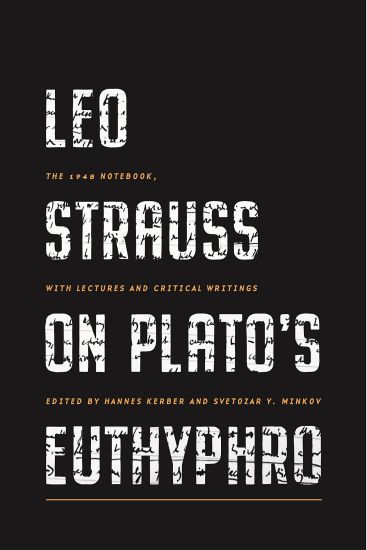
Leo Strauss famously asserted that the fundamental, defining debate within Western civilization is that between Jerusalem and Athens, piety and philosophy, the Bible and Plato. And yet, surprisingly, Strauss never published any of his thoughts on Plato’s dialogue on piety, the Euthyphro.This volume presents, for the first time, Strauss’s 1948 notebook on the dialogue, written in preparation for a class at the New School for Social Research. Featuring close analysis and line-by-line commentary, the notebook opens a window onto a philosophic mind in action, as Strauss asks questions of the classic text, jots down observations and formulations, and analyzes very specific terms and arguments but also steps back, reviews the overall movement of the dialogue, and reconsiders previous conclusions. Beyond the notebook, the volume also brings together all the known materials that lay out Strauss’s thoughts on the Euthyphro. This includes newly transcribed and edited public lectures, illuminating appendixes, critical essays by volume editors Hannes Kerber and Svetozar Y. Minkov and scholar Wayne Ambler, an account of Strauss’s public lecture, and a new English translation of Plato’s Euthyphro by Seth Benardete, a classicist and one of Strauss’s students.Engaging and inspiring, Leo Strauss on Plato’s “Euthyphro” is a vital resource for scholars and students of political theory, readers interested in the intersection of philosophy and religion, and a must-have for anyone who studies Strauss.
Leo Strauss on Plato’s Euthyphro

Leo Strauss on Plato’s Euthyphro

Pennsylvania State University Press
2024
pokkari
Leo Strauss famously asserted that the fundamental, defining debate within Western civilization is that between Jerusalem and Athens, piety and philosophy, the Bible and Plato. And yet, surprisingly, Strauss never published any of his thoughts on Plato’s dialogue on piety, the Euthyphro.This volume presents, for the first time, Strauss’s 1948 notebook on the dialogue, written in preparation for a class at the New School for Social Research. Featuring close analysis and line-by-line commentary, the notebook opens a window onto a philosophic mind in action, as Strauss asks questions of the classic text, jots down observations and formulations, and analyzes very specific terms and arguments but also steps back, reviews the overall movement of the dialogue, and reconsiders previous conclusions. Beyond the notebook, the volume also brings together all the known materials that lay out Strauss’s thoughts on the Euthyphro. This includes newly transcribed and edited public lectures, illuminating appendixes, critical essays by volume editors Hannes Kerber and Svetozar Y. Minkov and scholar Wayne Ambler, an account of Strauss’s public lecture, and a new English translation of Plato’s Euthyphro by Seth Benardete, a classicist and one of Strauss’s students.Engaging and inspiring, Leo Strauss on Plato’s “Euthyphro” is a vital resource for scholars and students of political theory, readers interested in the intersection of philosophy and religion, and a must-have for anyone who studies Strauss.
Leo Strauss and the Politics of American Empire

Leo Strauss and the Politics of American Empire

Anne Norton

Yale University Press
2005
pokkari
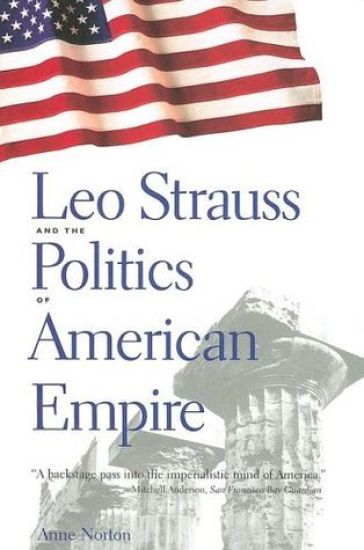
How an unlikely group of academics came to power in Washington and provided the philosophical justification for the war on Iraq The teachings of political theorist Leo Strauss (1899–1973) have recently received new attention, as political observers have become aware of the influence Strauss’s students have had in shaping conservative agendas of the Bush administration—including the war on Iraq. This provocative book examines Strauss’s ideas and the ways in which they have been appropriated, or misappropriated, by senior policymakers. Anne Norton, a political theorist trained by some of Strauss’s most famous students, is well equipped to write on Strauss and Straussians. She tells three interwoven narratives: the story of Leo Strauss, a Jewish German-born émigré, who carried European philosophy into a new world; the story of the philosophic lineage that came from Leo Strauss; and the story of how America has been made a moral battleground by the likes of Paul Wolfowitz, Leon Kass, Carnes Lord, and Irving Kristol—Straussian conservatives committed to an American imperialism they believe will usher in a new world order.
Leo Strauss

Leo Strauss

Daniel Tanguay

Yale University Press
2011
pokkari
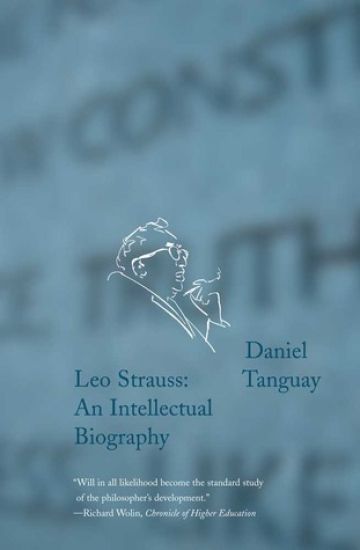
A major, groundbreaking biography that traces the intellectual development of one of the most important political thinkers of the twentieth century Since political theorist Leo Strauss’s death in 1973, American interpreters have heatedly debated his intellectual legacy. Daniel Tanguay recovers Strauss from the atmosphere of partisan debate that has dominated American journalistic, political, and academic discussions of his work. Tanguay offers in crystal-clear prose the first assessment of the whole of Strauss’s thought, a daunting task owing to the vastness and scope of Strauss’s writings. This comprehensive overview of Strauss’s thought is indispensable for anyone seeking to understand his philosophy and legacy.Tanguay gives special attention to Strauss’s little-known formative years, 1920-1938, during which the philosopher elaborated the theme of his research, what he termed the “theological-political problem.” Tanguay shows the connection of this theme to other major elements in Strauss’s thought, such as the Quarrel between the Ancients and Moderns, the return to classical natural right, the art of esoteric writing, and his critique of modernity. In so doing, the author approaches what is at the heart of Strauss’s work: God and politics. Rescuing Strauss from polemics and ill-defined generalizations about his ideas, Tanguay provides instead an important and timely analysis of a major philosophical thinker of the twentieth century.