Kirjahaku
Etsi kirjoja tekijän nimen, kirjan nimen tai ISBN:n perusteella.
1000 tulosta hakusanalla Lothar Beck
Originally published in English in 1986, these volumes are far more than the story of the life of a powerful statesman. The name Bismarck sums up the entire political, social, economic and intellectual development of central Europe in the second half of the 19th Century and the internal and external shape that Germany then assumed. This book analyses how much of this was Bismarck’s personal achievement or whether he was the man who put the nation on the disastrously wrong course that reached its fateful culmination in 1933? It examines whether Bismarck’s success was precisely because he implemented policies for which the time was ripe and did so in ways that were in harmony with the historical evolution of central Europe.

The State Of The Alliance 1986-1987
Lothar Ibrugger; Jules De Waart; Ludolf-Georg Von Wartenberg; John Cartwright
Routledge
2020
sidottu
Originally published in 1987. Leaders of NATO countries are continually faced with the need for highly accurate information on complex issues such as arms control, nuclear strategy, electronic warfare, ABM compliance, SDI, terrorism, economic cooperation, East-West relations, and diverging public opinion. To provide ongoing analysis of these issues, the North Atlantic Assembly conducts extensive research, fact-finding missions, and interviews with high-level government experts. Committees then analyze the data and meet annually to present the results. The studies in this volume, which were presented to the 1986 annual session of NATO legislators, focus on the state of the Alliance. This collection provides a comprehensive evaluation of political developments within the Alliance, probes fundamental controversies underlying Alliance security, and sheds light on the aggregate of concerns surrounding the direction of arms control negotiations and the state of NATO's nuclear strategy. The book includes an appendix containing the policy recommendations that the Assembly has adopted and forwarded to the secretary general of NATO and heads of Alliance governments.
The State Of The Alliance 1986-1987
Lothar Ibrugger; Jules De Waart; Ludolf-Georg Von Wartenberg; John Cartwright
TAYLOR FRANCIS LTD
2022
nidottu
Originally published in 1987. Leaders of NATO countries are continually faced with the need for highly accurate information on complex issues such as arms control, nuclear strategy, electronic warfare, ABM compliance, SDI, terrorism, economic cooperation, East-West relations, and diverging public opinion. To provide ongoing analysis of these issues, the North Atlantic Assembly conducts extensive research, fact-finding missions, and interviews with high-level government experts. Committees then analyze the data and meet annually to present the results. The studies in this volume, which were presented to the 1986 annual session of NATO legislators, focus on the state of the Alliance. This collection provides a comprehensive evaluation of political developments within the Alliance, probes fundamental controversies underlying Alliance security, and sheds light on the aggregate of concerns surrounding the direction of arms control negotiations and the state of NATO's nuclear strategy. The book includes an appendix containing the policy recommendations that the Assembly has adopted and forwarded to the secretary general of NATO and heads of Alliance governments.
Lothar Machtan makes a compelling case that Adolf Hitler was homosexual, and that one cannot begin to understand him, his entry into politics, and the early Nazi movement without a clear understanding of this aspect of his identity. Recent books on the Nazi movement have argued that the Third Reich was a fundamentally sordid regime. Machtan provides powerful new evidence in support of this view. This side of Hitler and his "Munich clique," as Goebbels put it, has never been so vividly evoked. As an intimate portrait of Hitler and as a surprising portrait of the homoerotic nature of the early Nazi movement, The Hidden Hitler is a major and certainly controversial contribution to the biographical literature.
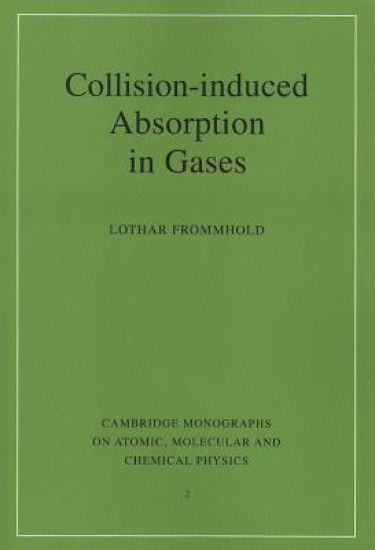
This book reviews the present knowledge of collision-induced absorption of infrared radiation in the dense, common gases. Following a brief introduction and review of essential background information, such as dipole radiation, molecular collisions and interactions, numerous experimental results for the absorption spectra of dense gases are presented. Other chapters review the causes and properties of dipole moments induced by molecular interactions, the theory of collision-induced absorption in monatomic gas mixtures and in molecular gases and mixtures. The final chapter discusses related phenomena and the important applications in astrophysics. Throughout the book, the emphasis is on the absorption by binary molecular complexes, but the onset of many-body effects, such as the ternary contributions and the intercollisional process, are also considered. The volume is meant to be a practical guide and sourcebook for the researcher interested in the spectroscopy of dense, neutral fluids. This edition includes a new appendix reviewing recent work.
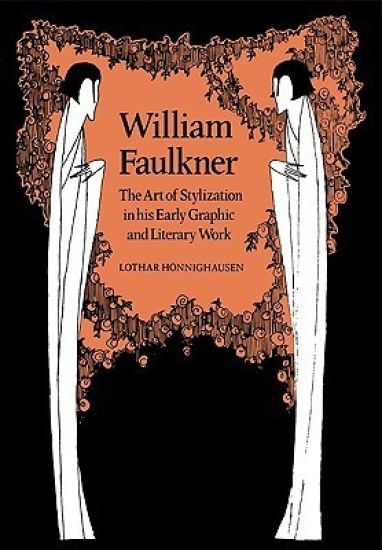
With a writer of Faulkner's scope and subtlety even the study of his beginnings is a challenging task. How did the young man who imitated Swinburne's verse and Beardsley's drawings develop into the author of The Sound and the Fury and Absalom, Absalom!? This book attempts one solution of the problem by focusing on the aspect of 'stylization' in Faulkner's earliest work and in his mature novels. The first comprehensive study of Faulkner's early graphic work, it sets his art nouveau illustrations and his affinities with the Arts and Crafts movement in their precise historical background, and goes on to offer new readings of his early poetry and his poetic play The Marionettes. By examining these ephemeral and apprentice works in detail, Professor Hönnighausen is able to show how the painstaking efforts of the young poet, calligrapher and illustrator foreshadow the verbal art of his great poetic novels.
The Symbolist Tradition in English Literature
Lothar Hönnighausen
Cambridge University Press
2011
pokkari
This major and acclaimed study of the symbolist tradition in England focuses on the years 1850 to 1900 and discusses the poetry of such as William Morris, O'Shaughnessy, the Rossettis, Swinburne, Wilde and Yeats, paintings by Holman Hunt, Millais, Rossetti, Burne-Jones and others, and critical works by Keble, Ruskin, Carlyle, Arnold, Pater and Arthur Symons. This volume considers the changes from romantic symbol through Victorian 'type' and 'emblem' to late romantic image. This study of both literature and the visual arts is comparative in nature, attempting to establish an English symbolist tradition as part of an international development linking the nineteenth and twentieth centuries. Originally published by Cambridge in 1988, Lother Hönnighausen's book includes illustrations and a survey of critical works, defining major research issues and offering suggestions for other work.
The Symbolist Tradition in English Literature
Lothar Hönnighausen
Cambridge University Press
1988
sidottu
This major and acclaimed study of the symbolist tradition in England focuses on the years 1850 to 1900 and discusses the poetry of such as William Morris, O'Shaughnessy, the Rossettis, Swinburne, Wilde and Yeats, paintings by Holman Hunt, Millais, Rossetti, Burne-Jones and others, and critical works by Keble, Ruskin, Carlyle, Arnold, Pater and Arthur Symons. This volume considers the changes from romantic symbol through Victorian 'type' and 'emblem' to late romantic image. This study of both literature and the visual arts is comparative in nature, attempting to establish an English symbolist tradition as part of an international development linking the nineteenth and twentieth centuries. Originally published by Cambridge in 1988, Lother Hönnighausen's book includes illustrations and a survey of critical works, defining major research issues and offering suggestions for other work.
An incomparable look at how Chinese artists have used mass production to assemble exquisite objects from standardized partsChinese workers in the third century BCE created seven thousand life-sized terracotta soldiers to guard the tomb of the First Emperor. In the eleventh century CE, Chinese builders constructed a pagoda from as many as thirty thousand separately carved wooden pieces. As these examples show, throughout history, Chinese artisans have produced works of art in astonishing quantities, and have done so without sacrificing quality, affordability, or speed of manufacture. In this book, Lothar Ledderose takes us on a remarkable tour of Chinese art and culture to explain how artists used complex systems of mass production to assemble extraordinary objects from standardized parts or modules. He reveals how these systems have deep roots in Chinese thought and reflect characteristically Chinese modes of social organization. Combining invaluable aesthetic and cultural insights with a rich variety of illustrations, Ten Thousand Things make a profound statement about Chinese art and society.
Fragile States
Lothar Brock; Hans-Henrik Holm; Georg Sorenson; Michael Stohl
Polity Press
2011
sidottu
Today a billion people, including about 340 million of the world's extreme poor, are estimated to live in 'fragile states'. This group of low-income countries are often trapped in cycles of conflict and poverty, which make them acutely vulnerable to a range of shocks and crises. This engaging book defines and clarifies what we mean by fragile states, examining their characteristics in relation to "weak" and "failed" states in the global system, and explaining their development from pre-colonial times to the present day. It explores the connections between fragile statehood and violent conflict, and analyses the limitations of outside intervention from international society. The complexities surrounding 'successes' such as Costa Rica and Botswana - countries which ought to be fragile, but which are not - are analysed alongside the more precarious cases of the Democratic Republic of the Congo, Afghanistan and Haiti. Absorbing and authoritative, Fragile States will be an invaluable resource for students and scholars of international relations, security studies and development.
Fragile States
Lothar Brock; Hans-Henrik Holm; Georg Sorenson; Michael Stohl
Polity Press
2011
nidottu
Today a billion people, including about 340 million of the world's extreme poor, are estimated to live in 'fragile states'. This group of low-income countries are often trapped in cycles of conflict and poverty, which make them acutely vulnerable to a range of shocks and crises. This engaging book defines and clarifies what we mean by fragile states, examining their characteristics in relation to "weak" and "failed" states in the global system, and explaining their development from pre-colonial times to the present day. It explores the connections between fragile statehood and violent conflict, and analyses the limitations of outside intervention from international society. The complexities surrounding 'successes' such as Costa Rica and Botswana - countries which ought to be fragile, but which are not - are analysed alongside the more precarious cases of the Democratic Republic of the Congo, Afghanistan and Haiti. Absorbing and authoritative, Fragile States will be an invaluable resource for students and scholars of international relations, security studies and development.
Paper is older than the printing press, and even in its unprinted state it was the great network medium behind the emergence of modern civilization. In the shape of bills, banknotes and accounting books it was indispensible to the economy. As forms and files it was essential to bureaucracy. As letters it became the setting for the invention of the modern soul, and as newsprint it became a stage for politics. In this brilliant new book Lothar Müller describes how paper made its way from China through the Arab world to Europe, where it permeated everyday life in a variety of formats from the thirteenth century onwards, and how the paper technology revolution of the nineteenth century paved the way for the creation of the modern daily press. His key witnesses are the works of Rabelais and Grimmelshausen, Balzac and Herman Melville, James Joyce and Paul Valéry. Müller writes not only about books, however: he also writes about pamphlets, playing cards, papercutting and legal pads. We think we understand the ?Gutenberg era?, but we can understand it better when we explore the world that underpinned it: the paper age. Today, with the proliferation of digital devices, paper may seem to be a residue of the past, but Müller shows that the humble technology of paper is in many ways the most fundamental medium of the modern world.
Algebraic Methods in Cryptography
Lothar (EDT) Gerritzen; Dorian (EDT) Goldfeld; Martin (EDT) Kreuzer
Amer Mathematical Society
2006
pokkari
1990 will see the 100th anniversary of the birth of Franz Werfel. The time has therefore come to reassess this writer whom Kafka called a 'miracle' and who to this day has a large and devoted following. The essays colleced in this volume were first given at an international symposium; they throw new light on various aspects of Werfel's poerty, drama and fiction which are put in the context of contemporary developments such as Freud's ideas, Experssionism and Austrian historical drama.
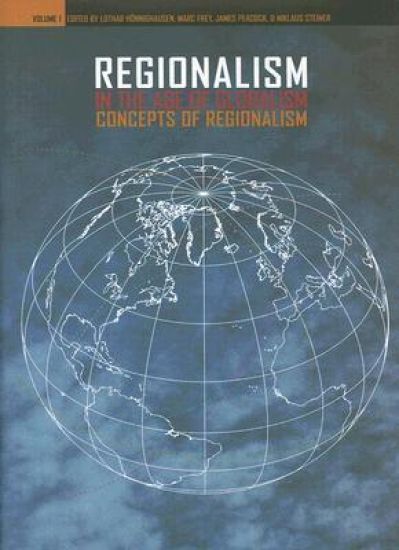
Regionalism in the Age of Globalism v. 1; Concepts of Regionalism
Lothar Honninghausen
Max Kade Institute for German-American Studies,U.S.
2005
sidottu
This two-volume set, Regionalism in an Age of Globalism, examines the concept of region and regionalism in today's rapidly shrinking world. Building on the insights of a diverse group of scholars, the first volume, Concepts of Regionalism, showcases the wide range of theories and methods that are being applied to regionalism today in the humanities and social sciences. Despite these differences many common themes emerge, most importantly that regions are social and cultural constructs. The second volume, Forms of Regionalism, expands on these themes by presenting concrete examples of regionalism. Case studies explore regionalism in literature, governmental policy, architecture, and other fields in areas as diverse as the American South, Pacific Northwest, Eastern Europe, and the Canadian North.
Appearance and Essence – Refinements of Classical Architecture––Curvature
Lothar Haselberger
University of Pennsylvania Press
2000
sidottu
The proceedings of the second Williams Symposium explore the phenomenon of curvature, together with other such "secrets" of classical refinement. Debated ever since the Renaissance, these stunning architectural subtleties are treated here for the first time in a combined effort of international experts. Ranging from painstaking new technical observations to the wider issues of perception and art theory, this well-illustrated volume demonstrates why classical architecture was-and still is-deemed to be perfect.
Principles and Applications of Room Acoustics, Volume 1
Lothar Cremer; Helmut A Muller
Peninsula Publishing
2016
sidottu
Principles and Applications of Room Acoustics, Volume 2
Lothar Cremer; Helmut A Muller
Peninsula Publishing
2016
sidottu