Kirjojen hintavertailu. Mukana 11 717 486 kirjaa ja 12 kauppaa.

Kirjahaku

Etsi kirjoja tekijän nimen, kirjan nimen tai ISBN:n perusteella.

1000 tulosta hakusanalla Louis Gerard

Engineering Applications of FPGAs

Engineering Applications of FPGAs

Esteban Tlelo-Cuautle; José de Jesús Rangel-Magdaleno; Luis Gerardo de la Fraga

Springer International Publishing AG
2016
sidottu
This book offers readers a clear guide to implementing engineering applications with FPGAs, from the mathematical description to the hardware synthesis, including discussion of VHDL programming and co-simulation issues. Coverage includes FPGA realizations such as: chaos generators that are described from their mathematical models; artificial neural networks (ANNs) to predict chaotic time series, for which a discussion of different ANN topologies is included, with different learning techniques and activation functions; random number generators (RNGs) that are realized using different chaos generators, and discussions of their maximum Lyapunov exponent values and entropies.Finally, optimized chaotic oscillators are synchronized and realized to implement a secure communication system that processes black and white and grey-scale images. In each application, readers will find VHDL programming guidelines and computer arithmetic issues, along with co-simulation examples with Active-HDL and Simulink.The whole book provides a practical guide to implementing a variety of engineering applications from VHDL programming and co-simulation issues, to FPGA realizations of chaos generators, ANNs for chaotic time-series prediction, RNGs and chaotic secure communications for image transmission.

Engineering Applications of FPGAs

Engineering Applications of FPGAs

Esteban Tlelo-Cuautle; José de Jesús Rangel-Magdaleno; Luis Gerardo de la Fraga

Springer International Publishing AG
2018
nidottu
This book offers readers a clear guide to implementing engineering applications with FPGAs, from the mathematical description to the hardware synthesis, including discussion of VHDL programming and co-simulation issues. Coverage includes FPGA realizations such as: chaos generators that are described from their mathematical models; artificial neural networks (ANNs) to predict chaotic time series, for which a discussion of different ANN topologies is included, with different learning techniques and activation functions; random number generators (RNGs) that are realized using different chaos generators, and discussions of their maximum Lyapunov exponent values and entropies.Finally, optimized chaotic oscillators are synchronized and realized to implement a secure communication system that processes black and white and grey-scale images. In each application, readers will find VHDL programming guidelines and computer arithmetic issues, along with co-simulation examples with Active-HDL and Simulink.The whole book provides a practical guide to implementing a variety of engineering applications from VHDL programming and co-simulation issues, to FPGA realizations of chaos generators, ANNs for chaotic time-series prediction, RNGs and chaotic secure communications for image transmission.

The Westminster Empire, 1717-1858

The Westminster Empire, 1717-1858

Gerald Daniel Louis

UNIVERSITY PRESS OF AMERICA
2026
nidottu
Through primary sources and valuable analysis, this book presents a study and exploration of the foundation, structure, and design of the Westminster Empire and the three stages of empire-building between 1717 and 1858. Westminster’s first stage of empire-building began in 1717 with the systematic transportation of British convicts to the American colonies as a source of labor for British settlers engaged in the plantation economy. Following America’s declaration of independence in 1776, the second stage of Westminster’s empire-building shifted to Australia in 1786. British convicts were transported primarily to New South Wales and Van Diemen’s Land (Tasmania) to provide their labor for British settlers engaged in, among others, cattle and sheep farming. In 1786, Westminster simultaneously embarked on its third stage of empire-building with the acquiring of Penang. By 1824, the colonies of Malacca (Melaka) and Singapore were acquired from the Dutch following the 1824 Anglo-Dutch treaty. Together with Penang, Malacca (Melaka) and Singapore became known as the Straits Settlements colonies. This book adopts an empirical approach based on primary and archival sources and the focus on empire-building provides an analytical lens into how Westminster structured and designed an empire built on the foundation of taxation. The paramount emphasis in Westminster was on creating profitable and modernized colonies dominated by ‘‘British subjects’’ and colonies that were connected to Westminster within Westminster’s imperial web. The colonies were part of Westminster’s ‘‘taxation network’’ within a wider ‘‘taxation archipelago’’.
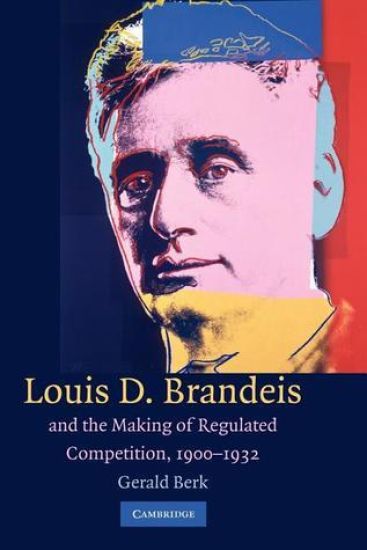
Louis D. Brandeis and the Making of Regulated Competition, 1900–1932
This book provides an innovative interpretation of industrialization and statebuilding in the United States. Whereas most scholars cast the politics of industrialization in the progressive era as a narrow choice between breaking up and regulating the large corporation, Berk reveals a third way: regulated competition. In this framework, the government steered economic development away from concentrated power by channeling competition from predation to improvements in products and production processes. Louis Brandeis conceptualized regulated competition and introduced it into public debate. Political entrepreneurs in Congress enacted many of Brandeis's proposals into law. The Federal Trade Commission enlisted business and professional associations to make it workable. The commercial printing industry showed how it could succeed. And 30 percent of manufacturing industries used it to improve economic performance. In order to make sense of regulated competition, Berk provides an original theory of institutions he calls 'creative syncretism'.
Louis D. Brandeis and the Making of Regulated Competition, 1900–1932
This book provides an innovative interpretation of industrialization and statebuilding in the United States. Whereas most scholars cast the politics of industrialization in the progressive era as a narrow choice between breaking up and regulating the large corporation, Berk reveals a third way: regulated competition. In this framework, the government steered economic development away from concentrated power by channeling competition from predation to improvements in products and production processes. Louis Brandeis conceptualized regulated competition and introduced it into public debate. Political entrepreneurs in Congress enacted many of Brandeis's proposals into law. The Federal Trade Commission enlisted business and professional associations to make it workable. The commercial printing industry showed how it could succeed. And 30 percent of manufacturing industries used it to improve economic performance. In order to make sense of regulated competition, Berk provides an original theory of institutions he calls 'creative syncretism'.
Louis de Fontanes (1757-1821).- Homme de Lettres Et Administrateur
Cette monographie ne donne pas seulement tous les details de la vie et des activites du poete, de l'ecrivain et du premier -Grand-Maitre de l'Universite Imperiale- a Paris sous Napoleon Ier, mais aussi de nouvelles connaissances sur l'epoque de la Revolution et de l'Empire. L'auteur de cette riche etude, malheureusement mort trop tot en 1992, a pu trouver dans de nombreuses archives des documents et des lettres de Fontanes encore inedits. L'Universite Paris-Sorbonne (Paris IV) a honore Norbert Alcer du titre de docteur d'Etat (mention -tres honorable-)."
Mordsmäßig gerädert

Mordsmäßig gerädert

Saskia Louis

dp Verlag
2021
pokkari
Ist eine Leiche im Garten besser als ein Einbrecher im Haus?Unsere Lieblingsdetektivin Louisa Manu ermittelt wieder mit Herz, Humor und GeschickLouisa Manu wei aus Erfahrung, dass Leichen nie sch n anzusehen sind - doch sie werden nicht h bscher, wenn jemand mit dem Auto dr berbrettert. Leider liegt ein ebensolcher Toter bei ihrer besten Freundin im Garten. Ariane springt kopf ber in die Mordermittlung und Lou bleibt nichts anderes brig, als hinterherzuhechten. Dabei hat sie allerhand damit zu tun, die selbsterkl rte Senioren-Partymaus Trudi im Zaum zu halten, die mit einer Menge Enthusiasmus Lous drei igsten Geburtstag plant. Obwohl doch das Einzige, was Lou sich w nscht, ein Heiratsantrag von Rispo ist. Aber der ist vollauf mit dem Mordfall seiner Mutter besch ftigt und muss auf einmal aufpassen, nicht selbst unter die R der zu kommen ...Weitere Titel dieser ReiheMordsm ig unverbl mt (ISBN: 9783945298725)Mordsm ig verstrickt (ISBN: 9783960870760)Mordsm ig kaltgemacht (ISBN: 9783960871262)Mordsm ig angefressen (ISBN: 9783960874201)Mordsm ig verkatert (ISBN: 9783960876731)Mordsm ig versaut (ISBN: 9783968172163)Erste Leserstimmen"mordsm ig fesselnd, witzig und turbulent ""Wer auf Cosy Krimis mit charmanten Ermittlerinnen steht, darf diese Reihe nicht verpassen.""Superlustig und unterhaltsam, Saskia Louis hat sich wieder selbst bertroffen ""Ich liebe die absurden F lle, in die Louisa Manu immer wieder stolpert."
The Private Science of Louis Pasteur

The Private Science of Louis Pasteur

Gerald L. Geison

Princeton University Press
2014
pokkari
In The Private Science of Louis Pasteur, Gerald Geison has written a controversial biography that finally penetrates the secrecy that has surrounded much of this legendary scientist's laboratory work. Geison uses Pasteur's laboratory notebooks, made available only recently, and his published papers to present a rich and full account of some of the most famous episodes in the history of science and their darker sides--for example, Pasteur's rush to develop the rabies vaccine and the human risks his haste entailed. The discrepancies between the public record and the "private science" of Louis Pasteur tell us as much about the man as they do about the highly competitive and political world he learned to master. Although experimental ingenuity served Pasteur well, he also owed much of his success to the polemical virtuosity and political savvy that won him unprecedented financial support from the French state during the late nineteenth century. But a close look at his greatest achievements raises ethical issues. In the case of Pasteur's widely publicized anthrax vaccine, Geison reveals its initial defects and how Pasteur, in order to avoid embarrassment, secretly incorporated a rival colleague's findings to make his version of the vaccine work. Pasteur's premature decision to apply his rabies treatment to his first animal-bite victims raises even deeper questions and must be understood not only in terms of the ethics of human experimentation and scientific method, but also in light of Pasteur's shift from a biological theory of immunity to a chemical theory--similar to ones he had often disparaged when advanced by his competitors. Through his vivid reconstruction of the professional rivalries as well as the national adulation that surrounded Pasteur, Geison places him in his wider cultural context. In giving Pasteur the close scrutiny his fame and achievements deserve, Geison's book offers compelling reading for anyone interested in the social and ethical dimensions of science. Originally published in 1995. The Princeton Legacy Library uses the latest print-on-demand technology to again make available previously out-of-print books from the distinguished backlist of Princeton University Press. These editions preserve the original texts of these important books while presenting them in durable paperback and hardcover editions. The goal of the Princeton Legacy Library is to vastly increase access to the rich scholarly heritage found in the thousands of books published by Princeton University Press since its founding in 1905.
The Private Science of Louis Pasteur

The Private Science of Louis Pasteur

Gerald L. Geison

Princeton University Press
2016
sidottu
In The Private Science of Louis Pasteur, Gerald Geison has written a controversial biography that finally penetrates the secrecy that has surrounded much of this legendary scientist's laboratory work. Geison uses Pasteur's laboratory notebooks, made available only recently, and his published papers to present a rich and full account of some of the most famous episodes in the history of science and their darker sides--for example, Pasteur's rush to develop the rabies vaccine and the human risks his haste entailed. The discrepancies between the public record and the "private science" of Louis Pasteur tell us as much about the man as they do about the highly competitive and political world he learned to master. Although experimental ingenuity served Pasteur well, he also owed much of his success to the polemical virtuosity and political savvy that won him unprecedented financial support from the French state during the late nineteenth century. But a close look at his greatest achievements raises ethical issues. In the case of Pasteur's widely publicized anthrax vaccine, Geison reveals its initial defects and how Pasteur, in order to avoid embarrassment, secretly incorporated a rival colleague's findings to make his version of the vaccine work. Pasteur's premature decision to apply his rabies treatment to his first animal-bite victims raises even deeper questions and must be understood not only in terms of the ethics of human experimentation and scientific method, but also in light of Pasteur's shift from a biological theory of immunity to a chemical theory--similar to ones he had often disparaged when advanced by his competitors. Through his vivid reconstruction of the professional rivalries as well as the national adulation that surrounded Pasteur, Geison places him in his wider cultural context. In giving Pasteur the close scrutiny his fame and achievements deserve, Geison's book offers compelling reading for anyone interested in the social and ethical dimensions of science. Originally published in 1995. The Princeton Legacy Library uses the latest print-on-demand technology to again make available previously out-of-print books from the distinguished backlist of Princeton University Press. These editions preserve the original texts of these important books while presenting them in durable paperback and hardcover editions. The goal of the Princeton Legacy Library is to vastly increase access to the rich scholarly heritage found in the thousands of books published by Princeton University Press since its founding in 1905.