Kirjojen hintavertailu. Mukana 12 390 323 kirjaa ja 12 kauppaa.

Kirjahaku

Etsi kirjoja tekijän nimen, kirjan nimen tai ISBN:n perusteella.

676 tulosta hakusanalla Lucretius

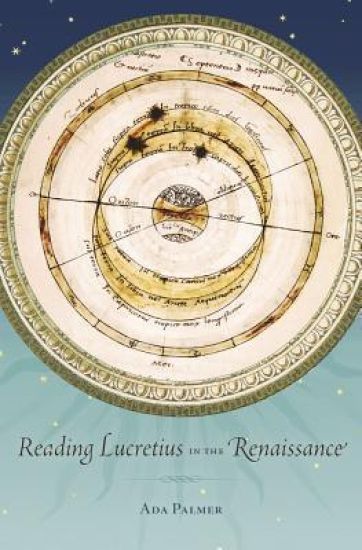
Reading Lucretius in the Renaissance

Reading Lucretius in the Renaissance

Palmer Ada

Harvard University Press
2014
sidottu
After its rediscovery in 1417, Lucretius’s Epicurean didactic poem De Rerum Natura threatened to supply radicals and atheists with the one weapon unbelief had lacked in the Middle Ages: good answers. Scholars could now challenge Christian patterns of thought by employing the theory of atomistic physics, a sophisticated system that explained natural phenomena without appeal to divine participation, and argued powerfully against the immortality of the soul, the afterlife, and a creator God. Ada Palmer explores how Renaissance readers, such as Machiavelli, Pomponio Leto, and Montaigne, actually ingested and disseminated Lucretius, and the ways in which this process of reading transformed modern thought. She uncovers humanist methods for reconciling Christian and pagan philosophy, and shows how ideas of emergent order and natural selection, so critical to our current thinking, became embedded in Europe’s intellectual landscape before the seventeenth century. This heterodoxy circulated in the premodern world, not on the conspicuous stage of heresy trials and public debates, but in the classrooms, libraries, studies, and bookshops where quiet scholars met the ideas that would soon transform the world. Renaissance readers—poets and philologists rather than scientists—were moved by their love of classical literature to rescue Lucretius and his atomism, thereby injecting his theories back into scientific discourse. Palmer employs a new quantitative method for analyzing marginalia in manuscripts and printed books, exposing how changes in scholarly reading practices over the course of the sixteenth century gradually expanded Europe’s receptivity to radical science, setting the stage for the scientific revolution.
Doing Lucretius

Doing Lucretius

Sidney Burris

Louisiana State University Press
2000
nidottu
In Doing Lucretius, Sidney Burris crosses a sensibility shaped by a classical education with a contemporary culture that finds such an education increasingly remote and forbidding. Molding his artistry and buttressing his response to modern society with the literature of the ancient world, Burris displays in his work an unabashed reverence for the various traditions, literary, cultural, familial, that guide him, but maintains that these conventions must now and again be interrogated and overthrown.The poems trace several themes through the poet's boyhood to the threshold of his middle age: fi‚ight, escape, distance, cultural displacement, themes that are strained by the counter-pressures of literary, political, and artistic impulses. The desire for fi‚ight and its attendant concerns are foremost among these motifs, fi‚ight to the sea, to love in all its varied and alluring forms, even to dying in its many manifestations.With these modes of motion comes an obsession with historical characters who have had their own travails resolved by fi‚ight, both psychological and actual: Achilles, Ulysses, Circe, and above all Lucretius, Virgil, and Dante, the perennial sustainers. There are also friendships recorded throughout the volume that arise out of the poet's deep need for a passionate community of nourishing relationships to help him survive the difficulties of a well-lived life, which he describes in ""The Celebration"" as ""the art / of living art / as if art's enough.""Blending southern narrative language with the melodic intensity of the impassioned lyric voices of the classical world, Doing Lucretius is a profound and deeply satisfying collection.
Titus Lucretius Carus, his six Books of Epicurean Philosophy, Done Into English Verse, With Notes. By T. Creech, ... The Fifth Edition
The 18th century was a wealth of knowledge, exploration and rapidly growing technology and expanding record-keeping made possible by advances in the printing press. In its determination to preserve the century of revolution, Gale initiated a revolution of its own: digitization of epic proportions to preserve these invaluable works in the largest archive of its kind. Now for the first time these high-quality digital copies of original 18th century manuscripts are available in print, making them highly accessible to libraries, undergraduate students, and independent scholars.The Age of Enlightenment profoundly enriched religious and philosophical understanding and continues to influence present-day thinking. Works collected here include masterpieces by David Hume, Immanuel Kant, and Jean-Jacques Rousseau, as well as religious sermons and moral debates on the issues of the day, such as the slave trade. The Age of Reason saw conflict between Protestantism and Catholicism transformed into one between faith and logic -- a debate that continues in the twenty-first century.++++The below data was compiled from various identification fields in the bibliographic record of this title. This data is provided as an additional tool in helping to insure edition identification: ++++Harvard University Houghton LibraryN013695Text continuous despite pagination.London: printed for George Sawbridge, 1712. 44],223, 1],56,55-60, 6]p.; 8
The First Book of Titus Lucretius Carus, on the Nature of Things, in English Verse, With the Latin Text
The 18th century was a wealth of knowledge, exploration and rapidly growing technology and expanding record-keeping made possible by advances in the printing press. In its determination to preserve the century of revolution, Gale initiated a revolution of its own: digitization of epic proportions to preserve these invaluable works in the largest archive of its kind. Now for the first time these high-quality digital copies of original 18th century manuscripts are available in print, making them highly accessible to libraries, undergraduate students, and independent scholars.Western literary study flows out of eighteenth-century works by Alexander Pope, Daniel Defoe, Henry Fielding, Frances Burney, Denis Diderot, Johann Gottfried Herder, Johann Wolfgang von Goethe, and others. Experience the birth of the modern novel, or compare the development of language using dictionaries and grammar discourses. ++++The below data was compiled from various identification fields in the bibliographic record of this title. This data is provided as an additional tool in helping to insure edition identification: ++++Huntington LibraryN046165Parallel English and Latin text. "Lowndes attributes the translation to John Nott" (Gordon). With a half-title and a final errata leaf.London: printed by J. Davis, for R. Faulder, 1799. xi, 1],129, 3]p.; 8
Titus Lucretius Carus, of the Nature of Things. In six Books. In two Volumes. The Sixth Edition. Explained and Illustrated With Notes and Animadversions; Being a Compleat System of the Epicurean Philosophy. of 2; Volume 2
The 18th century was a wealth of knowledge, exploration and rapidly growing technology and expanding record-keeping made possible by advances in the printing press. In its determination to preserve the century of revolution, Gale initiated a revolution of its own: digitization of epic proportions to preserve these invaluable works in the largest archive of its kind. Now for the first time these high-quality digital copies of original 18th century manuscripts are available in print, making them highly accessible to libraries, undergraduate students, and independent scholars.Western literary study flows out of eighteenth-century works by Alexander Pope, Daniel Defoe, Henry Fielding, Frances Burney, Denis Diderot, Johann Gottfried Herder, Johann Wolfgang von Goethe, and others. Experience the birth of the modern novel, or compare the development of language using dictionaries and grammar discourses. ++++The below data was compiled from various identification fields in the bibliographic record of this title. This data is provided as an additional tool in helping to insure edition identification: ++++British LibraryT050377"The book consists of unsold sheets with a cancel title in vol. 1. .. copies are found with the date altered with a pen to 1725" (Gordon).London: printed and sold by T. Warner; and J. Walthoe, jun., 1722. 2v.( 74],822, 34]p.), plate; 8