Whether you are a computer rookie or pro, you can thoroughly master Microsoft® Excel 2016 skills quickly and efficiently with ILLUSTRATED MICROSOFT® OFFICE 365 & EXCEL 2016: COMPREHENSIVE. Using a concise, focused approach and user-friendly format, the Illustrated Series incorporates a hallmark two-page layout that allows you to see an entire task in one view. Each presentation is easy to follow with Learning Outcomes that clearly outline the skills covered in each lesson and larger full-color screens that reflect exactly what you should see on your own computer. Each module begins with a brief overview of the lesson’s principles and introduces a case study for further application to ensure you gain a complete understanding of Microsoft® Excel 2016. In addition, new Productivity Apps visually introduce Microsoft® OneNote, Sway, Office Mix and Edge using hands-on activities.
Loved by students like you for its visual and flexible approach to building computer skills, the ILLUSTRATED COURSE GUIDE: MICROSOFT® OFFICE 365 & EXCEL 2016: INTRODUCTORY is the ideal resource for learning Microsoft® Excel 2016, regardless of your experience level. Each two-page spread focuses on a single skill, making information easy to follow and absorb. The ILLUSTRATED COURSE GUIDE divides important Microsoft® Excel 2016 concepts and skills into three manageable levels -- Introductory, Intermediate, and Advanced -- making it perfect for mastering the skills you need in any learning environment.
Whether you're a computer rookie or hot shot, you can master Microsoft? Office and Excel 2016 applications quickly and efficiently with ILLUSTRATED MICROSOFT? OFFICE 365 & EXCEL 2016: INTRODUCTORY. Skills are accessible and easy to follow thanks to the Illustrated Series' hallmark two-page layout, which allows you to work through an entire task without turning the page. Praised for its concise, focused, user-friendly format, this book guides efficient study with Learning Outcomes that outline the skills covered in each lesson. Larger full-color images reflect exactly what you should see on your own computer screen. Each module begins with a brief overview of the principles of the lesson and introduces a case study for further application. In addition, new Productivity Apps visually introduce Microsoft? OneNote, Sway, Office Mix and Edge using hands-on activities.
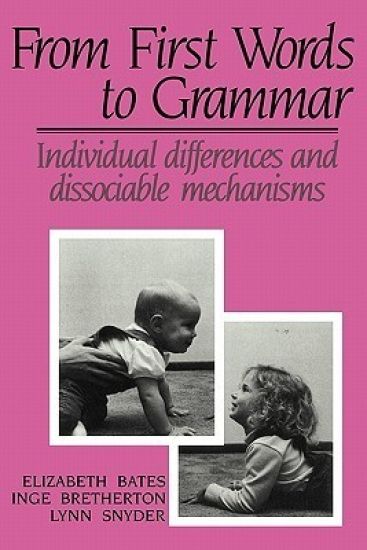
This book is a comprehensive study of the passage from first words to grammar in a sample of children large enough to permit systematic analysis of individual differences in style and rate of development. The authors provide a large body of information about first words and early grammatical development in qualitative and quantitative patterns that are useful not only for researchers in the field, but for speech/language pathologists and early childhood educators interested in the assessment of early language. The results support a unified functionalist approach to language development, and have implications for the way we think about the structure and breakdown of language under normal and abnormal conditions.
Marion Manley (1893–1984), Miami’s first female architect, successfully maintained an independent architectural practice in South Florida over much of the twentieth century. In this first comprehensive, illustrated work on Manley, Catherine Lynn and Carie Penabad explore the relationship of Manley’s work to her life and to the broader historical moment of which she was a part, including the overall development of the city of Miami. The book catalogs all of Manley’s known work, includes images and plans where available, and provides detailed examinations of what the authors consider to be her best, most emblematic work in each phase of her long career.Best known as one of the designers of the innovative University of Miami campus built just after the Second World War, Manley worked on other public buildings that are less well known, including an addition to the John Ringling Museum in Sarasota. Her residential work is interesting as well: modest and rational, with careful consideration of regional characteristics and construction appropriate to the South Florida landscape. As noted architect Elizabeth Plater-Zyberk remarks in her foreword, “Understanding the reduced circumstances of the provenance of these buildings and their low-tech characteristics such as rooms with cross ventilation, large areas of shaded glass, and the almost tactile relationship to the adjacent landscape, we must admire the legacy of Marion Manley.”
Derived from the renowned multi-volume International Encyclopaedia of Laws, this convenient resource provides systematic information on how the United States deals with the role religion plays or can play in society, the legal status of religious communities and institutions, and the legal interaction among religion, culture, education, and media. After a general introduction describing the social and historical background, the book goes on to explain the legal framework in which religion is approached. Coverage proceeds from the principle of religious freedom through the rights and contractual obligations of religious communities; international, transnational, and regional law effects; and the legal parameters affecting the influence of religion in politics and public life. Also covered are legal positions on religion in such specific fields as church financing, labour and employment, and matrimonial and family law. A clear and comprehensive overview of relevant legislation and legal doctrine make the book an invaluable reference source and very useful guide. Succinct and practical, this book will prove to be of great value to practitioners in the myriad instances where a law-related religious interest arises in the United States. Academics and researchers will appreciate its value as a thorough but concise treatment of the legal aspects of diversity and multiculturalism in which religion plays such an important part.
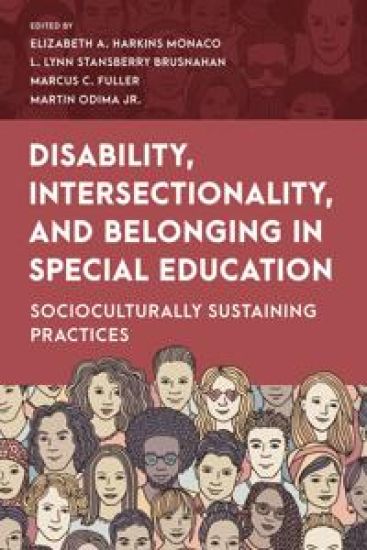
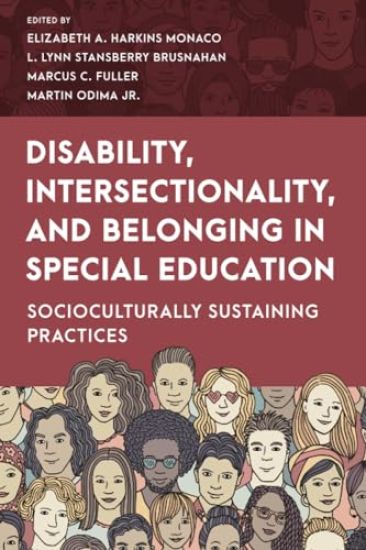
This book focuses on preparing culturally competent educators who use culturally sustaining practices and culturally relevant curricula and instruction to reach and teach all students with disabilities, including those with multiple social identities, through a varied multi-cultural lens. Today’s diverse classrooms require that educators possess competencies for teaching all students. This book has two primary audiences: 1. Pre-service educators2. Special education practitioners and administrators First, this book will assist pre-service students learning about special education for students with disabilities. We fully expect this book could be a required reading for students majoring in special education, for school social work students, for school counselors, and for students majoring in vocational rehabilitation services as a part of their coursework for transition.Second, this book will assist special education practitioners and administrators to meet the needs of individuals with disabilities including those with multiple social identities. Understanding the full-range of needs relating to cultural sustaining practices is imperative to working with individuals with disabilities and their families and care-givers. Being able to understand and explain this complex issue to others is important and often very necessary. This book is incredibly timely. Recent contributors to social injustices are the COVID-19 pandemic and the continued issues around police brutality and people of color. Social injustice in special education is historical and systemic. Special education practitioners are typically unaware of the importance of intersectional differences (Gay & Howard, 2000; Owen, 2010). Historically, practitioners have only been prepared to address cultural perspectives during awareness days and or through specific units in curricula. Other times they discuss it diagnostically (Linton, 1998), such as part of an educational plan or a need to learn English as a second language. Other issues stem from the value system of the special education practitioners themselves; some are not willing to engage in these concepts (Darling-Hammond, 2002); some “define fairness and equity as treating all children the same; and [others identify being] ‘colorblind’ [as] valuing diversity” (Owen, 2010, p. 18). Even when special educator practitioners attempt to address injustices on behalf of their students, they tend to center only on the student’s disability which means they are ignoring or erasing other aspects of their students’ identities. These issues highlight the importance of building the cultural competence of our teaching force. This book will help practitioners build this competence in their own spheres of influence.
This book focuses on preparing culturally competent educators who use culturally sustaining practices and culturally relevant curricula and instruction to reach and teach all students with disabilities, including those with multiple social identities, through a varied multi-cultural lens. Today’s diverse classrooms require that educators possess competencies for teaching all students. This book has two primary audiences: 1. Pre-service educators2. Special education practitioners and administrators First, this book will assist pre-service students learning about special education for students with disabilities. We fully expect this book could be a required reading for students majoring in special education, for school social work students, for school counselors, and for students majoring in vocational rehabilitation services as a part of their coursework for transition.Second, this book will assist special education practitioners and administrators to meet the needs of individuals with disabilities including those with multiple social identities. Understanding the full-range of needs relating to cultural sustaining practices is imperative to working with individuals with disabilities and their families and care-givers. Being able to understand and explain this complex issue to others is important and often very necessary. This book is incredibly timely. Recent contributors to social injustices are the COVID-19 pandemic and the continued issues around police brutality and people of color. Social injustice in special education is historical and systemic. Special education practitioners are typically unaware of the importance of intersectional differences (Gay & Howard, 2000; Owen, 2010). Historically, practitioners have only been prepared to address cultural perspectives during awareness days and or through specific units in curricula. Other times they discuss it diagnostically (Linton, 1998), such as part of an educational plan or a need to learn English as a second language. Other issues stem from the value system of the special education practitioners themselves; some are not willing to engage in these concepts (Darling-Hammond, 2002); some “define fairness and equity as treating all children the same; and [others identify being] ‘colorblind’ [as] valuing diversity” (Owen, 2010, p. 18). Even when special educator practitioners attempt to address injustices on behalf of their students, they tend to center only on the student’s disability which means they are ignoring or erasing other aspects of their students’ identities. These issues highlight the importance of building the cultural competence of our teaching force. This book will help practitioners build this competence in their own spheres of influence.
Lynn: - Its representative business men and points of interest is an unchanged, high-quality reprint of the original edition of 1893. Hansebooks is editor of the literature on different topic areas such as research and science, travel and expeditions, cooking and nutrition, medicine, and other genres. As a publisher we focus on the preservation of historical literature. Many works of historical writers and scientists are available today as antiques only. Hansebooks newly publishes these books and contributes to the preservation of literature which has become rare and historical knowledge for the future.