The low critical opinion of dramatic adaptations of prose works makes clear that the dramatic text is widely seen as unable to compete with the narrative text that it adapts. Privileging the text of a play as the site of meaning is inadequate, however, given the social nature of theatre; rather, the socio-historical context of a production must be investigated to flesh out the meaning of the text in dramatic production. In this study, four theatrical adaptations of Franz Kafka's novel "The Trial "(1925) from different decades and countries, and in three different languages, illustrate a history not only of Kafka reception, but also of society, politics and theatrical practice in western Europe and Canada. The diversity of these visions of Kafka's work pleads for the acceptance of dramatic adaptation as a creative form of interpretation, rather than as an ill-advised misappropriation, of its source.
In 1939 Annie Jarman and her six young daughters were evacuated from their south London home and sent to the Sussex countryside to wait out the war. Refusing to be parted, they faced the unknown together, never imagining just how much their lives would change.
2023 Catholic Media Association Third Place Award, Scripture – Academic Studies The Acts of the Apostles, the earliest work of its kind to have survived from Christian antiquity, is not “history” in the modern sense, nor is it about what we call “the church.” Written at least half a century after the time it describes, it is a portrait of the Movement of Jesus’ followers as it developed between 30 and 70 CE. More important, it is a depiction of the Movement of what Jesus wanted: the inbreaking of the reign of God. In this commentary, Linda Maloney, Ivoni Richter Reimer, and a host of other contributing voices look at what the text does and does not say about the roles of the original members of the Movement in bringing it toward fruition, with a special focus on those marginalized by society, many of them women. The author of Acts wrote for followers of Jesus in the second century and beyond, contending against those who wanted to break from the community of Israel and offering hope against hope, like Israel’s prophets before him.
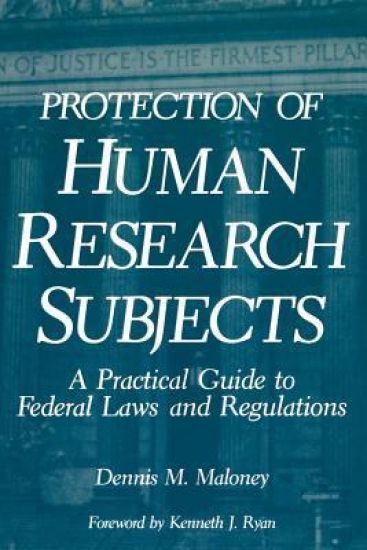
Regulations on human subjects research have evolved over a 20-year period and now provide a formal set of requirements for the conduct of federally sponsored studies. Over time, government regulations, like taboos in primitive societies, develop a life of their own, seemingly dissociated from their origins and justifica tions. When the investigator suffers the burdens of trying to comply with com plex rules, it is easy for him or her to lapse into a frustration that can be eased by being informed or reminded of why the rules were created in the first place and what they were designed to accomplish. Dennis Maloney's work provides a handy historical record of the processes by which the regulations were created and modified. He also recounts his own experience with research at Boys Town and provides instructions on how to cope with the system. It is difficult to find in one place the current status and appropriate citations for regulations as well as the contacts and know-how to obtain more information on the subject. In this respect, by providing a history and guide to interpretation and compliance, "Protection of Human Subjects" is a reference of importance and utility to the investigator entering into or working in the field of biomedical or behavioral research involving human subjects.
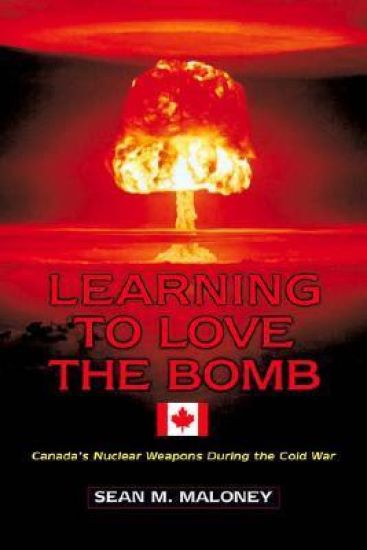
In Learning to Love the Bomb, Sean M. Maloney explores the controversial subject of Canada’s acquisition of nuclear weapons during the Cold War. Based on newly declassified Canadian and U.S. documents, it examines policy, strategy, operational, and technical matters and weaves these seemingly disparate elements into a compelling story that finally unlocks several Cold War mysteries. For example, while U.S. military forces during the 1962 Cuban Missile Crisis were focused on the Caribbean Sea and the southeastern United States, Canadian forces assumed responsibility for defending the northern United States, with aircraft armed with nuclear depth charges flying patrols and guarding against missile attack by Soviet submarines. This defensive strategy was a closely guarded secret because it conflicted with Canada’s image as a peacekeeper and therefore a more passive member of NATO than its ally to the south. It is revealed here for the first time. The place of nuclear weapons in Canadian history has, until now, been a highly secret and misunderstood field subject to rumor, rhetoric, half-truths, and propaganda. Learning to Love the Bomb reveals the truth about Canada’s role as a nuclear power.
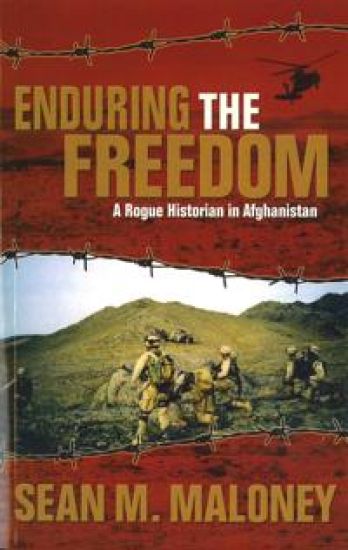
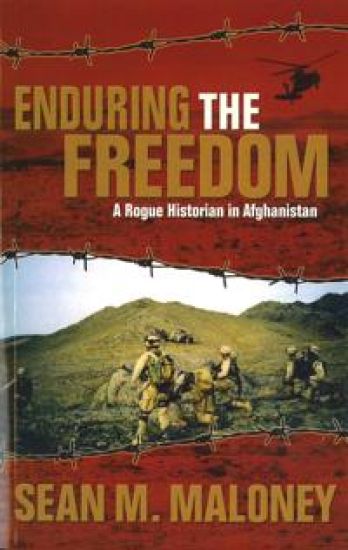
Within hours of the September 11 attacks, Sean M. Maloney deciphered that Osama bin Laden and al Qaeda were the aggressors behind the despicable act. A war in Afghanistan then was inevitable. As a military historian, Maloney was determined to go there to study and record the events for posterity, if for no other reason than the education of his future students at Canada's Royal Military College. What resulted is an in-depth and up-close look at the planning stages, deployment, and aftermath of Operation Enduring Freedom in Afghanistan. In Enduring the Freedom, Maloney presents a rare on-the-spot view from such important locations as Kabul, Bagram, and Kandahar. He describes the American-led intervention in Afghanistan and the conduct of the war through early 2003, then discusses the events of 2003 from the three locales in detail. Some critics contend that the war in Afghanistan is another Vietnam. Maloney rebuts that appraisal, pointing out that as opposed to the vague language of the Vietnam era, American objectives were clearly stated for Afghanistan. Those objectives were: to destroy al Qaeda's networks, training camps, resources, and communication systems; to destroy any governmental entity providing support or sanctuary to al Qaeda; and to undertake reconstruction efforts to ensure international terrorists can never again use the country as a base. The first objective has more or less been achieved. How to accomplish the last two is still widely debated, and Maloney offers some insightful thoughts and opinions. Finally, he offers educated advice going forward in the hopeful completion of Operation Enduring Freedom.
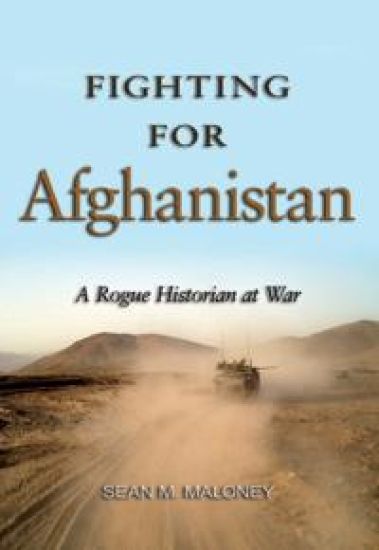
Fighting For Afghanistan is the third book in the Rogue Historian trilogy, taking Maloney’s story into the conflict in 2006, when the Taliban-led insurgency threatened to overwhelm the U.S.-led coalition in southern Afghanistan. This shift to near-conventional warfare, as opposed to the small-scale guerilla attacks and urban terrorism in Kandahar, caught everybody by surprise and forced a small, under-equipped Canadian battle group, supported by a Canadian-led multinational brigade consisting of American, British and Dutch forces, into a desperate series of battles to protect the city and to prevent the collapse of British forces in neighbouring Helmand province. Sean Maloney arrived on the ground just as the situation spun out of control and he was able to capture, at all levels from infantry company to battle group to brigade headquarters, exactly what happened. This book explains the difficulties in balancing security and development, the challenges of operating in an austere, alien environment, and the human cost of counterinsurgency warfare in Afghanistan. Fighting For Afghanistan takes the reader through all of the moving parts and planning and then depicts how it played out on the field of battle. During the course of the action, the author became the first Canadian military historian to go into combat since the Korean War. The battles around Kandahar City in 2006 were the turning point in the Afghanistan war and this book is the first to explain events in detail from all three levels. This is the only account that shows the scope of the fighting in the south in this time period. Because of his close proximity to the action, the author was nearly killed on several occasions that summer during the fighting and he brings the intensity of this experience to his writing.
Within hours of the September 11 attacks, Sean M. Maloney deciphered that Osama bin Laden and al Qaeda were the aggressors behind the despicable act. A war in Afghanistan then was inevitable. As a military historian, Maloney was determined to go there to study and record the events for posterity, if for no other reason than the education of his future students at Canada's Royal Military College. What resulted is an in-depth and up-close look at the planning stages, deployment, and aftermath of Operation Enduring Freedom in Afghanistan. In Enduring the Freedom, Maloney presents a rare on-the-spot view from such important locations as Kabul, Bagram, and Kandahar. He describes the American-led intervention in Afghanistan and the conduct of the war through early 2003, then discusses the events of 2003 from the three locales in detail. Some critics contend that the war in Afghanistan is another Vietnam. Maloney rebuts that appraisal, pointing out that as opposed to the vague language of the Vietnam era, American objectives were clearly stated for Afghanistan. Those objectives were: to destroy al Qaeda's networks, training camps, resources, and communication systems; to destroy any governmental entity providing support or sanctuary to al Qaeda; and to undertake reconstruction efforts to ensure international terrorists can never again use the country as a base. The first objective has more or less been achieved. How to accomplish the last two is still widely debated, and Maloney offers some insightful thoughts and opinions. Finally, he offers educated advice going forward in the hopeful completion of Operation Enduring Freedom.
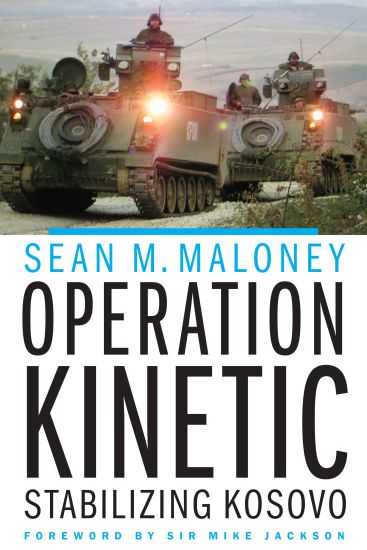
In the late 1990s, NATO led the Kosovo Force (KFOR), charged with stabilizing Kosovo and the former Yugoslav Republic of Macedonia after genocide and other atrocities were carried out in the Balkan region. Operation Kinetic is not only a history of the origins and operations of the Kosovo Force but also a history of the vital operations conducted by the Canadian Army units and their allies assigned to KFOR during the crucial early days and months after entry into the province in 1999 and through 2000. Operating alongside American, British, French, Norwegian, Finnish, and Swedish forces, these surveillance and response units were instrumental in preventing violence in numerous areas before it could escalate and draw in the Serbian Army, which could have led to further genocide or war in the region. Sean M. Maloney, a Canadian military historian with extensive field experience in the Balkans, draws on numerous interviews and firsthand accounts of an operation that would later serve as a model in preparing for similar efforts in Afghanistan and provide a blueprint for stabilizing operations around the world.
King of the Cold War crisis film, Dr. Strangelove became a cultural touchstone from the moment of its release in 1964. The duck-and-cover generation saw it as a satire on nuclear issues and Cold War thinking. Subsequent generations, removed from the film’s historical moment, came to view it as a quasi-documentary about an unfathomable secret world. Sean M. Maloney uses Dr. Strangelove and other genre classics like Fail Safe and The Bedford Incident to investigate a curious pop cultural contradiction. Nuclear crisis films repeatedly portrayed the failures of the Cold War’s deterrent system. Yet the system worked. What does this inconsistency tell us about the genre? What does it tell us about the deterrent system, for that matter? Blending film analysis with Cold War history, Maloney looks at how the celluloid crises stack up against reality-or at least as much of reality as we can reconstruct from these films with confidence. The result is a daring intellectual foray that casts new light on Dr. Strangelove, one of the Cold War era’s defining films.
Winner of the 2023 AFHF Air Power History Book Prize Emergency War Plan examines the theory and practice of American nuclear deterrence and its evolution during the Cold War. Previous examinations of nuclear strategy during this time have, for the most part, categorized American efforts as “massive retaliation” and “mutually assured destruction,” blunt instruments to be casually dismissed in favor of more flexible approaches or summed up in inflammatory and judgmental terms like “MAD.” These descriptors evolved into slogans, and any nuanced discussion of the efficacy of the actual strategies withered due to a variety of political and social factors. Drawing on newly released weapons effects information along with new information about Soviet capabilities as well as risky and covert espionage missions, Emergency War Plan provides a completely new examination of American nuclear deterrence strategy during the first fifteen years of the Cold War, the first such study since the 1980s. Ultimately what emerges is a picture of a gargantuan and potentially devastating enterprise that was understood at the time by the public in only the vaguest terms but that was not as out of control as has been alleged and was more nuanced than previously understood.
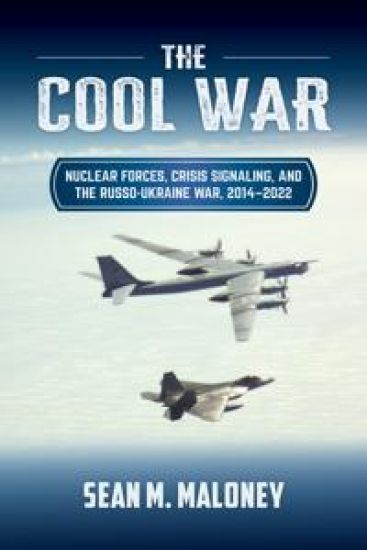
Sean Maloney reveals how Vladimir Putin has aggressively leveraged nuclear signaling to manipulate NATO and deter Western intervention in Ukraine. With Cold War–level brinkmanship and modern information warfare, Russia’s tactics have reshaped the strategic landscape—and raised urgent questions about how long the West can hold the line. Nuclear signaling is defined as the deliberate maneuvering of nuclear forces to deter and influence an adversary’s actions. Author Sean Maloney shows how Russian leader Vladimir Putin has systematically employed nuclear signaling to force desired behavior from both NATO and the United States. This strategy has escalated greatly during the Russo-Ukraine War as Putin seeks to deter Western intervention and support of Ukraine. Putin uses many forms of nuclear signaling, including ordering jets capable of carrying nuclear weapons to fly in western European airspace, staging a joint bomber exercise with China near Alaska, and instructing submarines carrying nuclear weapons to surface through the Arctic icepack. The frequency of this signaling far exceeds that of similar activity during the Cold War and has escalated to more dangerous levels than before. When Russia experienced setbacks on the battlefield, Putin often intensified his nuclear-force posturing by paring it with thinly veiled threats to use tactical nuclear weapons. Maloney argues convincingly that in the post–Cold War era, Putin has skillfully combined his use of nuclear signaling with advances in information technology to more effectively manipulate Western nations. He asserts that the United States was initially late in recognizing this development, but as the situation worsened, America and NATO have devised a series of responses that now hold Russia in check. The question is, for how long? Maloney concludes that Putin’s nuclear posturing has produced mixed results. First and foremost, Putin did successfully deter the United States and other NATO countries from outright military action in defense of Ukraine following the 2022 invasion. However, Russia’s nuclear signaling did not prevent the West from providing weapons and intelligence to Ukraine, nor did it stop NATO’s expansion. Nevertheless, the partial success of Russia’s Cool War activity does not lessen the significance of this new reality or the scope of the problems that face the West moving forward.
In a re-wilded, near-future England, a group of activists led by a writer try to make a noise in a society that refuses to hear its people. A re-wilded, half-submerged England is home to a divided society split into "haves" and "have-nots." Susan, once a teacher and writer, leads a small group of activists as they try to spread words--any words--in a world that no longer produces books. The Ghostwriters must try to revive ideas and get their message out whilst pitted against a system that shuts down thought and learning. After the break-up of the United Kingdom, war in Europe, starvation, and pandemic, the Capital is a society under siege. People just manage to survive on rations and scraps that they thieve. Always monitored, but never protected, life is cheap among the population. The Ghostwriters must navigate dangers, but who can be trusted and what secrets lie beneath the surface of the Old Capital?
This book provides a didactic overview of techniques for inferring information from soil spectroscopic data, and the codes in the R programming language for performing such analyses. It is intended for students, researchers and practitioners looking to infer soil information from spectroscopic data, focusing mainly on, but not restricted to, the infrared range of the electromagnetic spectrum. Little prior knowledge of the R programming language or digital soil spectra is required. We work through the steps to process spectroscopic data systematically.
This book provides a didactic overview of techniques for inferring information from soil spectroscopic data, and the codes in the R programming language for performing such analyses. It is intended for students, researchers and practitioners looking to infer soil information from spectroscopic data, focusing mainly on, but not restricted to, the infrared range of the electromagnetic spectrum. Little prior knowledge of the R programming language or digital soil spectra is required. We work through the steps to process spectroscopic data systematically.
Science as Psychology reveals the complexity and richness of rationality by demonstrating how social relationships, emotion, culture, and identity are implicated in the problem-solving practices of laboratory scientists. In this study, the authors gather and analyze interview and observational data from innovation-focused laboratories in the engineering sciences to show how the complex practices of laboratory research scientists provide rich psychological insights, and how a better understanding of science practice facilitates understanding of human beings more generally. The study focuses not on dismantling the rational core of scientific practice, but on illustrating how social, personal, and cognitive processes are intricately woven together in scientific thinking. The book is thus a contribution to science studies, the psychology of science, and general psychology.
Science as Psychology reveals the complexity and richness of rationality by demonstrating how social relationships, emotion, culture, and identity are implicated in the problem-solving practices of laboratory scientists. In this study, the authors gather and analyze interview and observational data from innovation-focused laboratories in the engineering sciences to show how the complex practices of laboratory research scientists provide rich psychological insights, and how a better understanding of science practice facilitates understanding of human beings more generally. The study focuses not on dismantling the rational core of scientific practice, but on illustrating how social, personal, and cognitive processes are intricately woven together in scientific thinking. The book is thus a contribution to science studies, the psychology of science, and general psychology.
The United Nations is a vital part of the international order. Yet this book argues that the greatest contribution of the UN is not what it has achieved (improvements in health and economic development, for example) or avoided (global war, say, or the use of weapons of mass destruction). It is, instead, the process through which the UN has transformed the structure of international law to expand the range and depth of subjects covered by treaties. This handbook offers the first sustained analysis of the UN as a forum in which and an institution through which treaties are negotiated and implemented. Chapters are written by authors from different fields, including academics and practitioners; lawyers and specialists from other social sciences (international relations, history, and science); professionals with an established reputation in the field; younger researchers and diplomats involved in the negotiation of multilateral treaties; and scholars with a broader view on the issues involved. The volume thus provides unique insights into UN treaty-making. Through the thematic and technical parts, it also offers a lens through which to view challenges lying ahead and the possibilities and limitations of this understudied aspect of international law and relations.
Those tasked with investigating crime scenes come from a variety of backgrounds and varying levels of experience. Crime Scene Investigation Procedural Guide gives the novice investigator the procedures for almost any crime scene imaginable while providing the seasoned pro a ready reference for crimes occurring even under the most unusual of circumstances. Designed as a stand-alone text or as a companion to Ross Gardner’s Practical Crime Scene Investigation, the book details the precise steps that need to be taken when processing and analyzing a crime scene. Using a bulleted format for quick, easy access, the authors provide hands-on, concise instruction in a style friendly to a range of professionals. Topics discussed in this practical manual include: Preparation for response, initial response, scene management, and scene evaluation/analysis Scene photography, videography, sketching, and search and processing procedures Steps to be taken prior to releasing the scene Response, documentation, processing, and collection of evidence for specific crimes against persons and property Evaluation, processing, collection, and preservation of all items of evidence encountered at the scene, including friction ridge evidence, two- and three-dimensional impression evidence, and trace and biological evidence Bloodstain pattern documentation and shooting incident documentationAppendices include direction on working with potential blood-borne pathogens and worksheets for documenting and evaluating the scene and processing various types of evidence. A supplemental CD is included with downloadable forms for crime scene investigations. Adherence to the instructions provided in this guide will help ensure investigators that vital evidence is properly documented and preserved.