
Kirjahaku
Etsi kirjoja tekijän nimen, kirjan nimen tai ISBN:n perusteella.
1000 tulosta hakusanalla M. Baxter
Études sur la pourriture molle bactérienne du tubercule de pomme de terre
Kamal A M Abo-Elyousr
Editions Notre Savoir
2025
pokkari
Interakcje miedzy bakteriami a Batrachochytrium dendrobatidis
Alissa M Carissimi
Wydawnictwo Nasza Wiedza
2025
pokkari
Zagrożenia patogeniczne dla r żnorodności biologicznej w znacznym stopniu przyczyniają się do wymierania spoleczności i gatunk w, a dla plaz w największym zagrożeniem jest grzyb chytrid, Batrachochytrium dendrobatidis (Bd). Dynamika relacji między żabami a Bd nie jest w pelni poznana, jednak ostatnie badania wykazaly, że sklad mikroflory na tkankach nask rka plaz w może sprzyjac odporności na tę chorobę. Bakterie przeciwgrzybicze mogą hamowac rozw j grzyb w, kt re do wzrostu potrzebują keratyny z nask rka. Dwa gatunki, Janthinobacterium lividum i Pseudomonas fluorescens, zostaly wykryte u plaz w odpornych na Bd. W serii trzech oddzielnych eksperyment w plazy podatne na Bd (tj. Lithobates shpenocephalus) zostaly poddane dzialaniu tych bakterii zar wno przed, jak i po eksperymentalnym zakażeniu Bd. J. lividum i P. fluorescens wywolaly silną odpowiedź immunologiczną, dzięki czemu mogą byc stosowane w zapobieganiu śmiertelności wywolanej przez Bd. Z drugiej strony, żadna z tych bakterii nie okazala się skuteczna w przypadku żab, kt re mialy wcześniej kontakt z Bd. Wyniki te można wykorzystac do zbadania innych aspekt w odporności plaz w, gdy Bd i bakterie powodują zmiany w strukturze ich spoleczności nask rkowej.
Interações entre bactérias e Batrachochytrium dendrobatidis
Alissa M Carissimi
Edicoes Nosso Conhecimento
2025
pokkari
As amea as patog nicas biodiversidade contribuem significativamente para a extin o de comunidades e esp cies, e para os anf bios, o fungo quitr dio Batrachochytrium dendrobatidis (Bd) a maior amea a. A din mica hospedeiro-pat geno entre anf bios e Bd ainda n o totalmente compreendida; no entanto, estudos recentes demonstraram que a composi o da comunidade microbiana nos tecidos epid rmicos dos anf bios pode promover resist ncia doen a. As bact rias antidermat fitas podem inibir os fungos que necessitam de queratina da epiderme para crescer. Duas esp cies, Janthinobacterium lividum e Pseudomonas fluorescens, foram encontradas em anf bios resistentes ao Bd. Numa s rie de tr s experi ncias individuais, anf bios suscet veis ao Bd (ou seja, Lithobates shpenocephalus) foram expostos a estas bact rias antes e depois da infec o experimental pelo Bd. J. lividum e P. fluorescens provocaram uma forte resposta imunit ria e, portanto, podem ser utilizadas para prevenir a mortalidade induzida pelo Bd. Por outro lado, nenhuma das bact rias se mostrou eficaz quando aplicada em sapos com exposi o pr via ao Bd. Esses resultados podem ser usados para abordar outros aspetos da imunidade dos anf bios quando o Bd e as bact rias induzem altera es na estrutura da sua comunidade epid rmica.
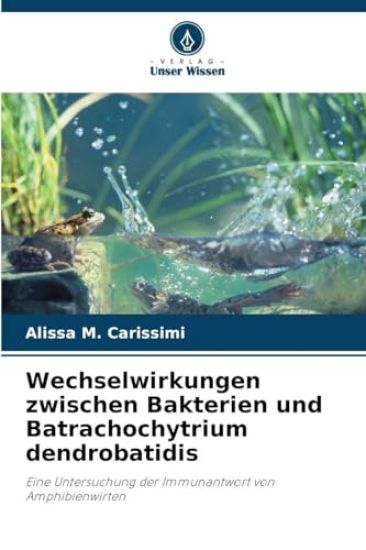
Wechselwirkungen zwischen Bakterien und Batrachochytrium dendrobatidis
Alissa M Carissimi
Verlag Unser Wissen
2025
pokkari
Pathogene Bedrohungen f r die Artenvielfalt tragen erheblich zum Aussterben von Gemeinschaften und Arten bei. F r Amphibien ist der Chytridpilz Batrachochytrium dendrobatidis (Bd) die gr te Bedrohung. Die Wirt-Pathogen-Dynamik zwischen Amphibien und Bd ist noch nicht vollst ndig verstanden, jedoch haben aktuelle Studien gezeigt, dass die Zusammensetzung der mikrobiellen Gemeinschaft auf dem Epidermisgewebe von Amphibien die Resistenz gegen die Krankheit f rdern kann. Antidermatophyten-Bakterien k nnen Pilze hemmen, die Keratin aus der Epidermis f r ihr Wachstum ben tigen. Zwei Arten, Janthinobacterium lividum und Pseudomonas fluorescens, wurden auf Bd-resistenten Amphibien gefunden. In einer Reihe von drei einzelnen Experimenten wurden Bd-anf llige Amphibien (d. h. Lithobates shpenocephalus) sowohl vor als auch nach der experimentellen Infektion mit Bd diesen Bakterien ausgesetzt. J. lividum und P. fluorescens l sten eine starke Immunantwort aus und k nnen daher zur Vorbeugung der durch Bd verursachten Mortalit t eingesetzt werden. Umgekehrt erwiesen sich beide Bakterien als unwirksam, wenn sie bei Fr schen angewendet wurden, die zuvor mit Bd in Kontakt gekommen waren. Diese Ergebnisse k nnen genutzt werden, um andere Aspekte der Immunit t von Amphibien zu untersuchen, wenn Bd und Bakterien Ver nderungen in der Struktur ihrer epidermalen Gemeinschaft hervorrufen.

Interacciones entre bacterias y Batrachochytrium dendrobatidis
Alissa M. Carissimi
Ediciones Nuestro Conocimiento
2025
nidottu
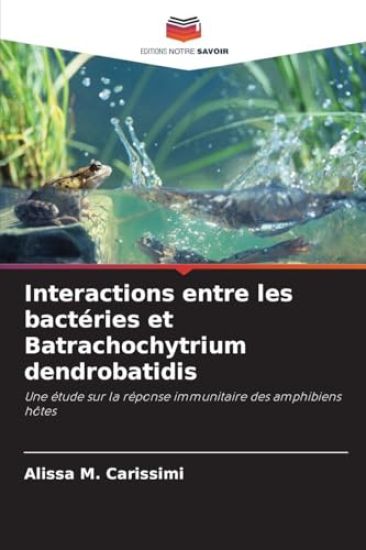
Interactions entre les bactéries et Batrachochytrium dendrobatidis
Alissa M Carissimi
Editions Notre Savoir
2025
pokkari
Les menaces pathog nes qui p sent sur la biodiversit contribuent de mani re significative l'extinction de communaut s et d'esp ces. Pour les amphibiens, le champignon chytride Batrachochytrium dendrobatidis (Bd) repr sente la plus grande menace. La dynamique h te-pathog ne entre les amphibiens et le Bd n'est pas enti rement comprise; cependant, des tudes r centes ont montr que la composition de la communaut microbienne sur les tissus pidermiques des amphibiens peut favoriser la r sistance la maladie. Les bact ries antidermatophytes peuvent inhiber les champignons qui ont besoin de la k ratine de l' piderme pour se d velopper. Deux esp ces, Janthinobacterium lividum et Pseudomonas fluorescens, ont t trouv es sur des amphibiens r sistants au Bd. Dans une s rie de trois exp riences individuelles, des amphibiens sensibles au Bd (c'est- -dire Lithobates shpenocephalus) ont t expos s ces bact ries avant et apr s une infection exp rimentale par le Bd. J. lividum et P. fluorescens ont d clench une forte r ponse immunitaire et peuvent donc tre utilis es pour pr venir la mortalit induite par le Bd. l'inverse, aucune de ces bact ries ne s'est av r e efficace lorsqu'elle a t appliqu e des grenouilles ayant d j t expos es au Bd. Ces r sultats peuvent tre utilis s pour aborder d'autres aspects de l'immunit des amphibiens lorsque le Bd et les bact ries induisent des changements dans la structure de leur communaut pidermique.

"Mr. Troxel, Is it true bacteria eat you alive when you're dead?": Comments and questions from high school students.
M. C. Troxel
Createspace Independent Publishing Platform
2014
nidottu
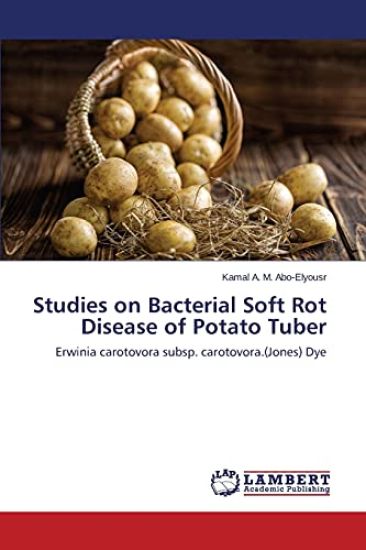
Studies on Bacterial Soft Rot Disease of Potato Tuber
Abo-Elyousr Kamal a M
LAP Lambert Academic Publishing
2015
pokkari
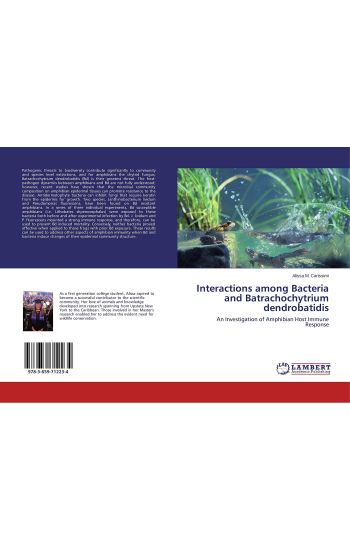
Interactions among Bacteria and Batrachochytrium dendrobatidis
Carissimi Alissa M
LAP Lambert Academic Publishing
2015
pokkari
Adhésion des bactéries lactiques dans des matrices alimentaires
Ly-Chatain-M
Omniscriptum
2018
pokkari
Évolution des bactériémies nosocomiales à porte d entrée urinaire
Hellot-Guersing-M
Omniscriptum
2018
pokkari

Estudio de incidencia y severidad de la marchitez bacteriana del plátano (BWX)
Agnès Sifa Kitumaini; Patient Shamavu M.; Ghyslain Shamavu M.
Ediciones Nuestro Conocimiento
2023
nidottu
Estudos sobre a doença da podridão mole bacteriana do tubérculo da batata
Kamal A. M. Abo-Elyousr
Edicoes Nosso Conhecimento
2025
nidottu
A batata (Solanum tuberosum L.) uma das hortali as mais importantes do Egito. Muitas doen as atacam a batata no campo e tamb m durante o armazenamento. Elas causam grandes e destrutivas perdas cultura, uma vez que provocam uma deteriora o maci a, levando perda de centenas de toneladas em quest o de dias. A podrid o mole causa graves perdas aos tub rculos da batata, bem como a muitas outras hortali as.
Untersuchungen zur bakteriellen Weichfäule der Kartoffelknolle
Kamal A M Abo-Elyousr
Verlag Unser Wissen
2025
pokkari
The objective of this book is to present a critical review and evaluation of the so-called conventional methods currently being used for bacterial identification, as well as to discuss the new approaches for the detection and identification of bacteria. Morphological, biochemical, and serological methods of detection and identification of bacteria in clinical specimens are emphasised, and current methods of characterization and enumeration of bacteria in air, water, milk, and other food materials are also described.

The objective of this book is to present a critical review and evaluation of the so-called conventional methods currently being used for bacterial identification, as well as to discuss the new approaches for the detection and identification of bacteria. Morphological, biochemical, and serological methods of detection and identification of bacteria in clinical specimens are emphasised, and current methods of characterization and enumeration of bacteria in air, water, milk, and other food materials are also described.

Immunoassays for Food-poisoning Bacteria and Bacterial Toxins
G. M. Wyatt
Springer-Verlag New York Inc.
2011
nidottu
Consumer safety has become a central issue of the food supply system in most countries. It encompasses a large number of interacting scientific and tech nological matters, such as agricultural practice, microbiology, chemistry, food technology, processing, handling and packaging. The techniques used in understanding and controlling contaminants and toxicity range from the most sophisticated scientific laboratory methods, through industrial engineering science to simple logical rules implemented in the kitchen. The problems of food safety, however, spread far beyond those directly occupied in food production. Public interest and concern has become acute in recent years, alerting a wide spectrum of specialists in research, education and public affairs. This series aims to present timely volumes covering all aspects of the subject. They will be up-to-date, specialist reviews written by acknowledged experts in their fields of research to express each author's own viewpoint. The readership is intended to be wide and international, and the style to be comprehensible to non-specialists, albeit professionals. The series will be of interest to food scientists and technologists working in industry, universities, polytechnics and government institutes; legislators and regulators concerned with the food supply; and specialists in agriculture, engineering, health care and consumer affairs. One of the most difficult situations to control is the contamination of food by small numbers of pathogenic micro-organisms before they multiply to give the large populations causing food poisoning when eaten.

● Stan the bacteria man appeared in the Oval Office on a gloomy Tuesday morning in late August.● A wildly weird journey into the indeterminate future of this Great Nation full of 0.50-inch service weapon rounds.He only wants to talk. The heavily armed humans only want to shoot.Tale as old as time.On the surface, gray goo gradually becomes warm skin. But underneath beats a heart of gold (or peanut butter, or ball bearings, or meat-as suits the occasion).While confrontations with national leaders, local liaisons, and homicidal political donors escalate into hilarious farce, Stan the bacteria man asks a very human question: Why am I the security threat around here?
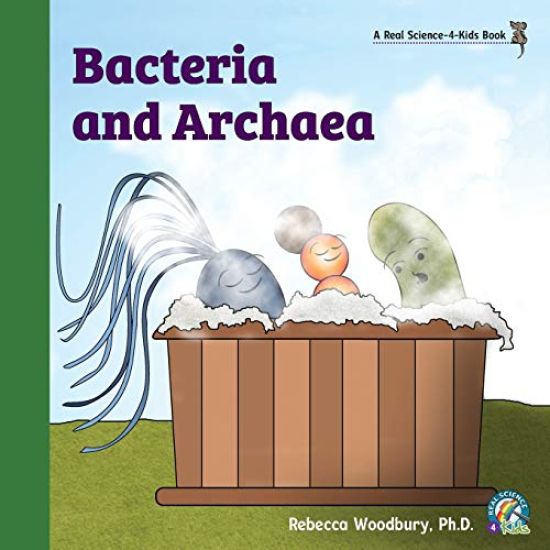
In the leveled reader Bacteria and Archaea, fundamental science facts of biology are explained through simply written text and colorful, fun illustrations. Young readers discover that bacteria and archaea are tiny organisms too small to be seen with only the eyes. Although they look a lot alike, they are different from each other. Bacteria come in three basic shapes: rods, spheres, and spirals. They live in different places, and some live alone, while others live in colonies. Archaea come in different shapes, such as a ball with hairs on one side, lumpy ping pong balls, rod shapes, and long hair-like shapes. Archaea can live in very hot or very salty places, and some can even eat iron.A pronunciation guide of scientific terms is included. 24 pages filled with engaging, colorful illustrations. Reading Level 1-3, Interest Level 2-5.