L'EGCG est la principale cat chine trouv e dans le th vert ayant des effets b n fiques contre de nombreuses maladies telles que le diab te sucr . Le diab te est accompagn par des anomalies m taboliques et connu d' tre associ au stress oxydatif. La pr sente tude visait valuer l'effet de l'EGCG contre le diab te de type 1 et le stress oxydant qui en r sulte. Nos r sultats montrent que in vitro l'EGCG poss de une activit antioxydante puissante, une activit anti-inflammatoire et une activit antidiab tique et anti-ob sit . Une augmentation des diff rents param tres biochimiques tudi s (glyc mie, ur e, cr atinine, ASAT, ALAT, TBIL, LDH et le profil lipidique a t enregistr e. En outre, les TBARS ont augment s dans le foie et les reins, tandis que les activit s des syst mes antioxydants ont t diminu es. L'administration de l'EGCG a am lior toutes les perturbations r nales et h patiques observ es. Ces r sultats sont confirm s par l'histologie du foie et des reins des diff rents lots tudi es. En conclusion, l'EGCG pourrait tre utilis comme compl ment alimentaire qui peut contribuer aux strat gies nutritionnelles pour la pr vention et le traitement du diab te sucr .
L'ent ropathie exsudative se caract rise par une perte excessive de prot ines plasmatiques dans le tube digestif. Elle peut tre suspect e et recherch e devant un syndrome oed mateux associ une hypoalbumin mie et une hypoprotid mie qui constitue l' l ment constant, apr s avoir limin les causes classiques d'hypoprotid mie, associ un tableau digestif fait de diarrh e chronique dans la forme typique.La mise en vidence des pertes gastro-intestinales des prot ines est possible gr ce une m thode de r f rence simple et reproductible; la clairance de l'alpha 1 antitrypsine qui permet une valuation quantitative de la fuite prot ique.L'ent ropathie exsudative peut exposer des complications nutritionnelles, infectieuses et thromboemboliques. Le clinicien doit suivre une strat gie de diagnostic tiologique bien tablit afin de d terminer la cause pour pouvoir prescrire rapidement le traitement sp cifique de la maladie ou du m canisme causal en plus de la prise en charge.
Les st noses oesophagiennes acquises repr sentent une volution redoutable de certaines pathologies oesophagiennes acquises comme les oesophagites caustiques et peptiques ou suite l'ingestion d'un corps tranger. La dysphagie est le premier signe vocateur d'une st nose oesophagienne. Elle doit pousser le praticien mener un interrogatoire minutieux et un examen clinique d taill afin de progresser dans le diagnostic positif et tiologique d'une ventuelle st nose oesophagienne. La dysphagie peut tre camoufl e par une alimentation liquide chez le nourrisson et peut tre d crite comme des douleurs r tro-sternales chez l'enfant. La prise en charge est souvent contraignante avec recours des dilatations oesophagiennes it ratives et parfois la chirurgie d'o l'int r t de la mise en place des mesures pr ventives.
Firms have usually more information about their technology than third parties, and this may be used opportunistically. This book examines how a regulator can mitigate the potential opportunistic behaviour of a polluting monopolist, when imposing taxes in a context of asymmetric information about the firm's production and emissions technology. A two-period dynamic signalling model is used in which the asymmetric information problem is resolved when production and emissions levels are publicly observed at the beginning of the second period. Results were found that highlight that whenever the regulator's environmental conscience is sufficiently high, the monopolist wishes to be perceived as a firm that pollutes a low amount. As a reaction, the regulator better aligns its incentives with those of the polluting firm by charging a tax not higher than that imposed, in expected terms, under the context of symmetric information.
Pjat golosov uslyshite vy v etoj knige. Kogda-to eti ljudi byli semej, no ee v odnochase razrushili - zhestoko i bezvozvratno, kak kartochnyj domik.Katrin i Mark schitalis obraztsovymi suprugami i ne menee obraztsovymi roditeljami. No, kak chasto byvaet, na samom dele ne vse v ikh zhizni bylo blagostno i bezoblachno. Naprimer, Katrin davno razocharovalas v brake i nakhodila uteshenie v objatijakh ljubovnika.Obychnaja intrizhka, skazhete vy. Da, eto bylo do pory do vremeni imenno tak. Poka Katrin, mat semejstva, ne sovershila strashnyj, nepopravimyj postupok. O chem ona dumala, kogda reshilas na nego? Nu uzh tochno ne o svoej seme. Pjat blizkikh ej ljudej - mat, sestra, muzh i dvoe detej - otnyne budut vyzhivat poodinochke, i nikto ne rastopit ikh serdtsa.
Bis zum heutigen Tag gelang es nicht, die Gedanken, Bilder und Tr ume von Koma-Patienten aufzuzeichnen. Dabei k nnen wir, wie sich jetzt dank der genialen Versuchsanordnungen des Dr. Dr. Marz herausstellt, viel, nein, alles ber die Welt erfahren - ber ihre Sch nheit, ihre Schrecken, ber ewiges Lieben und unabl ssiges Sterben. Der ganze Sch pfungsplan lie e sich enth llen, doch erst muss Vincent H.L. ins Koma fallen, bevor sich uns die letzten Weltgeheimnisse offenbaren. Wen wundert es da, dass die Geheimdienste dieses Planeten samt ihrer besten Agentin den Vincent absch pfen wollen, um zu erfahren, was die Welt zusammen h lt, und wie sie die Sch pfung am besten in ihrem Klammergriff behalten?
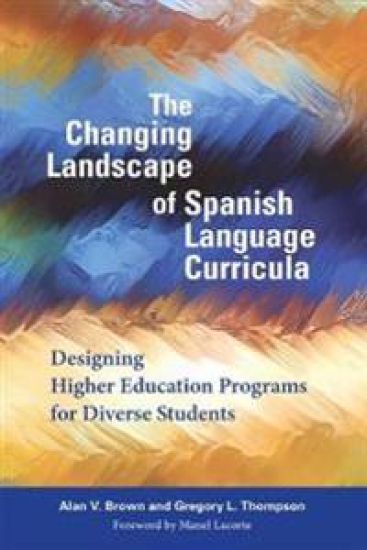
Spanish remains a large and constant fixture in the foreign language learning landscape in the United States. As Spanish language study has grown, so too has the diversity of students and contexts of use, placing the field in the midst of a curricular identity crisis. Spanish has become a second, rather than a foreign, language in the US, which leads to unique opportunities and challenges for curriculum and syllabus design, materials development, individual and program assessment, and classroom pedagogy. In their book, Brown and Thompson address these challenges and provide a vision of Spanish language education for the twenty-first century. Using data from the College Board, ETS, and the authors’ own institutions, as well as responses to their national survey of almost seven hundred Spanish language educators, the authors argue that the field needs to evolve to reflect changes in the sociocultural, socioeducational, and sociopolitical landscape of the US. The authors provide coherent and compelling discussion of the most pressing issues facing Spanish post-secondary education and strategies for converting these challenges into opportunities. Topics that are addressed in the book include: Heritage learners, service learning in Spanish-speaking communities, Spanish for specific purposes, assessment, unique needs for Spanish teacher training, online and hybrid teaching, and the relevance of ACTFL’s national standards for Spanish post-secondary education. An essential read for Spanish language scholars, especially those interested in curriculum design and pedagogy, that includes supporting reflection questions and pedagogical activities for use in upper-level undergraduate and graduate-level courses.
Spanish remains a large and constant fixture in the foreign language learning landscape in the United States. As Spanish language study has grown, so too has the diversity of students and contexts of use, placing the field in the midst of a curricular identity crisis. Spanish has become a second, rather than a foreign, language in the US, which leads to unique opportunities and challenges for curriculum and syllabus design, materials development, individual and program assessment, and classroom pedagogy. In their book, Brown and Thompson address these challenges and provide a vision of Spanish language education for the twenty-first century. Using data from the College Board, ETS, and the authors’ own institutions, as well as responses to their national survey of almost seven hundred Spanish language educators, the authors argue that the field needs to evolve to reflect changes in the sociocultural, socioeducational, and sociopolitical landscape of the US. The authors provide coherent and compelling discussion of the most pressing issues facing Spanish post-secondary education and strategies for converting these challenges into opportunities. Topics that are addressed in the book include: Heritage learners, service learning in Spanish-speaking communities, Spanish for specific purposes, assessment, unique needs for Spanish teacher training, online and hybrid teaching, and the relevance of ACTFL’s national standards for Spanish post-secondary education. An essential read for Spanish language scholars, especially those interested in curriculum design and pedagogy, that includes supporting reflection questions and pedagogical activities for use in upper-level undergraduate and graduate-level courses.
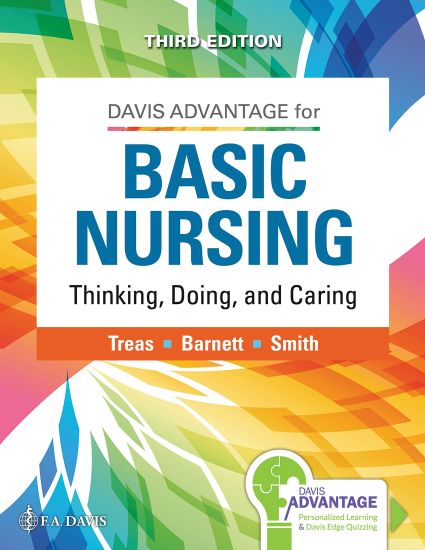
LEARN–APPLY–ASSESSDavis Advantage for Basic Nursing combines an innovative text with an immersive online program that make this challenging but must-know content easier to master by making learning personal. Together, they create a seamless experience that tracks each student’s progress and assesses their knowledge until they have mastered the concepts and are ready to apply them in class, clinical, and practice.An access code inside new, printed textbooks unlocks an ebook, as well as access to Davis Advantage. Or choose the all-digital Instant Access option, which includes the ebook and immediate access to Davis Advantage.THE TEXTBOOKA comprehensive approach to care promotes critical thinking and clinical judgment to teach students how to “Think Like a Nurse” from the very first day. A consistent and concise organization along with a wealth of pedagogical features emphasizes the Thinking, Doing, and Caring at the heart of professional practice.In every chapter, students first explore the theoretical knowledge behind key Fundamentals concepts. Then, they learn the practical knowledge guided by the nursing process; and finally, the skills and procedures for safe and effective nursing care.ONLINE (DAVIS ADVANTAGE)Using a unique and proven approach across a Learn-Apply-Assess continuum, Davis Advantage engages students and helps them make the connections to key topics. Whether teaching in-person or online, this complete, integrated solution aligns seamlessly with the textbook and equips instructors with actionable analytics to track students’ progress, remediate where needed, and facilitate an active learning environment.LEARN—Personalized LearningThe foundation of the Davis Advantage platform, Personalized Learning, immerses students in an online learning experience tailored to their needs. Students are assessed on their comprehension of key topics from the text, and then are guided through animated mini-lecture videos and dynamic activities to reinforce learning and bring concepts to life.APPLY—Clinical Judgment (NEW!)Clinical Judgment elevates students’ critical thinking and clinical reasoning, helping them to build the clinical judgment skills they need to practice safe and effective nursing care and to prepare for the Next Generation NCLEX® with confidence. Progressive case studies featuring real-life, complex clinical situations challenge students to apply their knowledge, make informed decisions, and evaluate outcomes.ASSESS—QuizzingQuizzing uses NCLEX®-style questions for assessment and remediation. Its adaptive, question-based format provides the additional practice students need to test their knowledge, master course content, and perform well on course and board exams.TextbookProvides the evidence-based, foundational knowledge students need to learn how to ‘think like a nurse’.Promotes critical thinking, clinical reasoning, and clinical decision making through a comprehensive approach to care.Prepares students for real-world practice with case studies and clinically based exercises that develop clinical judgment skills and reinforce the thinking, doing, and caring they will do as nurses.Features over 230 step-by-step, illustrated procedures with rationales to teach students how to perform and master essential nursing skills.Emphasizes the important aspects of safe and effective care to ensure the best patient outcomes.Davis Advantage (Personalized Learning, Clinical Judgment (NEW!) and Quizzing)Personalized Learning engages students through videos and interactive activities that present key concepts in a way that makes content more relatable and understandable.Clinical Judgment (NEW!) challenges students with complex questions that align with the cognitive areas of the NCSBN’s Clinical Judgment Measurement Model, requiring careful analysis, synthesis of the data, and critical thinking.Quizzing provides thousands of NCLEX®-style questions (including alternate format questions) and detailed rationales to test students’ knowledge and promote in-depth understanding.Personalized Learning Plans and dashboards track students’ progress across their assignments and highlight where they need to focus their study time.Actionable analytics allow instructors to track comprehension and participation, monitor performance, and identify areas for remediation.Personalized Teaching Plans provide instructors with engaging lesson plans and activities that can be leveraged in both virtual and in-person classroom settings.Integrated ebook allows students to reference the textbook anytime, anywhere.New To This Edition:NEW! Clinical Judgment component now in Davis Advantage. EXPANDED & ENHANCED! Increased focus on Clinical Judgment reflecting the NCSBN Clinical Judgment Measurement Model (CJMM) and the relationship among the nursing process, critical thinking, clinical reasoning, and clinical judgment.NEW! “Critical-Thinking and Clinical Judgment” scenario with questions added to each chapter.UPDATED! “Example Client Conditions” to reflect CJMM.REVISED! Nursing process chapters combined into a single chapter to better explain the interconnectedness of each step in the Nursing Process.EXPANDED & ENHANCED! Focus on patient advocacy.