Kirjojen hintavertailu. Mukana 12 411 060 kirjaa ja 12 kauppaa.

Kirjahaku

Etsi kirjoja tekijän nimen, kirjan nimen tai ISBN:n perusteella.

1000 tulosta hakusanalla Magda Portal

Sinners on Trial

Sinners on Trial

Magda Teter

Harvard University Press
2011
sidottu
In post-Reformation Poland—the largest state in Europe and home to the largest Jewish population in the world—the Catholic Church suffered profound anxiety about its power after the Protestant threat. Magda Teter reveals how criminal law became a key tool in the manipulation of the meaning of the sacred and in the effort to legitimize Church authority. The mishandling of sacred symbols was transformed from a sin that could be absolved into a crime that resulted in harsh sentences of mutilation, hanging, decapitation, and, principally, burning at the stake.Teter casts new light on the most infamous type of sacrilege, the accusation against Jews for desecrating the eucharistic wafer. These sacrilege trials were part of a broader struggle over the meaning of the sacred and of sacred space at a time of religious and political uncertainty, with the eucharist at its center. But host desecration—defined in the law as sacrilege—went beyond anti-Jewish hatred to reflect Catholic-Protestant conflict, changing conditions of ecclesiastic authority and jurisdiction, and competition in the economic marketplace.Recounting dramatic stories of torture, trial, and punishment, this is the first book to consider the sacrilege accusations of the early modern period within the broader context of politics and common crime. Teter draws on previously unexamined trial records to bring out the real-life relationships among Catholics, Jews, and Protestants and challenges the commonly held view that following the Reformation, Poland was a “state without stakes”—uniquely a country without religious persecution.

Blood Libel

Blood Libel

Magda Teter

Harvard University Press
2020
sidottu
A landmark history of the antisemitic blood libel myth—how it took root in Europe, spread with the invention of the printing press, and persists today.Accusations that Jews ritually killed Christian children emerged in the mid-twelfth century, following the death of twelve-year-old William of Norwich, England, in 1144. Later, continental Europeans added a destructive twist: Jews murdered Christian children to use their blood. While charges that Jews poisoned wells and desecrated the communion host waned over the years, the blood libel survived.Initially blood libel stories were confined to monastic chronicles and local lore. But the development of the printing press in the mid-fifteenth century expanded the audience and crystallized the vocabulary, images, and “facts” of the blood libel, providing a lasting template for hate. Tales of Jews killing Christians—notably Simon of Trent, a toddler whose body was found under a Jewish house in 1475—were widely disseminated using the new technology. Following the paper trail across Europe, from England to Italy to Poland, Magda Teter shows how the blood libel was internalized and how Jews and Christians dealt with the repercussions.The pattern established in early modern Europe still plays out today. In 2014 the Anti-Defamation League appealed to Facebook to take down a page titled “Jewish Ritual Murder.” The following year white supremacists gathered in England to honor Little Hugh of Lincoln as a sacrificial victim of the Jews. Based on sources in eight countries and ten languages, Blood Libel captures the long shadow of a pernicious myth.
Christian Supremacy

Christian Supremacy

Magda Teter

PRINCETON UNIVERSITY PRESS
2023
sidottu
A panoramic cultural and legal history that traces the roots of antisemitism and racism to early Christian theologySince the earliest days of Christianity, theologians expressed pervasive anxiety about Jews as equal members of society, and, with European expansion in the early modern period, that anxiety extended to people of color. This troubling legacy still haunts us today. Christian Supremacy demonstrates how theological and legal frameworks created by the church centuries ago laid the seeds of antisemitism and anti-Black racism and reveals why Christian identity lies at the heart of the world’s violent white supremacy movements.In a powerful historical narrative spanning nearly two millennia, Magda Teter describes how Christian theology of late antiquity cast Jews as “children born to slavery,” and how the supposed theological inferiority of Jews became inscribed into law, creating tangible structures that reinforced a sense of Christian domination and superiority. With the dawn of European colonialism, a distinct brand of European Christian supremacy found expression in the legally sanctioned enslavement and exploitation of people of color, later taking the form of white Christian supremacy in the New World.Drawing on a wealth of primary evidence ranging from the theological and legal to the philosophical and artistic, Christian Supremacy is a profound reckoning with history that traces the roots of the modern rejection of Jewish and Black equality to an enduring Christian heritage of exclusion, intolerance, and persecution.
Christian Supremacy

Christian Supremacy

Magda Teter

PRINCETON UNIVERSITY PRESS
2025
pokkari
A panoramic cultural and legal history that traces the roots of antisemitism and racism to early Christian theologySince the earliest days of Christianity, theologians expressed pervasive anxiety about Jews as equal members of society, and, with European expansion in the early modern period, that anxiety extended to people of color. This troubling legacy still haunts us today. Christian Supremacy demonstrates how theological and legal frameworks created by the church centuries ago laid the seeds of antisemitism and anti-Black racism and reveals why Christian identity lies at the heart of the world’s violent white supremacy movements.In a powerful historical narrative spanning nearly two millennia, Magda Teter describes how Christian theology of late antiquity cast Jews as “children born to slavery,” and how the supposed theological inferiority of Jews became inscribed into law, creating tangible structures that reinforced a sense of Christian domination and superiority. With the dawn of European colonialism, a distinct brand of European Christian supremacy found expression in the legally sanctioned enslavement and exploitation of people of color, later taking the form of white Christian supremacy in the New World.Drawing on a wealth of primary evidence ranging from the theological and legal to the philosophical and artistic, Christian Supremacy is a profound reckoning with history that traces the roots of the modern rejection of Jewish and Black equality to an enduring Christian heritage of exclusion, intolerance, and persecution.
A Guide to Heidegger's Being and Time

A Guide to Heidegger's Being and Time

Magda King

State University of New York Press
2001
pokkari
An indispensable guide to the major work of one of the twentieth century's most influential thinkers.This is the most comprehensive commentary on both Divisions of Heidegger's Being and Time, making it the essential guide for newcomers and specialists alike. Beginning with a non-technical exposition of the question Heidegger poses-"What does it mean to be?"-and keeping that question in view, it gradually increases the closeness of focus on the text. Citing Joan Stambaugh's translation, the author explains the key notions of the original with the help of concrete illustrations and reference to certain of the most relevant works Heidegger composed both before and after the publication of Being and Time.
Household Politics

Household Politics

Magda Fahrni

University of Toronto Press
2005
sidottu
The reconstruction of Canadian society in the wake of the Second World War had an enormous impact on all aspects of public and private life. For families in Montreal, reconstruction plans included a stable home life hinged on social and economic security, female suffrage, welfare-state measures, and a reasonable cost of living. In Household Politics, Magda Fahrni examines postwar reconstruction from a variety of angles in order to fully convey its significance in the 1940s as differences of class, gender, language, religion, and region naturally produced differing perspectives. Reconstruction was not simply a matter of official policy. Although the government set many of the parameters for public debate, federal projects did not inspire a postwar consensus, and families alternatively embraced, negotiated, or opposed government plans. Through in-depth research from a wide variety of sources, Fahrni brings together family history, social history, and political history to look at a wide variety of Montreal families – French-speaking and English-speaking; Catholic, Protestant, and Jewish - making Household Politics a particularly unique and erudite study.
Household Politics

Household Politics

Magda Fahrni

University of Toronto Press
2005
pokkari
The reconstruction of Canadian society in the wake of the Second World War had an enormous impact on all aspects of public and private life. For families in Montreal, reconstruction plans included a stable home life hinged on social and economic security, female suffrage, welfare-state measures, and a reasonable cost of living. In Household Politics, Magda Fahrni examines postwar reconstruction from a variety of angles in order to fully convey its significance in the 1940s as differences of class, gender, language, religion, and region naturally produced differing perspectives. Reconstruction was not simply a matter of official policy. Although the government set many of the parameters for public debate, federal projects did not inspire a postwar consensus, and families alternatively embraced, negotiated, or opposed government plans. Through in-depth research from a wide variety of sources, Fahrni brings together family history, social history, and political history to look at a wide variety of Montreal families – French-speaking and English-speaking; Catholic, Protestant, and Jewish - making Household Politics a particularly unique and erudite study.
Data Collection and Management

Data Collection and Management

Magda Stouthamer-Loeber; Welmoet Bok van Kammen

SAGE Publications Inc
1995
nidottu
Tired of a trial-and-error approach to collecting and managing data? Data Collection and Management offers helpful information on managing research projects. By stressing how to use good standards for data collecting and processing, the authors cover such important how-tos as planning research activities; making budgetary decisions and keeping the budget under control; hiring, training, and supervising field interviewing staff; establishing whether interviewers are ready to start interviewing; and ensuring high participant acquisition and retention rates. The book also covers using computerized information systems for tracking data collected and the data management process. Proposal writers, principal investigators, graduate research students, and project coordinators of research requiring large-scale field data collection will find the book to be an indispensable tool.
The Environmental Implications of Privatization

The Environmental Implications of Privatization

Magda Lovei

World Bank Publications
2002
nidottu
World Bank Discussion Paper 426 Governments have increasingly come to recognize the economic potential and fiscal advantages of privatisation. Privatisation, under the right conditions, can also yield environmental benefits and contribute to sustainable development. This report contains a number of case studies that highlight the lessons learned about the environmental implications of privatisation. It stresses that privatisation offers an opportunity for making strategic decisions with longer-term impacts. This report also emphasizes that integrating environmental and social considerations into the privatisation process leads to more sustainable outcomes. It also recommends strategies toward building on the positive linkages between privatisation and environmental protection.
RDA

RDA

Magda El-Sherbini

ALA Editions
2013
nidottu
"In this important book El-Sherbini tackles key questions about how the new cataloging standard will be implemented by cataloging professionals, offering an orientation in the conceptual background and the structure of RDA: Resource Description and Access from a practical and technical perspective, including a detailed comparison with AACR2. Firmly rooted in the concrete application of RDA, with numerous sample records, this book Covers FRBR-driven tasks, FRBR-Group relationships, and principles of FRAD, including how FRAD impacts the RDA application Analyzes the roles of manifestations and items, such as pre-cataloging decisions, preferred sources of information, and mandatory elements of description Discusses works and expressions for specific library materials, from methods of recording primary relationships to constructing the authorized access point and recording relationships Offers advice for using RDA Toolkit, with tips for efficient navigation in RDA Toolkit using workflows and searching techniques And much more"
Abigail

Abigail

Magda Szabo

MacLehose Press
2021
pokkari
A teenage girl's difficult journey towards adulthood in a time of war."A school story for grownups that is also about our inability or refusal to protect children from history" SARAH MOSS"Of all Szabo's novels, Abigail deserves the widest readership. It's an adventure story, brilliantly written" TIBOR FISCHEROf all her novels, Magda Szabó's Abigail is indeed the most widely read in her native Hungary. Now, fifty years after it was written, it appears for the first time in English, joining Katalin Street and The Door in a loose trilogy about the impact of war on those who have to live with the consequences. It is late 1943 and Hitler, exasperated by the slowness of his Hungarian ally to act on the "Jewish question" and alarmed by the weakness on his southern flank, is preparing to occupy the country. Foreseeing this, and concerned for his daughter's safety, a Budapest father decides to send her to a boarding school away from the capital. A lively, sophisticated, somewhat spoiled teenager, she is not impressed by the reasons she is given, and when the school turns out to be a fiercely Puritanical one in a provincial city a long way from home, she rebels outright. Her superior attitude offends her new classmates and things quickly turn sour.It is the start of a long and bitter learning curve that will open her eyes to her arrogant blindness to other people's true motives and feelings. Exposed for the first time to the realities of life for those less privileged than herself, and increasingly confronted by evidence of the more sinister purposes of the war, she learns lessons about the nature of loyalty, courage, sacrifice and love.Translated from the Hungarian by Len Rix
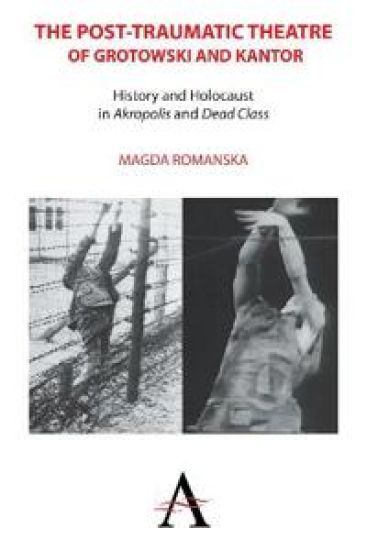
The Post-traumatic Theatre of Grotowski and Kantor

The Post-traumatic Theatre of Grotowski and Kantor

Magda Romanska; Kathleen Cioffi

Anthem Press
2012
sidottu
Despite its international influence, Polish theatre remains a mystery to many Westerners. This volume attempts to fill in current gaps in English-language scholarship by offering a historical and critical analysis of two of the most influential works of Polish theatre: Jerzy Grotowski’s ‘Akropolis’ and Tadeusz Kantor’s ‘Dead Class’. By examining each director’s representation of Auschwitz, this study provides a new understanding of how translating national trauma through the prism of performance can alter and deflect the meaning and reception of theatrical works, both inside and outside of their cultural and historical contexts.