Kirjojen hintavertailu. Mukana 11 420 392 kirjaa ja 12 kauppaa.

Kirjahaku

Etsi kirjoja tekijän nimen, kirjan nimen tai ISBN:n perusteella.

1000 tulosta hakusanalla Manuela Roth

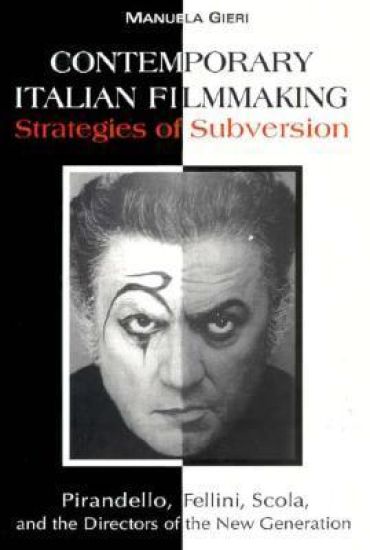
Contemporary Italian Filmmaking

Contemporary Italian Filmmaking

Manuela Gieri

University of Toronto Press
1995
sidottu
Contemporary Italian Filmmaking is an innovative critique of Italian filmmaking in the aftermath of World War II - as it moves beyond traditional categories such as genre film and auteur cinema. Manuela Gieri demonstrates that Luigi Pirandello's revolutionary concept of humour was integral to the development of a counter-tradition in Italian filmmaking that she defines `humoristic'. She delineates a `Pirandellian genealogy' in Italian cinema, literature, and culture through her examination of the works of Federico Fellini, Ettore Scola, and many directors of the `new generation,' such as Nanni Moretti, Gabriele Salvatores, Maurizio Nichetti, and Giuseppe Tornatore. A celebrated figure of the theatrical world, Luigi Pirandello (1867-1936) is little known beyond Italy for his critical and theoretical writings on cinema and for his screenplays. Gieri brings to her reading of Pirandello's work the critical parameters offered by psychoanalysis, poststructuralism, and postmodernism to develop a syncretic and transcultural vision of the history of Italian cinema. She identifies two fundamental trends of development in this tradition: the `melodramatic imagination' and the `humoristic,' or comic, imagination. With her focus on the humoristic imagination, Gieri describes a `Pirandellian mode' derived from his revolutionary utterances on the cinema and narrative, and specifically, from his essay on humour, L'umorismo (On Humour, 1908). She traces a history of the Pirandellian mode in cinema and investigates its characteristics, demonstrating the original nature of Italian filmmaking that is particularly indebted to Pirandello's interpretation of humour.
Contemporary Italian Filmmaking

Contemporary Italian Filmmaking

Manuela Gieri

University of Toronto Press
1995
pokkari
Contemporary Italian Filmmaking is an innovative critique of Italian filmmaking in the aftermath of World War II - as it moves beyond traditional categories such as genre film and auteur cinema. Manuela Gieri demonstrates that Luigi Pirandello's revolutionary concept of humour was integral to the development of a counter-tradition in Italian filmmaking that she defines `humoristic'. She delineates a `Pirandellian genealogy' in Italian cinema, literature, and culture through her examination of the works of Federico Fellini, Ettore Scola, and many directors of the `new generation,' such as Nanni Moretti, Gabriele Salvatores, Maurizio Nichetti, and Giuseppe Tornatore. A celebrated figure of the theatrical world, Luigi Pirandello (1867-1936) is little known beyond Italy for his critical and theoretical writings on cinema and for his screenplays. Gieri brings to her reading of Pirandello's work the critical parameters offered by psychoanalysis, poststructuralism, and postmodernism to develop a syncretic and transcultural vision of the history of Italian cinema. She identifies two fundamental trends of development in this tradition: the `melodramatic imagination' and the `humoristic,' or comic, imagination. With her focus on the humoristic imagination, Gieri describes a `Pirandellian mode' derived from his revolutionary utterances on the cinema and narrative, and specifically, from his essay on humour, L'umorismo (On Humour, 1908). She traces a history of the Pirandellian mode in cinema and investigates its characteristics, demonstrating the original nature of Italian filmmaking that is particularly indebted to Pirandello's interpretation of humour.

Altered Habits

Altered Habits

Manuela Mourao

University Press of Florida
2002
sidottu
In a comprehensive analysis of the nun in literature, Manuela Mourao challenges the notion that nuns are ""women who lead unnatural lives, most probably because they were disappointed in love or because they failed to adjust to 'reality.""' Unique in the breadth of its historical and literary scope-the seventeenth through the twentieth centuries and the national literatures of France and England, with references to those of Portugal, Italy, and the U.S. - Altered Habits examines the representation of nuns and convents in a range of primary sources, both canonical and more culturally marginal. Expanding on the familiar accounts of anti-Catholic and misogynous stereotypes, Mourao relates the more familiar French texts to both English and Portuguese traditions, as well as to contemporary autobiographies of nuns. Mourao's is the first study to trace the fictional tropes across cultures and to articulate a feminist critique of the misrepresentations of this important female figure, from evil abbess, to naive victim, to more romantic stereotypes. She provides substantial documentation of the various tropes along with difficult to access bibliographic information, including citations of a number of little-known works. Her interpretation of their social and political implications illuminates the mechanisms that allowed them to take hold, to endure, and ultimately to suppress alternatives. Finally, she highlights a number of post-Vatican II works in which the stereotypes have been transformed and, she argues, a reconsideration of traditional imagery has begun to take place.
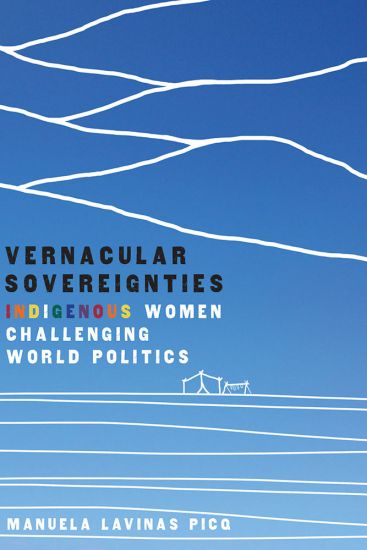
Vernacular Sovereignties

Vernacular Sovereignties

Manuela Lavinas Picq

University of Arizona Press
2019
nidottu
Indigenous women continue to be imagined as passive Subjects at the margins of political decision-making, but they are in fact dynamic actors who shape state sovereignty and domestic and international politics. Manuela Lavinas Picq uses the case of Kichwa women successfully advocating for gender parity in the administration of Indigenous justice in Ecuador to show how Indigenous women can influence world politics.
Daughter of Silence

Daughter of Silence

Manuela Fingueret

Texas Tech Press,U.S.
2012
sidottu
Silence is a tradition among the women of Rita’s family, so it is no wonder that she must interpret for herself what her mother has left unsaid about the horrors of the Terezin concentration camp. But Rita faces a silence of her own: a Peronist militant in 1980s Argentina, she has been incarcerated and abused in Buenos Aires’s infamous Escuela de Mecánica de la Armada (ESMA) detention center. In an imagined dialogue between mother and daughter, Rita recreates Tinkeleh’s unarticulated story, interweaving it with memories of her own childhood. Breaking with the tradition of women as silent observers, Rita speaks not only for the nameless victims who have disappeared under Argentina’s military dictatorship but those of the Holocaust. Fingueret’s trenchant novel of survival transforms silence into a cry for justice that cannot be stifled.
Of Alien Kings and Perpetual Kin

Of Alien Kings and Perpetual Kin

Manuela Palmeirim

SEAN KINGSTON PUBLISHING
2006
sidottu
Of Alien Kings and Perpetual Kin presents a detailed understanding and analysis of the ideology of kingship among the Aruwund (Lunda) of southern Democratic Republic of the Congo. In doing so the text is drawn into addressing a range of important regional themes: the debate on the concept of the 'culture hero' in central African traditions of state formation; the system of 'perpetual kinship'; issues of hierarchy; and the symbolic use of space in royal ritual. All these lead to an analysis that stresses the fluidity and ambiguity of symbolic thought. In this, this innovative work questions the heuristic and theoretical validity of the concept of 'opposition' as used in theoretical models applied to the study of symbolism in which terms are self-contained and mutually exclusive.
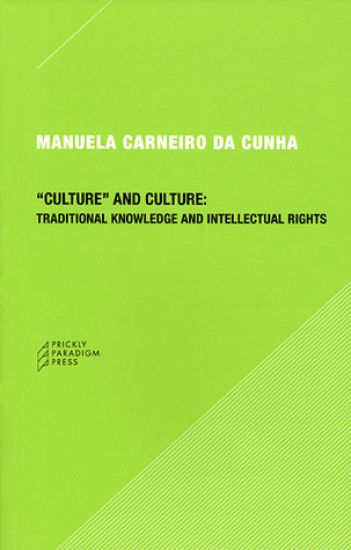
"Culture" and Culture

"Culture" and Culture

Manuela Carneiro da Cunha

Prickly Paradigm Press, LLC
2009
nidottu
Brazilian anthropologist Manuela Carneiro da Cunha examines here the complex meaning—and anthropological implications—of the word “culture” for indigenous peoples. Caneiro da Cunha explores the contradictions inherent in the interface between Western and traditional understandings of knowledge and intellectual property rights. Distinguishing culture from “culture,” the latter being a reflexive awareness of one’s culture, Carneiro da Cunha then poses questions such as: What are the cognitive and pragmatic consequences when “culture” and culture coexist? She shows how the word “culture,” as used in the anthropological sense, is employed by indigenous people to distinguish the different interpretations and avoid contradictions. “Culture” and Culture offers a concise and innovative anthropological study of a crucial issue faced by indigenous peoples the world over.
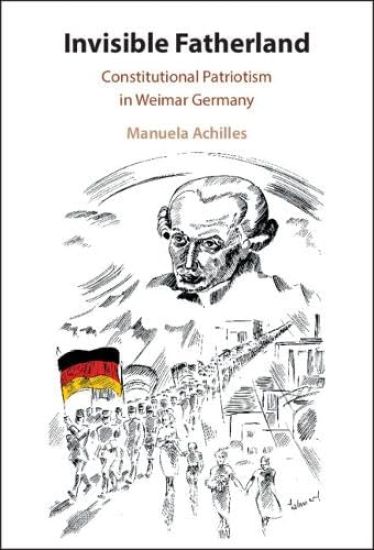
Invisible Fatherland

Invisible Fatherland

Manuela Achilles

Cambridge University Press
2025
sidottu
Weimar Germany is often remembered as the ultimate political disaster, a democracy whose catastrophic end directly led to Adolf Hitler's rise. Invisible Fatherland challenges this narrative by recovering the nuanced and sophisticated efforts of Weimar contemporaries to make democracy work in Germany-efforts often obscured by the Republic's eventual collapse. In doing so, Manuela Achilles reveals a unique form of constitutional patriotism that was rooted in openness, compromise, and the capacity to manage conflict. Authoritative yet accessible, Invisible Fatherland contrasts Weimar's pluralistic democratic practices with the rigid tendencies in contemporary thought, including Rudolf Smend's theory of symbolic integration and Karl Löwenstein's concept of militant democracy. Both theories, though influential, restrict the positive potential of open, conflict-driven democratic processes. This study challenges us to appreciate the fundamental fluidity and pluralism of liberal democracy and to reflect on its resilience in the face of illiberal and authoritarian threats-an urgent task in our time.
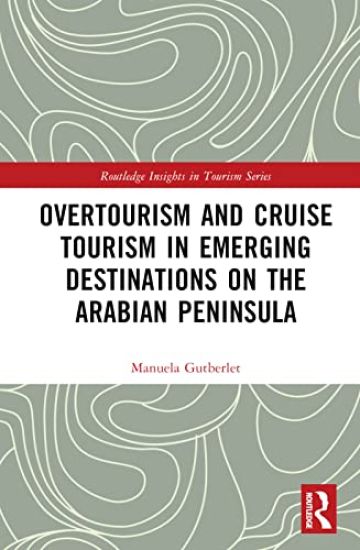
Overtourism and Cruise Tourism in Emerging Destinations on the Arabian Peninsula
Cruise tourism is one of the fastest growing sectors worldwide. This book is the first of its kind to provide in-depth insights into the emergence of mega-cruise tourism in destinations on the Arabian Peninsula and its impacts on local communities, their spaces, cultures, identities and tourist experiences. It offers a micro-sociological analysis, calling for holistic, participatory, mindful approaches and to rethink current exploitative tourism planning and development. It assumes a high political, social and economic importance within globalization. It draws on a long-term field study in an under-researched region in Asia that developed large-scale tourism recently to diversify the economy. The book provides insights on the destination development from a state of continuous growth to a sudden fall in tourism activities due to a sudden shock, caused by the global health pandemic and its resilience. It explores the sociocultural, economic and spatial challenges faced in international tourism development and its power relations analysed from different perspectives and within time. It analyses time-space compression, overtourism, urban tourism, nature-based tourism, enclavization, social capital, imaginaries, Cultural Ecosystem Services, slow tourism as well as just tourism. The book provides an innovative contribution to the planning and development of tourism destinations, communities and their spaces in which tourism operates in a fast pace. It will be of interest to academics, undergraduate and postgraduate students in the field of tourism and hospitality management, geography, sociology, anthropology, urban planning and environmental sciences. Moreover, the book will be useful for practitioners and policymakers around the globe, as well as all those interested in the fast emergence and the impacts of mega-cruise tourism.
European Narratives and Euroscepticism in the Western Balkans and the EU

European Narratives and Euroscepticism in the Western Balkans and the EU

Manuela Caiani; Benedetta Carlotti; Marko Lovec; Maria Winclawska; Faris Kocan; Adam Balcer

TAYLOR FRANCIS LTD
2024
sidottu
Moving from a social movement perspective, this timely volume examines narratives on Euroscepticism and frames on Europe from below, at the party and social movement levels. Revealing perspectives from both the Right and the Left, it unpacks the emergence, re-emergence and increase in critical ‘voices’ and opposition towards Europe.Based on extensive fieldwork in two candidate countries for accession to the EU and three member states, it offers insight from analysis of focus groups, interviews with Eurosceptic and pro-European political actors and ordinary citizens, together with frame analysis and scrutiny of archival material, electoral manifestoes and organisational documents. Revealing the development of Eurocritical frames, it demonstrates the differences and similarities in narratives used to address Europe and the conceptualisation of Euroscepticism. Key cases examined include the rise of illiberalism in post-transition Slovenia; complex Euroscepticism in Poland; the path from strong support to harsh opposition in Italy; indecision over membership in North Macedonia; anticipating the future while revisiting the past in Bosnia and Herzegovina.Offering guidelines for the direction of future research and policy, European Narratives and Euroscepticism in the Western Balkans and the EU is essential reading for scholars and students of political sociology, political science, European studies and international relations, as well as policy makers concerned with trajectories pro and against Europe and the European integration process.
European Narratives and Euroscepticism in the Western Balkans and the EU

European Narratives and Euroscepticism in the Western Balkans and the EU

Manuela Caiani; Benedetta Carlotti; Marko Lovec; Maria Winclawska; Faris Kocan; Adam Balcer

TAYLOR FRANCIS LTD
2025
nidottu
Moving from a social movement perspective, this timely volume examines narratives on Euroscepticism and frames on Europe from below, at the party and social movement levels. Revealing perspectives from both the Right and the Left, it unpacks the emergence, re-emergence and increase in critical ‘voices’ and opposition towards Europe.Based on extensive fieldwork in two candidate countries for accession to the EU and three member states, it offers insight from analysis of focus groups, interviews with Eurosceptic and pro-European political actors and ordinary citizens, together with frame analysis and scrutiny of archival material, electoral manifestoes and organisational documents. Revealing the development of Eurocritical frames, it demonstrates the differences and similarities in narratives used to address Europe and the conceptualisation of Euroscepticism. Key cases examined include the rise of illiberalism in post-transition Slovenia; complex Euroscepticism in Poland; the path from strong support to harsh opposition in Italy; indecision over membership in North Macedonia; anticipating the future while revisiting the past in Bosnia and Herzegovina.Offering guidelines for the direction of future research and policy, European Narratives and Euroscepticism in the Western Balkans and the EU is essential reading for scholars and students of political sociology, political science, European studies and international relations, as well as policy makers concerned with trajectories pro and against Europe and the European integration process.
Antonio de Viti de Marco

Antonio de Viti de Marco

Manuela Mosca

Palgrave Macmillan
2016
sidottu
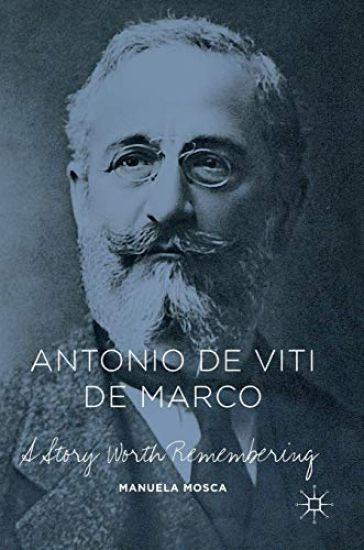
This book provides insight into the remarkable life and work of the Italian economist Antonio de Viti de Marco (1858-1943). This book presents eleven interviews with American and Italian scholars from various disciplines that provide a profile of this major intellectual as an economic theorist, politician, and individual. He was the founder of the pure theory of Public Finance, played an important role in the foundation of Public Choice, and was also a staunch liberal and radical politician. An English translation of one of his books, made as early as 1936, greatly influenced James M. Buchanan, Nobel prize-winner for economics.
Global Inequalities Beyond Occidentalism
Based on theoretical developments in research on world-systems analysis, transnational migration, postcolonial and decolonial perspectives, whilst considering continuities of inequality patterns in the context of colonial and postcolonial realities, Global Inequalities Beyond Occidentalism proposes an original framework for the study of the long-term reproduction of inequalities under global capitalism. With attention to the critical assessment of both Marxist and Weberian perspectives, this book examines the wider implications of transferring classical approaches to inequality to a twenty-first-century context, calling for a reconceptualisation of inequality that is both theoretically informed and methodologically consistent, and able to cater for the implications of shifts from national and Western structures to global structures. Engaging with approaches to the study of class, gender, racial and ethnic inequalities at the global level, this innovative work adopts a relational perspective in the study of social inequalities that is able to reveal how historical interdependencies between world regions have translated as processes of inequality production and reproduction. As such, it will be of interest to scholars of sociology, political and social theory and anthropology concerned with questions of globalisation and inequality.
European and American Extreme Right Groups and the Internet
How do right-wing extremist organizations throughout the world use the Internet as a tool for communication and recruitment? What is its role in identity-building within radical right-wing groups and how do they use the Internet to set their agenda, build contacts, spread their ideology and encourage mobilization? This important contribution to the field of Internet politics adopts a social movement perspective to address and examine these important questions. Conducting a comparative content analysis of more than 500 extreme right organizational web sites from France, Germany, Italy, Spain, the United Kingdom and the United States, it offers an overview of the Internet communication activities of these groups and systematically maps and analyses the links and structure of the virtual communities of the extreme right. Based on reports from the daily press the book presents a protest event analysis of right wing groups’ mobilisation and action strategies, relating them to their online practices. In doing so it exposes the new challenges and opportunities the Internet presents to the groups themselves and the societies in which they exist.
National Identity and the Agrarian Republic
With a few exceptions, historiography has paid little attention to the impact of French economic thought during the American Revolution, focusing instead on the Revolution’s links with Britain. This book outlines how, from the mid-eighteenth to the early-nineteenth century, the political and social dimension of French economic thought, and particularly of Physiocracy, spurred American Republicans to a radical shaping of American agrarian ideology. Such a perspective allows for a reconsideration of several questions that lie at the heart of contemporary historiographic debate: the connection between politics and economics; the meaning of republicanism; the foundations of representation; the role of Europe in the Atlantic world; and the interaction between national histories and global context. In particular, the research methodology adopted here makes it possible to reconstruct how American national identity, conceived as an expression of society in economic terms, emerged through a cosmopolitan way of thinking focused on the uniqueness of the new state.
Overtourism and Cruise Tourism in Emerging Destinations on the Arabian Peninsula
Cruise tourism is one of the fastest growing sectors worldwide. This book is the first of its kind to provide in-depth insights into the emergence of mega-cruise tourism in destinations on the Arabian Peninsula and its impacts on local communities, their spaces, cultures, identities and tourist experiences. It offers a micro-sociological analysis, calling for holistic, participatory, mindful approaches and to rethink current exploitative tourism planning and development. It assumes a high political, social and economic importance within globalization. It draws on a long-term field study in an under-researched region in Asia that developed large-scale tourism recently to diversify the economy. The book provides insights on the destination development from a state of continuous growth to a sudden fall in tourism activities due to a sudden shock, caused by the global health pandemic and its resilience. It explores the sociocultural, economic and spatial challenges faced in international tourism development and its power relations analysed from different perspectives and within time. It analyses time-space compression, overtourism, urban tourism, nature-based tourism, enclavization, social capital, imaginaries, Cultural Ecosystem Services, slow tourism as well as just tourism. The book provides an innovative contribution to the planning and development of tourism destinations, communities and their spaces in which tourism operates in a fast pace. It will be of interest to academics, undergraduate and postgraduate students in the field of tourism and hospitality management, geography, sociology, anthropology, urban planning and environmental sciences. Moreover, the book will be useful for practitioners and policymakers around the globe, as well as all those interested in the fast emergence and the impacts of mega-cruise tourism.