
Kirjahaku
Etsi kirjoja tekijän nimen, kirjan nimen tai ISBN:n perusteella.
1000 tulosta hakusanalla Maria Edgeworth
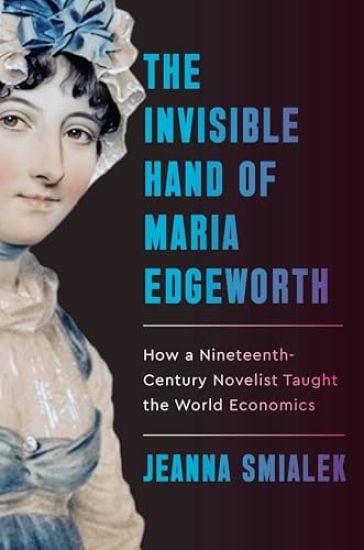
The Invisible Hand of Maria Edgeworth
Knopf Doubleday Publishing Group
2026
sidottu
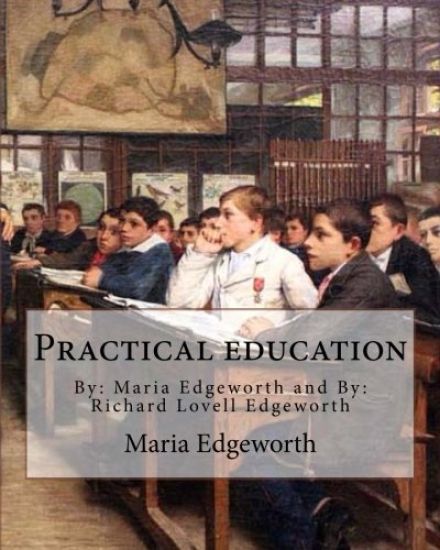
Practical education. By: Maria Edgeworth and By: Richard Lovell Edgeworth: Practical Education is an educational treatise written by Maria Edge
Richard Lovell Edgeworth; Maria Edgeworth
Createspace Independent Publishing Platform
2017
nidottu
Practical Education is an educational treatise written by Maria Edgeworth and her father Richard Lovell Edgeworth. Published in 1798, it is a comprehensive theory of education that combines the ideas of philosophers John Locke and Jean-Jacques Rousseau as well as of educational writers such as Thomas Day, William Godwin, Joseph Priestley, and Catharine Macaulay. The Edgeworths' theory of education was based on the premise that a child's early experiences are formative and that the associations they form early in life are long-lasting. They also encourage hands-on learning and include suggestions of "experiments" that children can perform and learn fun. 2] Following Locke's emphasis on the importance of concrete language over abstract, the Edgeworth's argued that words should clearly indicate "distinct ideas". This contributed to what Romanticist Alan Richardson calls "their controversial positions", including their resistance to reading fairy tales to children or discussing religion with them......... Maria Edgeworth (1 January 1768 - 22 May 1849) was a prolific Anglo-Irish writer of adults' and children's literature. She was one of the first realist writers in children's literature and was a significant figure in the evolution of the novel in Europe. She held advanced views, for a woman of her time, on estate management, politics and education, and corresponded with some of the leading literary and economic writers, including Sir Walter Scott and David Ricardo. Early life: Maria Edgeworth was born at Black Bourton, Oxfordshire. She was the second child of Richard Lovell Edgeworth (who eventually fathered 22 children by four wives) and Anna Maria Edgeworth; Maria was thus an aunt of Francis Ysidro Edgeworth. She spent her early years with her mother's family in England, until her mother's death when Maria was five. When her father married his second wife Honora Sneyd in 1773, she went with him to his estate, Edgeworthstown, in County Longford, Ireland. Maria was sent to Mrs. Lattafi re's school in Derby after Honora fell ill in 1775. After Honora died in 1780 Maria's father married Honora's sister Elizabeth (then socially disapproved and legally forbidden from 1833 until the Deceased Wife's Sister's Marriage Act 1907). Maria transferred to Mrs. Devis's school in London. Her father's attention became fully focused on her in 1781 when she nearly lost her sight to an eye infection. Returning home at the age of 14, she took charge of her many younger siblings and was home-tutored in law, Irish economics and politics, science, and literature by her father. She also started her lifelong correspondences with learned men, mainly members of the Lunar Society. She became her father's assistant in managing the Edgeworthstown estate, which had become run-down during the family's 1777-1782 absence; she would live and write there for the rest of her life. With their bond strengthened, Maria and her father began a lifelong academic collaboration "of which she was the more able and nimble mind." Present at Edgeworthstown was an extended family, servants and tenants. She observed and recorded the details of daily Irish life, later drawing on this experience for her novels about the Irish. She also mixed with the Anglo-Irish gentry, particularly Kitty Pakenham (later the wife of Arthur Wellesley, 1st Duke of Wellington), Lady Moira, and her aunt Margaret Ruxton of Black Castle. Margaret supplied her with the novels of Anne Radcliffe and William Godwin and encouraged her in her writing. Though Maria Edgeworth spent most of her childhood in England, her life in Ireland had a profound impact on both her thinking and views surrounding her Irish culture. Fauske and Kaufman conclude, "........ Richard Lovell Edgeworth (31 May 1744 - 13 June 1817) was an Anglo-Irish politician, writer and inventor...........
Popular tales. By: Maria Edgeworth, and By: Richard Lovell Edgeworth: (Story collections), Volume II.
Richard Lovell Edgeworth; Maria Edgeworth
Createspace Independent Publishing Platform
2017
nidottu
Maria Edgeworth (1 January 1768 - 22 May 1849) was a prolific Anglo-Irish writer of adults' and children's literature. She was one of the first realist writers in children's literature and was a significant figure in the evolution of the novel in Europe. She held advanced views, for a woman of her time, on estate management, politics and education, and corresponded with some of the leading literary and economic writers, including Sir Walter Scott and David Ricardo. Early life: Maria Edgeworth was born at Black Bourton, Oxfordshire. She was the second child of Richard Lovell Edgeworth (who eventually fathered 22 children by four wives) and Anna Maria Edgeworth; Maria was thus an aunt of Francis Ysidro Edgeworth. She spent her early years with her mother's family in England, until her mother's death when Maria was five. When her father married his second wife Honora Sneyd in 1773, she went with him to his estate, Edgeworthstown, in County Longford, Ireland. Maria was sent to Mrs. Lattafi re's school in Derby after Honora fell ill in 1775. After Honora died in 1780 Maria's father married Honora's sister Elizabeth (then socially disapproved and legally forbidden from 1833 until the Deceased Wife's Sister's Marriage Act 1907). Maria transferred to Mrs. Devis's school in London. Her father's attention became fully focused on her in 1781 when she nearly lost her sight to an eye infection. Returning home at the age of 14, she took charge of her many younger siblings and was home-tutored in law, Irish economics and politics, science, and literature by her father. She also started her lifelong correspondences with learned men, mainly members of the Lunar Society. She became her father's assistant in managing the Edgeworthstown estate, which had become run-down during the family's 1777-1782 absence; she would live and write there for the rest of her life. With their bond strengthened, Maria and her father began a lifelong academic collaboration "of which she was the more able and nimble mind." Present at Edgeworthstown was an extended family, servants and tenants. She observed and recorded the details of daily Irish life, later drawing on this experience for her novels about the Irish. She also mixed with the Anglo-Irish gentry, particularly Kitty Pakenham (later the wife of Arthur Wellesley, 1st Duke of Wellington), Lady Moira, and her aunt Margaret Ruxton of Black Castle. Margaret supplied her with the novels of Anne Radcliffe and William Godwin and encouraged her in her writing. Though Maria Edgeworth spent most of her childhood in England, her life in Ireland had a profound impact on both her thinking and views surrounding her Irish culture. Fauske and Kaufman conclude, " She] used her fiction to address the inherent problems of acts delineated by religious, national, racial, class based, sexual, and gendered identities." Edgeworth used works such Castle Rackrent and Harrington to express her feelings on controversial issues............... Richard Lovell Edgeworth (31 May 1744 - 13 June 1817) was an Anglo-Irish politician, writer and inventor.Biography Edgeworth was born in Pierrepont Street, Bath, England, great-grandson of Sir Salathiel Lovell through his granddaughter, Jane Lovell. A Trinity College, Dublin and Oxford alumnus, he is credited for creating, among other inventions, a machine to measure the size of a plot of land. He also made strides in the developing educational methods. He anticipated the caterpillar track with an invention that he played around with for forty years but that he never successfully developed. 3] He described it as a "cart that carries its own road". He was married four times, including both Honora Sneyd and Frances Beaufort, older sister of Francis Beaufort of the Royal Navy. The two men installed a telegraph line for Ireland. Richard Lovell Edgeworth was a member of the Lunar Society.....

Popular tales. By: Maria Edgeworth, and By: Richard Lovell Edgeworth: (Story collections), Volume I.
Richard Lovell Edgeworth; Maria Edgeworth
Createspace Independent Publishing Platform
2017
nidottu
Maria Edgeworth (1 January 1768 - 22 May 1849) was a prolific Anglo-Irish writer of adults' and children's literature. She was one of the first realist writers in children's literature and was a significant figure in the evolution of the novel in Europe. She held advanced views, for a woman of her time, on estate management, politics and education, and corresponded with some of the leading literary and economic writers, including Sir Walter Scott and David Ricardo. Early life: Maria Edgeworth was born at Black Bourton, Oxfordshire. She was the second child of Richard Lovell Edgeworth (who eventually fathered 22 children by four wives) and Anna Maria Edgeworth; Maria was thus an aunt of Francis Ysidro Edgeworth. She spent her early years with her mother's family in England, until her mother's death when Maria was five. When her father married his second wife Honora Sneyd in 1773, she went with him to his estate, Edgeworthstown, in County Longford, Ireland. Maria was sent to Mrs. Lattafi re's school in Derby after Honora fell ill in 1775. After Honora died in 1780 Maria's father married Honora's sister Elizabeth (then socially disapproved and legally forbidden from 1833 until the Deceased Wife's Sister's Marriage Act 1907). Maria transferred to Mrs. Devis's school in London. Her father's attention became fully focused on her in 1781 when she nearly lost her sight to an eye infection. Returning home at the age of 14, she took charge of her many younger siblings and was home-tutored in law, Irish economics and politics, science, and literature by her father. She also started her lifelong correspondences with learned men, mainly members of the Lunar Society. She became her father's assistant in managing the Edgeworthstown estate, which had become run-down during the family's 1777-1782 absence; she would live and write there for the rest of her life. With their bond strengthened, Maria and her father began a lifelong academic collaboration "of which she was the more able and nimble mind." Present at Edgeworthstown was an extended family, servants and tenants. She observed and recorded the details of daily Irish life, later drawing on this experience for her novels about the Irish. She also mixed with the Anglo-Irish gentry, particularly Kitty Pakenham (later the wife of Arthur Wellesley, 1st Duke of Wellington), Lady Moira, and her aunt Margaret Ruxton of Black Castle. Margaret supplied her with the novels of Anne Radcliffe and William Godwin and encouraged her in her writing. Though Maria Edgeworth spent most of her childhood in England, her life in Ireland had a profound impact on both her thinking and views surrounding her Irish culture. Fauske and Kaufman conclude, " used her fiction to address the inherent problems of acts delineated by religious, national, racial, class based, sexual, and gendered identities." Edgeworth used works such Castle Rackrent and Harrington to express her feelings on controversial issues............... Richard Lovell Edgeworth (31 May 1744 - 13 June 1817) was an Anglo-Irish politician, writer and inventor.Biography Edgeworth was born in Pierrepont Street, Bath, England, great-grandson of Sir Salathiel Lovell through his granddaughter, Jane Lovell. A Trinity College, Dublin and Oxford alumnus, he is credited for creating, among other inventions, a machine to measure the size of a plot of land. He also made strides in the developing educational methods. He anticipated the caterpillar track with an invention that he played around with for forty years but that he never successfully developed. 3] He described it as a "cart that carries its own road". He was married four times, including both Honora Sneyd and Frances Beaufort, older sister of Francis Beaufort of the Royal Navy. The two men installed a telegraph line for Ireland. Richard Lovell Edgeworth was a member of the Lunar Society.....
Beaufort Edgeworth, F: Memoir of Maria Edgeworth: With a Sel
Antigonos Verlag
2025
sidottu
Edgeworth, F: Memoir of Maria Edgeworth
Antigonos Verlag
2025
sidottu
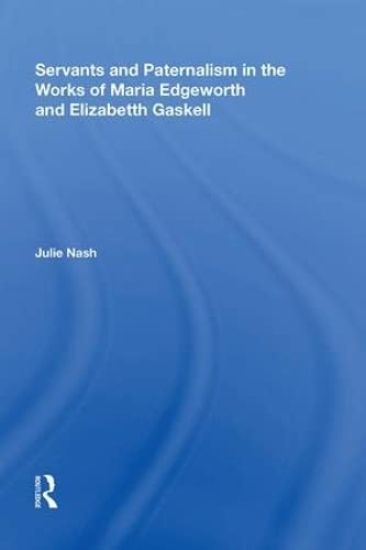
Servants and Paternalism in the Works of Maria Edgeworth and Elizabeth Gaskell
Julie Nash
CRC Press Inc
2017
sidottu
Writing during periods of dramatic social change, Maria Edgeworth and Elizabeth Gaskell were both attracted to the idea of radical societal transformation at the same time that their writings express nostalgia for a traditional, paternalistic ruling class. The author shows how this tension is played out especially through the characters of servants in short fiction and novels such as Edgeworth's Castle Rackrent, Belinda, and Helen and Gaskell's North and South and Cranford. Servant characters, the author contends, enable these writers to give voice to the contradictions inherent in the popular paternalistic philosophy of their times because the situation of domestic servitude itself embodies such inconsistencies. Servants, whose labor was essential to the economic and social function of eighteenth- and nineteenth-century British society, made up the largest category of workers in England by the nineteenth century and yet were expected to be socially invisible. At the same time, they lived in the same houses as their masters and mistresses and were privy to the most intimate details of their lives. Both Edgeworth and Gaskell created servant characters who challenge the social hierarchy, thus exposing the potential for dehumanization and corruption inherent in the paternalistic philosophy. the author's study opens up important avenues for future scholars of women's fiction in the nineteenth century.
Servants and Paternalism in the Works of Maria Edgeworth and Elizabeth Gaskell
Julie Nash
Routledge
2020
nidottu
Writing during periods of dramatic social change, Maria Edgeworth and Elizabeth Gaskell were both attracted to the idea of radical societal transformation at the same time that their writings express nostalgia for a traditional, paternalistic ruling class. The author shows how this tension is played out especially through the characters of servants in short fiction and novels such as Edgeworth's Castle Rackrent, Belinda, and Helen and Gaskell's North and South and Cranford. Servant characters, the author contends, enable these writers to give voice to the contradictions inherent in the popular paternalistic philosophy of their times because the situation of domestic servitude itself embodies such inconsistencies. Servants, whose labor was essential to the economic and social function of eighteenth- and nineteenth-century British society, made up the largest category of workers in England by the nineteenth century and yet were expected to be socially invisible. At the same time, they lived in the same houses as their masters and mistresses and were privy to the most intimate details of their lives. Both Edgeworth and Gaskell created servant characters who challenge the social hierarchy, thus exposing the potential for dehumanization and corruption inherent in the paternalistic philosophy. the author's study opens up important avenues for future scholars of women's fiction in the nineteenth century.
The Life and Letters of Maria Edgeworth - Volume II is an unchanged, high-quality reprint of the original edition of 1894. Hansebooks is editor of the literature on different topic areas such as research and science, travel and expeditions, cooking and nutrition, medicine, and other genres. As a publisher we focus on the preservation of historical literature. Many works of historical writers and scientists are available today as antiques only. Hansebooks newly publishes these books and contributes to the preservation of literature which has become rare and historical knowledge for the future.
The Life and Letters of Maria Edgeworth
Antigonos Verlag
2025
sidottu

The Life and Letters of Maria Edgeworth
Antigonos Verlag
2025
sidottu
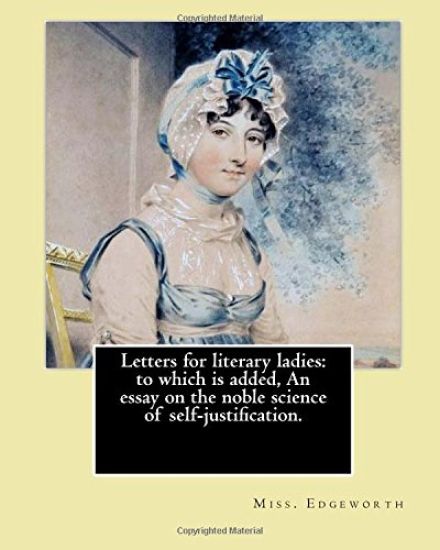
Letters for literary ladies: to which is added, An essay on the noble science of self-justification. By: Miss. Edgeworth ( Maria Edgeworth).: Maria
Miss Edgeworth
Createspace Independent Publishing Platform
2017
nidottu
Maria Edgeworth (1 January 1768 - 22 May 1849) was a prolific Anglo-Irish writer of adults' and children's literature. She was one of the first realist writers in children's literature and was a significant figure in the evolution of the novel in Europe. She held advanced views, for a woman of her time, on estate management, politics and education, and corresponded with some of the leading literary and economic writers, including Sir Walter Scott and David Ricardo. Early life: Maria Edgeworth was born at Black Bourton, Oxfordshire. She was the second child of Richard Lovell Edgeworth (who eventually fathered 22 children by four wives) and Anna Maria Edgeworth; Maria was thus an aunt of Francis Ysidro Edgeworth. She spent her early years with her mother's family in England, until her mother's death when Maria was five. When her father married his second wife Honora Sneyd in 1773, she went with him to his estate, Edgeworthstown, in County Longford, Ireland. Maria was sent to Mrs. Lattafi re's school in Derby after Honora fell ill in 1775. After Honora died in 1780 Maria's father married Honora's sister Elizabeth (then socially disapproved and legally forbidden from 1833 until the Deceased Wife's Sister's Marriage Act 1907). Maria transferred to Mrs. Devis's school in London. Her father's attention became fully focused on her in 1781 when she nearly lost her sight to an eye infection. Returning home at the age of 14, she took charge of her many younger siblings and was home-tutored in law, Irish economics and politics, science, and literature by her father. She also started her lifelong correspondences with learned men, mainly members of the Lunar Society. She became her father's assistant in managing the Edgeworthstown estate, which had become run-down during the family's 1777-1782 absence; she would live and write there for the rest of her life. With their bond strengthened, Maria and her father began a lifelong academic collaboration "of which she was the more able and nimble mind." Present at Edgeworthstown was an extended family, servants and tenants. She observed and recorded the details of daily Irish life, later drawing on this experience for her novels about the Irish. She also mixed with the Anglo-Irish gentry, particularly Kitty Pakenham (later the wife of Arthur Wellesley, 1st Duke of Wellington), Lady Moira, and her aunt Margaret Ruxton of Black Castle. Margaret supplied her with the novels of Anne Radcliffe and William Godwin and encouraged her in her writing. Though Maria Edgeworth spent most of her childhood in England, her life in Ireland had a profound impact on both her thinking and views surrounding her Irish culture. Fauske and Kaufman conclude, " She] used her fiction to address the inherent problems of acts delineated by religious, national, racial, class based, sexual, and gendered identities." Edgeworth used works such Castle Rackrent and Harrington to express her feelings on controversial issues......
