
Kirjahaku
Etsi kirjoja tekijän nimen, kirjan nimen tai ISBN:n perusteella.
1000 tulosta hakusanalla Maria L. Lopes
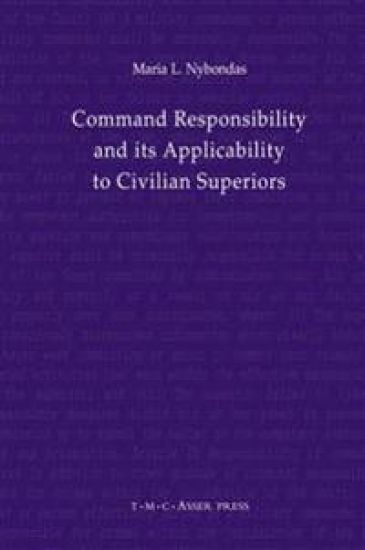
Command Responsibility and Its Applicability to Civilian Superiors
Maria L. Nybondas
T.M.C. Asser Press
2010
sidottu
Article 28 of the Rome Statute explicitly provides that the command responsibility doctrine may be applied to both ‘commanders and other superiors', and sets out separate criteria for the two categories of superiors. The question arises how the doctrine should be applied by the International Criminal Court and by other international courts and tribunals. Up until now, the doctrine has been applied to both military and civilian superiors without a distinctive provision.The author examines the applicability of the command responsibility doctrine to civilian superiors, taking as a point of departure the origin of the doctrine and the unique position of the commander. An analysis of cases against civilian leaders identifies the challenges that prosecutors and judges face in these cases. The author provides, finally, an assessment of the remaining hurdles in the application of the doctrine, and offers a solution which is based on respect for the purpose of the doctrine.The book is a valuable source and tool for academics and practitioners in international criminal law and international humanitarian law, academics and students at National Defence Colleges, as well as military legal advisers and higher military officers.Maria L. Nybondas is an Associate Researcher at the T.M.C. Asser Instituut, The Hague, The Netherlands.

Artificial Intelligence in Contract Formation
María L. Mena-Durán
BLOOMSBURY PUBLISHING PLC
2026
sidottu
This book explores how artificial intelligence is reshaping the foundations of contract formation under English contract law. As AI systems take on critical roles in forming agreements, traditional legal principles rooted in human decision-making are being challenged. The book introduces the concept of the “meeting of the algorithms” as a modern alternative to the conventional “meeting of the minds,” emphasizing how AI-driven contracts differ from human-based ones. Focusing on algorithmic contracting where both parties operate AI systems—particularly those based on machine learning—the book challenges the adequacy of traditional legal doctrines and terminology. It provides a structured analysis of the legal, conceptual, and doctrinal challenges raised by contracts formed without human intervention at the point of agreement. The book proposes a new legal framework that accommodates algorithmic systems as communication and decision-making tools. It redefines consent, examines the attribution of knowledge and intention, and identifies the legal moment of formation in automated contracting environments. It shows how AI-driven contracting is forcing contract law to evolve without relying on fictional agency constructs or debates around legal personhood. Artificial Intelligence in Contract Formation will appeal to researchers of contract law, technology law, and private law theory, as well as legal practitioners interested in AI governance and legal innovation. It contributes to ongoing debates on AI and law, and offers a roadmap for integrating algorithmic transactions into the mainstream of contract doctrine.

Ätherische Öle - 39 Schönheitsrezepte für den Sommer
Maria L Schasteen
Independently Published
2017
pokkari

Ätherische Öle - Essen mit Kindern
Maria L Schasteen; Patricia Fromme
Independently Published
2017
pokkari


Ätherische Öle in der Weihnachtsbäckerei
Maria L Schasteen; Hermine Gärtner
Independently Published
2018
pokkari


Duftmedizin im Alter - Aromatherapie für Senioren, Angehörige und Pflegekräfte
Maria L. Schasteen
Crotona Verlag GmbH
2025
sidottu

Explores the concept of time in the work of Michel Serres, demonstrating close analogies in his work to the discourses of science, literature, and philosophy. This book identifies a new perspective on time and temporality in the work of the French writer Michel Serres. Time is the veiled notion that underlies Serres's many epistemological parables and fables, and is a consistent metaphor throughout his work. Assad uncovers this common thread through a sustained discussion of certain key concepts in chaos theory and nonlinear dynamics, and these concepts come into focus as she continues her detailed readings of Serres's texts, demonstrating close analogies in his work to the discourses of science, literature, and philosophy.

Longevity - Mit Duftmedizin zu mehr Vitalität, Jugendlichkeit und innerer Balance
Maria L. Schasteen
Crotona Verlag GmbH
2026
pokkari

Sacred Geometry Coloring Book
Dale L; Maria L
Createspace Independent Publishing Platform
2013
nidottu
Crise Psicótica e Ensino de Psicopatologia
Maria José de Castro Nascimento; Maria L. C. R. Romera
Novas Edições Acadêmicas
2016
nidottu
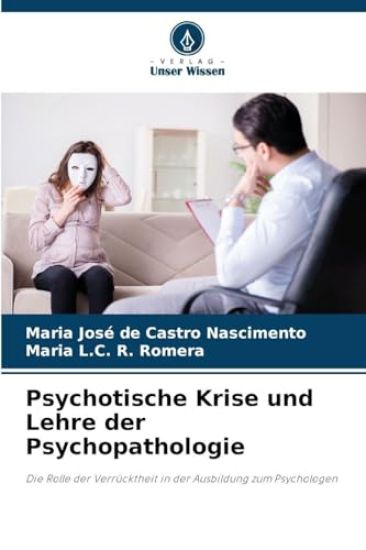
Psychotische Krise und Lehre der Psychopathologie
Maria José de Castro Nascimento; Maria L C R Romera
Verlag Unser Wissen
2025
pokkari
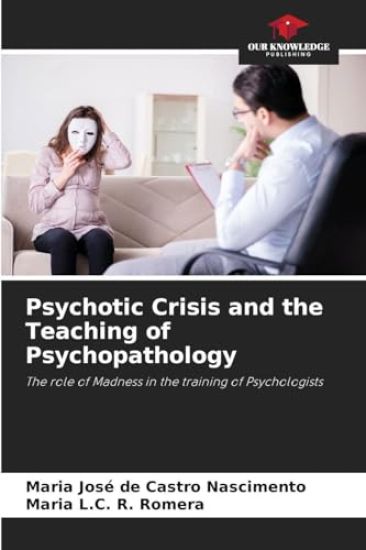
Psychotic Crisis and the Teaching of Psychopathology
Maria José de Castro Nascimento; Maria L C R Romera
Our Knowledge Publishing
2025
pokkari
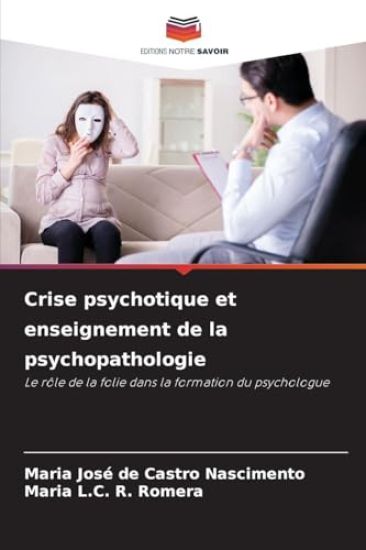
Crise psychotique et enseignement de la psychopathologie
Maria José de Castro Nascimento; Maria L C R Romera
Editions Notre Savoir
2025
pokkari