Kirjojen hintavertailu. Mukana 11 627 220 kirjaa ja 12 kauppaa.

Kirjahaku

Etsi kirjoja tekijän nimen, kirjan nimen tai ISBN:n perusteella.

1000 tulosta hakusanalla Mark Chang

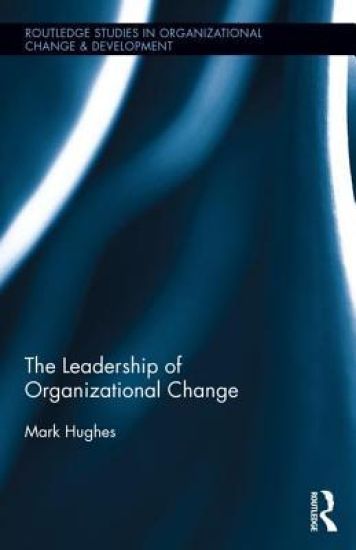
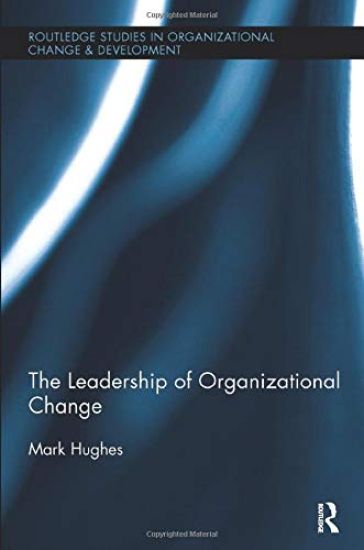
The Leadership of Organizational Change
Understanding both leadership and change have been recurrent and popular themes within the business, management and organization studies literature. However, our understanding of leadership and organizational change in combination is far more limited. The Leadership of Organizational Change offers a critical review of the evolution of leadership and organizational change for the past thirty-five years, taking stock of what we know, identifying what we do not know, and establishing how the study of the leadership of change should advance. In the late seventies and early eighties, as interest in managing and leading change was fuelled by the competitive threat of Asia in general and Japan in particular as perceived by western businesses and governments, Burns (1978) writing in his landmark book Leadership at this time, referred to an intellectual crisis:"The crisis of leadership today is the mediocrity or irresponsibility of so many of the men and women in power, but leadership rarely rises to the full need for it. The fundamental crisis underlying mediocrity is intellectual. If we know all too much about our leaders, we know far too little about leadership."While the study of managing change has benefitted from sustained critical scrutiny, particularly in the last decade, it is believed that this is to have been at the expense of critical scrutiny of leading change. The Leadership of Organizational Change critically reviews how the study of leading change has advanced since 1978 and the crisis of intellectual mediocrity.
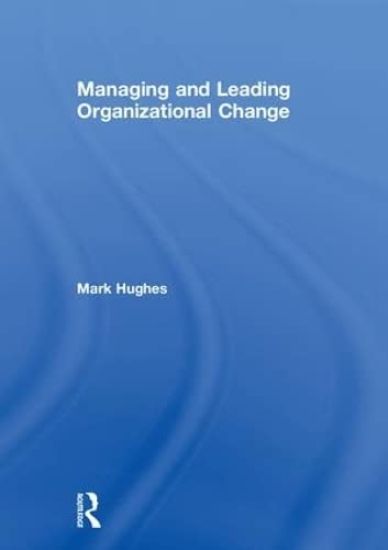
Managing and Leading Organizational Change
Organizational change impacts upon all organizations regardless of size and sector. In this unique organizational change textbook, important ongoing debates about managing change and leading change are combined, giving a broader perspective that encourages readers to engage with both management and leadership. In combination, management and leadership insights inform how organizations are changing and how we can make a positive difference in such processes of change.Managing and Leading Organizational Change speaks both to the applied and practical aspects of organizational change, as well as questioning the research and evidence base of organizational change practices. Chapters begin with real-world insights, followed by coverage of the major theories. The ongoing nature of these debates is signposted through the inclusion of questioning sections with research case studies showcased. This textbook will be particularly beneficial for final year undergraduates and postgraduates studying organizational change, strategic change, change management and change leadership modules.
Managing and Leading Organizational Change
Organizational change impacts upon all organizations regardless of size and sector. In this unique organizational change textbook, important ongoing debates about managing change and leading change are combined, giving a broader perspective that encourages readers to engage with both management and leadership. In combination, management and leadership insights inform how organizations are changing and how we can make a positive difference in such processes of change.Managing and Leading Organizational Change speaks both to the applied and practical aspects of organizational change, as well as questioning the research and evidence base of organizational change practices. Chapters begin with real-world insights, followed by coverage of the major theories. The ongoing nature of these debates is signposted through the inclusion of questioning sections with research case studies showcased. This textbook will be particularly beneficial for final year undergraduates and postgraduates studying organizational change, strategic change, change management and change leadership modules.
The Leadership of Organizational Change
Understanding both leadership and change have been recurrent and popular themes within the business, management and organization studies literature. However, our understanding of leadership and organizational change in combination is far more limited. The Leadership of Organizational Change offers a critical review of the evolution of leadership and organizational change for the past thirty-five years, taking stock of what we know, identifying what we do not know, and establishing how the study of the leadership of change should advance. In the late seventies and early eighties, as interest in managing and leading change was fuelled by the competitive threat of Asia in general and Japan in particular as perceived by western businesses and governments, Burns (1978) writing in his landmark book Leadership at this time, referred to an intellectual crisis:"The crisis of leadership today is the mediocrity or irresponsibility of so many of the men and women in power, but leadership rarely rises to the full need for it. The fundamental crisis underlying mediocrity is intellectual. If we know all too much about our leaders, we know far too little about leadership."While the study of managing change has benefitted from sustained critical scrutiny, particularly in the last decade, it is believed that this is to have been at the expense of critical scrutiny of leading change. The Leadership of Organizational Change critically reviews how the study of leading change has advanced since 1978 and the crisis of intellectual mediocrity.
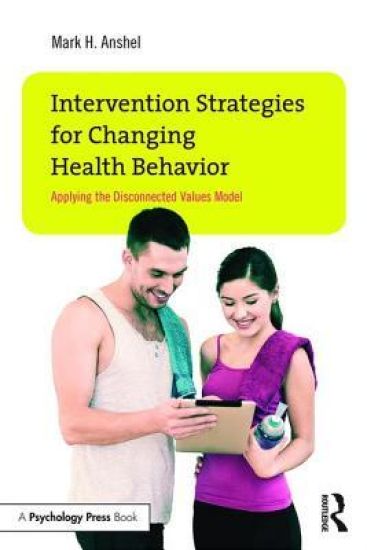
Intervention Strategies for Changing Health Behavior
Changing habits, particularly habits that are self-destructive and unhealthy, is among the most challenging goals of therapists and coaches who work with clients in promoting a healthier lifestyle. The purpose of this book is to "help the helper," that is, to assist the person whose professional mission it is to provide a service that enables clients or patients to acknowledge their unhealthy habits and to replace them with more desirable, healthier routines. It focuses on the power of helping clients identify: (1) the inconsistency between their core values – what they consider most important in life – with one or more unhealthy habits, (2) the costs and long-term consequences of this inconsistency, called a "disconnect" in the model, and (3) their willingness to conclude that the consequences of this inconsistency is unacceptable. At that stage, (4) clients should be prepared to work with a coach in developing and carrying out an action plan that aims to remove the disconnect between the client’s values and at least one of their unhealthy habits.
Intervention Strategies for Changing Health Behavior
Changing habits, particularly habits that are self-destructive and unhealthy, is among the most challenging goals of therapists and coaches who work with clients in promoting a healthier lifestyle. The purpose of this book is to "help the helper," that is, to assist the person whose professional mission it is to provide a service that enables clients or patients to acknowledge their unhealthy habits and to replace them with more desirable, healthier routines. It focuses on the power of helping clients identify: (1) the inconsistency between their core values – what they consider most important in life – with one or more unhealthy habits, (2) the costs and long-term consequences of this inconsistency, called a "disconnect" in the model, and (3) their willingness to conclude that the consequences of this inconsistency is unacceptable. At that stage, (4) clients should be prepared to work with a coach in developing and carrying out an action plan that aims to remove the disconnect between the client’s values and at least one of their unhealthy habits.
When A Theological Shift Changed a Nation

When A Theological Shift Changed a Nation

Mark R. Kreitzer

PETER LANG PUBLISHING INC
2024
sidottu
The Dutch Reformed Church in South Africa (DRC) played a key role in developing apartheid theology, syncretizing Reformed theology with race-based ideology. This paradigm changed rapidly between 1986 and 1990 with the General Synod decision, Church and Society. The result not only purged racist ideas from General Synod decisions supporting apartheid, but also brought a covert reception of the World Council of Churches’ ideologybased theological syncretism. The DRC thus rejected classic Reformational theology, opening the door to a strong movement away from biblical faith.This volume analyzes this paradigm shift and idenitifies a way forward for a post-New South African social order based on sound covenant theology, to which the DRC once adhered. It proposes an effort to remove the obsolete syncretism with apartheid ideology and to restore a sound Trinitarian, covenantal, and sola scriptura theological foundation for a truly renewed Southern Africa. Professor Kreitzer brilliantly amplifies the significance of the theological errors which underlie the paradigm shift in the Dutch Reformed Church in South Africa towards the end of the twentieth century. This work is a must-read for anyone seeking to understand that shift’s devastating consequences for Southern African society as a whole. Kreitzer convincingly shows how a return to a biblical understanding of justice and love is absolutely essential for the peoples of Southern Africa moving forward. —Adi Schlebusch, PhD, Director of the Pactum Institute and Research Associate at the University of Pretoria This book makes an original and significant contribution to our insight in the way radical change can happen in a challenging environment when the Christian church adopts different views. The example used is the biggest church denomination among the Afrikaners in South Africa, which altered its stance significantly on apartheid but also on other socialethical concepts. This book is a must read for those who are interested in the interplay of church and society, including the role of the Christian church in shaping society grounded on Biblical presuppositions. —Henk Stoker, PhD, Professor of Apologetics and Ethics, North-West University, Potchefstroom, South Africa
Leaving a Legacy: 40 Life-Changing Lessons

Leaving a Legacy: 40 Life-Changing Lessons

Mark a. Albert

Createspace Independent Publishing Platform
2013
nidottu
The genesis of this project was a high school classroom. As a language arts teacher for students with special needs, I noticed, as any teacher might, that many of my students struggled in the foundational area of being mentored. There was a crisis of adult supervision in some of their lives. So I began the process of introducing a few of the deep truths I had acquired during my journey. I began to share some of the life lessons I had learned from adults who cared for me, as well as, lessons learned through experience. These were, in fact, many of the insights that I taught to my own children as they were growing up.Those initial classroom presentations were very popular with the students; deep meaningful discussions ensued. In fact, it became everything that a teacher would want in a lesson; students were emotionally engaged and educationally challenged. The sessions were soon dubbed "Life Lesson Friday." As it progressed, I searched for new ways to differentiate instruction, so I began writing an original poem that coincided with each life lesson. As a result, the lessons were presented in a way that now included poetry analysis.Eventually, I was encouraged to put on paper what I had been sharing in the classroom. Though the format in this book is somewhat different, because my desire is to reach a broader audience, the content is the same. My hope is that this book will become a tool in the hands of those who desire to begin a discussion on personal growth and development.Be blessed, Mark A. Albert
The Year Science Changed Everything

The Year Science Changed Everything

Mark O'Connell

GLOBE PEQUOT PRESS
2025
sidottu
In 1957, 60,000 scientists from sixty-six countries around the world temporarily erased Earth’s artificial borders and joined forces for eighteen months to unlock the mysteries of our home planet. Their shared mission: to explore, measure, map, and study the Earth’s geology, oceans, volcanos, and atmosphere, to study the impact of the sun on the Earth's climate, to explore the many ways that human activity affects the health of our planet, and to apply every branch of geophysical science for the first time ever as "a potent force in international affairs." It was The International Geophysical Year (IGY), and the discoveries made during that year established a new foundation for science that affects our lives nearly every day.In The Year Science Changed Everything, author Mark O’Connell charts the struggles and successes of 1957’s International Geophysical Year alongside interviews with today’s leading environmental scientists to show that the time is right for another global environmental initiative. The IGY lit the fuse to the space race, produced a historic international treaty to protect Antarctica, led to the discovery of the Van Allen radiation belts circling our planet, produced the first map of the underwater Mid-Atlantic Ridge, and spearheaded scientific breakthroughs that have proven foundational to our understanding of the planet. More than a half century later, top climate experts and activists illustrate the political, financial, and media-centered obstacles they face working as individual researchers and fighting against rampant disinformation spread by sectors of the public and even of the scientific community, from Christiana FigueresandTom Rivett-Carnac, who led negotiations for the United Nations during the historic Paris Agreement of 2015, former vice-president and climate activist Al Gore, marine biologist and climate researcher Dr. Wallace J. Nichols, and Sameh Shoukry, President of the 27th session of the Conference of Parties (COP27) to the United Nations Framework Convention on Climate Change (UNFCCC).The idea of global collaboration is as valid now as it was in 1957, and perhaps more necessary than ever to stave off the harmful effects of a deteriorating climate. The Year Science Changed Everything reframes the climate change discussion in a positive way through IGY’s example of how to unite scientists, and what we can achieve when we come together for the pursuit of scientific knowledge. ,
Icebreakers: Living At Higher Consciousness Changes Everything

Icebreakers: Living At Higher Consciousness Changes Everything

Mark Kimmel

Createspace Independent Publishing Platform
2016
nidottu
C.K. Beaumond is a well-know journalist who has published many expos s while working with whistleblowers. A woman approaches him with information about a secret program, telling him it will be the greatest story of his career. An ATV crashes on the sand dunes near Pismo Beach, California putting a woman in the hospital. While recovering from her injuries, an unusual man helps her mend while discovering what she really is. These four will soon become embroiled in a drama of galactic proportions as they, with the help of extraterrestrials and celestials, unearth secret plans for the conquest of the galaxy. Mark Kimmel weaves together the physical and the non-physical to show how secret activities adversely influence today's mass consciousness. Then he uses these insights to bring this adventure story to a startling climax, while demonstrating how to live in higher consciousness.
Surf Line: The Changing Scene on Southern California's Focal Passenger Rail Corridor
The "Surf Line," a scenic rail route from Fullerton to San Diego, showcases diverse landscapes and busy traffic, featuring coastal views and upgraded locomotives like Siemens SC-44 Chargers.One of the most scenic rail lines in the United States is the former Santa Fe 4th District between Fullerton and San Diego, California. Known as the "Surf Line," this route operates through a variety of urban, suburban, agricultural, and even mountainous scenery. This line is most known for its coastal running at various locations between San Clemente and Del Mar, where the route operates along the Pacific Ocean. Today, this line's ownership is split between Orange County, North County (San Diego) Transit District (NCTD), San Diego Metropolitan Transit System (MTS), and the BNSF Railway. Amtrak, Metrolink, and NCTD's Coaster service operate passenger trains on various portions of the line, while BNSF operates local and freight service. Between these operators, this is a busy line with a heavy volume of traffic. For many years, the primary locomotives powering most passenger trains on this line were a variety of EMD F59s on Amtrak and Metrolink, and rebuilt F40s on Coaster. However, all three operators upgraded their power in recent years, with the State of California and NCTD opting for Siemens SC-44 Chargers and Metrolink purchasing EMD F125s. This book captures the last years of the older locomotives on this route.