Retail Geography and Intelligent Network Planning demonstrates the importance of geographical thinking in a wide variety of situations. The book exemplifies the importance of sophisticated and intelligent spatial analysis techniques in dealing with the range of location, distribution and channel management issues which now face retail and service businesses. This technology is especially crucial in an age when traditional channels of physical distribution such as bank branches and shops are increasingly complemented by electronic and virtual channels. Building on the success of Intelligent GIS (1996), which set out the principles and applications of GIS and spatial modelling for strategic planning, this new title concentrates on the concept of retail intelligence applied to retail planning by presenting examples relating to a wide range of business problems. Retail Geography and Intelligent Network Planning is an innovative book in several ways: *Explores some of the key retail trends impacting on retail location and store location studies by drawing on research undertaken in grocery and supermarket retailing, financial services, travel and leisure in Europe, North America and Australasia *Examines the role of e-commerce and its growth, and argues that geography will still be crucial to its success in the retail sector *Presents readers with various spatial analysis methods and their usefulness for addressing retail growth strategies such as branch optimization. *Draws examples from the authors' own expertise over the past fifteen years in retail consultancy This book is invaluable reading for professionals working in retail location teams and consultancies, and for students studying retail geography, GIS , marketing and management.
This innovative book exemplifies the importance of sophisticated and intelligent spatial analysis techniques in dealing with the range of location, distribution and channel management issues which face today's retail and service businesses. Explores some of the trends taking place within the broad consumer-retailing sector, drawing on research undertaken in grocery, supermarket retailing, financial services, travel and leisure in Europe, North America and AustralasiaNumerous global case studies are used to show keys issuesDetails how retailers can begin to develop information and analytical frameworks to better understand what is happening in the retail environmentDescribes how retailers can plan their cross channel network strategy for the future
Contemporary Catholic environmentalism is at a crossroads, both theologically and politically. While the first half of the 20th century saw only fleeting references to environmental concerns in papal encyclicals, Pope John Paul II’s 1990 New Year’s Day address, later titled The Ecological Crisis, marked a pivotal shift. His stark warnings about the planet’s mounting ecological challenges galvanized the Catholic theological community, prompting numerous regional bishops’ statements that highlighted pressing local environmental issues. By the mid-1990s, Catholic environmentalism had evolved into a distinct theological discourse and a burgeoning political movement, attracting support from both church hierarchy and lay Catholics worldwide. Despite Pope John Paul II’s efforts to root Catholic environmental thought in the stewardship paradigm, his success in securing theological consensus was limited. While Pope Benedict XVI endorsed this model, many Catholic theologians and scholars voiced significant reservations. Some critiqued its vague theological underpinnings, others lamented its inherent anthropocentrism, and still others sought a broader scriptural foundation for environmental ethics. These critiques signaled a growing desire for an alternative framework. With the publication of Laudato Si in 2015, Pope Francis ushered in a new era of Catholic environmentalism. His encyclical reaffirmed the theological and moral urgency of ecological issues while challenging humanity’s unchecked technological optimism and deep-seated anthropocentrism. At the heart of his vision is the idea that all creation manifests divine love, calling Catholics to embrace a theocentric environmental ethic. This book builds upon Laudato Si, offering a fresh theological framework that
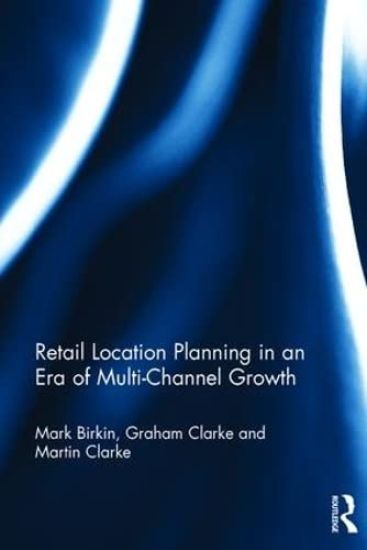
The way in which products and services are delivered to consumers, through branches and retail outlets, or more generally through a network of distribution channels, remains fundamentally important for maintaining a competitive advantage for a very wide range of businesses. This is true within domestic markets, but especially so for increasingly global corporations, as shareholder pressure for continued growth drives businesses into ever more widespread geographical markets.Arguing that more complex markets demand more sophisticated spatial analysis, this book discusses the application of location planning techniques to generate competitive advantage in a variety of business sectors in a changing retail environment. The series of techniques are analysed, from relatively straightforward branch scorecards to sophisticated applications of geographical information systems (GIS), spatial modelling and mathematical optimisation. Also explored are the changing dynamics of the impact of more restrictive planning environments in many countries on how retailers find new locations for growth and respond to changing consumer needs and wants.The book is essential reading for students and scholars alike working in geography, economics, business management, planning, finance and industry studies.
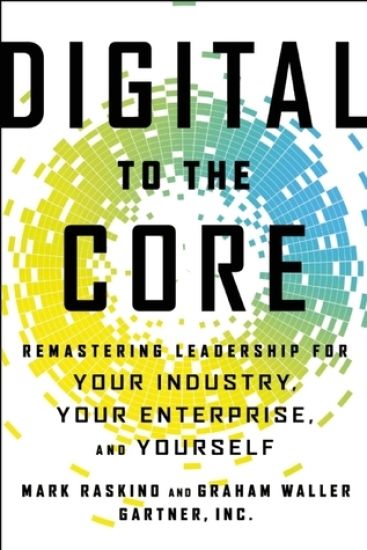
There is no simple strategic method for dealing with the multidimensional nature of digital change. Even the sharpest leaders can become disoriented as change builds on change, leaving almost nothing certain. Yet to stand still is to fail. Enterprises and leaders must re-master themselves to succeed. Leaders must identify the key macro forces, then lead their organizations at three distinct levels: industry, enterprise, and self. By doing this they cannot only survive but clean up. Digital to the Core makes the case that all business leaders must understand the impact the digital revolution will continue to play in their industries, companies, and leadership style and practices. Drawing on interviews with over 30 top C-level executives in some of the world's most powerful companies and government organizations, including GE, Ford, Tory Burch, Babolat, McDonalds, Publicis and UK Government Digital Service, this book delivers practical insights from those on the front lines of major digital upheaval. The authors incorporate Gartner's annual CIO and CEO global survey research and also apply the deep knowledge and qualitative insights they have acquired as practitioners, management researchers, and advisors over decades in the business. Above all else, Raskino and Waller want companies and their top leaders to understand the full impact of digital change and integrate it at the core of their businesses.
This is the first published overview of the archaeology of urban common land. By recognising that urban common land represents a valid historical entity, this book contributes towards successful informed conservation. It contains a variety of interesting and illuminating illustrations, including contemporary and archive photographs. Historically, towns in England were provided with common lands for grazing the draft animals of townspeople engaged in trade and for the pasturing of farm animals in an economy where the rural and the urban were inextricably mixed. The commons yielded wood, minerals, fruits and wild animals to the town's inhabitants and also developed as places of recreation and entertainment, as extensions of domestic and industrial space, and as an arena for military, religious and political activities. However, town commons have been largely disregarded by historians and archaeologists; the few remaining urban commons are under threat and are not adequately protected, despite recognition of their wildlife and recreational value. In 2002, English Heritage embarked upon a project to study town commons in England, to match its existing initiatives in other aspects of the urban scene. The aim was to investigate, through a representative sample, the archaeological content and Historic Environment value of urban commons in England and to prompt appropriate conservation strategies for them. The resulting book is the first overview of the archaeology of town commons - a rich resource because of the relatively benign traditional land-use of commons, which preserves the physical evidence of past activities, including prehistoric and Roman remains as well as traces of common use itself. The recognition of town commons as a valid historical entity and a valued part of the modern urban environment is an important first step towards successful informed conservation. An important consideration for the future is maintaining the character of town commons as a different sort of urban open space, distinct from parks and public gardens.
A worldview of ""spiritual warfare"" is widely held among charismatics and Pentecostals, but it has been criticized for producing paranoia and denying personal responsibility. It is less well known that the term was first used in print around 1970 by Anglican charismatics. What did it mean to them then, and what are the practical effects of their worldview? Should we now be adopting a more sophisticated ontology of evil, such as Nigel Wright's ""non-ontological realist"" view or Amos Yong's ""apophatic theology"" of the demonic, rather than the traditional one that Satan and demons are real ontological entities? This practical theological study begins with a study of Anglican charismatic pioneers, and an in-depth case study of a charismatic Anglican congregation, before grappling with the ontological question in dialogue with Wright (together with Barth and Walter Wink), Yong, and Gregory Boyd. A fresh engagement with the biblical texts then argues for a positive, realist ontology for rebellious demonic powers and presents a Trinitarian model of spiritual warfare praxis that emphasizes personal responsibility and promotes freedom from fear. ""Smith has produced a study on spiritual warfare unusual in its depth, rigor, and theological insight. By engaging with lived experience, biblical material, and contemporary authors of different perspectives, he has opened a new way of understanding spiritual warfare. This book deserves to be taken seriously "" --Gavin Wakefield, Director of Training for Missional Ministry, York Diocese; Author of Alexander Boddy: Pentecostal Anglican Pioneer ""This book is a gold mine. Where else will I find a scholarly but readable tour de force about the experiential, philosophical, biblical, and theological aspects of the battle withevil as understood in thecharismatic churches of the UK since the 1970s? The writer recordsinterviews with well-known practitioners. He considers with an open mind the critical views of established scholars. Ultimately, he emerges with carefully nuancedsupport for the traditional and orthodox understanding of Satan and the demonic realm. Excellent "" --Graham Dow, formerly Bishop of Carlisle, England; Author of Explaining Deliverance REV'D DR GRAHAM SMITH is Team Vicar in Bushbury parish, Wolverhampton, UK.
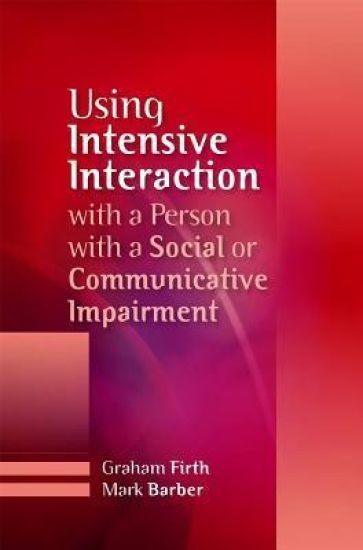
Intensive Interaction is a highly effective approach for communicating and developing social interaction and engagement with difficult-to-reach individuals. This easy-to-use guide steers readers through the practical application of the approach, showing how positive results can best be achieved.The authors explain clearly how to prepare for, carry out and reflect on the use of Intensive Interaction with a client or family member. A multitude of key questions are addressed, including finding the right setting, evaluating progress and disengaging effectively at the end of a session. In the final section they consider some of the wider implications of the approach, such as developing confidence as a practitioner and incorporating Intensive Interaction into long-term care or educational planning.This practical and accessible book is a useful resource for speech and language therapists, occupational therapists, special school or further education teachers, social care professionals and anyone else caring for or working with people with social or communicative impairments. It will also be useful to practitioners already using the approach.
It has been polemically argued that the most important aesthetic productions of the twentieth century have not been objects, buildings, or spaces, but exhibitions. There is a curious imbalance, however, between the centrality claimed for exhibitions and their fugitive character-exhibitions collect artifacts, exist briefly, and are then dispersed. Documentary Remains explores what we know of exhibitions through questioning archives, records, documents, and other forms of remains. With exhibition research and curatorial practices gaining increasing prominence as a mode of conceptual and historical thought, this edited volume (based on a conference hosted by Columbia University's Graduate School of Architecture, Planning and Preservation) revisits the stakes of exhibitions as they have developed across the history of architectural modernism as well as their current position within the field.
Exam Board: Cambridge Level: IGCSE Subject: Biology Suitable for the 2023 exams and onwards Revision and practice to help you fully prepare for the Cambridge IGCSE exams Collins Cambridge IGCSE Biology Revision Guide provides clear and accessible revision content to support all students. With focused revision for every topic, plus four separate practice opportunities, use this revision guide to build your confidence and help you prepare for your Cambridge IGCSE Biology assessments. Covering the Cambridge IGCSE and IGCSE (9–1) Biology syllabuses (0610/0970), for examination from 2023, this revision guide includes: • clear and concise syllabus coverage, with the Supplementary material clearly differentiated • topics in short, user-friendly sections to help you plan your revision in manageable chunks • worked examples and guidance on structuring your answers • support for key subject vocabulary (including a glossary) and exam command words • quick tests and exam-style practice questions for every topic, so you can check your progress and develop your exam skills • a complete set of exam-style practice papers to help you prepare for assessment • a free ebook version, so you can revise from anywhere.
Hundreds of millions of years ago, warm, coral-rich seas deposited mud on the ocean floor, and in time it became limestone--the cornerstone of Indiana geology. From the fossil-studded rocks and twisting caverns of the southern hills to the coal seams of the Wabash Valley and the shifting sands of the glacial plains, Roadside Geology of Indiana provides a window to a vibrant and dynamic past. With this book as your guide, tour Indiana's timeworn topography and discover fossilized reefs, mastodon skeletons, geodes, buried bedrock valleys, and the site of a meteorite impact.
This book aims to deconstruct ethnography to alert systems designers, and other stakeholders, to the issues presented by new approaches that move beyond the studies of ‘work’ and ‘work practice’ within the social sciences (in particular anthropology and sociology). The theoretical and methodological apparatus of the social sciences distort the social and cultural world as lived in and understood by ordinary members, whose common-sense understandings shape the actual milieu into which systems are placed and used.In Deconstructing Ethnography the authors show how ‘new’ calls are returning systems design to ‘old’ and problematic ways of understanding the social. They argue that systems design can be appropriately grounded in the social through the ordinary methods that members use to order their actions and interactions.This work is written for post-graduate students and researchers alike, as well as design practitioners who have an interest in bringing the social to bear on design in a systematic rather than a piecemeal way. This is not a ‘how to’ book, but instead elaborates the foundations upon which the social can be systematically built into the design of ubiquitous and interactive systems.