
Kirjahaku
Etsi kirjoja tekijän nimen, kirjan nimen tai ISBN:n perusteella.
1000 tulosta hakusanalla Mark R. Conte

Beyond the Individual: Expressions of the Greater Intelligence
Mark R. Unger
Mark R. Unger
2017
nidottu
What is the nature and meaning of life? Can we come to understand the essence of God or a Greater Intelligence? What happens after death? Who has not pondered these and other questions about existence at one time or another, if not throughout life? There are almost certainly personal inclinations for what to believe about them, but with so many varying answers around the world, where or how can confirmation be found for what is true? What if answers with confirmation are to be found outside of one's current familiar beliefs? Acquisition and confirmation of such knowledge is and always will be experiential, not intellectual, thus making it fully acceptable to oneself, although not necessarily to others. The fortunate recipient of this Illuminating experience (commonly called cosmic consciousness) cannot prove the knowledge gained to anyone, but can assist in identifying and distinguishing what separates this experience from others and in how to strive for a natural one of their own. This concisely written book is a personal testament and effort to provide such fundamental assistance to supplement and stimulate a seeker's yearning for answers.While the emphasis is on striving for personal experience a sample overview of the core of what is learned (specifically the one-ness of totality) is provided as part of that stimulation; the integration of spirit with matter to develop and refine the forms of life is a root subject for endless contemplation and wonder of its many branches.

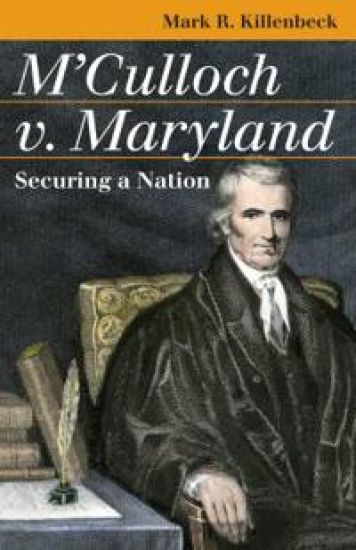
Federalism - including its meanings and limits - remains one of the most contested principles in constitutional law. To fully understand its importance, we must turn to a landmark decision nearly two centuries old. M'Culloch v. Maryland (1819) is widely regarded as the Supreme Court's most important and influential decision - one that essentially defined the nature and scope of federal authority and its relationship to the states. Mark Killenbeck's sharply insightful study helps us understand why. Killenbeck recounts how the cashier of the Baltimore branch of the Second Bank of the United States refused to pay Maryland's tax on the bank and how that act precipitated a showdown in the Supreme Court, which addressed two questions: whether the U.S. Congress had the authority to establish a national bank and whether Maryland's tax on the bank was barred by the Constitution. In one of Chief Justice, John Marshall's most famous opinions, the Court unanimously answered yes to both, authorizing the federal government to exercise powers not expressly articulated in the Constitution - and setting an alarming precedent for states-rights advocates. The issues at the heart of M'Culloch are as important today as they were then: the nature and scope of federal constitutional authority, the division of authority between federal and state governments, and the role of the Supreme Court in interpreting and applying the Constitution. Situating the case within the protracted debate about the bank and about federal-state relations, the Panic of 1819, the fate of the Second Bank following the Court's momentous decision, and the ever-expanding and increasingly contentious debate over slavery, Killenbeck's book provides a virtual constitutional history of the first fifty years of the nation. As such, it shows that the development of the Constitution as a viable governing document took place over time and that M'Culloch, with its very broad reading of federal power, marked a turning point for the Constitution, the Court, and the nation. As the Court continues to reshape the boundaries of federal power, M'Culloch looms large as a precedent in a debate that has never been fully settled. And as states today grapple with such questions as abortion, gay rights, medical marijuana, or assisted suicide, this book puts that precedent in perspective and offers a firm grasp of its implications for the future.
Federalism - including its meanings and limits - remains one of the most contested principles in constitutional law. To fully understand its importance, we must turn to a landmark decision nearly two centuries old. M'Culloch v. Maryland (1819) is widely regarded as the Supreme Court's most important and influential decision - one that essentially defined the nature and scope of federal authority and its relationship to the states. Mark Killenbeck's sharply insightful study helps us understand why. Killenbeck recounts how the cashier of the Baltimore branch of the Second Bank of the United States refused to pay Maryland's tax on the bank and how that act precipitated a showdown in the Supreme Court, which addressed two questions: whether the U.S. Congress had the authority to establish a national bank and whether Maryland's tax on the bank was barred by the Constitution. In one of Chief Justice, John Marshall's most famous opinions, the Court unanimously answered yes to both, authorizing the federal government to exercise powers not expressly articulated in the Constitution - and setting an alarming precedent for states-rights advocates. The issues at the heart of M'Culloch are as important today as they were then: the nature and scope of federal constitutional authority, the division of authority between federal and state governments, and the role of the Supreme Court in interpreting and applying the Constitution. Situating the case within the protracted debate about the bank and about federal-state relations, the Panic of 1819, the fate of the Second Bank following the Court's momentous decision, and the ever-expanding and increasingly contentious debate over slavery, Killenbeck's book provides a virtual constitutional history of the first fifty years of the nation. As such, it shows that the development of the Constitution as a viable governing document took place over time and that M'Culloch, with its very broad reading of federal power, marked a turning point for the Constitution, the Court, and the nation. As the Court continues to reshape the boundaries of federal power, M'Culloch looms large as a precedent in a debate that has never been fully settled. And as states today grapple with such questions as abortion, gay rights, medical marijuana, or assisted suicide, this book puts that precedent in perspective and offers a firm grasp of its implications for the future.
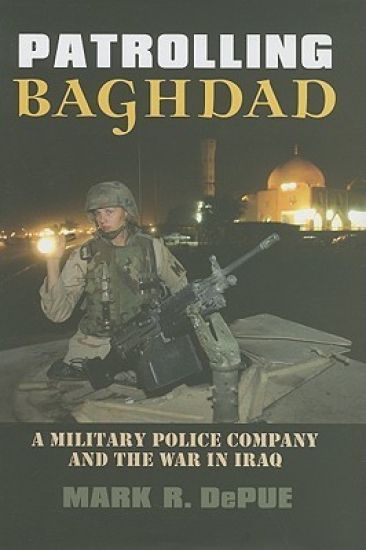
For the 160 national guardsmen from America's heartland, Baghdad was more than just a long way from home. It also confronted the 233rd Military Police Company with America's most difficult challenge in Iraq: establishing security in a nation rife with religious, tribal, and sectarian conflict and violence. The first MP company assigned to patrol the heart of Baghdad, the 233rd (from Springfield, Illinois) was a key part of the American occupation forces from April 2003 to April 2004. Charged with helping rebuild the city's police force - not just reopening stations but training a new force to replace its corrupt and hated predecessors - these men and women waged a ""military police war"" while witnessing all of the larger conflict's central themes, from the shortcoming of prewar planning to ongoing security problems, from media coverage to humanitarian efforts. DePue recounts the 233rd's actions in the streets and alleyways of Baghdad and the inevitable clash of cultures, along with lootings, shootings, roadside and police station bombings, and the inevitable bureaucratic bumbling. Here are the horrors of firefights and summary executions and the drama of the UN bombing. Here too is the untold side of the war, as these volunteers on their own initiative reopened Baghdad schools and took under their wing a Catholic orphanage for handicapped children located in the heart of the city. Based on extensive interviews with the unit's members and others associated with their mission, DePue's eye-opening account also covers what it was like for the 26 women of the unit, how a romance blossomed between two MPs, and how support groups back home - with the help of the Internet - helped families cope with worry over loved ones. The 233rd's story is not only deeply compelling, it is also central to our understanding of one of the most momentous problems of our day and helps us understand what went wrong - and what went right - during that crucial first year. As one of a frustrating war's few success stories, it epitomizes the work of America's citizen-soldiers and attests to the vastly expanded role that guardsmen and reservists now play in our nation's defense.
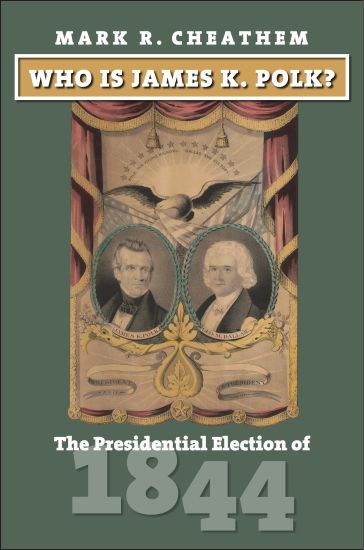
The question Americans asked in 1844 was, “Who the hell is James K. Polk?”Polk, of course, was not unknown, but was a highly unlikely presidential candidate given the availability of better-known options. Among the Democrats, this included Martin Van Buren, John C. Calhoun, and James Buchanan. Among the Whigs, Henry Clay was the clear frontrunner. Complicating the election were three other candidates: President John Tyler, a man without a party; Joseph Smith, the self-described prophet of the Church of Jesus Christ of Latter-day Saints and the first presidential candidate to be assassinated; and James G. Birney, head of the antislavery Liberty ticket. On top of this remarkable cast of characters, the stakes of the election were high as the United States was undergoing a tumultuous political transition.James K. Polk’s ascension to the White House over more notable politicians was a pivotal moment in propelling the United States towards civil war, and the 1844 election expanded the vigorous campaigning that had been growing since 1824. In Who is James K. Polk?, Mark R. Cheathem examines the transition from traditional political issues, such as banking and tariffs, to newer ones, like immigration and slavery. The book also captures the Whig and Democratic parties at a mature stage of competition and provides detailed descriptions of campaign tactics used by the candidates, including rallies, music, and political cartoons.Cheathem has written the definitive account of this important election in this volume for the esteemed American Presidential Elections series.
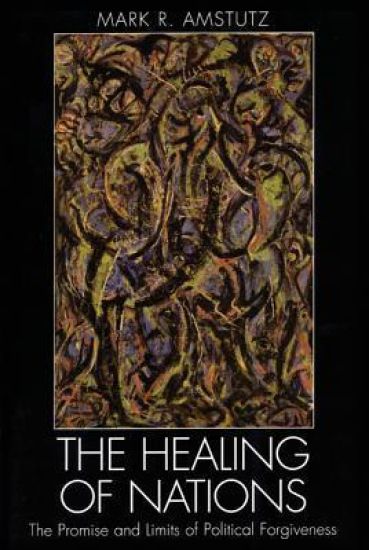
How does one forgive an international political transgression as deep as genocide or apartheid? Forgiveness is often conceived of as an element of personal morality, and even at that it is difficult. This book argues that it is also an essential part of political ethics, especially when dealing with collective wrongdoing by political regimes. In the past, a retributive justice demanding prosecution and punishment of all past offenses has kept the international community away from moving on to the next step in regime change. Here, Mark R. Amstutz takes a restorative justice approach, calling for nations to account for crimes through truth commissions, public apology and repentance, reparations, and ultimately forgiveness and the lifting of deserved penalties. The distinctive feature of forgiveness is the balance it strikes between backward-looking accountability and forward-looking reconciliation. The Healing of Nations combines a theory of the role of forgiveness in public life with four key case studies that test this ethic: Argentina, Chile, Northern Ireland, and South Africa. Amstutz uses the hard cases to illustrate the promise and limits of forgiving without forgetting.
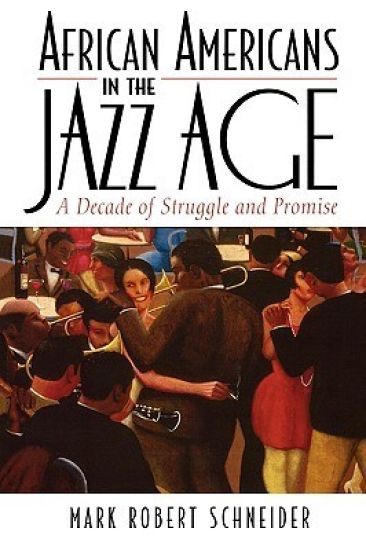
The victorious end to the first World War offered hope to African Americans who had fought for freedom abroad and hoped to find it at home. In this new work, historian Mark R. Schneider analyzes the dynamic 1920s that saw the enormous migration of African Americans to Northern urban centers and the formation of important African American religious, social and economic institutions. Yet, even with considerable efforts to promote civil rights and advancements in the arts, many African Americans in the rural south continued to live under conditions unchanged from a century before. African Americans in the Jazz Age recounts the history of this turbulent era, paying particular attention to the ways in which African Americans actively challenged Jim Crow and firmly expressed pride in their heritage. Supplemented by primary sources, this work serves as an ideal introduction to this critical period in U.S. history and allows students to examine the issues first-hand and draw their own conclusions.
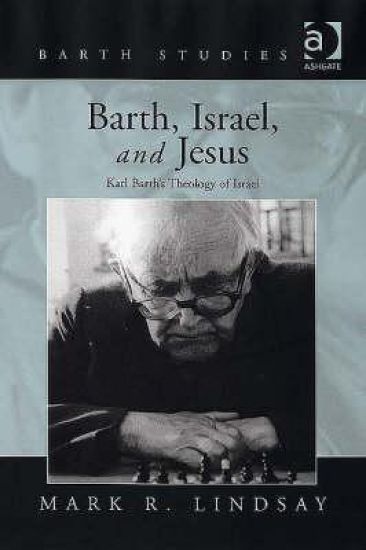
The attitude of Karl Barth to Israel and the Jews has long been the subject of heated controversy amongst historians and theologians. The question that has so far predominated in the debate has been Barth's attitude, both theologically and practically, towards the Jews during the period of the Third Reich and the Holocaust itself. How, if at all, did Barth's attitudes change in the post-war years? Did Barth's own theologising in the aftermath of the Holocaust take that horrendous event into account in his later writings on Israel and the Jews? Mark Lindsay explores such questions through a deep consideration of volume four of Barth's Church Dogmatics, the 'Doctrine of Reconciliation'.
This text examines why and when policies or organizations are terminated, how they can be terminated successfully, and what often prevents them from being terminated. The literature on termination and a variety of case studies are reviewed in order to identify theories supported by research.

This text examines why and when policies or organizations are terminated, how they can be terminated successfully, and what often prevents them from being terminated. The literature on termination and a variety of case studies are reviewed in order to identify theories supported by research.

As environmental deterioration became a major political issue near the end of the twentieth century, activists in Nova Scotia stood together to defend the places they called home. They cooperated to protect local environments and economies, but they disagreed about the causes of environmental problems, the role of humanity in nature, and the place of environmentalists in the political process.In Defence of Home Places examines the diversity of environmental activism in Nova Scotia, illustrating how radicals and conservatives combined efforts to achieve early legislative and social success. It also chronicles the debates and disagreements over fundamental principles that then weakened and divided the powerful environmental movement. Placing the evolution of Nova Scotian environmental activism within a broader theoretical framework, Mark R. Leeming considers its development in national and international contexts, examining the environmental movement itself along with the choices and tactics that brought about its greatest successes and failures.

As environmental deterioration became a major political issue near the end of the twentieth century, activists in Nova Scotia stood together to defend the places they called home. They cooperated to protect local environments and economies, but they disagreed about the causes of environmental problems, the role of humanity in nature, and the place of environmentalists in the political process.In Defence of Home Places examines the diversity of environmental activism in Nova Scotia, illustrating how radicals and conservatives combined efforts to achieve early legislative and social success. It also chronicles the debates and disagreements over fundamental principles that then weakened and divided the powerful environmental movement. Placing the evolution of Nova Scotian environmental activism within a broader theoretical framework, Mark R. Leeming considers its development in national and international contexts, examining the environmental movement itself along with the choices and tactics that brought about its greatest successes and failures.
Integrating Graphics and Vision for Object Recognition
Mark R. Stevens; J. Ross Beveridge
Springer
2000
sidottu
Integrating Graphics and Vision for Object Recognition serves as a reference for electrical engineers and computer scientists researching computer vision or computer graphics. Computer graphics and computer vision can be viewed as different sides of the same coin. In graphics, algorithms are given knowledge about the world in the form of models, cameras, lighting, etc., and infer (or render) an image of a scene. In vision, the process is the exact opposite: algorithms are presented with an image, and infer (or interpret) the configuration of the world. This work focuses on using computer graphics to interpret camera images: using iterative rendering to predict what should be visible by the camera and then testing and refining that hypothesis. Features of the book include: Many illustrations to supplement the text; A novel approach to the integration of graphics and vision; Genetic algorithms for vision; Innovations in closed loop object recognition. Integrating Graphics and Vision for Object Recognition will be of interest to research scientists and practitioners working in fields related to the topic. It may also be used as an advanced-level graduate text.
Micromachined Ultrasound-Based Proximity Sensors
Mark R. Hornung; Oliver Brand
Springer
1999
sidottu
Micromachined Ultrasound-Based Proximity Sensors presents a packaged ultrasound microsystem for object detection and distance metering based on micromachined silicon transducer elements. It describes the characterization, optimization and the long-term stability of silicon membrane resonators as well as appropriate packaging for ultrasound microsystems. Micromachined Ultrasound-Based Proximity Sensors describes a cost-effective approach to the realization of a micro electro mechanical system (MEMS). The micromachined silicon transducer elements were fabricated using industrial IC technology combined with standard silicon micromachining techniques. Additionally, this approach allows the cointegration of the driving and read-out circuitry. To ensure the industrial applicability of the fabricated transducer elements intensive long-term stability and reliability tests were performed under various environmental conditions such as high temperature and humidity. Great effort was undertaken to investigate the packaging and housing of the ultrasound system, which mainly determine the success or failure of an industrial microsystem. A low-stress mounting of the transducer element minimizes thermomechanical stress influences. The developed housing not only protects the silicon chip but also improves the acoustic performance of the transducer elements. The developed ultrasound proximity sensor system can determine object distances up to 10 cm with an accuracy of better than 0.8 mm. Micromachined Ultrasound-Based Proximity Sensors will be of interest to MEMS researchers as well as those involved in solid-state sensor development.
This wide-ranging, original account of the politics and economics of the giant military supply project in the North reconstructs an important but little-known part of Civil War history. Drawing on new and extensive research in army and business archives, Mark R. Wilson offers a fresh view of the wartime North and the ways in which its economy worked when the Lincoln administration, with unprecedented military effort, moved to suppress the rebellion. This task of equipping and sustaining Union forces fell to career army procurement officers. Largely free from political partisanship or any formal free-market ideology, they created a mixed military economy with a complex contracting system that they pieced together to meet the experience of civil war. Wilson argues that the North owed its victory to these professional military men and their finely tuned relationships with contractors, public officials, and war workers. Wilson also examines the obstacles military bureaucrats faced, many of which illuminated basic problems of modern political economy: the balance between efficiency and equity, the promotion of competition, and the protection of workers' welfare. The struggle over these problems determined the flow of hundreds of millions of dollars; it also redirected American political and economic development by forcing citizens to grapple with difficult questions about the proper relationships among government, business, and labor. Students of the American Civil War will welcome this fresh study of military-industrial production and procurement on the home front-long an obscure topic.
This wide-ranging, original account of the politics and economics of the giant military supply project in the North reconstructs an important but little-known part of Civil War history. Drawing on new and extensive research in army and business archives, Mark R. Wilson offers a fresh view of the wartime North and the ways in which its economy worked when the Lincoln administration, with unprecedented military effort, moved to suppress the rebellion. This task of equipping and sustaining Union forces fell to career army procurement officers. Largely free from political partisanship or any formal free-market ideology, they created a mixed military economy with a complex contracting system that they pieced together to meet the experience of civil war. Wilson argues that the North owed its victory to these professional military men and their finely tuned relationships with contractors, public officials, and war workers. Wilson also examines the obstacles military bureaucrats faced, many of which illuminated basic problems of modern political economy: the balance between efficiency and equity, the promotion of competition, and the protection of workers' welfare. The struggle over these problems determined the flow of hundreds of millions of dollars; it also redirected American political and economic development by forcing citizens to grapple with difficult questions about the proper relationships among government, business, and labor. Students of the American Civil War will welcome this fresh study of military-industrial production and procurement on the home front-long an obscure topic.
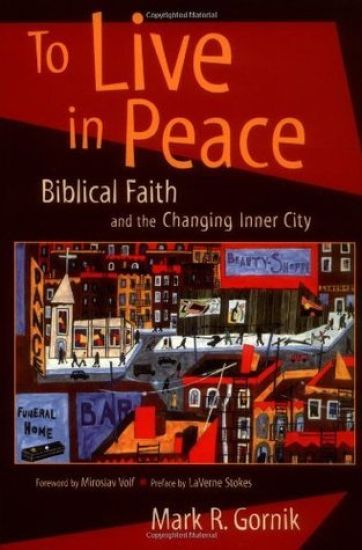
To Live in Peace: Biblical Faith and the Changing Inner City
Mark R. Gornik
William B Eerdmans Publishing Co
2002
nidottu
Foreword by Miroslav Volf Preface by LaVerne Stokes How are Christians to understand and respond to our distressed inner-city communities? Building on both the perspective of God's new creation and the view from the neighborhood, Mark R. Gornik'sTo Live in Peace shows how the life of the church, the strategies of community development, and the practices of peacemaking can make a transformational difference. Centering the book is the story of Baltimore's New Song Community Church, a church that stands as a witness to what can happen when the risks of the gospel are taken. Engaging with a wide range of theological and missiological perspectives, Gornik demonstrates how placing blame for the current conditions of life in the inner city on the residents themselves fails the test of critical analysis and the witness of Scripture. Yet his proposals also show ways that the church can work with the community to overcome structural obstacles to human flourishing.
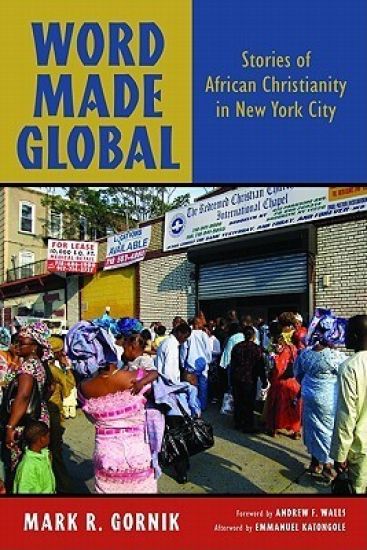
A groundbreaking work of ethnography, urban studies, and theology, Mark Gornik's Word Made Global explores the recent development of African Christianity in New York City. Drawing especially on ten years of intensive research into three very different African immigrant churches, Gornik sheds light on the pastoral, spiritual, and missional dynamics of this exciting global, transnational Christian movement.
We live in an urban age. To a degree unprecedented in human history, most of the world's people live in cities. It is thus vital, say Mark Gornik and Maria Liu Wong, for Christians to think constructively about how to live out their faith in an urban setting. In Stay in the City Gornik and Liu Wong look at what is happening in the urban church-and what Christians everywhere can learn from it. Once viewed suspiciously for their worldly temptations and vices, cities are increasingly becoming centers of vibrant Christian faith. Writing from their experience living and working in New York City, Gornik and Liu Wong invite readers everywhere to join together in creating a more flourishing-and faith-filled-urban world.