The 18th century was a wealth of knowledge, exploration and rapidly growing technology and expanding record-keeping made possible by advances in the printing press. In its determination to preserve the century of revolution, Gale initiated a revolution of its own: digitization of epic proportions to preserve these invaluable works in the largest archive of its kind. Now for the first time these high-quality digital copies of original 18th century manuscripts are available in print, making them highly accessible to libraries, undergraduate students, and independent scholars.Delve into what it was like to live during the eighteenth century by reading the first-hand accounts of everyday people, including city dwellers and farmers, businessmen and bankers, artisans and merchants, artists and their patrons, politicians and their constituents. Original texts make the American, French, and Industrial revolutions vividly contemporary.++++The below data was compiled from various identification fields in the bibliographic record of this title. This data is provided as an additional tool in helping to insure edition identification: ++++British LibraryT226052Drop-head title. Edinburgh?, 1765?]. 7, 1]p., plate: map; 8
Title: Bude Haven; a pen-and-ink sketch, with portraits of the principal inhabitants. By W. M., i.e. William Maskell.]Publisher: British Library, Historical Print EditionsThe British Library is the national library of the United Kingdom. It is one of the world's largest research libraries holding over 150 million items in all known languages and formats: books, journals, newspapers, sound recordings, patents, maps, stamps, prints and much more. Its collections include around 14 million books, along with substantial additional collections of manuscripts and historical items dating back as far as 300 BC.The HISTORY OF BRITAIN & IRELAND collection includes books from the British Library digitised by Microsoft. As well as historical works, this collection includes geographies, travelogues, and titles covering periods of competition and cooperation among the people of Great Britain and Ireland. Works also explore the countries' relations with France, Germany, the Low Countries, Denmark, and Scandinavia. ++++The below data was compiled from various identification fields in the bibliographic record of this title. This data is provided as an additional tool in helping to insure edition identification: ++++ British Library Maskell, William; 1863. 8 . 10368.d.6.
This work provides a comprehensive account of the life and writings of Andrew Marvell (1621-78), as well as the reception of his work in the century after his death. A much-loved poet, a compelling controversialist, and once famous as a member of Parliament, Marvell's intersecting careers are here explored in detail. His biography is transformed with wide reference to print and manuscript sources, many of which are described for the first time in this useful resource for any student, historian, literary scholar or general reader interested in the life and works of this great writer.
The 18th century was a wealth of knowledge, exploration and rapidly growing technology and expanding record-keeping made possible by advances in the printing press. In its determination to preserve the century of revolution, Gale initiated a revolution of its own: digitization of epic proportions to preserve these invaluable works in the largest archive of its kind. Now for the first time these high-quality digital copies of original 18th century manuscripts are available in print, making them highly accessible to libraries, undergraduate students, and independent scholars.Medical theory and practice of the 1700s developed rapidly, as is evidenced by the extensive collection, which includes descriptions of diseases, their conditions, and treatments. Books on science and technology, agriculture, military technology, natural philosophy, even cookbooks, are all contained here.++++The below data was compiled from various identification fields in the bibliographic record of this title. This data is provided as an additional tool in helping to insure edition identification: ++++British LibraryT091186London: printed in the year, 1767. 18p., plate; 4
The 18th century was a wealth of knowledge, exploration and rapidly growing technology and expanding record-keeping made possible by advances in the printing press. In its determination to preserve the century of revolution, Gale initiated a revolution of its own: digitization of epic proportions to preserve these invaluable works in the largest archive of its kind. Now for the first time these high-quality digital copies of original 18th century manuscripts are available in print, making them highly accessible to libraries, undergraduate students, and independent scholars.Western literary study flows out of eighteenth-century works by Alexander Pope, Daniel Defoe, Henry Fielding, Frances Burney, Denis Diderot, Johann Gottfried Herder, Johann Wolfgang von Goethe, and others. Experience the birth of the modern novel, or compare the development of language using dictionaries and grammar discourses. ++++The below data was compiled from various identification fields in the bibliographic record of this title. This data is provided as an additional tool in helping to insure edition identification: ++++British LibraryT096776Each volume has a separate dated titlepage. Vol.2 is in two parts. The editor's dedication signed: Thomas Cooke.London: printed for E. Curll, 1726. 2v., plates: port.; 12
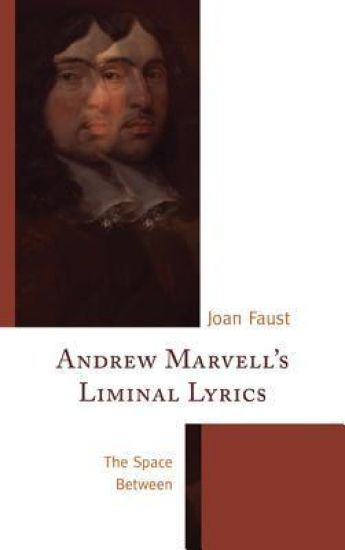
Andrew Marvell's Liminal Lyrics: The Space Between is an interdisciplinary study of the major lyric poems of seventeenth-century British metaphysical poet Andrew Marvell. The poet and his work have generally proven enigmatic to scholars because both refuse to fit into normal categories and expectations. This study invites Marvell readers to view the poet and some of his representative lyrics in the context of the anthropological concept of liminality as developed by Victor Turner and enriched by Arnold Van Gennep, Jacques Lacan, and other observers of the in-between aspects of experience. The approach differs from previous attempts to “explain” Marvell in that it allows multidisciplinary and multi-media contexts in a broad matrix of the areas of experience and representation that defy boundaries, that blur the line at which entrance becomes exit. This study acknowledges that the poems discussed, and, by implication, the entire corpus of Marvell’s work and the life that produced it, derive from a refusal to draw a definite divide. In analyzing a small selection of Marvell’s life and lyrics as explorations of various realms of liminality in word and image, readers can see a passageway to the poet’s works that never really reaches a destination; instead, the unlimited possibilities of the journey remain. Thus, the in-between aspects of the poet and his poetry actually define his technique as well as his brilliance.
Andrew Marvell's Liminal Lyrics: The Space Between is an interdisciplinary study of the major lyric poems of seventeenth-century British metaphysical poet Andrew Marvell. The poet and his work have generally proven enigmatic to scholars because both refuse to fit into normal categories and expectations. This study invites Marvell readers to view the poet and some of his representative lyrics in the context of the anthropological concept of liminality as developed by Victor Turner and enriched by Arnold Van Gennep, Jacques Lacan, and other observers of the in-between aspects of experience. The approach differs from previous attempts to “explain” Marvell in that it allows multidisciplinary and multi-media contexts in a broad matrix of the areas of experience and representation that defy boundaries, that blur the line at which entrance becomes exit. This study acknowledges that the poems discussed, and, by implication, the entire corpus of Marvell’s work and the life that produced it, derive from a refusal to draw a definite divide. In analyzing a small selection of Marvell’s life and lyrics as explorations of various realms of liminality in word and image, readers can see a passageway to the poet’s works that never really reaches a destination; instead, the unlimited possibilities of the journey remain. Thus, the in-between aspects of the poet and his poetry actually define his technique as well as his brilliance.
Andrew Marvell, Sexual Orientation, and Seventeenth-Century Poetry examines the important Interregnum/Restoration poet Andrew Marvell against a background of his contemporary lyric poets. His major works from the early elegies to the later political pieces are discussed with a view to unmasking the poet’s own sexuality and his reflection of prevailing sexual attitudes. Popular poems like the Mower poems and “The Nymph Complaining for the Death of her Fawn” are explicated in depth as well as lesser known poems like “The Unfortunate Lover” and “The Gallery.” Marvell, often described as a “chameleon” has teased readers for hundreds of years. This new book will help both new readers as well as established Marvellians to understand cryptic sexual meanings and references in the verses. Poems are explicated against current heteronormative theory as well as recent work on homoeroticism, autoeroticism, and celibacy. George Klawitter has devoted much of his recent scholarly life to a study of Marvell’s lyric pieces and brings to this new book fresh insights into the suggestive intent of the poet’s works.
This book provides an accessible account of the poet and politician Andrew Marvell’s life (1621-1678) and of the great events which found reflection in his work and in which he and his writings eventually played a part. At the same time, considerable space is afforded to reflecting deeply on the modes and meanings of Marvell’s art, redressing the balance of recent biography and criticism which has tended to dwell on the public and political aspects of this literary life at the expense of lyric invention and lyric possibility. Moving beyond the familiar terms of imitation and influence, the book aims at reconstructing an embodied history of reading and writing, acts undertaken within a series of complex physical and social environments, from the Hull Charterhouse to the coffee houses and print shops of Restoration London. Care has been taken to cover the whole of Marvell’s career, in verse and prose, even as the book places the lyric achievement at the centre of its vision.

![Bude Haven; A Pen-And-Ink Sketch, with Portraits of the Principal Inhabitants. [By W. M., i.e. William Maskell.]](/covers/9781241442811.jpg)
![A Collection of Poems on Affairs of State by A-M-L [Marvell] Esq.; And Other Eminent Wits. the Second Part of the Collection of Poems on Affairs of State, by A-M-L, Etc. the Third Part Containing Esquire Marvel's Further Instructions to a Painter.](/covers/9781241695798.jpg)