

Kirjahaku
Etsi kirjoja tekijän nimen, kirjan nimen tai ISBN:n perusteella.
1000 tulosta hakusanalla Marshall Alfred
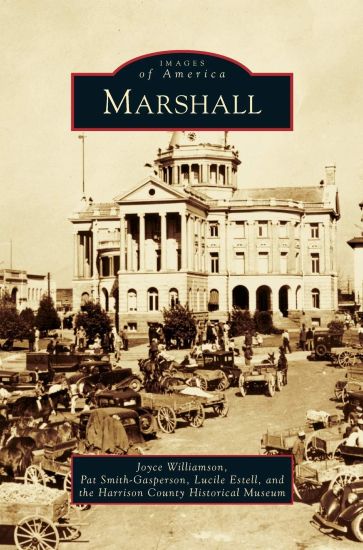
Marshall
Joyce Williamson; Pat Smith-Gassperson; Lucile Estell
Arcadia Publishing Library Editions
2011
sidottu



Marshall and Worthing's The Construction of Houses
Derek Worthing; Nigel Dann; Roger Heath; Duncan Marshall
Routledge
2021
sidottu
The sixth edition of The Construction of Houses builds on the success of the previous five editions. The book provides a comprehensive introduction to the principles and processes of the construction of houses and their services. As such it is aimed at providing a broad understanding of domestic building construction for students as part of their academic studies and as a useful information source for practitioners. The existing chapters have all been updated and most of them expanded to take account of changes to dwelling house construction since the last edition and there are new chapters on ‘Modern Methods of Construction’ and ‘Regulatory controls and building standards’. Additionally, many new and/or updated photographs and diagrams have been added.As with the previous editions, the authors have concentrated on presenting current mainstream approaches to the construction of houses. The detailed, yet accessible, text that is supported by hundreds of coloured photographs and diagrams provides clear explanations of the many complex processes that go into the building of a house. A deeper insight into modern construction is also given by the book’s consideration of historical building techniques from the 18th century onwards in order to illustrate how and why we build houses in the way we do now.
Marshall and Worthing's The Construction of Houses
Derek Worthing; Nigel Dann; Roger Heath; Duncan Marshall
Routledge
2021
nidottu
The sixth edition of The Construction of Houses builds on the success of the previous five editions. The book provides a comprehensive introduction to the principles and processes of the construction of houses and their services. As such it is aimed at providing a broad understanding of domestic building construction for students as part of their academic studies and as a useful information source for practitioners. The existing chapters have all been updated and most of them expanded to take account of changes to dwelling house construction since the last edition and there are new chapters on ‘Modern Methods of Construction’ and ‘Regulatory controls and building standards’. Additionally, many new and/or updated photographs and diagrams have been added.As with the previous editions, the authors have concentrated on presenting current mainstream approaches to the construction of houses. The detailed, yet accessible, text that is supported by hundreds of coloured photographs and diagrams provides clear explanations of the many complex processes that go into the building of a house. A deeper insight into modern construction is also given by the book’s consideration of historical building techniques from the 18th century onwards in order to illustrate how and why we build houses in the way we do now.
Alfred Marshall was one of the most important economists ever to have lived. This excellent new book, from a Marshall expert respected the world over, attempts to show that Marshall anticipated some of the views that are now associated with the cognitive sciences. Examining Marshall's philosophy of the human mind, his overall approach to economics, his concern for socio-economic issues, and the fertility of his framework, this book breathes fresh life into the fascinating world of Marshallian economics.
Marshall McLuhan
Routledge
2004
muu
This collection contains key critical essays and assessments of the writings of Canadian communications thinker Marshall McLuhan selected from the voluminous output of the past forty years. McLuhan's famous aphorisms and uncanny ability to sense megatrends are once again in circulation across and beyond the disciplines. Since his untimely death in 1980, McLuhan's ideas have been rediscovered and redeployed with urgency in the age of information and cybernation.Together the three volumes organise and present some forty years of indispensable critical works for readers and researchers of the McLuhan legacy. The set includes critical introductions to each section by the editor.Forthcoming titles in this series include Walter Benjamin (0-415-32533-1) December 2004, 3 vols, Theodor Adorno (0-415-30464-4) April 2005, 4 vols and Jean-Francois Lyotard (0-415-33819-0) 2005, 3 vols.
Alfred Marshall was one of the most important economists ever to have lived. This excellent new book, from a Marshall expert respected the world over, attempts to show that Marshall anticipated some of the views that are now associated with the cognitive sciences. Examining Marshall's philosophy of the human mind, his overall approach to economics, his concern for socio-economic issues, and the fertility of his framework, this book breathes fresh life into the fascinating world of Marshallian economics.
Marshall, Marshallians and Industrial Economics
Routledge
2011
sidottu
The four sections of the book deal in succession with Marshall’s key ideas on the subject, the wider context of his thought in which they are to be read, their later development by some of his pupils, and their revival in contemporary economics. The first and last sections work together to illustrate the evolutionary focus of Marshall’s research program and to identify its affinity with modern industrial economics; the second explicates the social assumptions within which the Marshallian paradigm was embedded, in particular those relating to the various relationships that exist between individuals and wider groups; while the third traces the development of Marshall’s views by some of his pupils.

Originally published in 1987 to commemorate the 40th anniversary of the Marshall Plan, this fascinating collection of essays, from an eminent ‘insider’ to the Marshall Plan, combines economics, politics and history to provide authoritative and personal insights into the creation of one of the greatest foreign aid programmes of the twentieth century.Any reader interested in the Marshall Plan itself, the inner workings of a major act of US foreign policy, and its many economic, political and historical facets will welcome the reissue of this valuable book from one of America’s most distinguished economists.

Originally published in 1987 to commemorate the 40th anniversary of the Marshall Plan, this fascinating collection of essays, from an eminent ‘insider’ to the Marshall Plan, combines economics, politics and history to provide authoritative and personal insights into the creation of one of the greatest foreign aid programmes of the twentieth century.Any reader interested in the Marshall Plan itself, the inner workings of a major act of US foreign policy, and its many economic, political and historical facets will welcome the reissue of this valuable book from one of America’s most distinguished economists.

Marshall, Marshallians and Industrial Economics
Routledge
2013
nidottu
The four sections of the book deal in succession with Marshall’s key ideas on the subject, the wider context of his thought in which they are to be read, their later development by some of his pupils, and their revival in contemporary economics. The first and last sections work together to illustrate the evolutionary focus of Marshall’s research program and to identify its affinity with modern industrial economics; the second explicates the social assumptions within which the Marshallian paradigm was embedded, in particular those relating to the various relationships that exist between individuals and wider groups; while the third traces the development of Marshall’s views by some of his pupils.


General George C. Marshall, chief of staff of the U.S. Army during World War II, faced the daunting task not only of overseeing two theatres of a global conflict but also of selecting the best generals to carry out American grand strategy. Marshall and His Generals is the first and only book to focus entirely on that selection process and the performances, both stellar and disappointing, that followed from it. Stephen Taaffe chronicles and critiques the background, character, achievements, and failures of the more than three dozen general officers chosen for top combat group commands—from commanders like Dwight Eisenhower and Douglas MacArthur to some nearly forgotten. Taaffe explores how and why Marshall selected the Army’s commanders. Among his chief criteria were character (including “unselfish and devoted purpose”), education, (whether at West Point, Fort Leavenworth, or the Army War College), and striking a balance between experience and relative youth in a war that required both wisdom and great physical stamina. As the war unfolded, Marshall also factored into his calculations the combat leadership his generals demonstrated and the opinions of his theatre commanders. Taaffe brings into sharp focus the likes of Eisenhower, MacArthur, George Patton, Omar Bradley, Walter Krueger, Robert Eichelberger, Courtney Hodges, Lucian Truscott, J. Lawton Collins, Alexander “Sandy” Patch, Troy Middleton, Matthew Ridgeway, Mark Clark, and twenty-five other generals who served in the conflict. He describes their leadership and decision-making processes and provides miniature biographies and personality sketches of these men drawn from their personal papers, official records, and reflections of fellow officers. Delving deeper than other studies, this path-breaking work produces a seamless analysis of Marshall’s selection process of operational-level commanders. Taaffe also critiques the performance of these generals during the war and reveals the extent to which their actions served as stepping stones to advancement. Ambitious in scope and filled with sharp insights, Marshall and His Generals is essential reading for anyone interested in World War II and military leadership more generally.

Marshall & Ruedy's On Call
Anthony F. T. Brown; Mike Cadogan; Antonio (Tony) Celenza; Viet Tran
ELSEVIER AUSTRALIA
2025
nidottu

In a world of multinational conglomerates, one name in British aviation has remained independent for the past nine decades. Marshall of Cambridge has quietly grown to be one of the single largest employers in Cambridgeshire. Founded in the Edwardian era as a motor engineers, the company branched out into aviation after WWI, teaching pilots to fly, and became a major aircraft repair centre during the WWII. In the inter-war period it purchased the land which later became Cambridge Airport.Marshall have a repair facilty at Cambridge that has worked on almost every type of aircraft manufactured in the UK and USA,winning many civilian and military contracts. They have made components for aircraft as diverse as Comets and Concordes. The company also has a string of motor dealerships and manufactures ambulance and lorry bodies for both military and civilian use. This is the story of the firm's prodigious enterprise over the past century.

'In quite a profound, high-modernist way, this succinct but comprehensive book deems its subject worthy of careful scholarly analysis. I applaud and recommend it for taking much of the nonsense out of McLuhan' - Topia Journal 'Feted and reviled in his own lifetime, Marshall McLuhan has made a dramatic comeback in recent years. Marchessault gives a balanced and carefully considered appraisal of McLuhan's contribution to cultural theory, which may be even more pertinent now, in the early twenty-first century, than when he originally formulated it in the 1950s and '60s' Jim McGuigan, Professor of Cultural Analysis, Loughborough University Why is McLuhan important? What use can we make of his approach to the media today? In this insightful critical introduction, McLuhan's contribution is carefully explained and his reputation reassessed. The book: · Explains McLuhan's key ideas · Engages with critical issues in media and contemporary art · Demonstrates the relevance of his work for students of media and communications · Addresses his methodological contribution · Revises our understanding of his place in the history of ideas. Illustrated with many examples from the network society, the book works as a guide to anyone who wants to know why McLuhan is important.