Kirjojen hintavertailu. Mukana 12 390 323 kirjaa ja 12 kauppaa.

Kirjahaku

Etsi kirjoja tekijän nimen, kirjan nimen tai ISBN:n perusteella.

1000 tulosta hakusanalla Mart

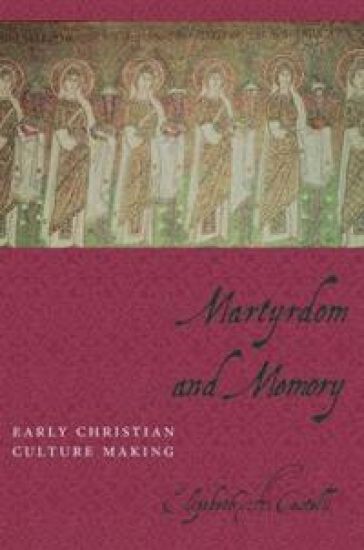
Martyrdom and Memory

Martyrdom and Memory

Elizabeth Castelli

Columbia University Press
2004
sidottu
Martyrs are produced, Elizabeth Castelli suggests, not by the lived experience of particular historical individuals but by the stories that are later told about them. And the formulaic character of stories about past suffering paradoxically serves specific theological, cultural, or political ends in the present. Martyrdom and Memory explores the central role of persecution in the early development of Christian ideas, institutions, and cultural forms and shows how the legacy of Christian martyrdom plays out in today's world. In the pre-Constantinian imperial period, the conflict between Roman imperial powers and the subject Christian population hinged on competing interpretations of power, submission, resistance, and victory. This book highlights how both Roman and Christian notions of law and piety deployed the same forms of censure and critique, each accusing the other of deviations from governing conventions of gender, reason, and religion. Using Maurice Halbwachs's theoretical framework of collective memory and a wide range of Christian sources-autobiographical writings, martyrologies and saints'lives, sermons, art objects, pilgrimage souvenirs, and polemics about spectacle-Castelli shows that the writings of early Christians aimed to create public and ideologically potent accounts of martyrdom. The martyr's story becomes a "usable past" and a "living tradition" for Christian communities and an especially effective vehicle for transmitting ideas about gender, power, and sanctity. An unlikely legacy of early Christian martyrdom is the emergence of modern "martyr cults" in the wake of the 1999 shootings at Columbine High School. Focusing specifically on the martyr cult associated with one of the victims, Martyrdom and Memory argues that the Columbine story dramatically expresses the ongoing power of collective memory constructed around a process of rendering tragic suffering redemptive and meaningful. In the wake of Columbine and other contemporary legacies of martyrdom's ethical ambivalence, the global impact of Christian culture making in the early twenty-first century cannot be ignored. For as the last century's secularist hypothesis sits in the wings, "religion" returns to center stage with one of this drama's most contentious yet riveting stars: the martyr.
Martyrdom and Memory

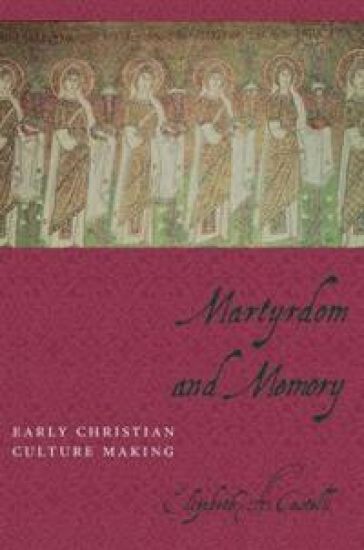
Martyrdom and Memory

Elizabeth Castelli

Columbia University Press
2007
pokkari
Martyrs are produced, Elizabeth Castelli suggests, not by the lived experience of particular historical individuals but by the stories that are later told about them. And the formulaic character of stories about past suffering paradoxically serves specific theological, cultural, or political ends in the present. Martyrdom and Memory explores the central role of persecution in the early development of Christian ideas, institutions, and cultural forms and shows how the legacy of Christian martyrdom plays out in today's world. In the pre-Constantinian imperial period, the conflict between Roman imperial powers and the subject Christian population hinged on competing interpretations of power, submission, resistance, and victory. This book highlights how both Roman and Christian notions of law and piety deployed the same forms of censure and critique, each accusing the other of deviations from governing conventions of gender, reason, and religion. Using Maurice Halbwachs's theoretical framework of collective memory and a wide range of Christian sources-autobiographical writings, martyrologies and saints'lives, sermons, art objects, pilgrimage souvenirs, and polemics about spectacle-Castelli shows that the writings of early Christians aimed to create public and ideologically potent accounts of martyrdom. The martyr's story becomes a "usable past" and a "living tradition" for Christian communities and an especially effective vehicle for transmitting ideas about gender, power, and sanctity. An unlikely legacy of early Christian martyrdom is the emergence of modern "martyr cults" in the wake of the 1999 shootings at Columbine High School. Focusing specifically on the martyr cult associated with one of the victims, Martyrdom and Memory argues that the Columbine story dramatically expresses the ongoing power of collective memory constructed around a process of rendering tragic suffering redemptive and meaningful. In the wake of Columbine and other contemporary legacies of martyrdom's ethical ambivalence, the global impact of Christian culture making in the early twenty-first century cannot be ignored. For as the last century's secularist hypothesis sits in the wings, "religion" returns to center stage with one of this drama's most contentious yet riveting stars: the martyr.
Martin and Lorna Activity Book - Ladybird Readers Starter Level 14
This Activity Book accompanies the Reader. It provides practice of key language structures and vocabulary, while developing a range of skills: singing, spelling and writing, reading, speaking, and listening.Ladybird Readers is a graded reading series of traditional tales, popular characters, modern stories, and non-fiction, written for young learners of English as a foreign or second language. Recommended for children aged 4+, the eight levels of Readers and six levels of Activity Books follow the CEFR framework (Pre-A1 to A2+) and include language activities that help develop key skills and provide preparation for the Cambridge English: Young Learners (YLE) Starters, Movers and Flyers exams. The Starter level introduces phonics and sight words. Each book contains two versions of the story: the first with single words focusing on phonics, and the second with full sentences introducing sight words. It is Pre-A1 in the CEFR framework.
Martin Lukes: Who Moved My BlackBerry?

Martin Lukes: Who Moved My BlackBerry?

Lucy Kellaway

Penguin Books Ltd
2011
pokkari
Lucy Kellaway, author of In Office Hours, invites you into the world of Martin Lukes, Marketing Director and adopter of every corporate fad going, in her astutely observed and wickedly funny office satire Martin Lukes: Who Moved My Blackberry? Meet Martin Lukes, Director of Marketing, A&B Global (UK)A year in the life of an A-playing brand ambassador suspended halfway up the corporate ladder. Must be read with a can-do headset.'Enormously funny, touching...should become an instant classic' Financial Times'Acutely and hilariously observed' Evening Standard'Hilarious' Sunday TimesManagement Columnist for the Financial Times, Lucy Kellaway, lampoons modern corporate culture in her two novels: Martin Lukes: Who Moved My Blackberry? and In Office Hours. You can follow Lucy on Twitter @lucykellaway or on her Financial Times blog and podcast.
Martin Buber's Theopolitics

Martin Buber's Theopolitics

Samuel Hayim Brody

Indiana University Press
2018
sidottu
How did one of the greatest Jewish thinkers of the 20th century grapple with the founding of Israel and the Israeli-Palestinian conflict—one of the most significant political conflicts of his time? Samuel Hayim Brody traces the development of Martin Buber's thinking and its implications for the Jewish religion, for the problems posed by Zionism, and for the Zionist-Arab conflict. Beginning in turbulent Weimar Germany, Brody shows how Buber's debates about Biblical meanings had concrete political consequences for anarchists, socialists, Zionists, Nazis, British, and Palestinians alike. Brody further reveals how Buber's passionate commitment to the rule of God absent an intermediary came into conflict in the face of a Zionist movement in danger of repeating ancient mistakes. Brody argues that Buber's support for Israel stemmed from a radically rich and complex understanding of the nature of the Jewish mission on earth that arose from an anarchist reading of the Bible.
Martin Buber's Theopolitics

Martin Buber's Theopolitics

Samuel Hayim Brody

Indiana University Press
2018
pokkari
How did one of the greatest Jewish thinkers of the 20th century grapple with the founding of Israel and the Israeli-Palestinian conflict—one of the most significant political conflicts of his time? Samuel Hayim Brody traces the development of Martin Buber's thinking and its implications for the Jewish religion, for the problems posed by Zionism, and for the Zionist-Arab conflict. Beginning in turbulent Weimar Germany, Brody shows how Buber's debates about Biblical meanings had concrete political consequences for anarchists, socialists, Zionists, Nazis, British, and Palestinians alike. Brody further reveals how Buber's passionate commitment to the rule of God absent an intermediary came into conflict in the face of a Zionist movement in danger of repeating ancient mistakes. Brody argues that Buber's support for Israel stemmed from a radically rich and complex understanding of the nature of the Jewish mission on earth that arose from an anarchist reading of the Bible.
Martin Buber

Martin Buber

INDIANA UNIVERSITY PRESS
2022
sidottu
A new collection of essays highlighting the wide range of Buber's thought, career, and activism. Best known for I and Thou, which laid out his distinction between dialogic and monologic relations, Martin Buber (1878–1965) was also an anthologist, translator, and author of some seven hundred books and papers. Martin Buber: Creaturely Life and Social Form, edited by Sarah Scott, is a collection of nine essays that explore his thought and career. Martin Buber: Creaturely Life and Social Form shakes up the legend of Buber by decentering the importance of the I-Thou dialogue in order to highlight Buber as a thinker preoccupied by the image of relationship as a guide to spiritual, social, and political change. The result is a different Buber than has hitherto been portrayed, one that is characterized primarily by aesthetics and politics rather than by epistemology or theology. Martin Buber: Creaturely Life and Social Form will serve as a guide to the entirety of Buber's thinking, career, and activism, placing his work in context and showing both the evolution of his thought and the extent to which he remained driven by a persistent set of concerns.
Martin Buber

Martin Buber

INDIANA UNIVERSITY PRESS
2022
pokkari
A new collection of essays highlighting the wide range of Buber's thought, career, and activism. Best known for I and Thou, which laid out his distinction between dialogic and monologic relations, Martin Buber (1878–1965) was also an anthologist, translator, and author of some seven hundred books and papers. Martin Buber: Creaturely Life and Social Form, edited by Sarah Scott, is a collection of nine essays that explore his thought and career. Martin Buber: Creaturely Life and Social Form shakes up the legend of Buber by decentering the importance of the I-Thou dialogue in order to highlight Buber as a thinker preoccupied by the image of relationship as a guide to spiritual, social, and political change. The result is a different Buber than has hitherto been portrayed, one that is characterized primarily by aesthetics and politics rather than by epistemology or theology. Martin Buber: Creaturely Life and Social Form will serve as a guide to the entirety of Buber's thinking, career, and activism, placing his work in context and showing both the evolution of his thought and the extent to which he remained driven by a persistent set of concerns.
Martin Kippenberger

Martin Kippenberger

Chris Reitz

MIT PRESS LTD
2023
sidottu
An illuminating study of the work of artist Martin Kippenberger, whose art expressed the enthusiasms and frustrations of the West German middle class. Martin Kippenberger: Everything Is Everywhere is the first scholarly monograph in English on West German artist Martin Kippenberger (1953-1997), one of the most prominent German artists of the 1980s. In this book, Chris Reitz shows that the condition of Kippenberger's art was an endless, enthusiastic searching, constrained by the impossibility of fulfillment. A child during West Germany's Wirtschaftswunder, the economic miracle of the 1950s and 1960s, and a young adult during the economic recession and political tumult of the 1970s, Kippenberger belonged to the first truly postwar generation. But, largely uninterested in the legacy of National Socialism that had occupied his predecessors, Kippenberger instead pursued a hyperproductive artistic practice that reflected the dreams and fears of the ascendent 1980s West German middle class. Kippenberger's ambitions took him everywhere: he founded a museum in Greece, invested in a fashion business and a restaurant, and even bought a gas station in Brazil. He made art in a dizzying range of genres, from paintings to poetry, from posters to stickers. He made art out of his appetites, too, producing art on the theme of his own alcoholism. Intensely entrepreneurial, Kippenberger carried out an artistic practice in which his diverse endeavors, and the people who joined him in them, were all connected in a sprawling network. Reitz deftly presents Kippenberger's career as an allegory of the neoliberal networks of capital, technology, and culture that spanned Europe and America in the 1980s.
Martin Luther and the Council of Trent

Martin Luther and the Council of Trent

Peter M. Folan

UNIVERSITY OF NOTRE DAME PRESS
2022
sidottu
Seeking to understand the doctrine of justification by way of biblical hermeneutics, this book uncovers the differences between Martin Luther and the Council of Trent that set them on a collision course for conflict, and the church toward what has arguably been its most significant division in the West. As Catholics and Lutherans continue to engage in dialogue about their shared faith and differing confessions, the need remains for a discerning study of the ways in which the Bible functioned in the Reformation's central theological clash: the understanding and import of the doctrine of justification. Peter Folan's incisive analysis in this volume fulfills that need. Through a careful reading of the debate's most significant texts, he shows both how Martin Luther and the Council of Trent relied upon scripture to arrive at their respective formulations of the doctrine and how such seemingly divergent conclusions about the human person's salvation in Christ could be grounded in the same sacred book. This study begins with an examination of the key texts that Luther and his allies produced on justification and then turns to their Catholic respondents, whose work would ultimately inform the Council of Trent's decree on the doctrine. By comparing precisely which texts both parties relied upon to articulate and defend their positions, Folan puts into sharp relief how infrequently both sides made use of the same biblical passages and, when they did avail themselves of the same passages, just how distinct their interpretive tendencies were. This book will be a critical addition to the libraries of scholars and students in Catholic and Lutheran biblical hermeneutics, Catholic-Lutheran dialogue, ecumenical studies, and church history.
Martyrdom

Martyrdom

Rona M. Fields

Praeger Publishers Inc
2004
sidottu
Martyrdom is a controversial and disputed concept. Just as religion is often hijacked by politics, martyrdom is frequently ascribed to a narrow, partisan, and parochial foundation. This is the first book to present varied views on the topic of martyrdom, reaching beyond cliches and simplistic explanations to provoke deep consideration of the essential nature of human beings and society. The volume's authors—experts in the disciplines of psychology, theology, and politics—examine martyrdom in thoughtful and thought-provoking chapters. A closing conversation between the authors is designed to inspire further discourse and debate.Readers engaged in the exploration of social justice, conflict, psychology, religion, and the politics of memory will find this book unique and stimulating. The authors have appeared on public television and public radio, as well as ABC, CBS, and NBC news and discussion programs.
Martial Arts in the Modern World

Martial Arts in the Modern World

Joseph R. Svinth

Praeger Publishers Inc
2003
sidottu
Martial arts, once restricted to a few specific locations and practiced by small groups of devotees, have truly spread throughout the world. The plethora of tae kwando and karate dojos in U.S. shopping malls attests to the popularity of various kinds of martial arts in this country. Though generally perceived and advertised as means of self-defense, body sculpting, and self-discipline, martial arts are actually social tools that respond to altered physical, social, and psychological environments. This book examines how practitioners have responded to stimuli such as feminism, globalism, imperialism, militarism, nationalism, slavery, and the commercialization of sport. In a series of chapters devoted to Asian, African, and European systems of the late 19th to early 21st centuries, the authors examine the forces and philosophies that shaped fighting arts in diverse cultural settings. Because of political, social, and economic factors, this period witnessed the spread of martial arts to areas outside of their original contexts. Some of these arts flourished in their new environments, but others did not. The authors demonstrate that martial arts are not the conservative strongholds of tradition posited by conventional wisdom, but are instead responsive and mutable barometers of change. This book is essential for students of multicultural dialogues and devotees of martial arts performance and practice.