Reproduktion des Originals. Der Verlag Antigonos spezialisiert sich auf die Herausgabe von Nachdrucken historischer B cher. Wir achten darauf, dass diese Werke der ffentlichkeit in einem guten Zustand zug nglich gemacht werden, um ihr kulturelles Erbe zu bewahren.
for SATB accompanied and unaccompanied This anthology of nine anthems by William Mathias (1934-1992) celebrates the eightieth anniversary of the composer's birth. Ideal for church and concert choirs, it includes a variety of sacred works from throughout Mathias's career, each demonstrating an aspect of his unique compositional voice-from the lively 'Alleluya Psallat' to the peaceful 'As truly as God is our Father'. Alongside more established anthems, the collection reintroduces a number of lesser-known works into the choral repertoire, making it a must for all admirers of Mathias's choral music.
Taking piano lessons at three years of age and composing by five, William Mathias became one of Britain's leading 20th-century composers. (He was invited to compose the wedding anthem for the marriage of the Prince of Wales to Lady Diana Spencer.) This work provides, for the first time in one volume, up-to-date and comprehensive details of the composer's life's work. It includes a biography, a complete list of works and performances, a discography of sound recordings, and an annotated bibliography, along with useful appendixes and an index. This book will be of interest to musicologists, students, and 20th century music buffs alike. Mathias was a prolific and versatile composer whose works included opera and music for orchestra, chamber groups, solo instruments, organ, brass ensembles, choral, church, and children's groups. His wedding anthem for Prince Charles and Lady Diana was heard by over 750 million people around the world on television—probably the largest audience for any first performance of a new work.
A founder of "Dock Leaves" (renamed "The Anglo-Welsh Review"), Mathias combined his career as an editor with work as an educationalist, poet and critic. This book examines his life and writing career, exploring the origins and depth of his commitment to a Welsh literature in the English language.
Roland Mathias is one of the key figures of post-war Welsh writing in English. While his importance as a poet, editor, critic and scholar is widely recognised, his contribution to the short story genre remains unassessed, as the bulk of his stories have long been out of print. The Collected Short Stories of Roland Mathias brings together material from The Eleven Men of Eppynt (1956), a handful of early stories that have not appeared previously in book form and three other important tales first published in magazines. These varied and highly individual stories are derived in the main from the personal experiences of the writer and of his father's family. As well as impressing with the energy and variety of the writing and the consistent power of language and imagery, they also exemplify the overarching integrity of Mathias's art. The text of the stories is fully annotated, while the introduction to the volume outlines the writer's life, sets the stories in the context of their times and offers background information identifying the origins and occasional obscurities of the texts.
Roland Mathias is one of the most important writers to emerge in Wales since the Second World War. He was one of the founders of Dock Leaves in 1949 and became an outstanding editor of the magazine under its revised title, The Anglo-Welsh Review. He is a distinguished short-story writer, literary critic and, above all, a poet. His poetry is profoundly influenced by the personal challenge of Christian morality and focuses on the intertwined concerns of family, mutability, history and landscape. It is characterized by verbal inventiveness, skilful use of metre and honesty of observation. The Collected Poems of Roland Mathias contains his entire poetic output, from Days Enduring (1942) to A Field at Vallorcines (1996), as well as a number of previously unpublished pieces. The poems are fully annotated and, in addition to a biographical outline and bibliography, the editor's introduction includes an extended discussion of Mathias's poetic development and a review of critical opinions of his poetry. This is the definitive edition of the poetic work of one of the major figures of twentieth-century Welsh writing in English.
R sum Mathias Pascal habite un village imaginaire de Ligurie appel Miragno; son p re a laiss comme h ritage sa famille une importante fortune, mais g r e avec avidit par un administrateur peu scrupuleux nomm Batta Malagna. Contraint au mariage avec Romilde Pescatore, ni ce de Batta Malagna, Mathias part s'installer dans une maison qu'il est oblig de partager avec sa belle-m re, Maria Mondi veuve Pescatore, qui se moque constamment de sa mollesse et de son incomp tence. Pour lui viter trop de discr dit, le meilleur ami de Mathias, J r me Pomino, finit par lui trouver un travail de biblioth caire. Malheureux, il fuit cette vie ennuyeuse pour Monte-Carlo, o il remporte une somme norme la roulette. Dans le train du retour, il lit avec stup faction, puis all gresse, un article du journal qui relate sa propre mort: sa belle-m re aurait formellement identifi son cadavre noy dans le bief du moulin eau. Il d cide alors de parcourir le monde sous le nom d'Adrien Meis. Il voyage longtemps, mais finit par se fixer Rome dans une pension de famille officiellement g r e par Anselme Paleari, officieusement par Terence Papiano. Durant son s jour, il rencontre Adrienne Paleari; les deux ne tardent pas s' prendre l'un de l'autre, mais cet amour r ciproque est rendu impossible par l'absence d'identit officielle de Mathias. C'est aussi cette absence formelle d'existence qui emp che Mathias de porter plainte quand Terence Papiano lui d robe le reste de ses conomies. D sireux de quitter Rome et de retrouver son identit , Adrien/Mathias feint de mourir une seconde fois en laissant son chapeau et son b ton pr s d'un pont pr s du Tibre. Il regagne alors Miragno et retrouve sa femme mari e son ami Pomino. Il quitte le domicile conjugal et termine ses jours la biblioth que, en crivant sa biographie qui constitue le pr sent roman. Luigi Pirandello est un crivain italien, po te, nouvelliste, romancier et dramaturge, n le 28 juin 1867 Agrigente en Sicile au lieu dit Caos, entre Agrigente et Porto Empedocle, durant une pid mie de chol ra, et mort Rome le 10 d cembre 1936. Son oeuvre a t r compens e du Prix Nobel de litt rature en 1934. C'est le p re du peintre Fausto Pirandello. Le mariage et les premiers crits En 1894, vingt-sept ans, il pouse Maria Antonietta Portulano, la fille de l'associ de son p re, qui lui apporte une belle dot. Ce mariage arrang par les parents, ne fut pas heureux. Les jeunes poux partent s'installer Rome. De ce mariage na tront trois enfants: Stefano (1895-1972), Lietta (1897-1971) et Fausto (1898-1975). Cette ann e 1894, il publie Amours sans amour son premier recueil de nouvelles dont les personnages appartiennent la petite bourgeoisie provinciale et au peuple des campagnes de sa Sicile natale. Pirandello crira des nouvelles toute sa vie. En 1897, il enseigne la stylistique l'Instituto Superiore di Magistero, une cole normale pour jeunes filles o il passera vingt-quatre ans, de sa trenti me sa cinquante-quatri me ann e. Il publie sa premi re pi ce, L' tau, en 1898 et son premier roman, L'Exclue, en 1901. Il crit galement des essais et collabore des journaux. En 1902, il renonce la po sie.
Mathias, gar on timor , vit en province: il abandonne le foyer conjugal apr s une querelle avec sa femme et sa belle-m re et se rend Montecarlo. L , il gagne au jeu plusieurs dizaines de milliers de lires. En lisant les faits divers, il apprend qu'on le croit mort, suite la fausse identification du cadavre d'un d sesp r , qui s'est jet dans le puits de Mathias. Cette trange situation lui sugg re de faire croire sa mort v ritable et de tenter de commencer une vie nouvelle. Feu Mathias Pascal prend alors le nom d'Adrien Meis.
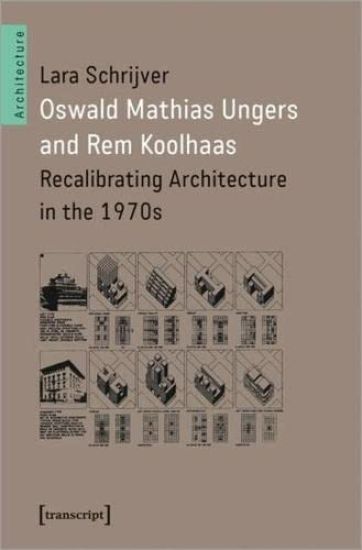
Lara Schrijver examines the work of Oswald Mathias Ungers and Rem Koolhaas as intellectual legacy of the 1970s for architecture today. Particularly in the United States, this period focused on the autonomy of architecture as a correction to the social orientation of the 1960s. Yet, these two architects pioneered a more situated autonomy, initiating an intellectual discourse on architecture that was inherently design-based. Their work provides room for interpreting social conditions and disciplinary formal developments, thus constructing a `plausible' relationship between the two that allows the life within to flourish and adapt. In doing so, they provide a foundation for recalibrating architecture today.
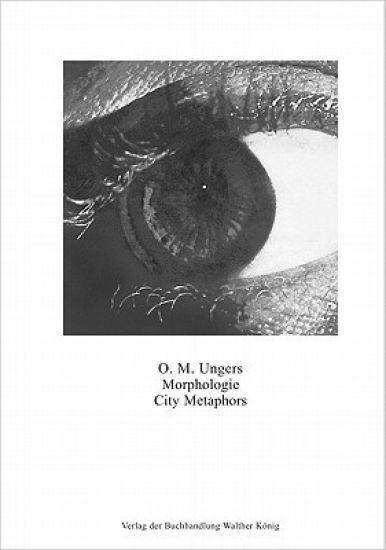
First published in 1982, German architect Oswald Mathias Ungers' City Metaphors juxtaposes more than 100 various city maps throughout history with images of flora and fauna and other images from science and nature. Ungers assigns each a title--a single descriptive word printed in both English and German. In Ungers' vision, the divisions of Venice are transformed into a handshake and the 1809 plan of St Gallen becomes a womb. Ungers writes in his foreword: "Without a comprehensive vision reality will appear as a mass of unrelated phenomenon and meaningless facts, in other words, totally chaotic. In such a world it would be like living in a vacuum; everything would be of equal importance; nothing could attract our attention; and there would be no possibility to utilize the mind." A classic of creative cartography and visual thinking, City Metaphors is also an experiment in conscious vision-building.
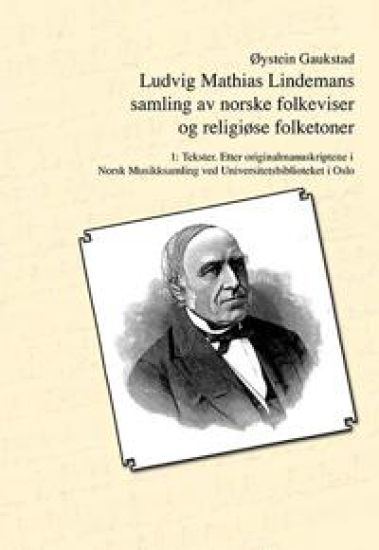
Grunnleggende verk om L.M. Lindemans folketoneopptegnelser, komposisjoner og bearbeidelser. Har bibliografi med tittel- og førstelinjeregister. Illustrert.