Meet Jack Skellington from Tim Burton's The Nightmare Before Christmas in this Little Golden Book Find out what makes Jack Skellington the one and only Pumpkin King of Halloween Town in this book about confidence and being true to yourself With fun, lighthearted text and beautiful illustrations, Tim Burton's The Nightmare Before Christmas fans of all ages will love this Little Golden Book based on the iconic film Little Golden Books enjoy nearly 100% consumer recognition. They feature hot licenses, beloved classics, and new original stories . . . the classics of tomorrow.
This Little Golden Book introduces young readers to Santa, his home, and his frightfully fun journey to Halloween Town from Disney Tim Burton's The Nightmare Before Christmas Santa Claus's life in Christmas Town-a land full of fluffy snow, colorful lights, and jolly songs-is a true holiday dream . . . until three sneaky Trick or Treaters show up at his door Find out what happens from Santa's point of view in this Little Golden Book, the perfect holiday gift for kids ages 2 to 5, and Disney Tim Burton's The Nightmare Before Christmas fans, and collectors of all ages Little Golden Books enjoy nearly 100% consumer recognition. They feature hot licenses, beloved classics, and new original stories . . . the classics of tomorrow.
Meet the mischievous villain Oogie Boogie from Disney Tim Burton's The Nightmare Before Christmas in this Little Golden Book In a town full of monsters, Oogie Boogie is the meanest one around When Jack Skellington gets distracted by Christmas, Oogie Boogie decides it is time to finally take over Halloween Town But can the villainous bag of bugs be stopped? This Little Golden Book featuring fun text and illustrations is perfect for fans of Disney Tim Burton's The Nightmare Before Christmas, kids ages 2 to 5, and Little Golden Book collectors of all ages Little Golden Books enjoy nearly 100% consumer recognition. They feature hot licenses, beloved classics, and new original stories . . . the classics of tomorrow.
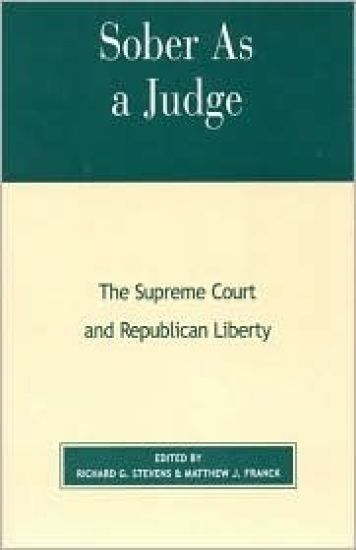
The premise of this study is that judicial sobriety has been underappreciated in scholarship and commentary on the Supreme Court, and this underappreciation has led to a devaluation of certain justices. The five justices treated in this book - Nathan Clifford, Standley Matthews, Edward White, Fred M. Vinson, and Antonin Scalia - have all exercised sobriety on the bench, and have consequently been dealt with unjustly. This book should be of interest to scholars of political science, history, and law.
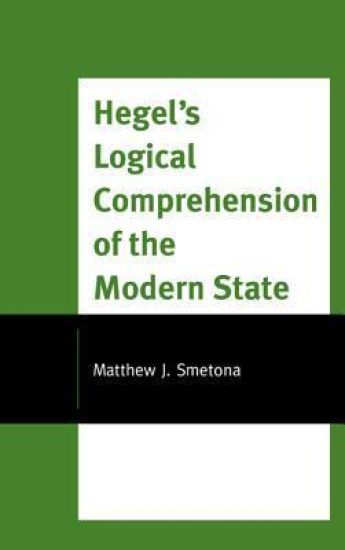
This book argues that the criterion of rationality Hegel employs in his argument that the modern state as he conceptualizes it is rational is the holistic inferential system of concepts he refers to as the Concept and depicts in the Science of Logic. The book then attempts to explain Hegel’s political philosophy as it is articulated in the Philosophy of Right in terms of the logical and metaphysical requirements of the Science of Logic. This unified logical interpretation of Hegel’s philosophy is opposed not only to recent “practical” interpretations which dispense entirely with his Science of Logic, but also to recent transcendental interpretations which attribute to Hegel the position that the determining activity of thought is limited to the form of the object of its cognition. The result of the interpretive argument offered in this book is a unified philosophy of logic and politics, in which the content of the objective political world is conceptual all the way down. Furthermore, it is argued that the interpretation of the relation between Hegel’s logic and political philosophy offered in this book implies a closer proximity between Hegel’s political philosophy and Marx’s critique of political economy than is generally recognized in the contemporary scholarship.
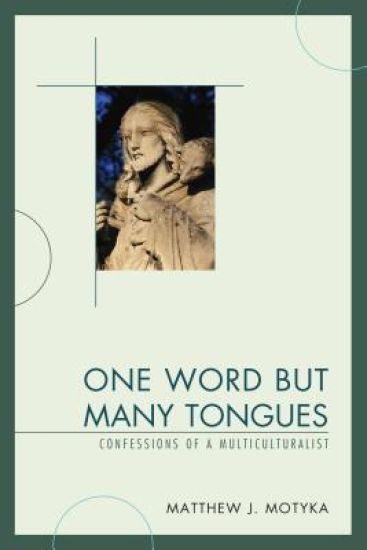
This book recounts the author’s spiritual transformation resulting from his encounter with new languages and cultures. This encounter allowed the author to transcend the boundaries imposed on him by the circumstances of his birth (born and raised behind the Iron Curtain during the Cold War). The fresh outlook on the world that emerged for him is the kind of radical shift that lies at the heart of all intense spiritual experiences, regardless of faith affiliation. His journey moves beyond the self to explore the domain of otherness in language, literature, and the arts. Ultimately, the author arrives at a spiritual place in which disparate, culture-bound realms blend—an expanse of acceptance, harmony, and peace.
It can be scary to hold your newborn--especially your first time Yet God's grace and spirit are present. Blessing and Prayers for New Parents calls attention to these holy moments by offering reflections, prayers, scripture, special suggestions for growing as a parent, and ways to remember how much you love your child as you grow together as a family. Enjoy the new life of your child as author Matthew Beck shares prayers and blessings as you "anxiously await the wonder" on up through "God and toddlers" and beyond--all through the eyes of a new parent and all wrapped up in God's care.
A chronicle of the development and evolution of one of Canada's most innovative and profitable crown corporation. Winner of the National Business Book Award
For decades, the name Labatt was synonymous with beer in Canada, but no longer. Brewed in the North traces the birth, growth, and demise of one of the nation's oldest and most successful breweries. Opening a window into Canada's complicated relationship with beer, Matthew Bellamy examines the strategic decisions taken by a long line of Labatt family members and professional managers from the 1840s, when John Kinder Labatt entered the business of brewing in the Upper Canadian town of London, to the globalization of the industry in the 1990s. Spotlighting the challenges involved as Labatt executives adjusted to external shocks - the advent of the railway, Prohibition, war, the Great Depression, new forms of competition, and free trade - Bellamy offers a case study of success and failure in business. Through Labatt's lively history from 1847 to 1995, this book explores the wider spirit of Canadian capitalism, the interplay between the state's moral economy and enterprise, and the difficulties of creating popular beer brands in a country that is regionally, linguistically, and culturally diverse. A comprehensive look at one of the industry's most iconic firms, Brewed in the North sheds light on what it takes to succeed in the business of Canadian brewing.
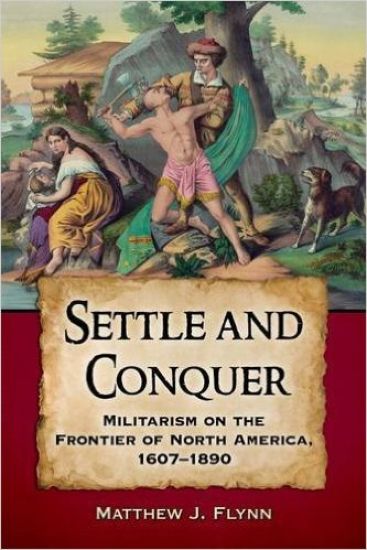
This rereading of the history of American westward expansion examines the destruction of Native American cultures as a successful campaign of "counterinsurgency." Paramilitary figures such as Daniel Boone and Davy Crockett "opened the West" and frontiersmen infiltrated the enemy, learning Indian tactics and launching "search and destroy" missions. Conventional military force was a key component but the interchange between militia, regular soldiers, volunteers and frontiersmen underscores the complexity of the conflict and the implementing of a "peace policy." The campaign's outcome rested as much on the civilian population's economic imperatives as any military action. The success of this three-century war of attrition was unparalleled but ultimately saw the victors question the morality of their own actions.
Paul's letter to the Romans is very different than any of his other letters. Paul addresses many of the important questions that arise when one considers the relationship between God and creation, as well as topics such assalvation and grace. Participants will engage in vibrant discussion around each of these topics in the course. This 6-session Bible study explores selected passages from the book of Romans. For groups wanting to enhance the study by covering the entire book of Romans, homework and enrichment activities are included in this study. What must I do to be saved? (Romans 3:9-31) Saved by grace . . . isn't that too good to be true? (Romans 5:1-11) If what I do doesn't save me, does it matter how I live? (Romans 6:1-23) Where is God when we suffer? (Romans 8:18-39) How can I keep from singing? (Romans 10:1-21) What does God want from us? (Romans 12:1-21)
Paul's letter to the Romans is very different than any of his other letters. Paul addresses many of the important questions that arise when one considers the relationship between God and creation, as well as topics such assalvation and grace. Participants will engage in vibrant discussion around each of these topics in the course. This 6-session Bible study explores selected passages from the book of Romans. For groups wanting to enhance the study by covering the entire book of Romans, homework and enrichment activities are included in this study. What must I do to be saved? (Romans 3:9-31) Saved by grace . . .isn't that too good to be true? (Romans 5:1-11) If what I do doesn't save me, does it matter how I live? (Romans 6:1-23) Where is God when we suffer? (Romans 8:18-39) How can I keep from singing? (Romans 10:1-21) What does God want from us? (Romans 12:1-21)
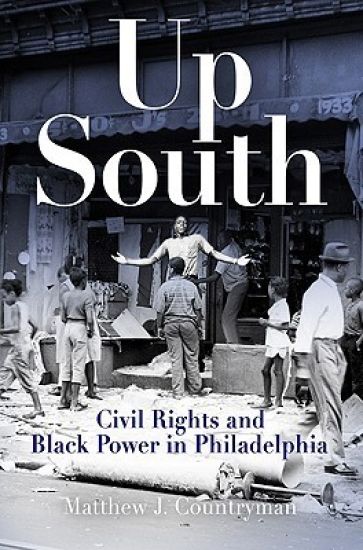
Up South traces the efforts of two generations of black Philadelphians to turn the City of Brotherly Love into a place of promise and opportunity for all. Although Philadelphia rarely appears in histories of the modern civil rights struggle, the city was home to a vibrant and groundbreaking movement for racial justice in the years between World War II and the 1970s. By broadening the chronological and geographic parameters of the civil rights movement, Up South explores the origins of civil rights liberalism, the failure of the liberal program of antidiscrimination legislation and interracial coalition-building to deliver on its promise of racial equality, and the subsequent rise of the Black Power movement. The Philadelphia movement occurred in three stages. During the 1940s and 1950s, liberal civil rights groups in the city successfully campaigned for Philadelphia's new City Charter to be the first in the nation to include a ban on racial discrimination in municipal employment, services, and contracts. Within a decade, however, black activists in the city were leading consumer boycotts and street protests against the city's liberal establishment for failing to overcome entrenched structures of racial inequality in labor markets, residential neighborhoods, and public schools. These protests set the stage both for some of the earliest experiments in affirmative action and for the emergence of the Black Power movement in Philadelphia. Challenging the view that it was the inflammatory rhetoric of Black Power and the rising demands of black activists that derailed the civil rights movement, Up South documents the efforts of Black Power activists in Philadelphia to construct a vital and effective social movement that combined black nationalism's analysis of racism's constitutive role in American society with a program of grassroots community organizing and empowerment. On issues ranging from public education and urban renewal to police brutality and welfare, Philadelphia's Black Power movement remade the city's political landscape. And, in contrast to the top-down middle-class leadership of traditional civil rights groups, Black Power in Philadelphia fundamentally altered the composition of black leadership in the city to include a new cohort of neighborhood-based working-class and female black community activists.
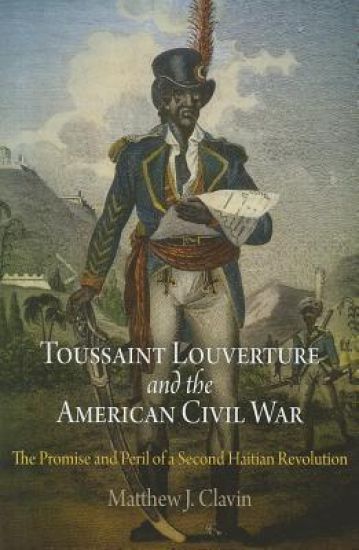
At the end of the eighteenth century, a massive slave revolt rocked French Saint Domingue, the most profitable European colony in the Americas. Under the leadership of the charismatic former slave François Dominique Toussaint Louverture, a disciplined and determined republican army, consisting almost entirely of rebel slaves, defeated all of its rivals and restored peace to the embattled territory. The slave uprising that we now refer to as the Haitian Revolution concluded on January 1, 1804, with the establishment of Haiti, the first "black republic" in the Western Hemisphere. The Haitian Revolution cast a long shadow over the Atlantic world. In the United States, according to Matthew J. Clavin, there emerged two competing narratives that vied for the revolution's legacy. One emphasized vengeful African slaves committing unspeakable acts of violence against white men, women, and children. The other was the story of an enslaved people who, under the leadership of Louverture, vanquished their oppressors in an effort to eradicate slavery and build a new nation. Toussaint Louverture and the American Civil War examines the significance of these competing narratives in American society on the eve of and during the Civil War. Clavin argues that, at the height of the longstanding conflict between North and South, Louverture and the Haitian Revolution were resonant, polarizing symbols, which antislavery and proslavery groups exploited both to provoke a violent confrontation and to determine the fate of slavery in the United States. In public orations and printed texts, African Americans and their white allies insisted that the Civil War was a second Haitian Revolution, a bloody conflict in which thousands of armed bondmen, "American Toussaints," would redeem the republic by securing the abolition of slavery and proving the equality of the black race. Southern secessionists and northern anti-abolitionists responded by launching a cultural counterrevolution to prevent a second Haitian Revolution from taking place.
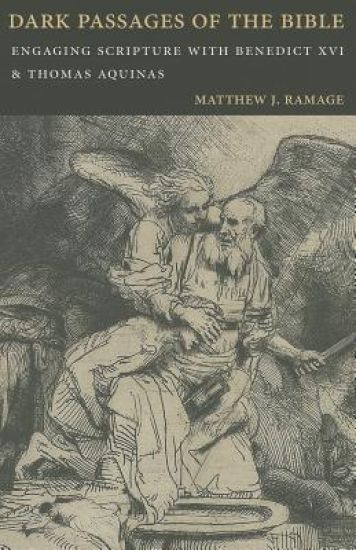
Multiple gods? Divinely mandated genocide? Rejection of an afterlife? If the Scriptures are the inspired and inerrant word of God that Christians claim them to be, how can they contain these things? For many believers in the modern age, traditional Christian answers to these challenges are no longer convincing. Though spiritually edifying, they are unable to account for the sheer scope and depth of problems raised through the advent of historical-critical scholarship.Following the lead of Pope Benedict XVI, in Dark Passages of the Bible Matthew Ramage weds the historical-critical approach with a theological reading of Scripture based in the patristic-medieval tradition. Whereas these two approaches are often viewed as mutually exclusive or even contradictory, Ramage insists that the two are mutually enriching and necessary for doing justice to the Bible’s most challenging texts.Ramage applies Benedict XVI’s hermeneutical principles to three of the most theologically problematic areas of the Bible: its treatment of God’s nature, the nature of good and evil, and the afterlife. Teasing out key hermeneutical principles from the work of Thomas Aquinas, Ramage analyses each of these themes with an eye to reconciling texts whose presence would seem to violate the doctrines of biblical inspiration and inerrancy. At the same time, Ramage directly addresses the problems of concrete biblical texts in light of both patristic and modern exegetical methods.
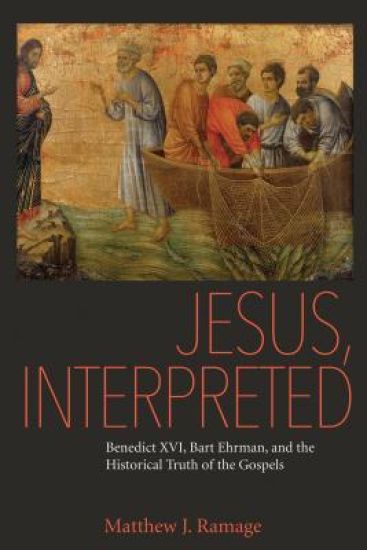
In this sequel volume to his Dark Passages of the Bible (CUA, 2013), author Matthew Ramage turns his attention from the Old to the New Testament, now tackling truth claims bearing directly on the heart of the Christian faith cast into doubt by contemporary New Testament scholarship: Did God become man in Jesus, or did the first Christians make Jesus into God? Was Jesus’ resurrection a historical event, or rather a myth fabricated by the early Church? Will Jesus indeed return to earth on the last day, or was this merely the naïve expectation of ancient believers that reasonable people today ought to abandon?In addition to examining the exegetical merits of rival answers to these questions, Ramage considers also the philosophical first principles of the exegetes who set out to answer them. This, according to Joseph Ratzinger, is the debate behind the debate in exegesis: whose presuppositions best position us for an accurate understanding of the nature of things in general and of the person of Jesus in particular?Insisting upon the exegetical vision of Joseph Ratzinger/Benedict XVI as a privileged avenue by which to address the thorniest issues in contemporary biblical exegesis, Ramage puts the emeritus pontiff’s hermeneutic of faith into dialogue with contemporary exponents of the historical-critical school. Carrying forth the “critique of the critique” called for by Joseph Ratzinger, Ramage offers the emeritus pontiff’s exegesis of the gospels as a plausible and attractive alternative to the mainstream agnostic approach exemplified in the work of Bart Ehrman.As in the case of Benedict’s Jesus trilogy upon which he draws extensively, Ramage’s quest in this book is not merely academic but also existential in nature. Benedict’s scholarship represents the fruit of hispersonal quest for the face of Christ, a quest which involves the commitment to engage, critique, and learn from the most serious challenges posed by modern biblical criticism while affirming the foundations of the Christian faith.