
Kirjahaku
Etsi kirjoja tekijän nimen, kirjan nimen tai ISBN:n perusteella.
1000 tulosta hakusanalla Matthew Turley
For sheer interest, 1 Samuel is unsurpassed. Not only does it recount eventful history, it is eventful history interwoven with the biographies of three colourful personalities, Samuel, Saul, and David.The book can be divided up with reference to these three biographies:1 - In Chapters 1-7 it is Samuel who is prominent.2 - In Chapters 8-15 Saul is under consideration.3 - In Chapters 16-31 it is David who is the focus of attention.
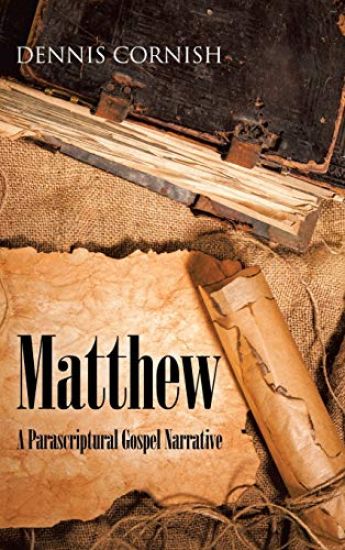
Matthew's personal calling is chronicled in each of three synoptic gospels. Luke calls him "Levi the tax-gatherer," Mark refers to him as "Levi, the son of Alphaeus," and Matthew names himself as Matthew but further identifies himself as "the tax collector." In Matthew, author Dennis Cornish offers a commentary on the gospel of Matthew. These verses are followed by applicable commentary which combines studied research, including a lifetime of personal study and devotion as well as referenced and cited discussion from various authors ranging from early church fathers to recognized contemporary theologians. Where applicable, Cornish cross references both Old and New Testament verses to enhance the understanding, as well as to incorporate the whole counsel of God's word. He also includes supporting information from extra Biblical sources such as Strong's Lexicon, the Westminster Theological Dictionary, ancient Jewish historians, the Apostle's Creed, the Nicene Creed, the Westminster Confession of Faith, and many more such creeds and confessions. Cornish uses the truths found in scripture, and in this case in the book of Matthew, to offer insight into the life and times of Jesus as it was chronicled by Matthew who was an eyewitness to the events that took place surrounding Jesus during his earthly ministry.
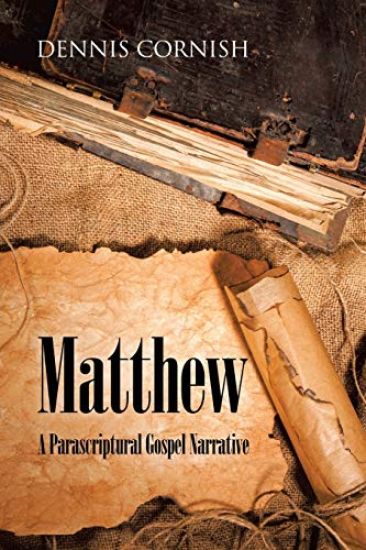
Matthew's personal calling is chronicled in each of three synoptic gospels. Luke calls him "Levi the tax-gatherer," Mark refers to him as "Levi, the son of Alphaeus," and Matthew names himself as Matthew but further identifies himself as "the tax collector." In Matthew, author Dennis Cornish offers a commentary on the gospel of Matthew. These verses are followed by applicable commentary which combines studied research, including a lifetime of personal study and devotion as well as referenced and cited discussion from various authors ranging from early church fathers to recognized contemporary theologians. Where applicable, Cornish cross references both Old and New Testament verses to enhance the understanding, as well as to incorporate the whole counsel of God's word. He also includes supporting information from extra Biblical sources such as Strong's Lexicon, the Westminster Theological Dictionary, ancient Jewish historians, the Apostle's Creed, the Nicene Creed, the Westminster Confession of Faith, and many more such creeds and confessions. Cornish uses the truths found in scripture, and in this case in the book of Matthew, to offer insight into the life and times of Jesus as it was chronicled by Matthew who was an eyewitness to the events that took place surrounding Jesus during his earthly ministry.

THE NEW AMERICAN COMMENTARY is for the minister or Bible student who wants to understand and expound the Scriptures. Notable features include: * commentary based on THE NEW INTERNATIONAL VERSION;* the NIV text printed in the body of the commentary;* sound scholarly methodology that reflects capable research in the original languages;* interpretation that emphasizes the theological unity of each book and of Scripture as a whole;* readable and applicable exposition.

Matthew
Lulu.com
2025
sidottu

Matthew and the Color of the Sky Little Book 6-Pack
McGraw Hill
McGraw-Hill Professional
2010
nidottu

Matthew and the Color of the Sky Little Book 6-pack (Spanish)
McGraw Hill
McGraw-Hill Professional
2010
nidottu
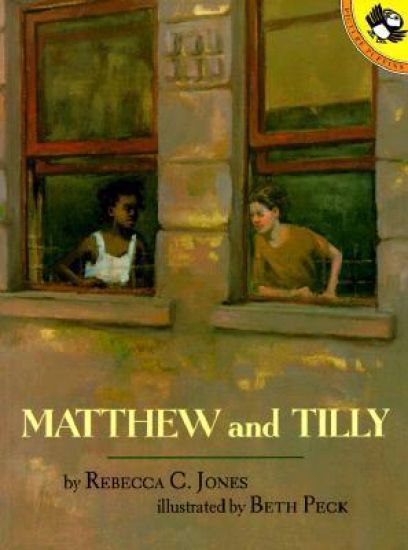
Like all good friends Matthew and Tilly have an occasional tiff, but their friendship prevails despite their differences

Matthew and Emma
Jenny Giles; Beverley Randell; Annette Smith
Cengage Learning Australia
2006
nidottu
Matthew and Emma are going down a water slide.
The Letters of Matthew Arnold to Arthur Hugh Clough
Matthew Arnold; Howard Foster Lowry
Oxford University Press
1968
sidottu
A scholarly edition of the letters of Matthew Arnold to Arthur Hugh Clough. The edition presents an authoritative text, together with an introduction, commentary notes, and scholarly apparatus.
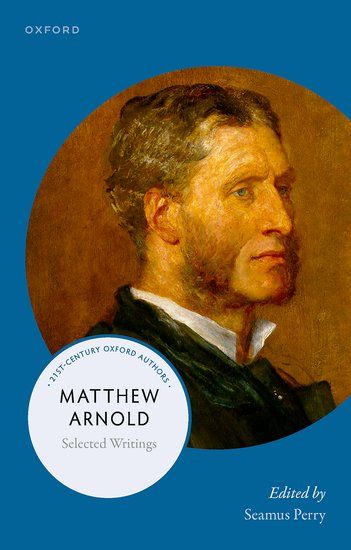
Matthew Arnold
Oxford University Press
2024
nidottu
This volume in the 21st Century Oxford Authors series offers students an authoritative, comprehensive selection of the poetry and prose of Matthew Arnold (1822-1888)--the first of its kind for half a century. The anthology is a fresh presentation of one of the most important and influential writers and thinkers of the Victorian period. Arnold's many facets--as poet, educationalist, literary critic, cultural commentator, and religious controversialist--are represented; and the text is fully annotated, identifying the many authors with whom Arnold engaged, and the contemporary public events to which his work often responds. Many of the themes of Arnold's writing life are still pressing matters today. What is the true nature of education? What are the duties of the State towards its citizens? What are the proper limits to individual freedom within a liberal society? What is the future of religion in an age of increasing secularisation? And, besides these questions, his poetry is one of the greatest and most influential of all bodies of Victorian verse, giving voice to the anxieties of an epoch.
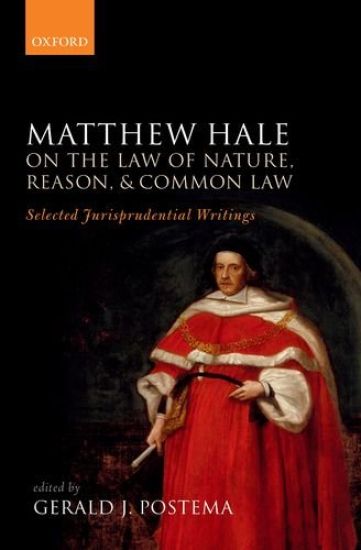
Matthew Hale: On the Law of Nature, Reason, and Common Law
Oxford University Press
2017
sidottu
Lawyer, judge, public figure, historian, theologian, and amateur natural philosopher, Sir Matthew Hale worked and wrote in the middle decades of the seventeenth century, perhaps the most turbulent period of English political history. His reflections on reason, law, and political authority, unpublished in his lifetime, are collected in this volume. It sets Hale's previously unpublished Treatise on the Nature of Laws in General and touching the Law of Nature and his "Reflections on Mr Hobbes his Dialogue of the Laws" in context of other key works of legal and constitutional theory. The Treatise reveals a complex general understanding of law and of moral and legal reasoning. "Reflections" brings these general considerations to bear on English law, in his critical response to Hobbes's all-out attack on common-law jurisprudence. "Reflections" suggests a conception of judicial reasoning, and a view of political authority, that deepens the view Hale defends in the longer and more systematic work. His views on practical reasoning are elaborated and related explicitly to the discipline of law in his "Preface to Rolle's Abridgement" and in parts of his History of the Common Law. In the Treatise, Hale argues that human law is necessarily instituted in the practices and customs of specific communities, manifesting their consent; this view is enriched and deepened in the History and "Considerations touching Amendment of the Law". His views on the foundations of political authority, sounded in the Treatise, are argued at length in Prerogatives of the King and "Reflections". "Reflections" argues for necessary legal limits of ruling power and Prerogatives offers a systematic discussion of the nature and limits of political authority. Taken together, these writings offer a rich and subtle articulation of a classical common-law understanding of law, reason and authority. Gerald J. Postema present these seminal writings in a modernized text for readers from philosophy, law, political theory, or intellectual history. He contributes an extended introduction setting out the theoretical and historical context of the works.
Matthew Arnold (1822-88), the leading man-of-letters of the Victorian age, has been the decisive influence on modern thinking about literature and criticism and his work has become an inescapable cultural reference point today. In this stylish and entertaining book Stefan Collini examines the whole range of Arnold's literary, social, and religious criticism as well as his poetry, placing them in the context of the major intellectual controversies of the nineteenth century. By attending to the distinctive power of Arnold's writing to charm, tease, persuade, and irritate, the book provides a brilliant characterization of the tone and temper of his mind. This edition includes a substantial Afterword which reflects on Arnold's continuing polemical significance and his role in contemporary cultural debate.
Matthew Arnold
Oxford University Press
2020
sidottu
This volume in the 21st Century Oxford Authors series offers students an authoritative, comprehensive selection of the poetry and prose of Matthew Arnold (1822-1888)--the first of its kind for half a century. The anthology is a fresh presentation of one of the most important and influential writers and thinkers of the Victorian period. Arnold's many facets--as poet, educationalist, literary critic, cultural commentator, and religious controversialist--are represented; and the text is fully annotated, identifying the many authors with whom Arnold engaged, and the contemporary public events to which his work often responds. Many of the themes of Arnold's writing life are still pressing matters today. What is the true nature of education? What are the duties of the State towards its citizens? What are the proper limits to individual freedom within a liberal society? What is the future of religion in an age of increasing secularisation? And, besides these questions, his poetry is one of the greatest and most influential of all bodies of Victorian verse, giving voice to the anxieties of an epoch. Explanatory notes and commentary enhance the study, understanding, and enjoyment of these works, and the edition includes an Introduction to the life and works of Arnold, and a Chronology.
The most Jewish of gospels in its contents and yet the most anti-Jewish in its polemics, the Gospel of Matthew has been said to mark the emergence of Christianity from Judaism. This text overturns the interpretation by showing us how Matthew, far from proclaiming the replacement of Israel by the Christian church, wrote from within Jewish tradition to a distinctly Jewish audience. Recent research reveals that among both Jews and Christians of the first century, many groups believed in Jesus while remaining close to Judaism. Saldarini argues that the author of the Gospel of Matthew belonged to such a group, supporting his claim with an informed reading of Matthew's text and historical context. Matthew emerges as a Jewish teacher competing for the commitment of his people after the catastrophic loss of the Temple in 70 C.E., his polemics aimed not at all Jews but at those who oppose him. Saldarini shows that Matthew's teaching about Jesus fits into first-century Jewish thought, with its tradition of God-sent leaders and heavenly mediators. In Saldarini's account, Matthew's Christian-Jewish community is a Jewish group, albeit one that deviated from the larger Jewish community.