Kirjojen hintavertailu. Mukana 12 425 877 kirjaa ja 12 kauppaa.

Kirjahaku

Etsi kirjoja tekijän nimen, kirjan nimen tai ISBN:n perusteella.

1000 tulosta hakusanalla Maximus F. Isla

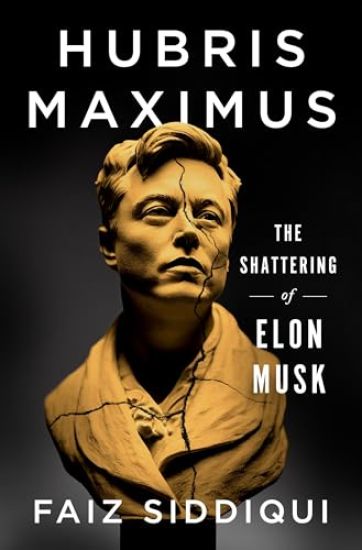
Hubris Maximus

Hubris Maximus

Faiz Siddiqui

St Martin's Press
2025
sidottu
What happened to Elon Musk? In six years, he turned Tesla into the world's most valuable automaker and cast himself as a saviour of humanity, an altruist whose fortune would stop climate change and colonise Mars. How did this modern day Edison devolve into a polarising and perpetually distracted CEO and the biggest bag-fumbler in human history? He didn't suddenly lose his mind, or morph into a tool of foreign agents. Elon Musk torched his reputation and put his entire empire at risk simply by being himself. Hubris Maximus provides a gripping, detailed portrait of the billionaire's rapid ascent and his spectacular public implosion. Washington Post reporter Faiz Siddiqui methodically deconstructs the making of the self-anointed Technoking, arguing that the warning signs were always visible to anyone willing to look. Musk's audacity and erratic behaviour drove his success from the start, and at every turn, he spurned regulators and whistleblowers, and replaced those who dared question him with loyalists. Now he is in a unique position to sabotage it all, and there is no one left to save him from himself. This remarkable case study in the pitfalls of unyielding loyalty to one man and the fecklessness of a gridlocked government is ultimately a cautionary tale: in a world that can't turn away from its screens, competence is no match for the power of influence and sustained attention.
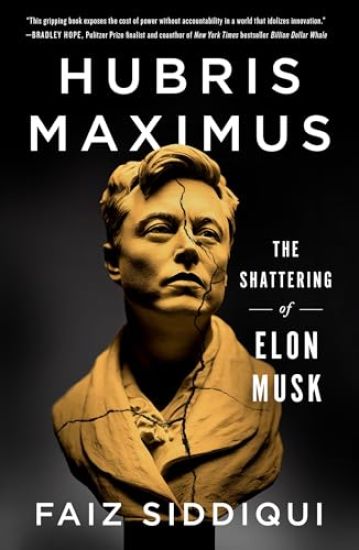
Hubris Maximus: The Shattering of Elon Musk

Hubris Maximus: The Shattering of Elon Musk

Faiz Siddiqui

St. Martin's Griffin
2026
nidottu
The rise, fall, and revival of the Caesar of Silicon Valley. Elon Musk has cast himself as the savior of humanity, an altruistic force whose fortune is tied to noble pursuits from halting our dependence on fossil fuels to colonizing Mars. Once frequently heralded as a modern-day Edison, Musk has taken up a new place in the public consciousness with his growing desire to disrupt not just the automotive and space industries but the policies that shape our nation, placing him at the center of America's most complex undertakings in manufacturing, politics, and defense and technology, even as his increasingly erratic personal behavior has raised questions about his stability and judgement. Musk famously leads his companies from a bully pulpit, eroding guardrails and cutting through red tape whenever possible with little regard for the fallout as long as it serves his larger goals. Many in his orbit have seen their lives upended or their careers throttled by believing in his utopian vision. As the scale of the wagers he makes with his fortune and concerns about his credibility have grown in recent years, he alternately seems to be in complete command or on the verge of a meltdown. Yet in the long run, he has only become wealthier, and now the stakes have risen. Thanks to astute political maneuvering, Musk is no longer limited to gambling with a company's bottom line or the livelihoods of his workers; he is poised to apply his uncompromising approach to business to the foundational rules and regulations that hold our society together. At a moment when America's tech gods are more influential than ever, Hubris Maximus is a cautionary tale about the pitfalls of lionizing magnetic leaders. Washington Post journalist Faiz Siddiqui offers a gripping, detailed portrait of a singularly messy and lucrative period in Musk's career, as well as a case study in the power of using one's platform to shape the public narrative in a world that can't turn away from its screens.
Poetus Maximus

Poetus Maximus

Robert Bradley

Lulu.com
2024
sidottu
Author Robert Bradley Jr., who is a qualified social worker, uses his poetry as a means to delve into character formulations worthy of analysis, had also given birth to 'The Dude'. 'The Dude', who emerged as a very nonchalant persona who need not take responsibility for expressing himself with his truths that penned freely metaphorically and consciously breaking grammar, spelling, and 'poetry' rules. The rebel, 'The Dude, ' comes to terms with the chaos that he has succumbed to and effectively, in a sense, generated. Thus, self-realisation, introspection, and change are evident in Robert's latest book, "Poetus Maximus". Hence, to read, "Poetus Maximus", is to witness the transformation of the pen, to literally experience 'The Dude's' death as another incognito voice comes to rise, the Poetus Maximus. "Poetus Maximus", is thus both a requiem and a celebration of new life by the metaphorical genius and poetry rebel, Author Robert Bradley Jr. Noora Salaam Publisher @ Writing EDEN https: //writingeden.co.za/
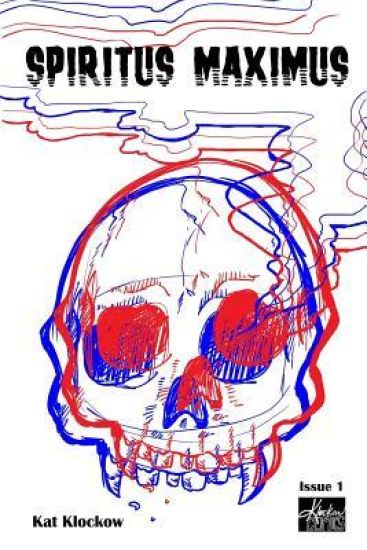
Spiritus Maximus Issue #1

Spiritus Maximus Issue #1

Kat Klockow

Lulu.com
2016
nidottu
Legendary creatures are now the main population on Earth, with vampires, werewolves, mermaids, and others out in the open around the world. Humans, however, have become a thing of legend themselves. Spritus, or their ghosts, are the only remaining fragment of human life. A popular past time for young Monstrum is to go seeking such spirits. Sawyer (a vampire) and Munny (a werewolf) particularly love going spirit hunting. On one outing however, in an abandoned hospital, they come across the most mythical of beings- a human girl.
Magically Maximus: Princess Rapunzels Horse (Disneys Horsetail Hollow, Book 1)
The horses of Disney gallop out of their fairy tales--and into our world--in this magical new chapter book series from Kiki Thorpe, the New York Times best-selling author of the Never Girls. Maddie and her sister, Evie, have just moved with their family from the big city to a farm called Horsetail Hollow. Maddie dreams of a horse of her own. Evie would rather read her favorite book of fairy tales. They are disappointed to discover that there are no horses--or fairy-tale princesses--on this farm. But there is a wishing well. . . ."An inviting choice for transitional readers who love horses and Disney princess movies." --Booklist
Magically Maximus: Princess Rapunzels Horse (Disneys Horsetail Hollow, Book 1)
The horses of Disney gallop out of their fairy tales--and into our world--in this magical new chapter book series from Kiki Thorpe, the New York Times best-selling author of the Never Girls. Maddie and her sister, Evie, have just moved with their family from the big city to a farm called Horsetail Hollow. Maddie dreams of a horse of her own. Evie would rather read her favorite book of fairy tales. They are disappointed to discover that there are no horses--or fairy-tale princesses--on this farm. But there is a wishing well. . . ."An inviting choice for transitional readers who love horses and Disney princess movies." --Booklist
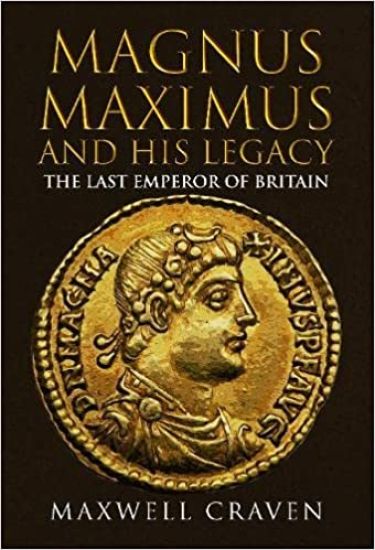
Magnus Maximus

Magnus Maximus

Maxwell Craven

AMBERLEY PUBLISHING
2023
sidottu
This is an in-depth re-assessment of the life of Magnus Maximus, Roman Emperor ruling in the west from 383 to 388, drawn from Classical sources and archaeology, which provides a very different impression of his life to the one created by the post-Roman and medieval British insular sources. While most historians tend to dismiss Maximus as an ephemeral usurper, his time in the sun shows every sign of having been a success. He cast a long shadow in Britain, where he was originally proclaimed. Yet early non-Roman sources, notably Gildas, condemn him for leaving the island bereft of defences due to his usurpation. In contrast, subsequent writers cast him as the progenitor of several British dynasties on the frontiers, while the medieval Mabinogion story ‘The Dream of Maxen Wledig’ presents him as an all-conquering figure of Romance who allied himself with a powerful British dynasty and facilitated the settlement of Brittany by the British. Following an introductory account of Roman Britain, its troubles and imperial adventures from Clodius Albinus in 193 to the end of the so-called ‘barbarian conspiracy’ in 368, Maxwell Craven examines all the sources to show how important the ardent Christian Maximus was to the settlement of the British frontiers. It was his work that kept the British tribes from being overwhelmed by Germanic invaders during the following centuries. Because of Maximus, the last remnant of the Roman west - Wales - remained unconquered until 1282, nine hundred years after Maximus was proclaimed.
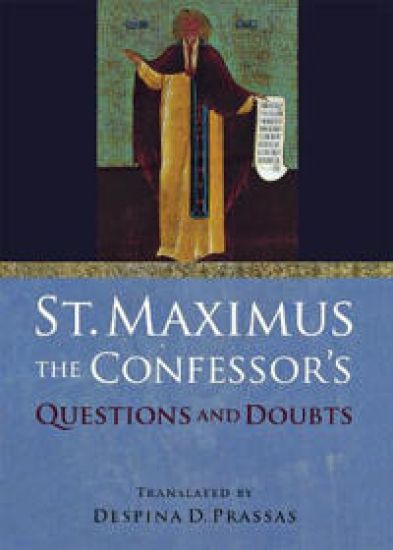
St. Maximus the Confessor's "Questions and Doubts"

St. Maximus the Confessor's "Questions and Doubts"

Saint Maximus the Confessor

Northern Illinois University Press
2021
pokkari
Despina D. Prassas's translation of the Quaestiones et Dubia presents for the first time in English one of the Confessor's most significant contributions to early Christian biblical interpretation. Maximus the Confessor (580–662) was a monk whose writings focused on ascetical interpretations of biblical and patristic works. For his refusal to accept the Monothelite position supported by Emperor Constans II, he was tried as a heretic, his right hand was cut off, and his tongue was cut out. In his work, Maximus the Confessor brings together the patristic exegetical aporiai tradition and the spiritual-pedagogical tradition of monastic questions and responses. The overarching theme is the importance of the ascetical life. For Maximus, askesis is a lifelong endeavor that consists of the struggle and discipline to maintain control over the passions. One engages in the ascetical life by taking part in both theoria (contemplation) and praxis (action). To convey this teaching, Maximus uses a number of pedagogical tools including allegory, etymology, number symbolism, and military terminology. Prassas provides a rich historical and contextual background in her introduction to help ground and familiarize the reader with this work.
Rufus Maximus

Rufus Maximus

Karen Karasz

Createspace Independent Publishing Platform
2016
nidottu
Join Rufus Maximus as he plays, explores, meets new friends and goes on an adventure. This cute and fun book is sure to delight your little ones.
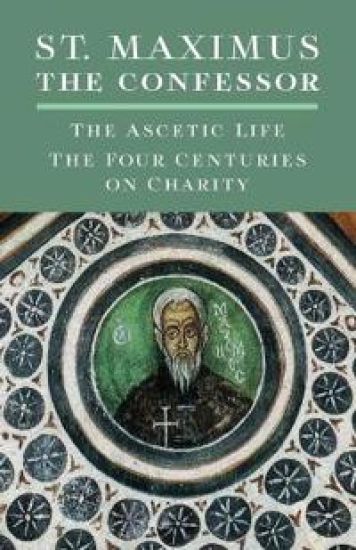
St. Maximus the Confessor: The Ascetic Life, The Four Centuries on Charity
St. Maximus the Confessor (1955) is a collection of theological works by the 1st-century monk St. Maximus, as well as interpretation by Polycarp Sherwood, an American Benedictine scholar from the 20th century. Including both The Ascetic Life and The Four Centuries on Charity by St. Maximus, as well as detailed research into the life and beliefs of the monk by Sherwood, this work includes both source material and commentary. The work begins with Life by Sherwood, a deep exploration into the life and theistic beliefs of St. Maximus. Born in 580 CE, Maximus enjoyed an education that prepared him for imperial service. He fulfilled this goal early in his career, serving as first secretary to the Byzantine emperor Heraclius. But he soon withdrew to monastic asceticism at Chrysopolis, seeking a routine of solitude and thought. Throughout his life, he traveled across the Byzantine Empire, including present-day Turkey, Crete, and parts of Africa, clarifying his position on important theological issues and writing his many works.Eventually, he was drawn into one of the great Christian controversies of the day-the nature of Christ's will. Maximus supported the Chalcedonian interpretation, which stated that Christ had both a human and a divine will. This was in contrast to the Monothelite position, accepted as canon at the time, which held that Christ had both a divine and human nature, but only a divine will. For this belief, Maximus was persecuted. Eventually, his tongue was cut out and his right hand cut off, so he could no longer speak or write his "heresy." He was then exiled to modern-day Georgia, where he died after just a few weeks. He was soon after vindicated and his position was upheld by the Third Council of Constantinople just 18 years after his death. It wasn't long before he was venerated as a saint.The next section, Doctrine, is also by Sherwood, and it explores St. Maximus' views on the nature of God as "goodness itself," the nature of man as a composite of body and soul, and on the salvation and deification of man through the works of Christ and asceticism.Next, we reach the works of St. Maximus himself. The first, The Ascetic Life, is a question-and-answer book in which a young brother asks an old wise man about the Christian life and the nature of Christ. In the old man's simple words, "...the purpose of the Lord's becoming man was our salvation." The old man answers the young brother's questions about the nature of Christian love, forsaking attachment to the worldly, and how to devote oneself entirely to God. Finally, the book concludes with The Four Centuries on Charity, also by St. Maximus. This collection of aphorisms is organized into four separate "centuries," or collections of one hundred. Kept short to aid in memorization and providing subjects for prayer, these sayings were presented to a Father Elpidius for his reading and benefit.The sayings range from the simple ("Happy is the man who is able to love all men equally") to the more complex ("Of the passions, it happens that some belong to the irascible, some to the concupiscible part of the soul. But both are moved by means of the senses.") Through study and prayer, St. Maximus hoped that these aphorisms would help the reader to live a Christ-like charity and grow closer to God.A work for study and reflection, this collection of St. Maximus' writings and Polycarp Sherwood's research and interpretation illuminates the beauty of God's love and the peace of a life of charity and forgiveness.
St. Maximus the Confessor: The Ascetic Life, The Four Centuries on Charity
St. Maximus the Confessor (1955) is a collection of theological works by the 1st-century monk St. Maximus, as well as interpretation by Polycarp Sherwood, an American Benedictine scholar from the 20th century. Including both The Ascetic Life and The Four Centuries on Charity by St. Maximus, as well as detailed research into the life and beliefs of the monk by Sherwood, this work includes both source material and commentary. The work begins with Life by Sherwood, a deep exploration into the life and theistic beliefs of St. Maximus. Born in 580 CE, Maximus enjoyed an education that prepared him for imperial service. He fulfilled this goal early in his career, serving as first secretary to the Byzantine emperor Heraclius. But he soon withdrew to monastic asceticism at Chrysopolis, seeking a routine of solitude and thought. Throughout his life, he traveled across the Byzantine Empire, including present-day Turkey, Crete, and parts of Africa, clarifying his position on important theological issues and writing his many works.Eventually, he was drawn into one of the great Christian controversies of the day-the nature of Christ's will. Maximus supported the Chalcedonian interpretation, which stated that Christ had both a human and a divine will. This was in contrast to the Monothelite position, accepted as canon at the time, which held that Christ had both a divine and human nature, but only a divine will. For this belief, Maximus was persecuted. Eventually, his tongue was cut out and his right hand cut off, so he could no longer speak or write his "heresy." He was then exiled to modern-day Georgia, where he died after just a few weeks. He was soon after vindicated and his position was upheld by the Third Council of Constantinople just 18 years after his death. It wasn't long before he was venerated as a saint.The next section, Doctrine, is also by Sherwood, and it explores St. Maximus' views on the nature of God as "goodness itself," the nature of man as a composite of body and soul, and on the salvation and deification of man through the works of Christ and asceticism.Next, we reach the works of St. Maximus himself. The first, The Ascetic Life, is a question-and-answer book in which a young brother asks an old wise man about the Christian life and the nature of Christ. In the old man's simple words, "...the purpose of the Lord's becoming man was our salvation." The old man answers the young brother's questions about the nature of Christian love, forsaking attachment to the worldly, and how to devote oneself entirely to God. Finally, the book concludes with The Four Centuries on Charity, also by St. Maximus. This collection of aphorisms is organized into four separate "centuries," or collections of one hundred. Kept short to aid in memorization and providing subjects for prayer, these sayings were presented to a Father Elpidius for his reading and benefit.The sayings range from the simple ("Happy is the man who is able to love all men equally") to the more complex ("Of the passions, it happens that some belong to the irascible, some to the concupiscible part of the soul. But both are moved by means of the senses.") Through study and prayer, St. Maximus hoped that these aphorisms would help the reader to live a Christ-like charity and grow closer to God.A work for study and reflection, this collection of St. Maximus' writings and Polycarp Sherwood's research and interpretation illuminates the beauty of God's love and the peace of a life of charity and forgiveness.