

Kirjahaku
Etsi kirjoja tekijän nimen, kirjan nimen tai ISBN:n perusteella.
1000 tulosta hakusanalla Michael B. Beckerman
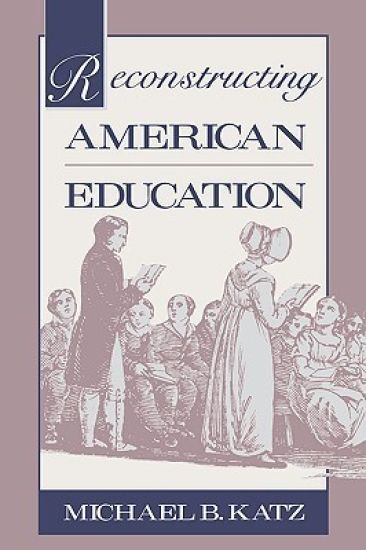
One of the leading historians of education in the United States here develops a powerful interpretation of the uses of history in educational reform and of the relations among democracy, education, and the capitalist state. Michael Katz discusses the reshaping of American education from three perspectives. First is the perspective of history: How did American education take shape? The second is that of reform: What can a historian say about recent criticisms and proposals for improvement? The third is that of historiography: What drives the politics of educational history? Katz shows how the reconstruction of America’s educational past can be used as a framework for thinking about current reform. Contemporary concepts such as public education, institutional structures such as the multiversity, and modern organizational forms such as bureaucracy all originated as solutions to problems of public policy. The petrifaction of these historical products—which are neither inevitable nor immutable—has become, Katz maintains, one of the mighty obstacles to change.The book’s central questions are as much ethical and political as they are practical. How do we assess the relative importance of efficiency and responsiveness in educational institutions? Whom do we really want institutions to serve? Are we prepared to alter institutions and policies that contradict fundamental political principles? Why have some reform strategies consistently failed? On what models should institutions be based? Should schools and universities be further assimilated to the marketplace and the state? Katz’s iconoclastic treatment of these issues, vividly and clearly written, will be of interest to both specialists and general readers. Like his earlier classic, The Irony of Early School Reform (1968), this book will set a fresh agenda for debate in the field.

This comprehensive introduction to the physics and chemistry of Earth's atmosphere explains the science behind some of the most critical and intensely debated environmental controversies of our day. In it, one of the world's leading experts on planetary environments presents the background necessary to assess the complex effects of human activity on our atmosphere and climate. Unique in its breadth and depth of coverage, The Atmospheric Environment includes a survey of Earth's climatic history to provide a context for assessing the changes underway today. It is written for--and will be of lasting value to--a varied audience, including not only students but also professional scientists and others seeking a sophisticated but readable introduction to the frontiers of contemporary research on biogeochemistry, depletion of stratospheric ozone, tropospheric air pollution, and climatology. The book covers both the chemistry and physics of the atmosphere with an account of relevant aspects of ocean science, treats atmospheric science and the climate as an integrated whole, and makes explicit the policy implications of what is known. Its critical account of steps taken by the international community to address the issue of climatic change highlights the challenge of dealing with a global issue for which the political and economic stakes are high, where uncertainties are common, and where there is an urgent need for clear thinking and informed policy. The book also sketches key gaps in our knowledge, outlining where we need to go to fully understand the impact of our actions on the climate. Thorough, timely, and authoritative, this is the book to consult for answers about some of the thorniest and most pressing environmental questions that we face.
"There are places where history feels irrelevant, and America's inner cities are among them," acknowledges Michael Katz, in expressing the tensions between activism and scholarship. But this major historian of urban poverty realizes that the pain in these cities has its origins in the American past. To understand contemporary poverty, he looks particularly at an old attitude: because many nineteenth-century reformers traced extreme poverty to drink, laziness, and other forms of bad behavior, they tried to use public policy and philanthropy to improve the character of poor people, rather than to attack the structural causes of their misery. Showing how this misdiagnosis has afflicted today's welfare and educational systems, Katz draws on his own experiences to introduce each of four topics--the welfare state, the "underclass" debate, urban school reform, and the strategies of survival used by the urban poor. Uniquely informed by his personal involvement, each chapter also illustrates the interpretive power of history by focusing on a strand of social policy in the nineteenth and twentieth centuries: social welfare from the poorhouse era through the New Deal, ideas about urban poverty from the undeserving poor to the "underclass," and the emergence of public education through the radical school reform movement now at work in Chicago. Why have American governments proved unable to redesign a welfare system that will satisfy anyone? Why has public policy proved unable to eradicate poverty and prevent the deterioration of major cities? What strategies have helped poor people survive the poverty endemic to urban history? How did urban schools become unresponsive bureaucracies that fail to educate most of their students? Are there fresh, constructive ways to think about welfare, poverty, and public education? Throughout the book Katz shows how interpretations of the past, grounded in analytic history, can free us of comforting myths and help us to reframe discussions of these great public issues.
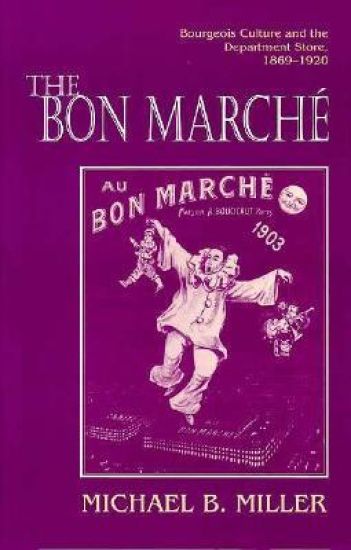
In this comprehensive social history of the Bon Marche, the Parisian department store that was the largest in the world before 1914, Michael Miller explores the bourgeois identities, ambitions, and anxieties that the new emporia so vividly dramatized. Through an original interpretation of paternalism, public images, and family-firm relationships, he shows how this new business enterprise succeeded in reconciling traditional values with the coming of an age of mass consumption and bureaucracy.

Random Fourier Series with Applications to Harmonic Analysis
Michael B. Marcus; Gilles Pisier
Princeton University Press
1981
pokkari
In this book the authors give the first necessary and sufficient conditions for the uniform convergence a.s. of random Fourier series on locally compact Abelian groups and on compact non-Abelian groups. They also obtain many related results. For example, whenever a random Fourier series converges uniformly a.s. it also satisfies the central limit theorem. The methods developed are used to study some questions in harmonic analysis that are not intrinsically random. For example, a new characterization of Sidon sets is derived. The major results depend heavily on the Dudley-Fernique necessary and sufficient condition for the continuity of stationary Gaussian processes and on recent work on sums of independent Banach space valued random variables. It is noteworthy that the proofs for the Abelian case immediately extend to the non-Abelian case once the proper definition of random Fourier series is made. In doing this the authors obtain new results on sums of independent random matrices with elements in a Banach space. The final chapter of the book suggests several directions for further research.
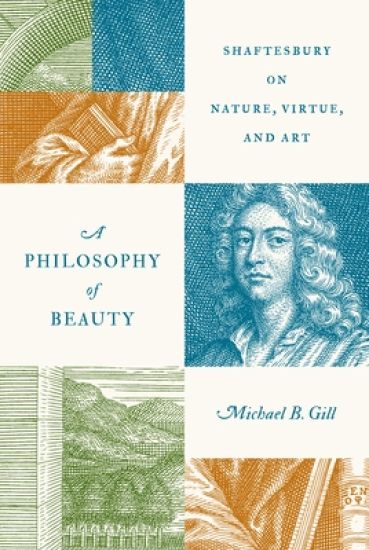
An engaging account of how Shaftesbury revolutionized Western philosophyAt the turn of the eighteenth century, Anthony Ashley Cooper, the third Earl of Shaftesbury (1671–1713), developed the first comprehensive philosophy of beauty to be written in English. It revolutionized Western philosophy. In A Philosophy of Beauty, Michael Gill presents an engaging account of how Shaftesbury’s thought profoundly shaped modern ideas of nature, religion, morality, and art—and why, despite its long neglect, it remains compelling today.Before Shaftesbury’s magnum opus, Charactersticks of Men, Manners, Opinions, Times (1711), it was common to see wilderness as ugly, to associate religion with fear and morality with unpleasant restriction, and to dismiss art as trivial or even corrupting. But Shaftesbury argued that nature, religion, virtue, and art can all be truly beautiful, and that cherishing and cultivating beauty is what makes life worth living. And, as Gill shows, this view had a huge impact on the development of natural religion, moral sense theory, aesthetics, and environmentalism.Combining captivating historical details and flashes of humor, A Philosophy of Beauty not only rediscovers and illuminates a fascinating philosopher but also offers an inspiring reflection about the role beauty can play in our lives.
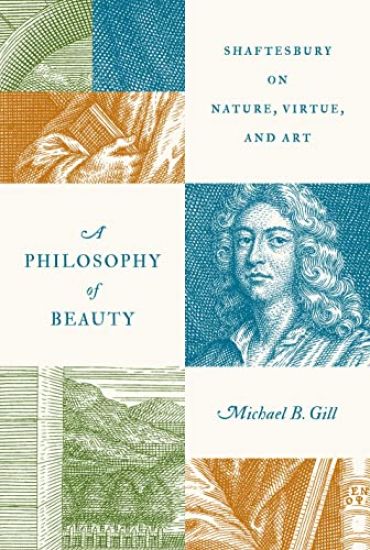
An engaging account of how Shaftesbury revolutionized Western philosophyAt the turn of the eighteenth century, Anthony Ashley Cooper, the third Earl of Shaftesbury (1671–1713), developed the first comprehensive philosophy of beauty to be written in English. It revolutionized Western philosophy. In A Philosophy of Beauty, Michael Gill presents an engaging account of how Shaftesbury’s thought profoundly shaped modern ideas of nature, religion, morality, and art—and why, despite its long neglect, it remains compelling today.Before Shaftesbury’s magnum opus, Charactersticks of Men, Manners, Opinions, Times (1711), it was common to see wilderness as ugly, to associate religion with fear and morality with unpleasant restriction, and to dismiss art as trivial or even corrupting. But Shaftesbury argued that nature, religion, virtue, and art can all be truly beautiful, and that cherishing and cultivating beauty is what makes life worth living. And, as Gill shows, this view had a huge impact on the development of natural religion, moral sense theory, aesthetics, and environmentalism.Combining captivating historical details and flashes of humor, A Philosophy of Beauty not only rediscovers and illuminates a fascinating philosopher but also offers an inspiring reflection about the role beauty can play in our lives.
The Truest Story Ever Told: What the World's Most Timeless Stories Reveal about Finding Fulfillment, Joy and Adventure
Michael B. Eddy
Wholehearted Media
2018
nidottu
Humans are hardwired for stories. We need stories to make sense of our lives and for insight on what the universe is expecting from us next. The Truest Story Ever Told shows readers how one specific story arc found throughout the world's most sacred stories can be used to find greater purpose, joy and adventure. This storytelling structure, labeled by the late mythologist Joseph Campbell as the HERO'S JOURNEY, describes the persistence of a particular set of themes in mythology and still used by today's best storytellers. While stories come in endless variation, the most profound ones follow a nearly universal format: A hero ventures out of an ordinary world and enters into a mysterious world full of adventure and challenges. During the Hero's Quest he or she is initiated into a more whole and alive condition before returning to the ordinary world to share the rewards of the journey with his or her community.Before walking readers through how to apply the various themes of the HERO'S JOURNEY in real modern day terms, Eddy points out that the reason these stories repeat themselves so often through history and have such power over us is because they all reflect one particular story-The Truest Story Ever Told - the Gospel story of Jesus Christ. Jesus came as the ultimate expression of life and as an example God's love for his creation. He was the Hero of all Hero's and now he invites us to join the narrative and to have his Hero story intertwine with ours so through our life we might continue to tell the Hero tale. What we learn through Eddy's take on the HERO'S JOURNEY is that our most cherished stories are not just a place for our imaginations to go to escape. They are pointing us toward an eternal truth about what it means to be the image-bearers of God. We have a new destiny. Come lean how you can be a part of The Truest Story Ever Told.

Immigrating and Moving to the USA: A Practical Guide
Michael B. Dye; Jeremy G. Stobie
Blue Pelican Press
2014
nidottu
Building Bridges of Communication Through Point of Use Leadership
Michael B. Rall
J.C. Bridge Builders
2015
nidottu
Too often we have poor working relationships with others at work at home and in the community that get in the way of achieving success and leave us feeling frustrated or overwhelmed. What if there was a way to lead your business, your home, and your community efforts that created positive relationships and success for both yourself and others? Michael B. Rall's Building Bridges of Communication through Point-of-Use Leadership illustrates how you can create sustainable success by improving communication between individuals and organizations and across functional and cultural boundaries. Told in story form, it follows a local business manager as she seeks advice from a friend who mentors her on how to transition from being a manager to being a leader, how to create positive interactions and engagement, and how to improve performance and achieve success. Each chapter tackles a different challenge and includes both a workplace and home-life application. This integrated leadership process teaches you how to: Transition from being a manager to being a leader. Cultivate engaged performance leadership at the point of use and at every level of your organization Make decisions and solve problems effectively and efficiently. Achieve your strategic and tactical objectives Inspire creative and innovative thinking. Enhance your business, enrich your personal life, and benefit your community today by following the simple steps of this comprehensively beneficial leadership process.

This book represents the first scholarly examination of the origins of the 1956 Sinai campaign between Egypt and Israel. Utilising a wide range of primary sources, the study analyses the reasons for the breakdown of the Armistice Agreement between Egypt and Israel and the failure of efforts to mediate a peace accord.

Here is the story of Ireland’s Civil War in colour – a defining moment in Irish history brought to life for the first time in hand-coloured photographs. The events of 1922–1923 are revealed using photographs painstakingly hand-coloured by John O’Byrne. His attention to detail gives a vivid authenticity that brings the events alive. Many of these photographs, carefully selected from archives and private collections, have never been published before. They carry informative captions by Michael B. Barry, based on extensive historical research. This richly illustrated book gives a fresh perspective to the conflict. If you want a better understanding of the story of the Irish Civil War, this is the book for you.
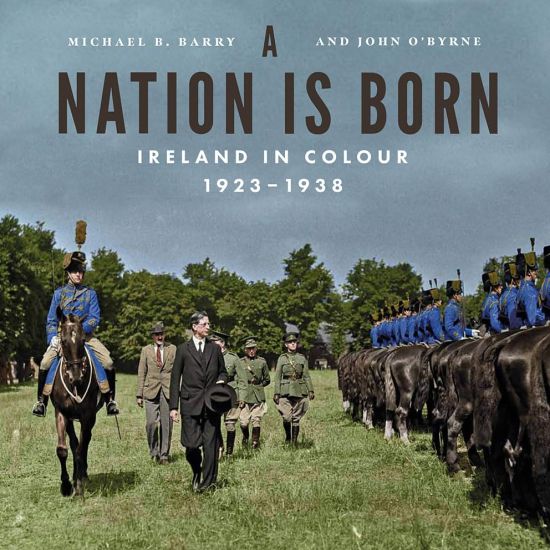
A Nation Is Born celebrates a formative period in the history of the Irish state: the fifteen years during which we emerged from the rubble of wars and violence and set up as a fledgling country while establishing a diplomatic presence on the world stage. The photos presented here have been painstakingly hand-colourised by photographer John O’Byrne, infusing energy into this often-overlooked time: the election of the country’s first governments; the mammoth Shannon hydroelectric scheme; a stunning Eucharistic Congress; scenes of cottage industry and rural Irish life; and ending with the uncertain rumblings of war in Europe. With over 150 photographs gathered from archives around the country, accompanied by insightful and accessible commentary by historian Michael B. Barry, A Nation Is Born brings a fresh perspective on our history and our past to life in a compellingly real way.
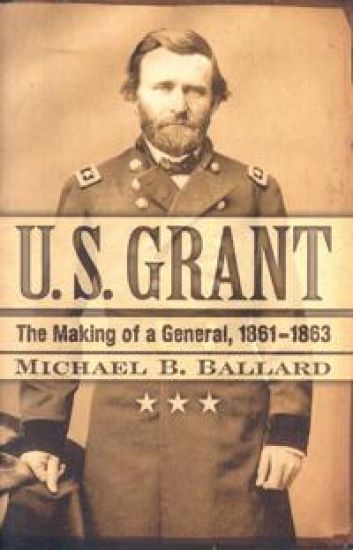
What made Ulysses S. Grant tick? Perhaps the greatest general of the Civil War, Grant won impressive victories and established a brilliant military career. His single-minded approach to command was coupled with the ability to adapt to the kind of military campaign the moment required. In this exciting new book, Michael B. Ballard provides a crisp account of Grant's strategic and tactical concepts in the period from the outset of the Civil War to the battle of Chattanooga—a period in which U. S. Grant rose from a semi-disgraceful obscurity to the position of overall commander of all Union armies. The author carefully sifts through diaries and letters of Grant and his inner circle to try to get inside Grant's mind and reveal why those early years of the war were formative in producing the Civil War's greatest general.
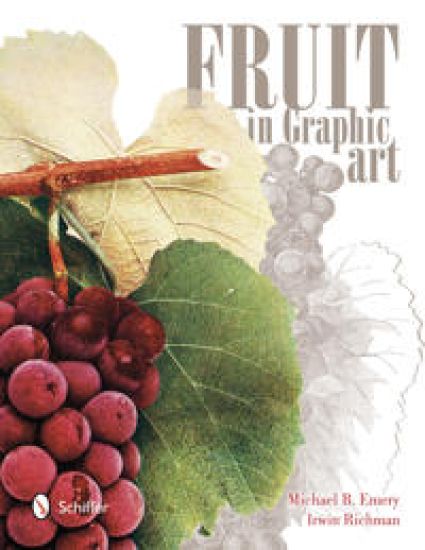
Throughout history, especially from the 18th century to the beginning of World War II, artists have produced a remarkable wealth of graphic representations of fruit. This volume includes paintings by American artists, including the Peale family, Grant Wood, and Thomas Hart Benton, engravings and lithographs by major printmaking companies like Currier and Ives, botanical illustrations, and excerpts from vintage nursery catalogs. Find hundreds of illustrations, chosen to arouse physical and aesthetic appetites. These include still lifes, photographs, and amusing antique postcards, as well as expert botanical and historical information. Fruit you know and some you may not are illustrated here in unique works of art or artifacts. They include standards like apples, cherries, and grapes, tropicals such as bananas, mangoes and avocados, biblical fruits, including pomegranates, dates, and olives, and rare delicacies like medlars, persimmons, prickly cactus pears, and pawpaws. Fruit has never looked this good.
"What brings you here?" is the standard question posed to patients at the outset of their therapeutic journey. In A Curious Calling, this question is posed to therapists themselves. Applicants to psychotherapy training programs commonly state that they wish "to help people"—but this tells us very little. What are the unconscious factors underlying the decision to become a psychotherapist? Guilt, compassion, a sense of moral duty, a sense of power? Or a wish to be needed, or to enjoy vicariously the prospect of receiving aid and comfort? For each individual with a "need to help" there exists a unique constellation of underlying motives and aims. Without exploring and facing up to these hidden sources of motivation, therapists run the risk of exploiting patients for their own needs. The only comprehensive text on this topic, Sussman's book presents a survey of motivations to practice psychotherapy, through an extensive review of the available literature and discussion of the results of a qualitative study of therapists conducted by the author.
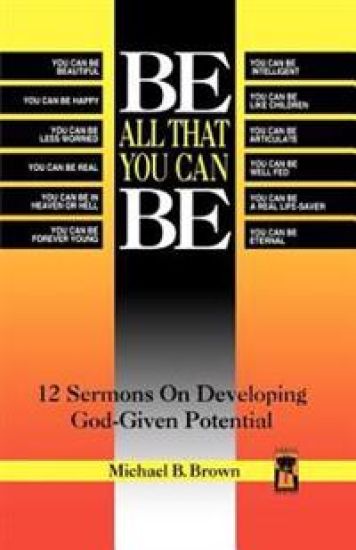
Though the title sounds like a promotional campaign for the U.S. Army, that's not its intent. Instead, what is contained in this book are road marks for the journey into a new and stronger sense of what it means to be fully alive. All people are created with inherent purpose, promise, and potential. All are endowed with abilities to do more and be more than we sometimes dare imagine. Herein are sermons intended to help readers and listeners discover their own powers and possibilities, to own them, to cultivate them and to live within them. The chapters do not form an exhaustive list of human potentials. They do, however, provide an important inventory of what we all were created to become and can become, if we choose. Chapter titles include: - You Can Be Articulate -- Based upon Mark 7:31-37 - You Can Be Intelligent -- Based upon 2 Chronicles 1-11 - You Can Be Like Children -- Based upon Mark 10:13-16 - You Can Be Beautiful -- Based upon Hosea 14:1-7 - You Can Be Well Fed -- Based upon 1 Corinthians - You Can Be Eternal -- Based upon 2 Corinthians Readers will sense their own calls to be more than they have been thus far and the extraordinary power of One who promises to make the journey with them. Michael B. Brown has a masters of divinity from Duke Divinity School and a doctor of ministry degree from Drew University Theological School. His previous books include It Works For Us and Ordinary Sins, both from CSS. His work has appeared in the Abingdon Preacher's Annual 1993 and 1994 and in 1990 he received the "Circuit Rider Certificate of Merit" and the "Circuit Rider Sermon-of-the-Year."

To find more information about Rowman and Littlefield titles, please visit www.rowmanlittlefield.com.
Corporate Communications for Executives
Michael B. Goodman
State University of New York Press
1998
pokkari
This strategic tool for executives to lead, motivate, persuade, and inform numerous audiences inside and outside their organizations explores corporate communication as an executive practice.Communication becomes more complex as businesses compete in a global environment. The complexity brought on by an explosion in the number of tools for communication-computers, digital media, interactive corporate television, faxes, e-mail, the Internet-fuels the need for a corporation to consider its communications as central to its strategic plans. Corporate Communications for Executives looks closely at the professional practice of corporate communication. It offers numerous perspectives on ethics, science and society, employee motivation, corporate social responsibility, internal communication, global corporate communications, and communicating corporate cultures.