Kirjojen hintavertailu. Mukana 11 244 527 kirjaa ja 12 kauppaa.

Kirjahaku

Etsi kirjoja tekijän nimen, kirjan nimen tai ISBN:n perusteella.

1000 tulosta hakusanalla Michael Philion

Michael Young, Social Science, and the British Left, 1945-1970
In post-war Britain, left-wing policy maker and sociologist Michael Young played a major role in shaping British intellectual, political, and cultural life, using his study of the social sciences to inform his political thought. In the mid-twentieth century the social sciences significantly expanded, and played a major role in shaping British intellectual, political and cultural life. Central to this intellectual shift was the left-wing policy maker and sociologist Michael Young. As a Labour Party policy maker in the 1940s, Young was a key architect of the Party's 1945 election manifesto, 'Let Us Face the Future'. He became a sociologist in the 1950s, publishing a classic study of the East London working class, Family and Kinship in East London with Peter Willmott in 1957, which he followed up with a dystopian satire, The Rise of the Meritocracy, about a future society in which social status was determined entirely by intelligence. Young was also a prolific social innovator, founding or inspiring dozens of organisations, including the Institute of Community Studies, the Consumers' Association, Which?magazine, the Social Science Research Council and the Open University. Moving between politics, social science, and activism, Young believed that disciplines like sociology, psychology and anthropology could help policy makers and politicians understand human nature, which in turn could help them to build better political and social institutions. This book examines the relationship between social science and public policy in left-wing politics between the end of the Second World War and the end of the first Wilson government through the figure of Michael Young. Drawing on Young's prolific writings, and his intellectual and political networks, it argues that he and other social scientists and policy makers drew on contemporary ideas from the social sciences to challenge key Labour values, like full employment and nationalisation, and to argue that the Labour Party should put more emphasis on relationships, family, and community. Showing that the social sciences were embedded in the project of social democratic governance in post-war Britain, it argues that historians and scholars should take their role in British politics and political thought seriously
Michael Faraday

Michael Faraday

Frank A. J. L. James

Oxford University Press
2010
nidottu
Michael Faraday is one of the best known scientific figures of all time. Known as the discoverer of electro-magnetic induction, the principle behind the electric generator and transformer, he has frequently been portrayed as the 'father' of electrical engineering from whence much of his popular fame derives. This Very Short Introduction dispels the myth that Faraday was an experimental genius working alone in his basement laboratory, making fundamental discoveries that were later applied by others. Instead, it portrays Faraday as a grand theorist of the physical world profoundly influencing later physicists such as Thomson (Kelvin), Maxwell, and Einstein. Frank A.J.L. James explores Faraday's life from his origins in eighteenth-century Westmorland and Yorkshire, his religious and scientific background, to the growth of his fame in the nineteenth and twentieth centuries. As well as introducing his scientific research, he also puts Faraday in the various institutional contexts in which he lived and worked, including the Royal Institution, the Royal Society, Trinity House, and other agencies of the state. James therefore provides a commentary on the rapidly changing place of science in nineteenth-century society, especially in regards to its role in government and the growth of a professional scientific community. ABOUT THE SERIES: The Very Short Introductions series from Oxford University Press contains hundreds of titles in almost every subject area. These pocket-sized books are the perfect way to get ahead in a new subject quickly. Our expert authors combine facts, analysis, perspective, new ideas, and enthusiasm to make interesting and challenging topics highly readable.
Michael Atiyah Collected Works

Michael Atiyah Collected Works

Michael Atiyah

Oxford University Press
2014
sidottu
Professor Atiyah is one of the greatest living mathematicians and is renowned in the mathematical world. He is a recipient of the Fields Medal, the mathematical equivalent of the Nobel Prize, and is still actively involved in the mathematics community. His huge number of published papers, focusing on the areas of algebraic geometry and topology, have here been collected into seven volumes, with the first five volumes divided thematically and the sixth and seventh arranged by date. This seventh volume in Michael Atiyah's Collected Works contains a selection of his publications between 2002 and 2013, including his work on skyrmions; K-theory and cohomology; geometric models of matter; curvature, cones and characteristic numbers; and reflections on the work of Riemann, Einstein and Bott.
Michael Atiyah Collected Works

Michael Atiyah Collected Works

Michael Atiyah

Oxford University Press
2014
muu
Professor Atiyah is one of the greatest living mathematicians and is renowned in the mathematical world. He is a recipient of the Fields Medal, the mathematical equivalent of the Nobel Prize, and is still actively involved in the mathematics community. His huge number of published papers, focusing on the areas of algebraic geometry and topology, have here been collected into seven volumes, with the first five volumes divided thematically and the sixth and seventh arranged by date. This seven volume set of the collected works of Professor Sir Michael Atiyah, includes: Collected Works: Volume 1: Early Papers; General Papers Collected Works: Volume 2: K-Theory Collected Works: Volume 3: Index Theory: 1 Collected Works: Volume 4: Index Theory: 2 Collected Works: Volume 5: Gauge Theories Collected Works: Volume 6: Publications between 1987 and 2002 New for 2014: Collected Works: Volume 7: 2002-2013, including Sir Michael's work on skyrmions; K-theory and cohomology; geometric models of matter; curvature, cones and characteristic numbers; and reflections on the work of Riemann, Einstein and Bott.
Michael Polanyi and His Generation

Michael Polanyi and His Generation

Mary Jo Nye

University of Chicago Press
2013
nidottu
In Michael Polanyi and His Generation, Mary Jo Nye investigates the role that Michael Polanyi and several of his contemporaries played in the emergence of the social turn in the philosophy of science. This turn involved seeing science as a socially based enterprise that does not rely on empiricism and reason alone but on social communities, behavioral norms, and personal commitments. Nye argues that the roots of the social turn are to be found in the scientific culture and political events of Europe in the 1930s, when scientific intellectuals struggled to defend the universal status of scientific knowledge and to justify public support for science in an era of economic catastrophe, Stalinism and Fascism, and increased demands for applications of science to industry and social welfare. At the center of this struggle was Polanyi, who Nye contends was one of the first advocates of this new conception of science. Nye reconstructs Polanyi's scientific and political milieus in Budapest, Berlin, and Manchester from the 1910s to the 1950s and explains how he and other natural scientists and social scientists of his generation and the next forged a politically charged philosophy of science, one that newly emphasized the social construction of science.
Michael Polanyi and His Generation

Michael Polanyi and His Generation

Mary Jo Nye

University of Chicago Press
2011
sidottu
In "Michael Polanyi and His Generation", Mary Jo Nye investigates the role that Michael Polanyi and several of his contemporaries played in the emergence of the social turn in the philosophy of science. This turn involved seeing science as a socially based enterprise that does not rely on empiricism and reason alone but on social communities, behavioral norms, and personal commitments. Nye argues that the roots of the social turn are to be found in the scientific culture and political events of Europe in the 1930s, when scientific intellectuals struggled to defend the universal status of scientific knowledge and to justify public support for science in an era of economic catastrophe, Stalinism and Fascism, and increased demands for applications of science to industry and social welfare. At the center of this struggle was Polanyi, who Nye contends was one of the first advocates of this new conception of science. Nye reconstructs Polanyi's scientific and political milieus in Budapest, Berlin, and Manchester from the 1910s to the 1950s and explains how he and other natural scientists and social scientists of his generation - including J.D. Bernal, Ludwik Fleck, Karl Mannheim, and Robert K. Merton - and the next, such as Thomas Kuhn, forged a politically charged philosophy of science, one that newly emphasized the social construction of science.
Michael and Brie (off the Ship) Book Number 2

Michael and Brie (off the Ship) Book Number 2

Shirley Ellen Dodding

Tellwell Talent
2020
pokkari
Michael (almost thirteen) is now home from the Caribbean cruise his uncle bought for his family. In the end he lost so much on that cruise -his uncle, his father-but he remains courageous. His trailer life at home in Miami is dull and poor. However, Michael is brilliant and all his peers hate him for it. He is determined when he walks into his Miami high school not to get bullied. The next day there he is on the ground, being kicked by a pack of boys. His single mom and seven-year-old sister Brie support him, but until Michael finds a way to eradicate bullying in all the schools in Miami and win the ten-thousand-dollar reward to do it, his life is a living nightmare. Then he meets Gloria and Gavin, two university students who take him on as an apprentice, and along with their dog they travel to every school to present the basic facts about bullying. Michael finds his life changing with this dog, and with every presentation. The pack of boys who had originally kicked him on the playground become his team of advocates as they take on the city of Miami and the bullies in every school.
Michael O'Leary

Michael O'Leary

Matt Cooper

Penguin Books Ltd
2019
pokkari
'In a world of colourless corporate leaders, Ryanair's aggressive, mouthy chief executive provides catnip for journalists. Cooper, an award-winning Irish writer and reporter, makes the most of the opportunity to dissect his colourful subject' Book of the Month, The Financial Times Michael O'Leary lifts the veil on the wildly successful and wildly controversial Ryanair CEO. Based on extensive research - including with close associates of O'Leary - the book examines O'Leary's personality, beliefs and obsessions and describes how these have moulded the business he runs. Written by a multi-award-winning journalist and broadcaster, with a thirty-year career covering business and current affairs, it is a fascinating insight into the business behind the man, and the man behind the business.'Fascinating book ... very comprehensive' Eamon Dunphy, The Stand'An indispensable guide for anyone who wants to understand not just where Michael O'Leary and Ryanair are coming from, but where they are going' Sunday Business Post'A frequently enlightening unauthorised biography ... entertaining' Irish Independent
Michael Rosen's Book of Very Silly Poems
Let your imagination run riot and laughter fill your belly as you explore this book of poems from former Children’s Laureate Michael Rosen. Discover traditional poems, rhymes with a twist, and subversive playground favourites in this playful treasure chest of verse. This is the perfect book for young readers to dive into the world of poetry and a great read-aloud with friends of family.
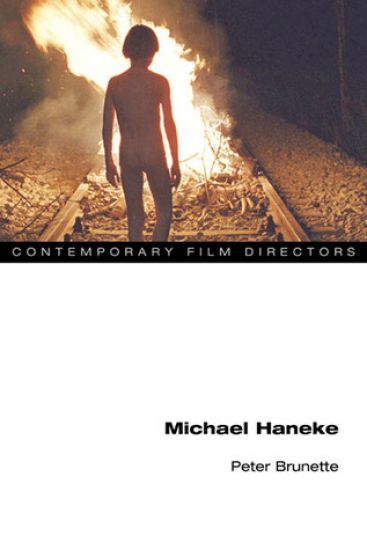
Michael Haneke

Michael Haneke

Peter Brunette

University of Illinois Press
2010
sidottu
In this book, Peter Brunette analyzes the theatrical releases of Austrian film director Michael Haneke, including The White Ribbon, winner of the 2009 Palme d'Or at the Cannes Film Festival. Perhaps best known to U.S. audiences for Caché, The Piano Teacher, and his remake of his own disturbing Funny Games, Haneke has consistently challenged critics and film viewers to consider their own responsibility for what they watch when they seek to be ""merely"" entertained by such studio-produced Hollywood thrillers. Brunette highlights Haneke's brilliant use of uncompromising visual and aural techniques to express complex themes. His most recent films contain what has become his hallmark: a moment of violence or shock that is not intended to be exploitative, but that nevertheless goes beyond the conventional boundaries of most art cinema. Lauded for graphically revealing the powerful influence of contemporary media on social behavior, his films offer a chilling critique of contemporary consumer society. Brunette discusses Haneke's major releases in English, French, and German, including the film that first brought him to international attention, Benny's Video. The first full-length study of Haneke's work in any language, this book also includes an interview with the director that explores his motivations and methods.
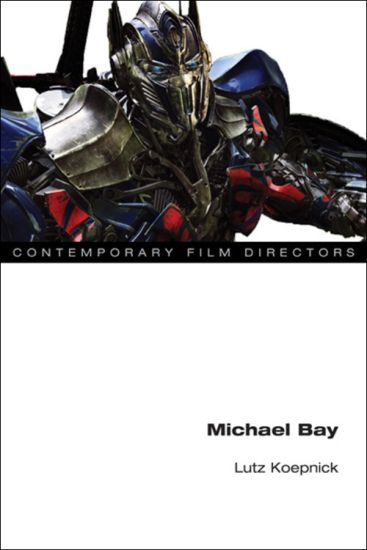
Michael Bay

Michael Bay

Lutz Koepnick

University of Illinois Press
2018
sidottu
If size counts for anything, Michael Bay towers over his contemporaries. His summer-defining event films involve extraordinary production costs and churn enormous box office returns. His ability to mastermind breathtaking spectacles of action, mayhem, and special effects continually push the movie industry as much as the medium of film toward new frontiers. Lutz Koepnick engages the bigness of works like Armageddon and the Transformers movies to explore essential questions of contemporary filmmaking and culture. Combining close analysis and theoretical reflection, Koepnick shows how Bay's films, knowingly or not, address profound issues about what it means to live in the late twentieth- and early twenty-first centuries. According to Koepnick's astute readings, no one eager to understand the state of cinema today can ignore Bay's work. Bay's cinema of world-making and transnational reach not only exemplifies interlocking processes of cultural and economic globalization. It urges us to contemplate the future of moving images, of memory, matter, community, and experience, amid a time of rampant political populism and ever-accelerating technological change. An eye-opening look at one of Hollywood's most polarizing directors, Michael Bay illuminates what energizes the films of this cinematic and cultural force.
Michael Haneke

Michael Haneke

Peter Brunette

University of Illinois Press
2010
nidottu
In this book, Peter Brunette analyzes the theatrical releases of Austrian film director Michael Haneke, including The White Ribbon, winner of the 2009 Palme d'Or at the Cannes Film Festival. Perhaps best known to U.S. audiences for Caché, The Piano Teacher, and his remake of his own disturbing Funny Games, Haneke has consistently challenged critics and film viewers to consider their own responsibility for what they watch when they seek to be ""merely"" entertained by such studio-produced Hollywood thrillers. Brunette highlights Haneke's brilliant use of uncompromising visual and aural techniques to express complex themes. His most recent films contain what has become his hallmark: a moment of violence or shock that is not intended to be exploitative, but that nevertheless goes beyond the conventional boundaries of most art cinema. Lauded for graphically revealing the powerful influence of contemporary media on social behavior, his films offer a chilling critique of contemporary consumer society. Brunette discusses Haneke's major releases in English, French, and German, including the film that first brought him to international attention, Benny's Video. The first full-length study of Haneke's work in any language, this book also includes an interview with the director that explores his motivations and methods.
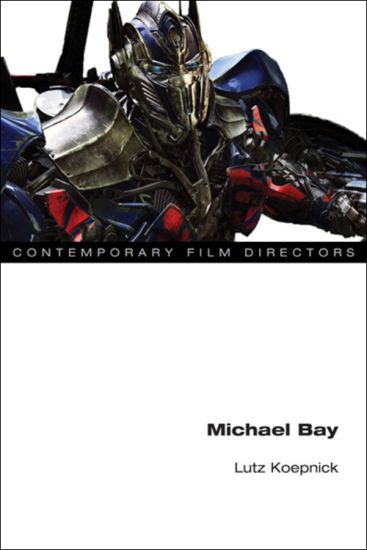
Michael Bay

Michael Bay

Lutz Koepnick

University of Illinois Press
2018
nidottu
If size counts for anything, Michael Bay towers over his contemporaries. His summer-defining event films involve extraordinary production costs and churn enormous box office returns. His ability to mastermind breathtaking spectacles of action, mayhem, and special effects continually push the movie industry as much as the medium of film toward new frontiers. Lutz Koepnick engages the bigness of works like Armageddon and the Transformers movies to explore essential questions of contemporary filmmaking and culture. Combining close analysis and theoretical reflection, Koepnick shows how Bay's films, knowingly or not, address profound issues about what it means to live in the late twentieth- and early twenty-first centuries. According to Koepnick's astute readings, no one eager to understand the state of cinema today can ignore Bay's work. Bay's cinema of world-making and transnational reach not only exemplifies interlocking processes of cultural and economic globalization. It urges us to contemplate the future of moving images, of memory, matter, community, and experience, amid a time of rampant political populism and ever-accelerating technological change. An eye-opening look at one of Hollywood's most polarizing directors, Michael Bay illuminates what energizes the films of this cinematic and cultural force.
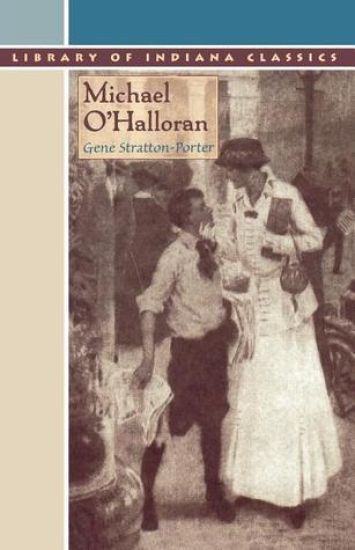
Michael O'Halloran

Michael O'Halloran

Gene Stratton-Porter

Indiana University Press
1997
pokkari
This early 20th-century classic chronicles the adventures of an orphaned newspaper boy in his "hand-to-hand scuffle" with life in a midwestern metropolis. Gene Stratton-Porter's faith in the healing power of nature is also apparent, in a lovingly depicted tamarack swamp set near the city.
Michael Asher

Michael Asher

MIT Press
2016
pokkari
Essays and criticism that span Michael Asher's career, documenting site-specific installations and institutional interventions.During a career that spanned more than forty years, from the late 1960s until his death in 2012, Michael Asher created site-specific installations and institutional interventions that examined the conditions of art's production, display, and reception. At the Art Institute of Chicago, for example, he famously relocated a bronze replica of an eighteenth-century sculpture of George Washington from the museum's entrance to an interior gallery, thereby highlighting the disjunction between the statue's symbolic function as a public monument and its aesthetic origins as an artwork.Today, Asher is celebrated as one of the forerunners of institutional critique. Yet because of Asher's situation-based method of working, and his resistance to making objects that could circulate in the art market, few of his works survive in physical form. What does survive is writing by scholars and critics about his diverse practice. The essays in this volume document projects that range from Asher's environmental works and museum displacements to his research-based presentations and reflections on urban space.ContributorsMichael Asher, Sandy Ballatore, Benjamin H. D. Buchloh, Jennifer King, Miwon Kwon, Barbara Munger, Stephan Pascher, Birgit Pelzer, Anne Rorimer, Allan Sekula
Michael Snow

Michael Snow

MIT Press
2019
pokkari
Essential texts on the work of the influential artist Michael Snow: essays and interviews spanning more than four decades.Few filmmakers have had as large an impact on the recent avant-garde film scene as Canadian Michael Snow (b. 1928). His works in a range of media-film, installation, video, painting, sculpture, sound, photography, drawing, writing, and music-address the fundamental properties of his materials, the conditions of perception and experience, questions of authorship in technologically reproducible media, and techniques of translation through written and pictorial representation. His film Wavelength (1967) is a milestone of avant-garde cinema and possibly the most frequently discussed "structural" film ever made. This volume collects essential texts on Snow's work, with essays and interviews spanning more than four decades.From its earliest issues, October has been a primary interlocutor of Snow's work, and many of these texts first appeared in its pages. Written by such distinguished critics and scholars as Annette Michelson, Hubert Damisch, and Malcolm Turvey, they document Snow's participation in postwar discourses of minimalism, postminimalism, photo-conceptualism, and avant-garde cinema, and examine particular works. Thierry de Duve's essay on linguistics in Snow's work appears alongside Snow's response. The volume also includes other writings by Snow, images from his 1975 work Musics for Piano, Whistling, Microphone, and Tape Recorder, and an interview with the artist conducted by Annette Michelson.Essays and interviewsJean Arnaud, Erik Bullot, Hubert Damisch, Thierry de Duve, Andree Hayum, Annette Michelson, Michael Snow, Amy Taubin, Malcolm Turvey, Kenneth White