
Kirjahaku
Etsi kirjoja tekijän nimen, kirjan nimen tai ISBN:n perusteella.
876 tulosta hakusanalla Michaelangelo Rodriguez


This book offers a fresh perspective on Michelangelo’s well-known masterpiece, the Vatican Pietà, by tracing the shifting meaning of the work of art over time.Lisa M. Rafanelli chronicles the object history of the Vatican Pietà and the active role played by its many reproductions. The sculpture has been on continuous view for over 500 years, during which time its cultural, theological, and artistic significance has shifted. Equally important is the fact that over its long life it has been relocated numerous times and has also been reproduced in images and objects produced both during Michelangelo’s lifetime and long after, described here as artistic progeny: large-scale, unique sculpted variants, smaller-scale statuettes, plaster and bronze casts, and engraved prints.The book will be of interest to scholars working in art history, Renaissance studies, early modern studies, religion, Christianity, and theology.
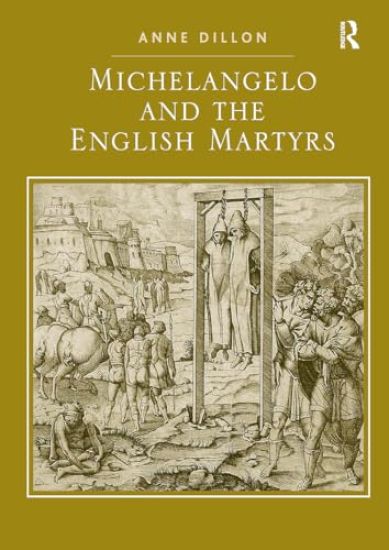
In May 1555, a broadsheet was produced in Rome depicting the torture and execution in London and York of the Carthusians of the Charterhouses of London, Axeholme, Beauvale and Sheen during the reign of Henry VIII. This single-page martyrology provides the basis for an in-depth exploration of several interconnected artistic, scientific and scholarly communities active in Rome in 1555 which are identified as having being involved in its production. Their work and concerns, which reflect their time and intellectual environment, are deeply embedded in the broadsheet, especially those occupying the groups and individuals who came to be known as Spirituali and in particular those associated with Cardinal Reginald Pole who is shown to have played a key role in its production. Following an examination of the text and a discussion of the narrative intentions of its producers a systematic analysis is made of the images. This reveals that the structure, content and intention of what, at first sight, seems to be nothing more than a confessionally charged Catholic image of the English Carthusian martyrs, typical of the genre of propaganda produced during the Reformation, is, astonishingly, dominated by the most celebrated name of the Italian Renaissance, the artist Michelangelo Buonarotti. Not only are there direct borrowings from two works by Michelangelo which had just been completed in Rome, The Conversion of St Paul and The Crucifixion of St Peter in the Pauline Chapel but many other of his works are deliberately cited by the broadsheet's producers. Through the use of a variety of artistic, scientific and historical approaches, the author makes a compelling case for the reasons for Michelangelo's presence in the broadsheet and his influence on its design and production. The book not only demonstrates Michelangelo's close relationship with notable Catholic reformers, but shows him to have been at the heart of the English Counter Reformation at its inception. This detailed analysis of the broadsheet also throws fresh light on the Marian religious policy in England in 1555, the influence of Spain and the broader preoccupations of the Counter Reformation papacy, while at the same time, enriching our understanding of martyrology across the confessional divide of the Reformation.
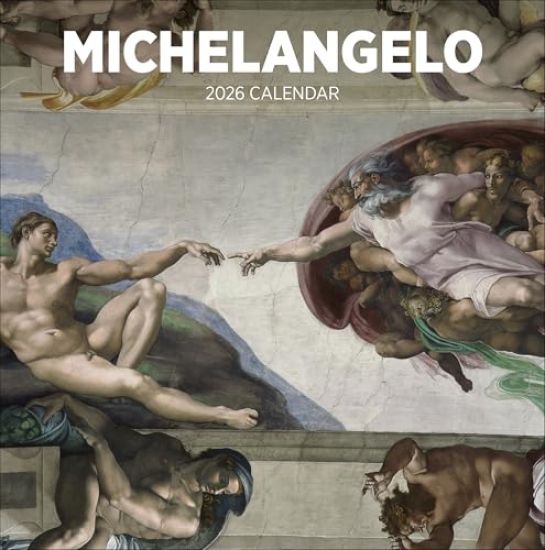
Michelangelo : 2026 Wall Calendar
Pomegranate Europe Ltd
2025
muu
Opere Varie In Versi Ed In Prosa Di Michelangelo Buonarroti Il Giovane (1863)
Michelangelo Buonarroti
KESSINGER PUBLISHING CO
2009
Tuntematon sidosasu
Opere Varie In Versi Ed In Prosa Di Michelangelo Buonarroti Il Giovane (1863)
Michelangelo Buonarroti
KESSINGER PUBLISHING CO
2009
Tuntematon sidosasu
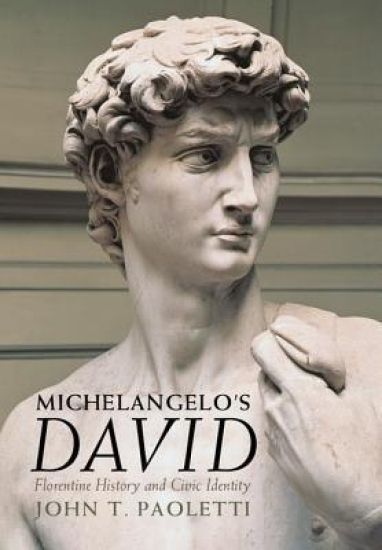
This book takes a new look at the interpretations of, and the historical information surrounding, Michelangelo's David. New documentary materials discovered by Rolf Bagemihl add to the early history of the stone block that became the David and provide an identity for the painted terracotta colossus that stood on the cathedral buttresses for which Michelangelo's statue was to be a companion. The David, with its placement at the Palazzo della Signoria, was deeply implicated in the civic history of Florence, where public nakedness played a ritual role in the military and in the political lives of its people. This book, then, places the David not only within the artistic history of Florence and its monuments but also within the popular culture of the period as well.
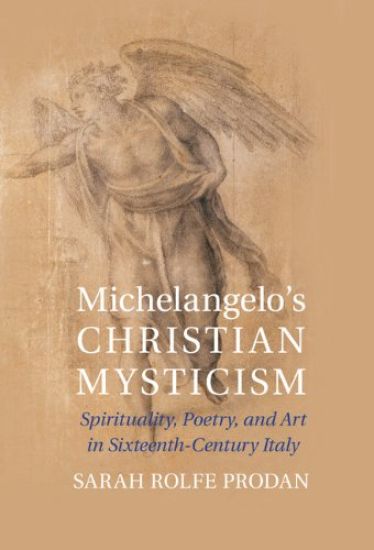
In this book, Sarah Rolfe Prodan examines the spiritual poetry of Michelangelo in light of three contexts: the Catholic Reformation movement, Renaissance Augustinianism, and the tradition of Italian religious devotion. Prodan combines a literary, historical, and biographical approach to analyze the mystical constructs and conceits in Michelangelo's poems, thereby deepening our understanding of the artist's spiritual life in the context of Catholic Reform in the mid-sixteenth century. Prodan also demonstrates how Michelangelo's poetry is part of an Augustinian tradition that emphasizes mystical and moral evolution of the self. Examining such elements of early modern devotion as prayer, lauda singing, and the contemplation of religious images, Prodan provides a unique perspective on the subtleties of Michelangelo's approach to life and to art. Throughout, Prodan argues that Michelangelo's art can be more deeply understood when considered together with his poetry, which points to a spirituality that deeply informed all of his production.
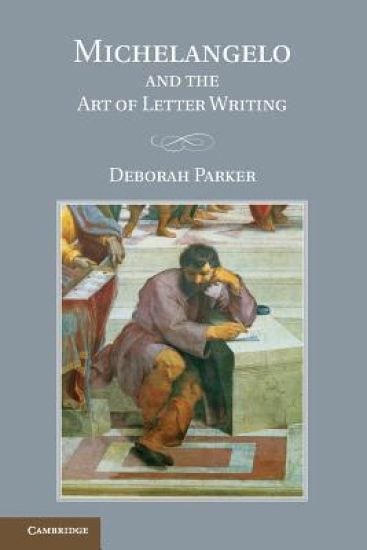
Michelangelo's extant correspondence is the most abundant of any artist. Spanning 67 years, it comprises roughly 1,400 letters, of which 500 were written by Michelangelo himself. Biographers and art historians have combed the letters for insight into Michelangelo's views on art, his contractual obligations, and his relationships. Literary scholars have explored parallels between the letters and Michelangelo's poetry. Nevertheless, this is the first book to study the letters for their intrinsically literary qualities. In this volume, Deborah Parker examines Michelangelo's use of language as a means of understanding the creative process of this extraordinary artist. His letters often revel in witticisms, rhetorical flourishes, and linguistic ingenuity. Close study of his mastery of words and modes of self-presentation shows Michelangelo to be a consummate artist who deploys the resources of language to considerable effect.
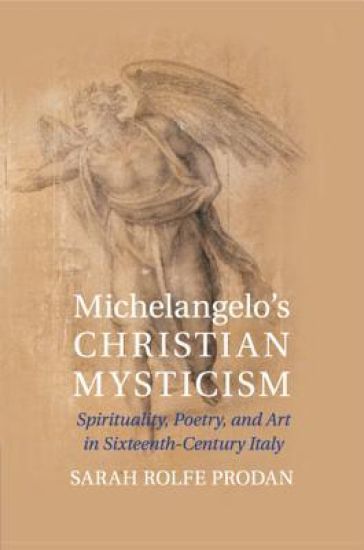
In this book, Sarah Rolfe Prodan examines the spiritual poetry of Michelangelo in light of three contexts: the Catholic Reformation movement, Renaissance Augustinianism, and the tradition of Italian religious devotion. Prodan combines a literary, historical, and biographical approach to analyze the mystical constructs and conceits in Michelangelo's poems, thereby deepening our understanding of the artist's spiritual life in the context of Catholic Reform in the mid-sixteenth century. Prodan also demonstrates how Michelangelo's poetry is part of an Augustinian tradition that emphasizes mystical and moral evolution of the self. Examining such elements of early modern devotion as prayer, lauda singing, and the contemplation of religious images, Prodan provides a unique perspective on the subtleties of Michelangelo's approach to life and to art. Throughout, Prodan argues that Michelangelo's art can be more deeply understood when considered together with his poetry, which points to a spirituality that deeply informed all of his production.
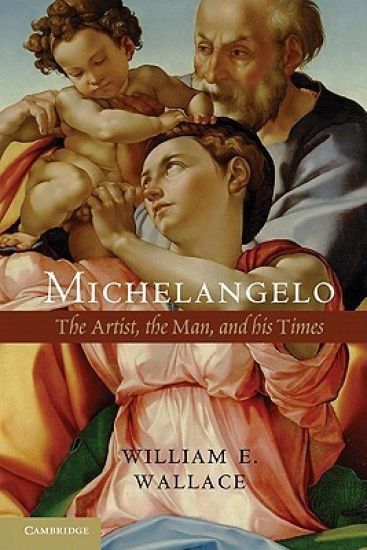
In this vividly written biography, William E. Wallace offers a new view of the artist. Not only a supremely gifted sculptor, painter, architect and poet, Michelangelo was also an aristocrat who firmly believed in the ancient, noble origins of his family. The belief in his patrician status fueled his lifelong ambition to improve his family's financial situation and to raise the social standing of artists. Michelangelo's ambitions are evident in his writing, dress and comportment, as well as in his ability to befriend, influence and occasionally say 'no' to popes, kings and princes. Written from the words of Michelangelo and his contemporaries, this biography not only tells his own stories, but also brings to life the culture and society of Renaissance Florence and Rome. Not since Irving Stone's novel The Agony and the Ecstasy has there been such a compelling and human portrayal of this remarkable yet credible human individual.

Adrian Stokes was one of the twentieth century's finest and most discriminating writers on art. Of over twenty works of art criticism, Michelangelo was considered by Lawrence Gowing to be the most complete he ever wrote, presenting an understanding of the great artist that no one subsequently could afford to ignore. Stokes brings to bear in this work not only twenty-five years' study and appreciation of Italian Renaissance art and of aesthetics, but also a unique psychological perspective, as he explains in his introduction, which enables him to uncover the depths of the artist's personality. The subtlety of feeling and profound knowledge of sculpture which Sir Herbert Read admired in Stokes's work is also combined with a literary style perfected through his own poetry and criticism. Presenting a unique survey of his subject's literary as well as his artistic legacy, Stokes succeeds, as no other has before or since, in his aim of bringing Michelangelo's greatness into nearer view.