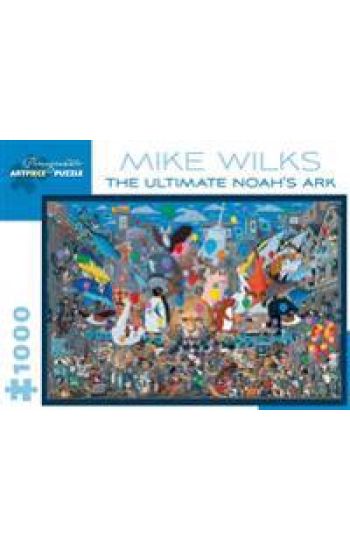
The Ultimate Noahs Ark, 19901992, by Mike Wilks British, b. 1947 From The Ultimate Noahs Ark, by Mike Wilks London Michael Joseph, 1993 Acrylic on canvas, 120 x 180 cm 47 x 70 in.
The story of Mike Mansfield's influential fifteen-year reign as Senate Majority Leader is colored with some of the most important events of this century: the election of John F. Kennedy, the Kennedy and King assassinations, student and political unrest of the late Sixties, Vietnam, Watergate, the Nixon resignation, and numerous important pieces of legislation from the era, among them the 1964 Civil Rights Act. Valeo, Secretary of the Senate under Mansfield, writes about the Senate and Mansfield's role in national affairs from 1961-76. He argues that Mansfield was instrumental in shaping a more egalitarian kind of Senate than that of the 1950s, when Lyndon B. Johnson was Majority Leader.
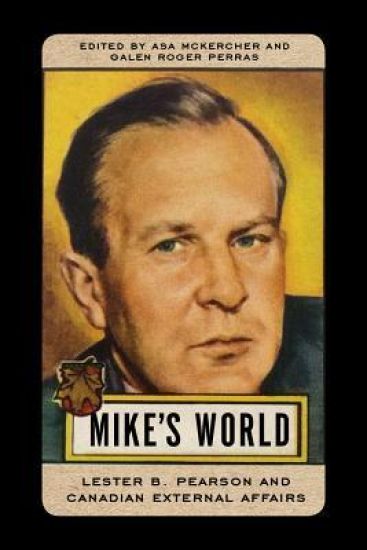
Although fifty years have passed since Lester Pearson stepped down as prime minister, he still influences debates about Canada's role in the world. Known as "Mike" to his friends, he has been credited with charting a "Pearsonian" course in which Canada took on a global role as a helpful fixer seeking to mediate disputes and promote international cooperation.Mike's World explores the myths surrounding Pearsonianism to explain why he remains such a touchstone for understanding Canadian foreign policy. Leading and emerging scholars dig deeply into Pearson's diplomatic and political career, especially during the 1960s and his time as prime minister. Topics range from peacekeeping and Arctic sovereignty to environmental diplomacy and human rights policy. They show that competing forces of idealism and pragmatism were key drivers of Pearsonian foreign policy and how global events often influenced politics and society within Canada itself.Situating Pearson within his times and as a lens through which to analyze Canadians' views of global affairs, this nuanced collection wrestles with the contradictions of Pearson and Pearsonianism and, ultimately, with the resulting myths surrounding Canada's role in the world.
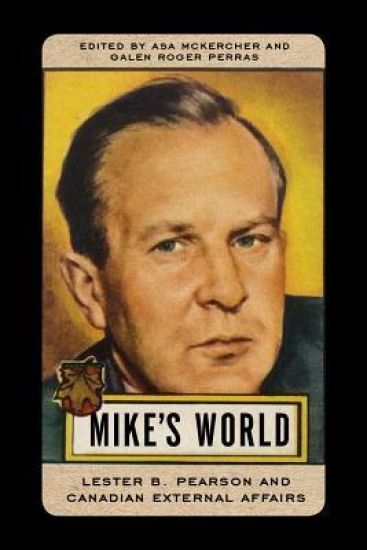
Although fifty years have passed since Lester Pearson stepped down as prime minister, he still influences debates about Canada's role in the world. Known as "Mike" to his friends, he has been credited with charting a "Pearsonian" course in which Canada took on a global role as a helpful fixer seeking to mediate disputes and promote international cooperation.Mike's World explores the myths surrounding Pearsonianism to explain why he remains such a touchstone for understanding Canadian foreign policy. Leading and emerging scholars dig deeply into Pearson's diplomatic and political career, especially during the 1960s and his time as prime minister. Topics range from peacekeeping and Arctic sovereignty to environmental diplomacy and human rights policy. They show that competing forces of idealism and pragmatism were key drivers of Pearsonian foreign policy and how global events often influenced politics and society within Canada itself.Situating Pearson within his times and as a lens through which to analyze Canadians' views of global affairs, this nuanced collection wrestles with the contradictions of Pearson and Pearsonianism and, ultimately, with the resulting myths surrounding Canada's role in the world.
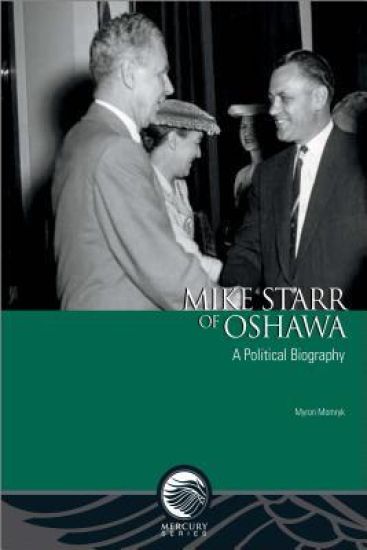
Mike Starr had a remarkable career in Canadian politics. In June 1957, he was appointed Minister of Labour in John Diefenbaker's cabinet and created a sensation, especially among Canadian ethnocultural groups. He made political history as the first Ukrainian Canadian appointed to federal cabinet. As Minister of Labour, Starr was faced with numerous national problems, including seasonal unemployment, regional disparities, union negotiations and emerging militant nationalism in Quebec. When the Diefenbaker government was defeated in the 1963 federal election, Starr returned to his earlier role as Member of Parliament. With the changing Canadian political environment, he was defeated by a tiny margin in the 1968 federal election. Starr continued his distinguished career of public service from 1968 to 1980. He promoted the increasing involvement of ethnocultural groups in Canada political life. In recent decades, it has become a political norm to have members of various ethnocultural and visible minority groups elected to the House of Commons, and appointed to Cabinet and other senior government positions. For breaking this barrier, Mike Starr was indeed a pioneer in Canadian politics.
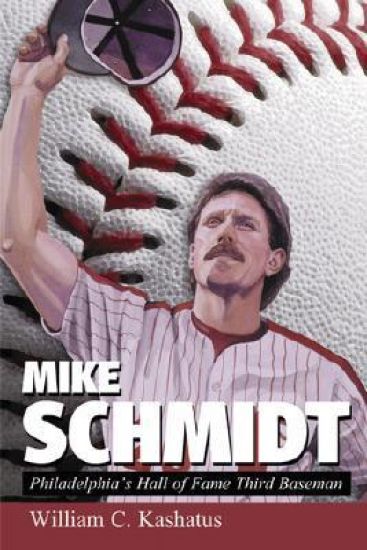
Michael Jack Schmidt, in the minds of many the greatest third baseman of all time, was a Philadelphia institution. From 1973 to 1989 he led the Phillies to five National League championship series and two World Series. Twelve times an All-Star, Schmidt was perhaps baseball's premier power hitter during the 1970s and 1980s. His 548 home runs are seventh best all-time. In the field he was just as exceptional, winning ten Gold Gloves, more than any other third baseman besides Brooks Robinson. A three-time N.L. Most Valuable Player (1980, 1981 and 1986), Schmidt was elected to the Baseball Hall of Fame in 1995, his first year of eligibility. This book is the first serious account of Schmidt's celebrated career with the Philadelphia Phillies. Concentrating on contemporary newspaper accounts, periodicals, baseball histories and biographies by Schmidt's teammates, this long-overdue work is the full story of one of the game's greatest sluggers, and one of its true heroes and role models.
In 1954, Mike Connolly, the gay gossip columnist for the Hollywood Reporter from 1951 to 1966, was described by Newsweek as "probably the most influential columnist inside the movie colony," the one writer "who gets the pick of trade items, the industry rumors, the policy and casting switches." He was indeed one of the most talented and influential members of the Hollywood press of his time, and his column, for those who could read between the lines, was a daily chronicle of gay goings-on. Fifty years later, his cumulative output is a virtually untapped lode of gay Hollywood history. Mike Connolly's life and work are the focus of this book. It considers his formative years, his pre-World War II life at the University of Illinois and in Chicago, and the ways in which the homosexual community in Hollywood lived lives both secretive and open in the forties, fifties and sixties. It also examines the literary merit, power and newsworthiness of Connolly's "Rambling Reporter" column in the Hollywood Reporter and its significance as a chronicle of gay Hollywood life; the previously unexplored role of Connolly's column in the Hollywood blacklist and how his anti-Communist crusade was rooted in his earlier campaign to close down the brothels in his college town; and how his life informed his column and his column shaped his life.
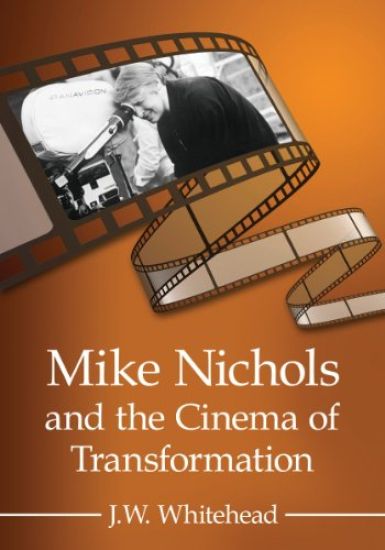
Mike Nichols burst onto the American cultural scene in the late 1950s as one half of the comic cabaret team of Nichols and May. He became a Broadway directing sensation, then moved on to Hollywood, where his first two films - Who's Afraid of Virginia Woolf? (1966) and The Graduate (1967) - earned a total of 20 Academy Award nominations. Nichols won the 1968 Oscar for Best Director and later joined the rarefied EGOT (Emmy, Grammy, Oscar, Tony) club. He made many other American cinematic classics, including Catch-22 (1970), Carnal Knowledge (1971), Silkwood (1983), Working Girl (1988), Postcards from the Edge (1990), and his late masterpieces for HBO, Wit (2001) and Angels in America (2003). Filmmakers like Steven Spielberg and Steven Soderbergh regard him with reverence. This first full-career retrospective study of this protean force in the American arts, begins with the roots of his filmmaking in satirical comedy and Broadway theatre, and devotes separate chapters to each of his 20 feature films. The author locates Nichols' permanent achievement in his critique of the ways in which culture constructs conformity, and in his tempered optimism about individuals liberation by transformative awakening.
The history of baseball is filled with players whose careers were defined by one bad play. Mike Torrez is remembered as the pitcher who gave up the infamous three-run homer to Bucky "Bleeping" Dent in the 1978 playoffs tie-breaker between the Red Sox and Yankees. Yet Torrez's life added up to much more than his worst moment on the mound. Coming from a vibrant Mexican American community that settled in Topeka, Kansas, in the early 1900s, he made it to the Majors by his own talent and efforts, with the help of an athletic program for Mexican youth that spread through the Midwest, Texas and Mexico during the 20th century. He was in the middle of many transformative events of the 1970s--such as the rise of free agency--and was an ethnic role model in the years before the "Fernandomania" of 1981. This book covers Torrez's life and career as the winningest Mexican American pitcher in Major League history.
Mike the Tiger has symbolized the spirit and resolve of Louisiana State University for over seventy-five years. Fiercely confident, keenly competitive, marvelously clever, and the only live tiger to reside on a college campus, Mike reigns nobly from his home just outside of Tiger Stadium in Baton Rouge. In this completely updated and visually stunning new edition of Mike the Tiger, David G. Baker and W. Sheldon Bivin tell the story of the famed mascot from the Civil War origins of LSU's fighting tiger tradition to the present age of social media. They debunk the myths, confirm the legends, and share priceless behind-the-scenes anecdotes as they chronicle the reign of each of the six Mikes. Included are 70 additional photos, for a total of 200 images, as well as new details about:The construction of a spacious natural enclosure for Mike in 2005, complete with waterfall, stream, pool, shrubs, rocks, and grassThe final years of Mike V, who was hand-raised at LSU, and the outpouring of condolences upon his deathThe exciting arrival and introduction of Mike VI and the establishment of his reputation as possibly the most affectionate and inquisitive personality of any LSU tiger to dateThe naming of a sixth subspecies of tiger, the Malayan, and the current status of global tiger preservation effortsFrequently asked questions and answers about Mike's care and lifestyleMike the Tiger provides a treat for all who ever said, ""Meet me at the tiger cage,"" for all who still marvel at his regal appearance, and for all who will forever bleed purple and gold.
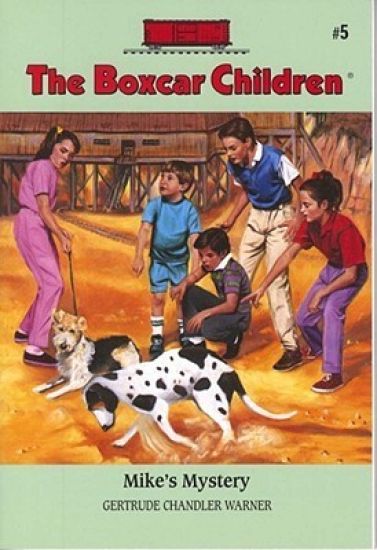
When the Aldens visit Aunt Jane, Benny's friend Mike discovers a new mystery Adapted from Gertrude Chandler Warner's story of the same name, this early reader allows children to start reading with a Boxcar Children classic.
When the Aldens visit Aunt Jane, Benny's friend Mike discovers a new mystery Adapted from Gertrude Chandler Warner's story of the same name, this early reader allows children to start reading with a Boxcar Children classic.
"I am with you, Comrade Jackson. You won't mind my calling you Comrade, will you? I've just become a Socialist. It's a great scheme. You ought to be one. You work for the equal distribution of property, and start by collaring all you can and sitting on it. We must stick together. We are companions in misfortune. Lost lambs. Sheep that have gone astray. Divided, we fall, together we may worry through. Have you seen Professor Radium yet?" "Our greatest humorous novelist, and indeed one of our greatest writers." -- Richard Gordon "Mr. Wodehouses's idyllic world can never stale. He will continue to release future generations from captivity that may be more irksome than our own." -- Evelyn Waugh
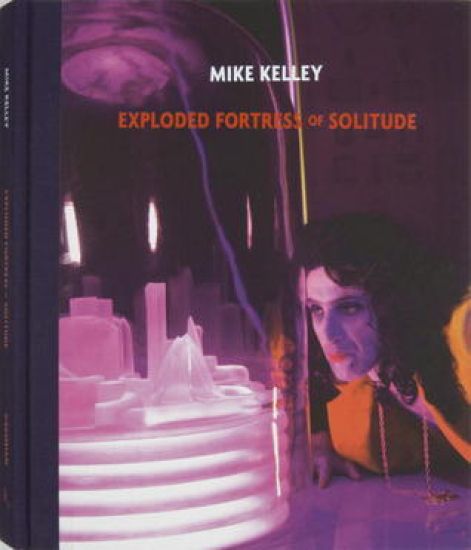
A catalogue documenting the last two exhibitions of new work by American artist Mike Kelley, held in 2011 at Gagosian Gallery in Los Angeles and London. Mike Kelley made nostalgia, memory, and repression in everyday life the topics of his idiosyncratic sculptures, performances, paintings, and installations, which conflate vernacular sources and high modernist aesthetics. A veteran of the Los Angeles conceptual art scene, Kelley used deconstructive strategies in order to challenge the established norms of contemporary culture, both high and low.
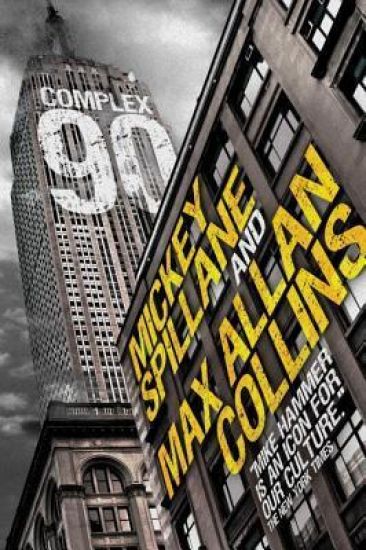
Hammer accompanies a politician to Moscow, where he is arrested by the KGB and imprisoned. He quickly escapes, but back in the States, the government is none too happy. Russia demands his return to stand charges, and various government agencies are following him. A question dogs Hammer: Why does Russia want him back, and why was sent to Russia with the senator in the first place?
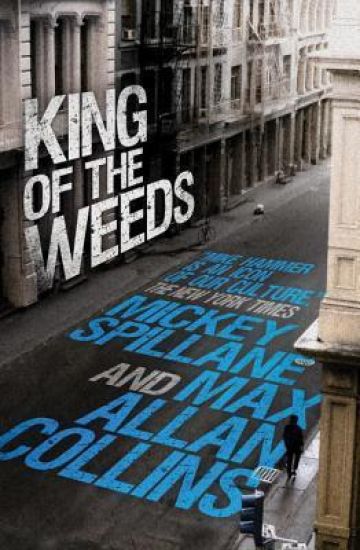
Mike Hammer's cop pal Captain Pat Chambers is nearing retirement, and Mike and his gorgeous secretary Velda are planning a much overdue marriage. It's a mellow time for America's toughest detective, until an assassin's bullet almost brings him down on his doorstep. Could the attempted hit have anything to do with the release of a serial killer put away by Mike and Pat, decades ago?