Monet s Venice paintings are high points in his lifelong engagement with the interplay of water and light. Monet and Venice anchored by two masterworks from the collections of Brooklyn and San Francisco, The Doge s Palace and The Grand Canal, Venice will be the first exhibition and English-language publication dedicated to this significant suite of paintings since their Parisian debut at the Bernheim-Jeune gallery in 1912. Monet keenly felt the burden of influence in a city that had so often been depicted and had long been an icon of waning, fragile beauty. Venice was and is a place where culture and nature are profoundly and uniquely entangled. Monet s images of Venice s buildings and canals dissolved in colorful mist and hazy light may be seen as meditations on human aesthetic interaction with a natural environment built upon for centuries. These tonally unifying atmospheres which he referred to as the enveloppe reveal Monet s essentially ecological understanding of the world in which he immersed himself. Air, light, water, and stone emerge together from a matrix of bold brushwork; buildings, reflections, and space are interconnected in luminous paintings that reinscribed and transformed the centuries-old Venetian landscape tradition. Including lush reproductions, newly commissioned texts, and maps of the artist s views, this book is an essential addition to any Monet lover s library.
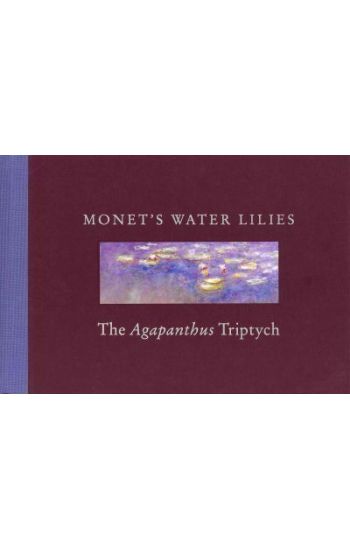
Claude Monet was undoubtedly the most important of all the Impressionist painters and his water lily paintings represent the culminating moment in his career. Monet's famous garden at Giverny provided the inspiration for the paintings. The exhibition will bring to life the importance and beauty of this garden through a range of archival photographs, as well as an early, rarely seen film from 1915, showing Monet painting outdoors in his garden.Monet's Water Lilies will reunite the three panels of an exceptionally impressive water lily triptych, created by Monet between 1915 and 1926. The Nelson-Atkins Museum of Art, the Saint Louis Art Museum, and the Cleveland Museum of Art each own one panel of the triptych and the exhibition will offer a rare opportunity to bring the works together. This will be the first time that this reunion has occurred for more than 30 years. With the single exception of a triptych in the Museum of Modern Art, this is the only triptych by Monet in the United States.The exhibition will be on view in Kansas City April 9-August 7, 2011, before traveling to St. Louis. The exhibition will travel to the Cleveland Museum of Art in 2015.
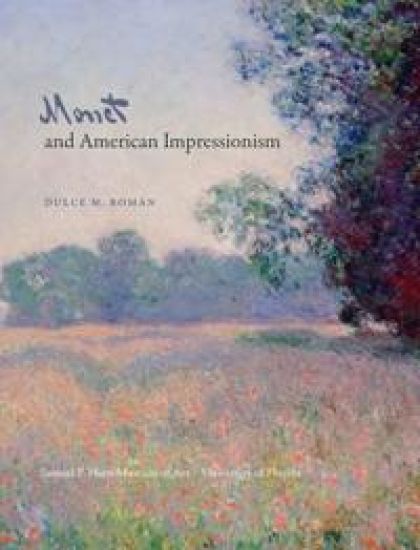
Published in conjunction with an exhibition over a decade in the making, this exciting volume examines the influence of Claude Monet (1840–1926) on an entire generation of American artists. Monet and the other French Impressionists, who eschewed academic traditions of in favor of spontaneous brushstrokes, bright color palettes, and the transience of everyday reality.Featuring works by Mary Cassatt, William Merritt Chase, Childe Hassam, Willard Metcalf, Theodore Robinson, John Henry Twachtman, and J. Alden Weir, this exhibition examines how the innovations of French Impressionism were adopted and transformed into one of the most enduring styles in American painting.The works included in the exhibition span more than three decades, and this book includes eight essays that examine various aspects of history, culture, literature, and sociology to shed light on how American artists embraced and transformed the style and themes of Monet and other French artists.
Award-Winning Children's Book for 7-11 year-olds with fun chapter headings that will make you smile-at any age.: D Monet is one of those kids who can't watch the suffering in her inner city neighborhood and do nothing about it. Her best friend, Diamond, loves a good laugh. That's why they balance each other out so well Packed with purpose, friends of all ages, and a desire to have fun while helping out others, this gem of a book is beloved by all ages. Monet: a gigantic-hearted eleven-year-old girl living in the inner city who struggles in school, mainly math. Diamond: Monet's best friend who does fine in school and mostly wants to have fun. Eden: Monet and Diamond's friend who hates summer because it means babysitting her two younger brothers every day all day long. Monet's family: a big bunch of close, loving people who sacrifice a summer to help Monet and their neighbors out. Mrs. Sam: An old lady feared by the neighborhood kids who hides behind her drawn curtains. Mr. Tom: A lonely old man who sees Monet in action and asks how he can help. Miss Felicia Swan: A lonely senior woman Monet's mama befriends at the grocery store who floats into Monet's yard with cookies and kindness. Carl: An adorable, furry Saint Bernard puppy Monet and Diamond rescue that won't have a home unless the girls can talk Monet's parents into letting her keep him.Love and fun are the motivations behind Monet's Fun Camp, but what happens because of Monet's caring heart is like a miracle even she couldn't have dreamt up 11-year-old Monet might have been named after a famous artist, but she doesn't have any skills as far as she can tell unless you count almost always failing math. Her mama tells her she's a people-centered person, and that's the best kind of person there is, but that doesn't help Monet get good grades in school. "Forget about school and have fun " Mama insists on the first day of summer vacation. Monet tries, but while her best friend Diamond can see the fun in a sunburn, all Monet can see is the suffering people in her inner city neighborhood. Summer isn't looking good for Monet or Diamond until Monet hatches a plan to create a Fun Camp that turns her neighborhood upside down-in a right side up kind of way. Here's what a couple of my fans have to say: "I loved this book because Monet always put others before herself. I especially loved how she made a difference in the world by creating one little camp. This book was so good I could read it over and over again." - Tatum age 11, Grade 6 "Monet's Fun Camp is simply brimming with small adventures and colorful characters. I could hardly wait to see what she would get herself into next Though Monet lives in the real, imperfect world of the inner city, her caring and enthusiasm scatter hope and love wherever she goes. Monet will appeal to nearly every child. She is not perfect and has her struggles--but she never gives up trying. I especially loved the fact that Monet embraces friendship with both children and adults. I want to be Mrs. Sam, the story lady The illustrations are bright and sparkling. Monet is a great book for middle readers and a perfect read-to-me book for younger children." - D. Quinney NOTE: Not everybody is an academic whiz. Not everybody has 1,000 friends on Facebook or a few thousand followers on Instagram. Not everybody is like big-hearted Monet. But EVERYBODY has something unique and special they were meant to do. Find that, and you find contentment and joy. You are special I know you are Children's Novels by Debra Tracy - available in Paperback and Kindle: Peridot the Secret Portal Peridot the Secret Rescue Monet's Fun Camp Meet the Tanners - a dog story (Limited amount left paperback only)
Monet's Bamboo is a collection of non-traditional / traditional haiku concerning the diaspora of foibles and phobias that concern and consume us all.I don't consider traditional form. No artist totally ever has, nor should, lock themselves in that way. I love to edit, so I keep the three line, 5-7-5, seventeen syllable perspective fixed on the horizon and prune longer pieces to the core of what I hoped to say or, better yet, the moment demanded, or, as Garcia sings Hunter in Scarlet Begonias "Once in a while / You get shown the light / In the strangest of places / If you look at it right."
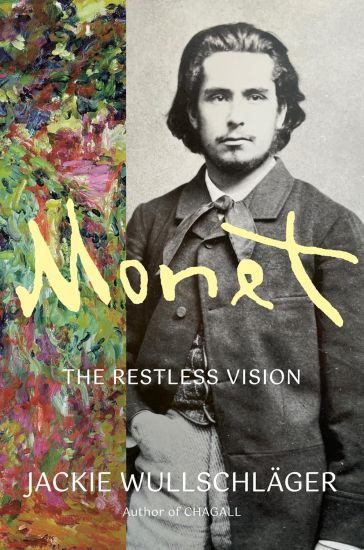
A groundbreaking look at the life and art of one of the most influential, modern painters of the late nineteenth century and founder of the Impressionist movement "Wullschl ger emerges with a strikingly different picture of the artist. Passionate, prickly, edgy and unstable, her Monet, the unrecognizable Monet, is a powerful new character in art." --The Sunday Times (London) Drawing on thousands of never-before-translated letters and unpublished sources, this biography reveals dramatic new information about the life and work of one of the late nineteenth century's most important painters. Despite being mocked at the beginning of his career, and living hand to mouth, Monet risked all to pursue his vision, and his early work along the banks of the Seine in the 1860s and '70s would come to be revered as Impressionism. In the following decades, he emerged as its celebrated leader in one of the most exciting cultural moments in Paris, before withdrawing to his house and garden to paint the late Water Lilies, which were ignored during his lifetime and would later have a major influence on all twentieth-century painters both figurative and abstract. This is the first time we see the turbulent life of this volatile and voracious man, who was as obsessed by his love affairs as he was by nature. He changed his art decisively three times when the woman at the center of his life changed; Wullschl ger brings these unknown, passionate, and passionately committed women to the foreground. Monet's closest friend was Prime Minister Georges Clemenceau; strong intellectual currents connected him to writers from Zola to Proust, as well as to his friends Manet, Renoir, and Pissarro. Brilliant and absorbing, this biography will forever change our understanding of Monet's life and work.
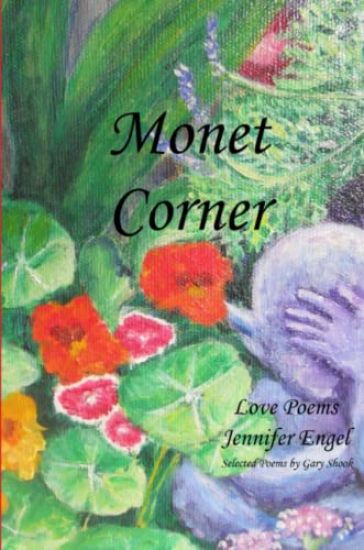
Enter a garden where colors burst and night passions bloom. Monet Corner is a collection of forty-one poems that express the physical, emotional and spiritual aspects love. Love is delivered as a first kiss at the sofa's edge. Love endures through a lifetime of sun, rain, children, and bills that pile up. Through it all there is excitement of the senses and a deep sense of peace.
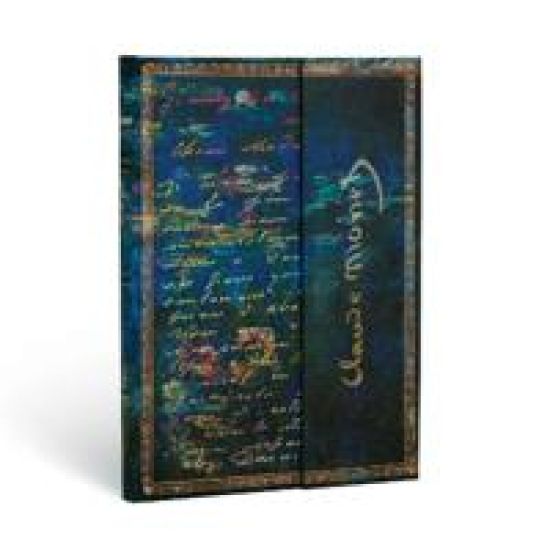
A key member of the Impressionist movement, Claude Monet (1840-1926) painted more than 250 canvases inspired by the play of light and colour upon the lily pond at his Giverny home. This Paperblanks Embellished Manuscript journal sets an 1888 letter written by Monet to Berthe Morisot, a fellow Impressionist, against a backdrop of one of these famous oil paintings.
A key member of the Impressionist movement, Claude Monet (1840-1926) painted more than 250 canvases inspired by the play of light and colour upon the lily pond at his Giverny home. This Paperblanks Embellished Manuscript journal sets an 1888 letter written by Monet to Berthe Morisot, a fellow Impressionist, against a backdrop of one of these famous oil paintings.
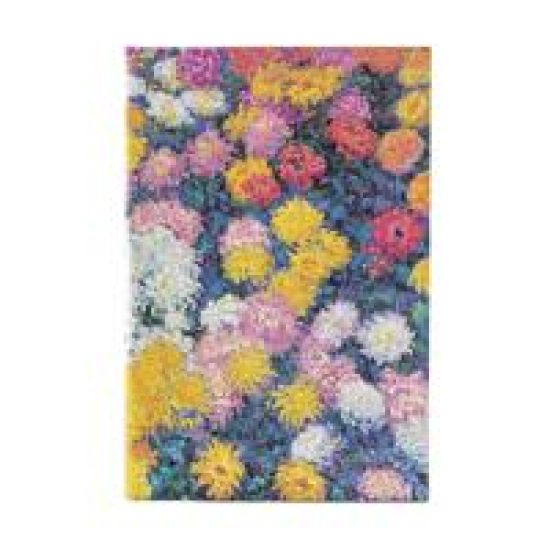
French artist Claude Monet (1840–1926) was one of the founders of the Impressionist movement and is considered one of the most successful painters in contemporary art. Impressionism, which originated in France in the 1860s, is characterized by the artist’s depiction of the visual impression of the moment, specifically the transient effect of light and colour. After purchasing property in Giverny, France, in 1890, Monet set about designing an expansive garden according to the contrasts of colour and shadow, as though it were a painting. In a virtuoso display of flowers, this 1897 work portrays a vibrant bed of chrysanthemums from his prized garden.
French artist Claude Monet (1840–1926) was one of the founders of the Impressionist movement and is considered one of the most successful painters in contemporary art. Impressionism, which originated in France in the 1860s, is characterized by the artist’s depiction of the visual impression of the moment, specifically the transient effect of light and colour. After purchasing property in Giverny, France, in 1890, Monet set about designing an expansive garden according to the contrasts of colour and shadow, as though it were a painting. In a virtuoso display of flowers, this 1897 work portrays a vibrant bed of chrysanthemums from his prized garden.
French artist Claude Monet, one of the founders of the Impressionist movement, was particularly fascinated with capturing the transient beauty of nature. In a virtuoso display of flowers, this 1897 work portrays a vibrant bed of chrysanthemums from his prized garden in Giverny.
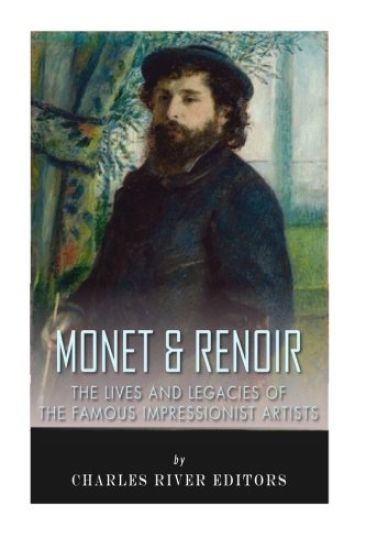
*Includes pictures *Includes the artists' quotes about their lives and art *Includes online resources and a bibliography for further reading *Includes a table of contents To get a sense of the kind of prestige that Claude Monet enjoys within the art world, one need only learn that his Le Bassin Aux Nymphe s (1919) - from his series of paintings featuring water lilies - sold for the equivalent of more than $70 million. This is an incredibly staggering price, especially considering that early in his life, Monet had been so poor and debt-ridden that some of his paintings were taken from him by creditors. How, exactly, did Monet progress from being an impoverished young Impressionist artist working at the vanguard of European art to the legendary Master whose works command prices near the very pinnacle of the art world? Naturally, Monet's commercial success soared exponentially in the decades following his death in 1926, at a time in which the prices commanded by the great Masters of Western art began rising in price at exponential rates. Yet even during his own lifetime, Monet enjoyed a sharp rise to fame and was canonized as one of the greatest painters in France. Following sharply in the footsteps of Edouard Manet, Claude Monet was one of the first painters identified within the Impressionist circle (indeed, it was Monet himself who coined the label of Impressionist after using it in the title of one of his paintings). Where some artists reach the peak of their acclaim early in life, Monet's star continued to rise even throughout his old age; although some would argue that the last decade or so of his life were anticlimactic, at least from an artistic standpoint, his landmark water lilies were made during his elderly years. And even though Monet would continue to paint well after the canonical period of Impressionism had ended, his name was and remains synonymous with Impressionism, along with cherished acquaintances of his, including such luminaries as Pierre-August Renoir, Camille Pissarro, and Edouard Manet. Simply put, Monet is a monumental figure when it comes to examining Western art during the second half of the 19th century. Pierre-Auguste Renoir stands alongside Claude Monet at the very peak of Impressionist painting, and though neither of them can be credited with founding the movement (that honor likely goes to Edouard Manet or Edgar Degas), Renoir and Monet remain inextricably tied to the key characteristics of Impressionism: loose brushwork; outdoor painting; an emphasis on capturing natural light and shadow; and a focus on remaining in Paris and the surrounding countryside. Yet if Monet and Renoir are each remembered for their affiliation with these descriptors, differences nevertheless distinguish them, especially the fact that Renoir concentrated less on nature than did Monet, attending instead to scenes depicting Parisian leisure activity. This thematic concern for depicting scenes of idyllic Parisian enjoyment, such as rowing in boats or grand luncheons, imbues Renoir with a greater sense of joie-de-vivre than Monet or perhaps any of the other members of the Impressionist cohort. Even though Renoir's art shares much in common with his Impressionist colleagues, both his handling of paint and even his subject matter contain significant differences that render him truly unique as a painter. That Renoir captured scenes of leisure better than any of his contemporaries was surprising and unlikely considering the background in which he was raised. Denied the opportunity for a proper education, Renoir's painting, which started at a young age, was borne more out of a need to work than in pursuit of a lifelong passion. Renoir certainly loved to paint, but like Monet, painting always remained his profession, and he treated it as such. Monet & Renoir looks at the personal background that led to the two becoming artists and the cultural climate in which they rose to fame.
In November 1885, impressionist painter Claude Monet vacationed in tretat, France, where he spent his days outside, painting scenes of the seaside village. One morning he rose early and carried all of his supplies and half-finished paintings out to the cliffs and rocky beach, finally stopping to paint the arch called Manneporte. Eager to capture the scene before him, and aware that he must work quickly to catch the light, Monet became so engrossed in his work that he forgot to watch the incoming tide. Based on a true incident, MONET PAINTS A DAY introduces readers to the life and nature of this illustrious impressionist. Interspersed throughout the story are excerpts from the painter's notes and letters, while a second layer of text and back matter includes information about Impressionism as a whole. Lush watercolor illustrations in the Impressionist style give readers a visual for this artistic movement. A bibliography is also included.
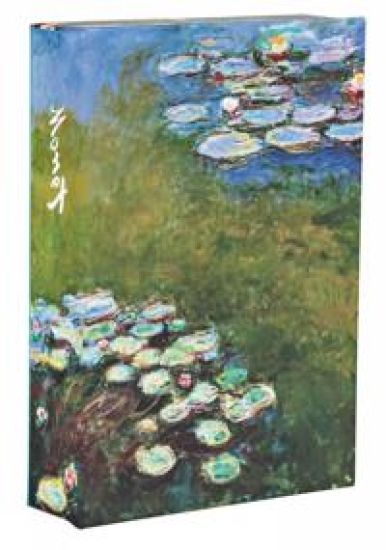
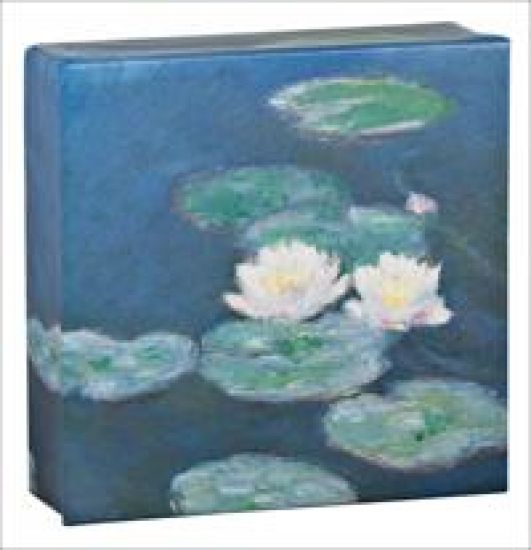
Claude Monet’s classic artwork is depicted in the Monet FlipTop Note Cards Box by teNeues. Our FlipTop Note Cards box notecards are full colour and large enough to convey personal greetings, thank-yous and invitations. 20 notecards, 4 each of 5 images.20 envelopes.Magnetic closure.Sturdy, reuseable box, ideal for keepsakes.
Claude Monet’s classic artwork is reproduced here for our museum quality notecard collection. Our Mini FlipTop Notecard box notecards are full colour, mini cards that can be used to convey personal greetings, thank-yous and invitations. 16 notecards of 1 image and 16 envelopesSturdy, reuseable box, ideal for keepsakesMagnetic closureBox measurements 95 x 95 x 32 mm We choose the best images from well-known classic and contemporary fine artists, plus talented emerging illustrators and designers from around the globe. Claude Monet (French, 1840-1926) was one of the best-known and most influential painters of the seminal Modern art movement, Impressionism, which sought to capture the fleeting moments in nature and the subtle passage of time with flickering light effects and hurried brush strokes of soft colour on canvas.
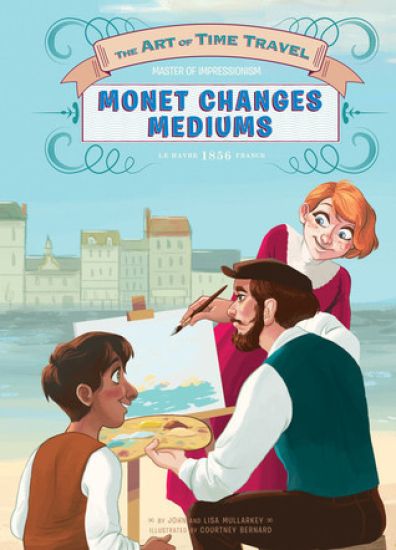
Join Becca and Logan as they travel back in time to La Havre, France, and meet Claude Monet It's 1856, and Monet has a lucrative business drawing caricatures in charcoal. Becca and Logan know Eug ne Boudin will inspire Monet to paint in oils and become a famous Impressionist. But Monet will not meet with him. If Monet and Boudin don't meet, the world will never enjoy Monet's masterpieces Can Becca and Logan make Monet change mediums? Aligned to Common Core Standards and correlated to state standards. Calico is an imprint of Magic Wagon, a division of ABDO.
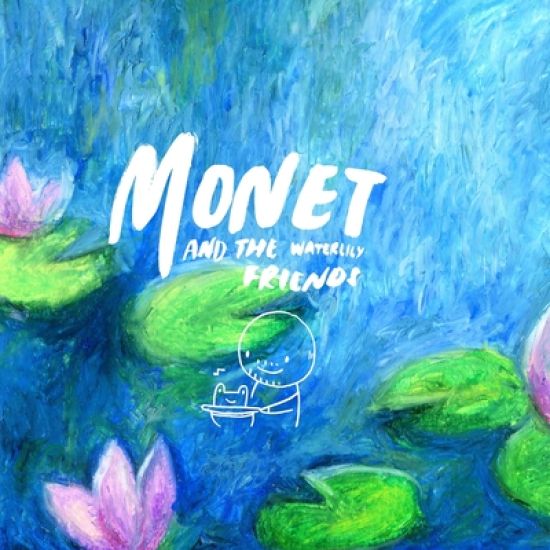
Monet and the Waterlily Friends is a picture book that introduces readers to the colorful world of art. The book has three sections: The first section is a story in strictly images for non-readers to enjoy. The second section serves as a mini art history lesson about Monet and Impressionism. The third section is a collection of art activities that can be done at home or in the classroom.
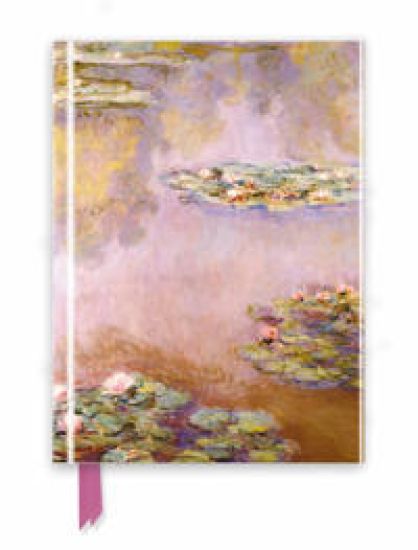
Part of a series of exciting and luxurious Flame Tree Notebooks. Combining high-quality production with magnificent fine art, the covers are printed on foil in five colours, embossed, then foil stamped. And they're powerfully practical: a pocket at the back for receipts and scraps, two bookmarks and a solid magnetic side flap. These are perfect for personal use and make a dazzling gift. This example features Monet's Waterlilies