Borates are among the most widely used compounds in chemical and related fields. They have extensive applications in consumer products including pharmaceuticals, cosmetics, insecticides, preservatives, detergents, bleaching agents and enamels. This book provides a thorough background of the chemical, pharmaceutical and pharmacological aspects of borates and their industrial applications. It contains extensive information for academic and industrial research workers in their fields of interest and gives them a collective view of the importance and current state of knowledge in this vastly growing subject.
This book is focused on wireless infrastructure deployment in modern transportation markets, where the wireless infrastructure co-exists with the existing structure. It details the challenges this deployment may face and explores the mitigation measures to overcome the challenges. The book proposes a smart antenna structure to overcome airspace congestion, which improves the overall wireless performance and deployment cost. With the combination of practical know-how and theoretical estimation, this book provides insight on how the modern smart antenna techniques that support most cutting-edge wireless technology can be adopted into the existing infrastructure whilst minimising the distraction to the existing system. This book is suitable for industrial and academic researchers, practising engineers within the field of smart antennae, and wireless infrastructure designers and developers.
Tracing the monetary history of Europe, this study explores the impact of change in the availability and use of bullion, in the form of money, on the economic evolution of Europe. The Romans fostered economic prosperity through the accumulation of bullion and circulation of accredited currency. Over time, shortages of species rendered the Roman coinage worthless. As a result, commercial activities contracted, causing the breakdown of the Roman economic and political systems. Lack of liquidity in the early Middle Ages limited commercial activities, and promoted conditions sustaining dependency on land, thereby enabling feudalism to flourish. In the late 10th century, discovery of rich silver mines in Central Europe increased the circulation of coinage, promoting trade and demographic urbanization. The augmentation of silver resources continued to boost economic prosperity during the 12th and 13th centuries.In the 14th century, decrease in mine output induced severe scarcity of bullion. Lack of currency caused the contraction of economic activities, leading to food shortages, famines, depopulation, and the eventual breakdown of the feudal economic order. Continuous shortage of bullion in the 15th century forced the reintroduction of barter trade and limited commercial activities. Scarcity of precious metals induced the Portuguese to venture into Africa. African gold provided them with the incentive and capital for expeditions of discovery to the East, but the lack of sufficient bullion prevented them from monopolizing the eastern trade. In the 16th century the influx of species from the mines of central Europe and America ended the European bullion famine and gave rise to economic prosperity.
Readings in Innovative Ideas in Teaching Collegiate Mathematics is a collection of papers contributed by professional mathematicians in the United States and Great Britain. The topics in this volume represent the pros and cons of implementing creative instructional styles such as cooperative learning and educational technology in classrooms. The main objective of this book is to share the implementation and outcomes of these experiments with the teachers of mathematics at all educational levels and help them to learn about different teaching strategies and how they might incorporate them in their classrooms.
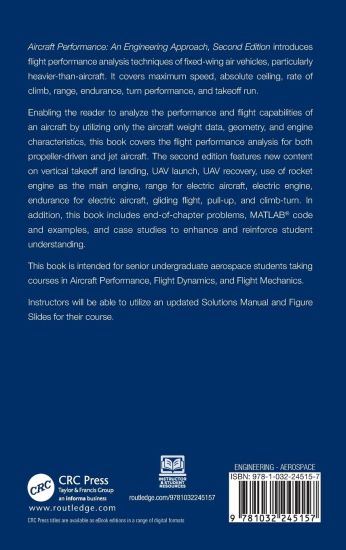
Aircraft Performance: An Engineering Approach, Second Edition introduces flight performance analysis techniques of fixed-wing air vehicles, particularly heavier-than-aircraft. It covers maximum speed, absolute ceiling, rate of climb, range, endurance, turn performance, and takeoff run.Enabling the reader to analyze the performance and flight capabilities of an aircraft by utilizing only the aircraft weight data, geometry, and engine characteristics, this book covers the flight performance analysis for both propeller-driven and jet aircraft. The second edition features new content on vertical takeoff and landing, UAV launch, UAV recovery, use of rocket engine as the main engine, range for electric aircraft, electric engine, endurance for electric aircraft, gliding flight, pull-up, and climb-turn. In addition, this book includes end-of-chapter problems, MATLAB® code and examples, and case studies to enhance and reinforce student understanding.This book is intended for senior undergraduate aerospace students taking courses in Aircraft Performance, Flight Dynamics, and Flight Mechanics.Instructors will be able to utilize an updated Solutions Manual and Figure Slides for their course.
This book is a comprehensive guide that equips organizations and individuals with the necessary tools and knowledge to streamline operations, optimize resources, and deliver superior customer value through implementing lean Six Sigma methodologies. It provides a practical roadmap for achieving process, product, and service improvement. The book introduces readers to the powerful framework of Lean Six Sigma, combining Lean and Six Sigma methodologies. It takes readers through the DMAIC model – Define, Measure, Analyze, Improve, and Control – providing a structured approach to identifying inefficiencies, reducing defects, and enhancing overall business performance. It covers essential topics such as lean Six Sigma leadership, change management, project management, and a detailed explanation of each phase of the DMAIC process.This book is designed to cater to a diverse audience, including executives, managers, quality professionals, improvement professionals, engineers, operations professionals, customer service professionals, and students. The book offers practical knowledge, tools, and case studies to drive transformative change and build a sustainable competitive advantage.
This book is a comprehensive guide that equips organizations and individuals with the necessary tools and knowledge to streamline operations, optimize resources, and deliver superior customer value through implementing lean Six Sigma methodologies. It provides a practical roadmap for achieving process, product, and service improvement. The book introduces readers to the powerful framework of Lean Six Sigma, combining Lean and Six Sigma methodologies. It takes readers through the DMAIC model – Define, Measure, Analyze, Improve, and Control – providing a structured approach to identifying inefficiencies, reducing defects, and enhancing overall business performance. It covers essential topics such as lean Six Sigma leadership, change management, project management, and a detailed explanation of each phase of the DMAIC process.This book is designed to cater to a diverse audience, including executives, managers, quality professionals, improvement professionals, engineers, operations professionals, customer service professionals, and students. The book offers practical knowledge, tools, and case studies to drive transformative change and build a sustainable competitive advantage.
This book provides a systematic approach to realizing NiTi shape memory alloy actuation, and is aimed at science and engineering students who would like to develop a better understanding of the behaviors of SMAs, and learn to design, simulate, control, and fabricate these actuators in a systematic approach. Several innovative biomedical applications of SMAs are discussed. These include orthopedic, rehabilitation, assistive, cardiovascular, and surgery devices and tools. To this end unique actuation mechanisms are discussed. These include antagonistic bi-stable shape memory-superelastic actuation, shape memory spring actuation, and multi axial tension-torsion actuation. These actuation mechanisms open new possibilities for creating adaptive structures and biomedical devices by using SMAs.
Provides a comprehensive introduction to the design and analysis of unmanned aircraft systems with a systems perspective Written for students and engineers who are new to the field of unmanned aerial vehicle design, this book teaches the many UAV design techniques being used today and demonstrates how to apply aeronautical science concepts to their design. Design of Unmanned Aerial Systems covers the design of UAVs in three sections—vehicle design, autopilot design, and ground systems design—in a way that allows readers to fully comprehend the science behind the subject so that they can then demonstrate creativity in the application of these concepts on their own. It teaches students and engineers all about: UAV classifications, design groups, design requirements, mission planning, conceptual design, detail design, and design procedures. It provides them with in-depth knowledge of ground stations, power systems, propulsion systems, automatic flight control systems, guidance systems, navigation systems, and launch and recovery systems. Students will also learn about payloads, manufacturing considerations, design challenges, flight software, microcontroller, and design examples. In addition, the book places major emphasis on the automatic flight control systems and autopilots. Provides design steps and procedures for each major componentPresents several fully solved, step-by-step examples at component levelIncludes numerous UAV figures/images to emphasize the application of the conceptsDescribes real stories that stress the significance of safety in UAV designOffers various UAV configurations, geometries, and weight data to demonstrate the real-world applications and examplesCovers a variety of design techniques/processes such that the designer has freedom and flexibility to satisfy the design requirements in several waysFeatures many end-of-chapter problems for readers to practice Design of Unmanned Aerial Systems is an excellent text for courses in the design of unmanned aerial vehicles at both the upper division undergraduate and beginning graduate levels.
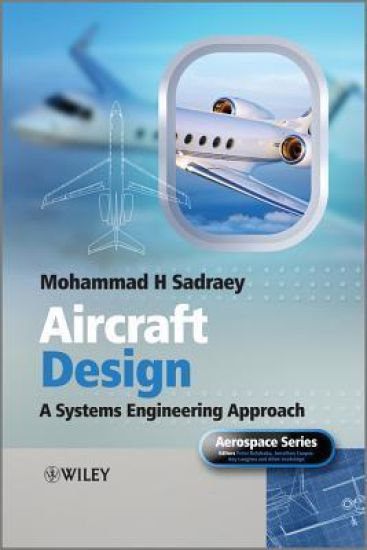
A comprehensive approach to the air vehicle design process using the principles of systems engineering Due to the high cost and the risks associated with development, complex aircraft systems have become a prime candidate for the adoption of systems engineering methodologies. This book presents the entire process of aircraft design based on a systems engineering approach from conceptual design phase, through to preliminary design phase and to detail design phase. Presenting in one volume the methodologies behind aircraft design, this book covers the components and the issues affected by design procedures. The basic topics that are essential to the process, such as aerodynamics, flight stability and control, aero-structure, and aircraft performance are reviewed in various chapters where required. Based on these fundamentals and design requirements, the author explains the design process in a holistic manner to emphasise the integration of the individual components into the overall design. Throughout the book the various design options are considered and weighed against each other, to give readers a practical understanding of the process overall. Readers with knowledge of the fundamental concepts of aerodynamics, propulsion, aero-structure, and flight dynamics will find this book ideal to progress towards the next stage in their understanding of the topic. Furthermore, the broad variety of design techniques covered ensures that readers have the freedom and flexibility to satisfy the design requirements when approaching real-world projects. Key features: • Provides full coverage of the design aspects of an air vehicle including: aeronautical concepts, design techniques and design flowcharts • Features end of chapter problems to reinforce the learning process as well as fully solved design examples at component level • Includes fundamental explanations for aeronautical engineering students and practicing engineers • Features a solutions manual to sample questions on the book’s companion website Companion website - www.wiley.com/go/sadraey
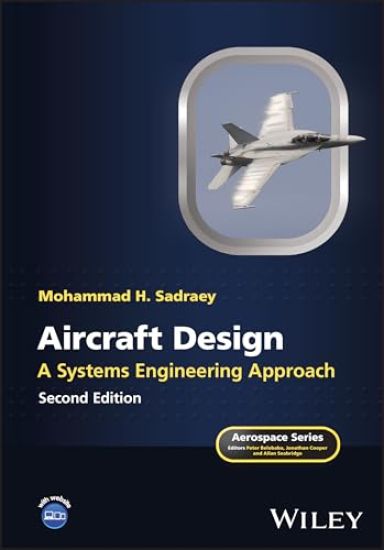
Learn the aircraft design process from a systems-engineering perspective, designed for both aspiring and practicing aerospace engineers Aircraft design incorporates a range of technological areas, including aerodynamics, flight dynamics, propulsion, and structure. Aircraft engineering design therefore requires techniques from systems engineering to integrate the requirements from these disparate areas into a coherent whole. There has never been a greater need for successful aerospace engineers to have a grasp of systems engineering and its applications in the field. Aircraft Design: A Systems Engineering Approach meets this need with a volume which takes the reader from conceptual design to detail design. Offering a systems engineering approach that weighs the needs of different aircraft components holistically, it provides readers with a practical look into the process of aircraft design. Now fully updated to reflect the latest industry developments, it promises to continue as an indispensable tool for modern students in the field. Readers of the second edition of Aircraft Design will also find: Brand new material on structural design, spoiler design, winglets, aircraft modification and modernization, and moreDetailed discussion of emerging topics including all-electric aircraft design, VTOL aircraft design, and many othersGuidance on the latest FAA requirements with a design impact Aircraft Design is ideal for senior undergraduate and graduate students interested in aircraft design, advanced aircraft design, and air vehicle design. The book may also be of interest to mechanical, industrial, and systems engineers working in the aerospace sector.
Mohammad H. Tamdgidi is Assistant Professor of Sociology at the University of Massachusetts Boston. He is the Founding Editor of Human Architecture:Journal of the Sociology of Self-Knowledge.
Mohammad H. Tamdgidi is Assistant Professor of Sociology at the University of Massachusetts Boston. He is the Founding Editor of Human Architecture:Journal of the Sociology of Self-Knowledge.
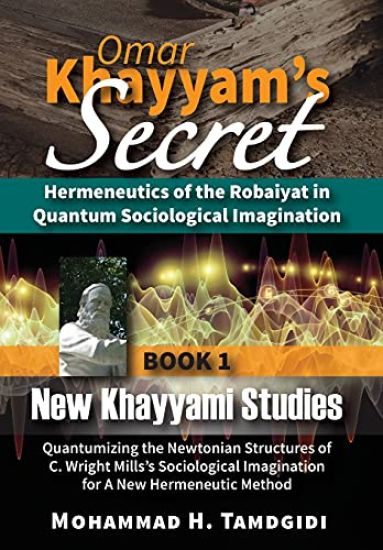
Omar Khayyam's Secret: Hermeneutics of the Robaiyat in Quantum Sociological Imagination is a twelve-book series of which this book, subtitled New Khayyami Studies: Quantumizing the Newtonian Structures of C. Wright Mills's Sociological Imagination for A New Hermeneutic Method, is the first volume. Each book is independently readable, although it will be best understood as a part of the whole series. In the overall series, the transdisciplinary sociologist Mohammad H. Tamdgidi shares the results of his decades-long research on Omar Khayyam, the enigmatic 11th/12th centuries Persian Muslim sage, philosopher, astronomer, mathematician, physician, writer, and poet from Neyshabour, Iran, whose life and works still remain behind a veil of deep mystery. Tamdgidi's purpose has been to find definitive answers to the many puzzles still surrounding Khayyam, especially regarding the existence, nature, and purpose of the Robaiyat in his life and works. To explore the questions posed, he advances a new hermeneutic method of textual analysis, informed by what he calls the quantum sociological imagination, to gather and study all the attributed philosophical, religious, scientific, and literary writings of Khayyam. In this first book of the series, following a common preface and introduction to the series, Tamdgidi develops the quantum sociological imagination method framing his hermeneutic study in the series as a whole. In the prefatory note he shares the origins of this series and how the study is itself a moment in the trajectory of a broader research project. In his introduction, he describes how centuries of Khayyami studies, especially during the last two, have reached an impasse in shedding light on his enigmatic life and works, especially his attributed Robaiyat. The four chapters of the book are then dedicated to developing the quantum sociological imagination as a new hermeneutic method framing the Khayyami studies in the series. The method builds, in an applied way, on the results of Tamdgidi's recent work in the sociology of scientific knowledge, Liberating Sociology: From Newtonian Toward Quantum Imagination: Volume 1: Unriddling the Quantum Enigma (2020), where he explored extensively, in greater depth, and in the context of understanding the so-called "quantum enigma," the Newtonian and quantum ways of imagining reality. In this first book, he shares the findings of that research in summary amid new applied insights developed in relation to Khayyami studies. In the first chapter, Tamdgidi raises a set of eight questions about the structure of C. Wright Mills's sociological imagination as a potential framework for Khayyami studies. In the second chapter, he shows how the questions are symptomatic of Newtonian structures that still continue to frame Mills's sociological imagination. In the third chapter, the author explores how the sociological imagination can be reinvented to be more in tune with the findings of quantum science. In the last chapter, the implications of the quantum sociological imagination for devising a hermeneutic method for new Khayyam and Robaiyat studies are outlined. In conclusion, the findings of this first book of the Omar Khayyam's Secret series are summarized.
Omar Khayyam's Secret: Hermeneutics of the Robaiyat in Quantum Sociological Imagination is a twelve-book series of which this book, subtitled New Khayyami Studies: Quantumizing the Newtonian Structures of C. Wright Mills's Sociological Imagination for A New Hermeneutic Method, is the first volume. Each book is independently readable, although it will be best understood as a part of the whole series. In the overall series, the transdisciplinary sociologist Mohammad H. Tamdgidi shares the results of his decades-long research on Omar Khayyam, the enigmatic 11th/12th centuries Persian Muslim sage, philosopher, astronomer, mathematician, physician, writer, and poet from Neyshabour, Iran, whose life and works still remain behind a veil of deep mystery. Tamdgidi's purpose has been to find definitive answers to the many puzzles still surrounding Khayyam, especially regarding the existence, nature, and purpose of the Robaiyat in his life and works. To explore the questions posed, he advances a new hermeneutic method of textual analysis, informed by what he calls the quantum sociological imagination, to gather and study all the attributed philosophical, religious, scientific, and literary writings of Khayyam. In this first book of the series, following a common preface and introduction to the series, Tamdgidi develops the quantum sociological imagination method framing his hermeneutic study in the series as a whole. In the prefatory note he shares the origins of this series and how the study is itself a moment in the trajectory of a broader research project. In his introduction, he describes how centuries of Khayyami studies, especially during the last two, have reached an impasse in shedding light on his enigmatic life and works, especially his attributed Robaiyat. The four chapters of the book are then dedicated to developing the quantum sociological imagination as a new hermeneutic method framing the Khayyami studies in the series. The method builds, in an applied way, on the results of Tamdgidi's recent work in the sociology of scientific knowledge, Liberating Sociology: From Newtonian Toward Quantum Imagination: Volume 1: Unriddling the Quantum Enigma (2020), where he explored extensively, in greater depth, and in the context of understanding the so-called "quantum enigma," the Newtonian and quantum ways of imagining reality. In this first book, he shares the findings of that research in summary amid new applied insights developed in relation to Khayyami studies. In the first chapter, Tamdgidi raises a set of eight questions about the structure of C. Wright Mills's sociological imagination as a potential framework for Khayyami studies. In the second chapter, he shows how the questions are symptomatic of Newtonian structures that still continue to frame Mills's sociological imagination. In the third chapter, the author explores how the sociological imagination can be reinvented to be more in tune with the findings of quantum science. In the last chapter, the implications of the quantum sociological imagination for devising a hermeneutic method for new Khayyam and Robaiyat studies are outlined. In conclusion, the findings of this first book of the Omar Khayyam's Secret series are summarized.
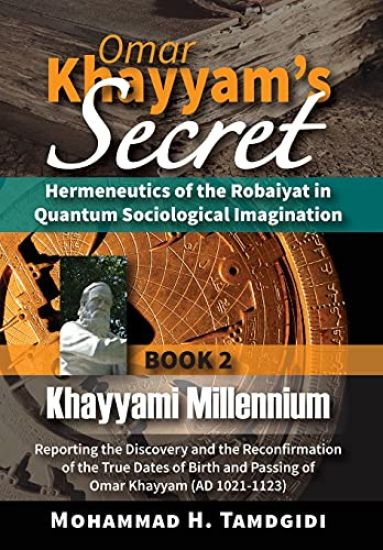
Omar Khayyam's Secret: Hermeneutics of the Robaiyat in Quantum Sociological Imagination is a twelve-book series of which this book is the second volume, subtitled Khayyami Millennium: Reporting the Discovery and the Reconfirmation of the True Dates of Birth and Passing of Omar Khayyam (AD 1021-1123). Each book is independently readable, although it will be best understood as a part of the whole series. In the overall series, the transdisciplinary sociologist Mohammad H. Tamdgidi shares the results of his decades-long research on Omar Khayyam, the enigmatic 11th/12th centuries Persian Muslim sage, philosopher, astronomer, mathematician, physician, writer, and poet from Neyshabour, Iran, whose life and works still remain behind a veil of deep mystery. Tamdgidi's purpose has been to find definitive answers to the many puzzles still surrounding Khayyam, especially regarding the existence, nature, and purpose of the Robaiyat in his life and works. To explore the questions posed, he advances a new hermeneutic method of textual analysis, informed by what he calls the quantum sociological imagination, to gather and study all the attributed philosophical, religious, scientific, and literary writings of Khayyam. In this second book of the series, Tamdgidi lays down an essential foundation for the series by revisiting the unresolved questions surrounding the dates of birth and passing of Omar Khayyam. Critically reexamining the manner in which Omar Khayyam's birth horoscope as reported in Zahireddin Abolhassan Beyhaqi's Tatemmat Sewan al-Hekmat (Supplement to the Chest of Wisdom) was used by Swāmi Govinda Tīrtha in his The Nectar of Grace: Omar Khayyam's Life and Works (1941) to determine Khayyam's birth date, Tamdgidi uncovers a number of serious internal inconsistencies and factual inaccuracies that prevented Tīrtha (and, since then, other scholars more or less taking for granted his results) from arriving at a reliable date for Khayyam's birth, hurling Khayyami studies into decades of confusion regarding Khayyam's life and works. Tamdgidi then shares in the book the detailed account of his own discovery of Khayyam's true date of birth for the first time, a finding that eluded Khayyami studies for centuries and is bound to revolutionize the studies for decades to come. Tamdgidi then turns his attention to the task of definitively establishing the true date of passing of Omar Khayyam. Conducting an in-depth, superposed analysis of Beyhaqi's Tatemmat Sewan el-Hekmat (Supplement to the Chest of Wisdom), Abdorrahman Khazeni's Mizan ol-Hekmat (Balance of Wisdom), Nezami Arouzi's Chahar Maqaleh (Four Discourses), and Yar Ahmad Rashidi Tabrizi's Tarabkhaneh (House of Joy), amid other relevant texts, he succeeds in firmly reconfirming and further discovering, in a textually reliable way, not only the year, the season, the month, and the day, but even the most likely time of day at which the poet mathematician, astronomer, and calender reformer died as a solar centenarian, completing his 102nd solar year age. Strange is that these discoveries are made just in time as we approach the first solar millennium of Omar Khayyam's birth date on June 10, AD 1021, at sunrise of Neyshabour, Iran, and the ninth solar centennial of his passing on June 10, AD 1123, on the eve also of his birthday, closing the circle of his life's "coming and going."
Omar Khayyam's Secret: Hermeneutics of the Robaiyat in Quantum Sociological Imagination is a twelve-book series of which this book is the second volume, subtitled Khayyami Millennium: Reporting the Discovery and the Reconfirmation of the True Dates of Birth and Passing of Omar Khayyam (AD 1021-1123). Each book is independently readable, although it will be best understood as a part of the whole series. In the overall series, the transdisciplinary sociologist Mohammad H. Tamdgidi shares the results of his decades-long research on Omar Khayyam, the enigmatic 11th/12th centuries Persian Muslim sage, philosopher, astronomer, mathematician, physician, writer, and poet from Neyshabour, Iran, whose life and works still remain behind a veil of deep mystery. Tamdgidi's purpose has been to find definitive answers to the many puzzles still surrounding Khayyam, especially regarding the existence, nature, and purpose of the Robaiyat in his life and works. To explore the questions posed, he advances a new hermeneutic method of textual analysis, informed by what he calls the quantum sociological imagination, to gather and study all the attributed philosophical, religious, scientific, and literary writings of Khayyam. In this second book of the series, Tamdgidi lays down an essential foundation for the series by revisiting the unresolved questions surrounding the dates of birth and passing of Omar Khayyam. Critically reexamining the manner in which Omar Khayyam's birth horoscope as reported in Zahireddin Abolhassan Beyhaqi's Tatemmat Sewan al-Hekmat (Supplement to the Chest of Wisdom) was used by Swāmi Govinda Tīrtha in his The Nectar of Grace: Omar Khayyam's Life and Works (1941) to determine Khayyam's birth date, Tamdgidi uncovers a number of serious internal inconsistencies and factual inaccuracies that prevented Tīrtha (and, since then, other scholars more or less taking for granted his results) from arriving at a reliable date for Khayyam's birth, hurling Khayyami studies into decades of confusion regarding Khayyam's life and works. Tamdgidi then shares in the book the detailed account of his own discovery of Khayyam's true date of birth for the first time, a finding that eluded Khayyami studies for centuries and is bound to revolutionize the studies for decades to come. Tamdgidi then turns his attention to the task of definitively establishing the true date of passing of Omar Khayyam. Conducting an in-depth, superposed analysis of Beyhaqi's Tatemmat Sewan el-Hekmat (Supplement to the Chest of Wisdom), Abdorrahman Khazeni's Mizan ol-Hekmat (Balance of Wisdom), Nezami Arouzi's Chahar Maqaleh (Four Discourses), and Yar Ahmad Rashidi Tabrizi's Tarabkhaneh (House of Joy), amid other relevant texts, he succeeds in firmly reconfirming and further discovering, in a textually reliable way, not only the year, the season, the month, and the day, but even the most likely time of day at which the poet mathematician, astronomer, and calender reformer died as a solar centenarian, completing his 102nd solar year age. Strange is that these discoveries are made just in time as we approach the first solar millennium of Omar Khayyam's birth date on June 10, AD 1021, at sunrise of Neyshabour, Iran, and the ninth solar centennial of his passing on June 10, AD 1123, on the eve also of his birthday, closing the circle of his life's "coming and going."