

Kirjahaku
Etsi kirjoja tekijän nimen, kirjan nimen tai ISBN:n perusteella.
1000 tulosta hakusanalla OCTAVIA BUTLER
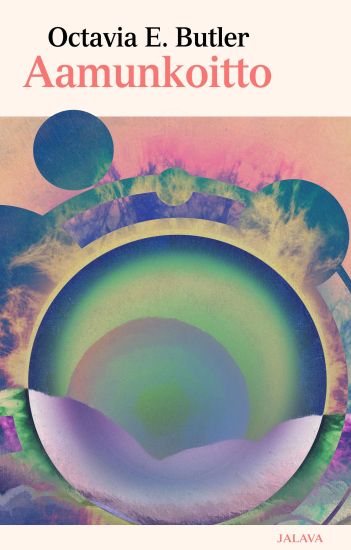
Ydinsota on tuhonnut ihmiskunnan. Yhden naisen tehtäväksi jää rakentaa se uudelleen. Kun Lilith lyapo herää, hän huomaa olevansa valtavan avaruusaluksen sisällä. Sitä kuljettaa hyväntahtoiselta vaikuttava ulkoavaruuden kansa, onkalit, jotka ovat puuttuneet ihmiskunnan kohtaloon jo vuosisatoja aikaisemmin pelastamalla ydinsodasta selviytyneet kuolemalta. Ihmisten nukkuessa syvää, pitkää untaan onkalit ovat opetelleet maapallosta kaiken mahdollisen, keksineet parannuksen syöpään ja vahvistaneet ihmisrodun kestävyyttä. Lilithin tehtäväksi tulee johdattaa oma kansansa takaisin maapallolle - mutta ihmiskunnan pelastamisen hinta osoittautuu raskaaksi. Modernin tieteiskirjallisuuden klassikon Octavia E. Butlerin toivoa ja ajatuksia herättävä, yhä ajankohtaisempi Aamunkoitto (1987) ilmestyi Ronald Reaganin presidenttikaudella, jolloin Yhdysvaltain politiikassa ydinsotaa ja sen voittamista pidettiin mahdollisena. Kirja kertoo tarinan paitsi tulevaisuuden maailmasta myös meidän modernin yhteiskuntamme polttavista kysymyksistä. ”Butler katsoo silmää räpäyttämättä myös ihmiskunnan synkimpään historiaan - ja päätyy siitä huolimatta luomaan tulevaisuudenuskoa. ” —The Fantasy Hive

Is there life beyond the veil of Death? Get answers after reading this shocking first-hand account of this extraordinary story. Four people had a date with destiny. Octavia, her husband and friends were in a horrific accident. The circumstances of the crash so bad that it was unlikely anyone would survive As family and friends prayed for a miracle, their prayers were answered Octavia came back from death with a thread of hope and an incredible story Her Intriguing true accounts shared a glimpse into the Afterlife. Through her experience, you will BELIEVE in power of miracles, restoration and healing
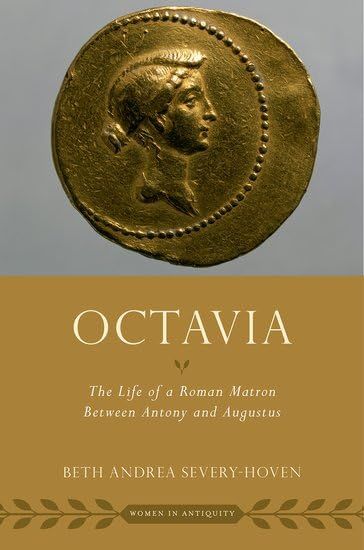
Octavia Minor (c. 69--11 BCE) was the elder sister of the first Roman Emperor Augustus, the fourth wife of his ally and subsequent rival Mark Antony, and ancestor of the emperors Caligula, Claudius, and Nero. Such a genealogy positions her squarely at the center of events as Rome transitioned from Republic to civil war to Empire. Octavia traces this elite woman's significant role in a turbulent period of Roman history. It explores the major events of Octavia's life, including her coming of age in the late Republic, her pivotal role as wife of Mark Antony and sister of Octavian during the triumviral conflicts, and finally her exemplary motherhood in the early years of the Augustan regime. This book analyses contemporary evidence from coins, statues, poetry, and inscriptions to counterbalance the picture of Octavia and her contemporaries that survives in literary sources indelibly marked by the propaganda of the final war between her brother and her husband, and her brother's triumphant transformation into the first emperor. Octavia's life thus reveals changes to the social and political landscape for women and men of the Roman elite--and how these changes came about--as the Republican system disintegrated and a new imperial one emerged.

Octavia Minor (c. 69--11 BCE) was the elder sister of the first Roman Emperor Augustus, the fourth wife of his ally and subsequent rival Mark Antony, and ancestor of the emperors Caligula, Claudius, and Nero. Such a genealogy positions her squarely at the center of events as Rome transitioned from Republic to civil war to Empire. Octavia traces this elite woman's significant role in a turbulent period of Roman history. It explores the major events of Octavia's life, including her coming of age in the late Republic, her pivotal role as wife of Mark Antony and sister of Octavian during the triumviral conflicts, and finally her exemplary motherhood in the early years of the Augustan regime. This book analyses contemporary evidence from coins, statues, poetry, and inscriptions to counterbalance the picture of Octavia and her contemporaries that survives in literary sources indelibly marked by the propaganda of the final war between her brother and her husband, and her brother's triumphant transformation into the first emperor. Octavia's life thus reveals changes to the social and political landscape for women and men of the Roman elite--and how these changes came about--as the Republican system disintegrated and a new imperial one emerged.
Octavia
Oxford University Press
2008
sidottu
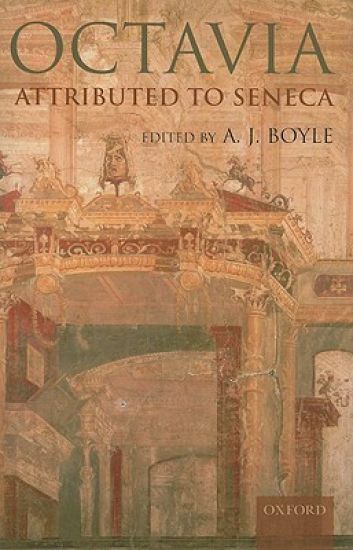
Octavia is a work of exceptional historical and dramatic interest. It is the only surviving complete example of the Roman historical drama known as the fabula praetexta. Written shortly after Nero's death by an unknown author, the play deals with events at the court of Nero in the decisive year 62 CE, for which it is the earliest extant (almost contemporary) literary source; its main themes are sex, murder, politics, power and the perceptions and constructions of history. It is a powerful, lyrical and spectacular play. This is the first critical edition of Octavia, with verse translation and commentary, which aims to elucidate the text dramatically as well as philologically, and to locate it firmly in its historical and theatrical context. The verse translation is designed for both performance and serious study.

Octavia
Cambridge University Press
2009
pokkari
This 2003 book is a full-length study of Octauia, the only complete Roman drama of an historical subject, or fabula praetexta. The play deals with Nero's divorce from the princess Octavia, Claudius' daughter by Valeria Messalina, and with his subsequent marriage to Poppaea Sabina. Professor Ferri presents a critical edition of the text based on a fresh re-examination of the relevant manuscripts and provides a full discussion of textual issues. In the Introduction he argues that the play, wrongly ascribed to Seneca in our MSS, was composed in the late Flavian period, and that the author relied on pre-existing historical accounts written after the death of Nero. He also discusses in detail the style and language of the play, strongly influenced by Senecan tragedy, its relationship to the other plays of the Senecan corpus, and particularly to Hercules Oetaeus, its stagecraft and post-Classical dramatic conventions, and the author's political position.

Octavia
Cambridge University Press
2003
sidottu
This is the first full-length study of Octauia, the only complete Roman drama of an historical subject, or fabula praetexta. The play deals with Nero’s divorce from the princess Octavia, Claudius’ daughter by Valeria Messalina, and with his subsequent marriage to Poppaea Sabina. Professor Ferri presents a critical edition of the text based on a fresh re-examination of the relevant manuscripts and provides a full discussion of textual issues. In the Introduction he argues that the play, wrongly ascribed to Seneca in our MSS, was composed in the late Flavian period, and that the author relied on pre-existing historical accounts written after the death of Nero. He also discusses in detail the style and language of the play, strongly influenced by Senecan tragedy, its relationship to the other plays of the Senecan corpus, and particularly to Hercules Oetaeus, its stagecraft and post-Classical dramatic conventions, and the author’s political position.
As soon as Octavia caught a glimpse of Jeremy in the nightclub, she knew she just had to have him. But the other part of the foursome was whizz-kid business tycoon Gareth Llewellyn, a swarthy Welshman with all the tenderness of a scrum-half...definitely not Octavia's type!

Title: Octavia Composer: Reinhard Keiser Original Publisher: Deutsche H ndelgesellschaft The complete score to Octavia, as originally published as part of the Deutsche H ndelgesellschaft, Band S 6, in 1902. Performer's Reprints are produced in conjunction with the International Music Score Library Project. These are out of print or historical editions, which we clean, straighten, touch up, and digitally reprint. Due to the age of original documents, you may find occasional blemishes, damage, or skewing of print. While we do extensive cleaning and editing to improve the image quality, some items are not able to be repaired. A portion of each book sold is donated to small performing arts organizations to create jobs for performers and to encourage audience growth.

Excerpt from Octavia: Tragedia em 5 Actos Dentro em pouco voltar ella ao meu palacio; e. Ent o saber s para que volta. Oh Seneca, tu, sabio entre os_sabms; tu. Que j foste meu ministro e meu guia em crrcumstancras mais criticas e mais melindrosas; n o te mostrar s hoje contrario ao que foste outr'ora. About the Publisher Forgotten Books publishes hundreds of thousands of rare and classic books. Find more at www.forgottenbooks.com This book is a reproduction of an important historical work. Forgotten Books uses state-of-the-art technology to digitally reconstruct the work, preserving the original format whilst repairing imperfections present in the aged copy. In rare cases, an imperfection in the original, such as a blemish or missing page, may be replicated in our edition. We do, however, repair the vast majority of imperfections successfully; any imperfections that remain are intentionally left to preserve the state of such historical works.
Excerpt from Octavia: Tragedia em 5 Actos Dentro em pouco voltar ella ao meu palacio; e. Ent o saber s para que volta. Oh Seneca, tu, sabio entre os_sabms; tu. Que j foste meu ministro e meu guia em crrcumstancras mais criticas e mais melindrosas; n o te mostrar s hoje contrario ao que foste outr'ora. About the Publisher Forgotten Books publishes hundreds of thousands of rare and classic books. Find more at www.forgottenbooks.com This book is a reproduction of an important historical work. Forgotten Books uses state-of-the-art technology to digitally reconstruct the work, preserving the original format whilst repairing imperfections present in the aged copy. In rare cases, an imperfection in the original, such as a blemish or missing page, may be replicated in our edition. We do, however, repair the vast majority of imperfections successfully; any imperfections that remain are intentionally left to preserve the state of such historical works.

Rooma, keisari Nero ja vuosi 62 - kauhun vuosi monien aikalaisten ja jälkipolvienkin silmissä. Tuon vuoden kohtalokkaisiin hetkiin keskittyy Octavia, ainoa meille säilynyt roomalainen historiallisiin tositapahtumiin perustuva murhenäytelmä, joka ilmestyy nyt ensi kertaa suomeksi. Viisitoistavuotiaana Nero oli naitettu itseään pari vuotta nuoremman Octavian, keisari Claudiuksen tyttären kanssa. Seuraavana vuonna Nerosta tuli äitinsä Agrippinan juonimana Rooman keisari. Neuvonantajaksi ja opettajaksi pojalleen äiti oli määrännyt stoalaisen filosofi Senecan, maineikkaan runoilijan, kirjailijan ja tiedemiehen. Hetken kaikki saattoi näyttää menevän hyvin. Mutta kun nuoren keisarin elämään astui kaunis, kokenut ja kohtalokas Poppaea Sabina, Octaviasta tuli Nerolle este ja rasite, josta tämä halusi eroon - keinolla millä hyvänsä. Senecan viisaat neuvot kaikuivat kuuroille korville.Octavia-tragedia on kulkenut meille Senecan itsensä nimissä. Vaikka monet nykytutkijat ovat pitäneet sitä epäperäisenä, suomentajat ovat päätyneet uskomaan sen sittenkin suurella todennäköisyydellä aidoksi. Mikäli tämä on totta, näytelmään on dramatisoitu ensi käden tietoa julman Neron hovista.Stoalainen filosofi Seneca (n. 4 eaa. - 65. jaa.) kirjoitti runoja, luonnontieteellisiä tutkielmia, elämänviisautta ja moraalikysymyksiä käsitteleviä dialogeja, laajan kirjekokoelman, Kirjeet Luciliukselle - Epistulae morales ad Lucilium (suom. Antti T. Oikarinen), sekä yhdeksän tai kymmenen tragediaa, joista tätä ennen on suomennettu neljä: Medeia, Thyestes, Faidra ja Oidipus (suom. Antti T. Oikarinen ja Maija-Leena Kallela).Kääntäjät Antti T. Oikarinen ja Maija-Leena Kallela ovat molemmat pitkän linjan latinisteja, joilta on ilmestynyt useita suomennoksia.
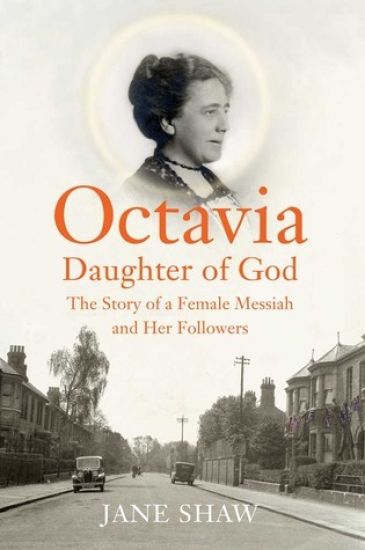
Octavia, Daughter of God: The Story of a Female Messiah and Her Followers
Jane Shaw
YALE UNIVERSITY PRESS
2011
sidottu
The little-known story of the charismatic, utopian leader Octavia and her devoted followers in the interwar years In 1919, in the wake of the upheaval of World War I, a remarkable group of English women came up with their own solution to the world's grief: a new religion. At the heart of the Panacea Society was a charismatic and autocratic leader, a vicar's widow named Mabel Bartlrop. Her followers called her Octavia, and they believed that she was the daughter of God, sent to build the New Jerusalem in Bedford.When the last living members of the Panacea Society revealed to historian Jane Shaw their immense and painstakingly preserved archives, she began to reconstruct the story of a close-knit utopian community that grew to include seventy residents, thousands of followers, and an international healing ministry reaching 130,000 people. Shaw offers a detailed portrait of Octavia and describes the faith of her devoted followers who believed they would never die. Vividly told, by turns funny and tragic, Octavia, Daughter of God is about a moment at the advent of modernity, when a generation of newly empowered women tried to re-make Christianity in their own image, offering a fascinating window into the anxieties and hopes of the interwar years.


Life of Octavia Hill as Told in Her Letters
Octavia Hill; C Edmund (Charles Edmund) Maurice
Anson Street Press
2025
pokkari