Kirjojen hintavertailu. Mukana 11 342 296 kirjaa ja 12 kauppaa.

Kirjahaku

Etsi kirjoja tekijän nimen, kirjan nimen tai ISBN:n perusteella.

1000 tulosta hakusanalla Pau

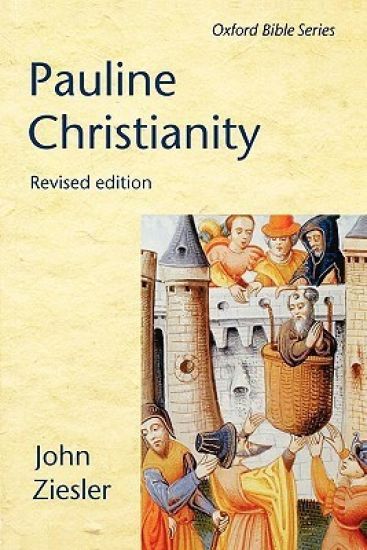
Pauline Christianity

Pauline Christianity

Ziesler

Oxford University Press
1990
nidottu
This revised edition of John Ziesler's broad yet detailed overview of St Paul's thought and distinctive kind of Christianity is intended for a general readership, and is therefore of wider value than individual and more technical commentaries. Dr Ziesler's starting point is St Paul's view of Jesus Christ as marking the end of an era and the beginning of a new world and a new humanity. The concentration is on theology, but matters of authorship and dating are discussed briefly where relevant. A number of key passages from the Pauline letters are given a more extended treatment.
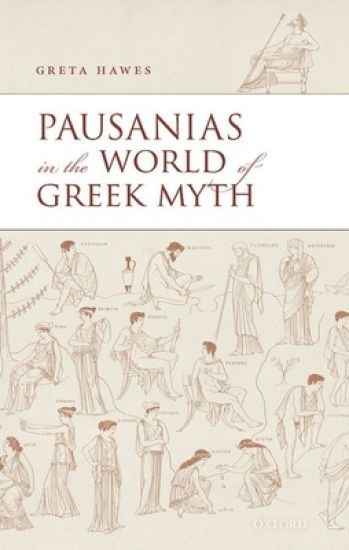
Pausanias in the World of Greek Myth

Pausanias in the World of Greek Myth

Greta Hawes

Oxford University Press
2021
sidottu
Greek myth comes to us through many different channels. Our best source for the ways that local communities told and used these stories is a travel guide from the second century AD, the Periegesis of Pausanias. Pausanias gives us the clearest glimpse of ancient Greek myth as a living, local tradition. He shows us that the physical landscape was nothing without the stories of heroes and gods that made sense of it, and reveals what was at stake in claims to possess the past. He also demonstrates how myths guided curious travellers to particular places, the kinds of responses they provoked, and the ways they could be tested or disputed. The Periegesis attests to a form of cultural tourism we would still recognise: it is animated by the desire to see for oneself distant places previously only read about. It shows us how travellers might map the literary landscapes that they imagined on to the reality, and how locals might package their cities to meet the demands of travellers' expectations. In Pausanias in the World of Greek Myth, Greta Hawes uses Pausanias's text to illuminate the spatial dynamics of myth. She reveals the significance of local stories in an Empire connected by a shared literary repertoire, and the unifying power of a tradition made up paradoxically of narratives that took diverse, conflicting forms on the ground. We learn how storytelling and the physical infrastructures of the Greek mainland were intricately interwoven such that the decline or flourishing of the latter affected the archive of myth that Pausanias transmits.
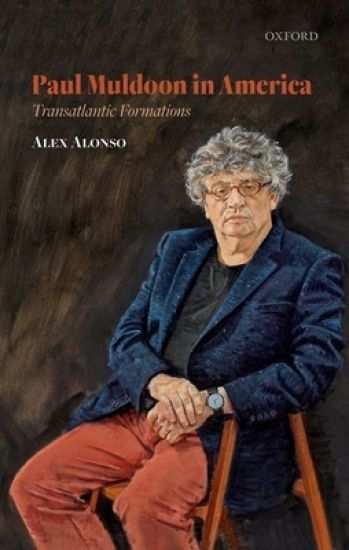
Paul Muldoon in America

Paul Muldoon in America

Alex Alonso

Oxford University Press
2021
sidottu
Paul Muldoon was looking west long before he left Ireland for the United States in 1987, and his Transatlantic departure would prove to be a turning point in his life and work. In America, Muldoon's creative repertoire has extended into song writing, libretti, and literary criticism, while his poetry collections have extended to outlandish proportions, typified in recent years by a level of formal intensity that is unique in modern poetry. To leave Northern Ireland, though, is not necessarily to leave it behind. Muldoon has spoken of his 'sense of belonging to several places at once,' and in the United States he has found another creative gear, new modes of performance facilitated by his Irish émigré status. Focusing on the protean work of his American period, this book explores Muldoon's expansive structural imagination, his investment in Eros and errors, the nimbleness of his allusive practice as both a reader and writer, and the mobility of his Transatlantic position. It raises questions about the Irish poet as a westward voyager, about Irish-American cultural exchange, and how departures for Muldoon seem to be a precondition for return, indeed returns of many different kinds. It also draws on archival research to produce provocative new readings of Muldoon's later works. Exploring the poetic and literary-critical 'long forms' that are now his hallmark, this volume places the most significant works of Muldoon's American period under the microscope, and opens up the intricate formal schemes of a poet Mick Imlah credits as having 'reinvented the possibilities of rhyme for our time.'
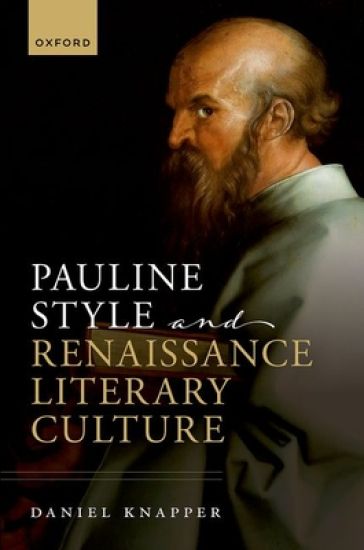
Pauline Style and Renaissance Literary Culture

Pauline Style and Renaissance Literary Culture

Daniel Knapper

Oxford University Press
2023
sidottu
As a major source of debate on theological topics such as the resurrection of body and soul, justification by faith, and predestination, the New Testament epistles of Saint Paul played a central role in the development of religious thought and practice across Reformation Europe. But in a period when Christian belief and Biblical knowledge permeated every aspect of human life, how did Paul's epistles inform Europe's literary and rhetorical cultures? How did scholars and artists respond, not just to Paul's provocative ideas, but also to his provocative manner of expressing them? Pauline Style and Renaissance Literary Culture is the first critical history of Saint Paul's rhetorical style in the Renaissance, 1500-1700. It explores critical and creative responses to Paul's style across a wide range of mediums and genres, at a time when two powerful and confluent cultural forces--Humanism and Protestantism--profoundly altered conceptions of Biblical writing. Daniel Knapper argues that Paul's style developed into one of the most theoretically productive and artistically provocative styles of the Renaissance primarily because of its controversial reception among European Biblical humanists, who struggled to define and assess its volatile features, qualities, and expressive functions. This theoretical discourse directly impacted literary activity in England, shaping how and why English writers imitated Paul's style in their literary works. From the plays of William Shakespeare, to the devotional poetry of John Donne, to the courtly sermons of Lancelot Andrewes, to the polemical prose and epic poetry of John Milton, English writers imitated Paul's style--or, more precisely, a set of critically and culturally determined aspects of Paul's style--to produce specific aesthetic effects, reflect on pressing theological problems, and engage in heated religious controversies. In tracing the reception of Paul's style in Renaissance literary culture, this groundbreaking study reveals how and why English writers drew on Biblical models to develop their literary practices, even as it reveals how issues of style and rhetoric shaped Biblical interpretation and theological discourse in the contentious religious crucible of Reformation Europe.
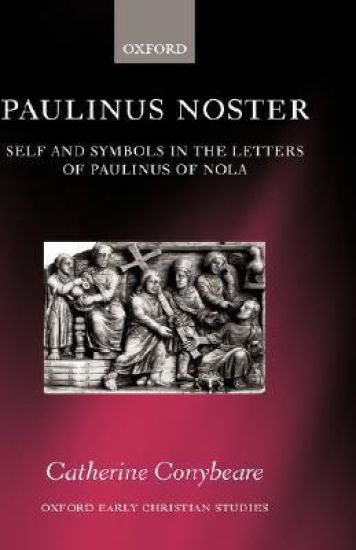
Paulinus Noster

Paulinus Noster

Catherine Conybeare

Clarendon Press
2000
sidottu
The aristocratic convert, Paulinus of Nola, was revered by contemporaries and correspondents, like Augustine of Hippo and Sulpicius Severus, as Paulinus noster - 'our Paulinus'. But his role as a shaper of, and exemplar to, the early Christian Church has, until recently, been often overlooked. This literate and accessible study examines the profound impact Paulinus had on Christian thought during a crucial period of its development. His ideas on friendship, Christian symbolism, and the nature of personal identity were produced on the cusp of the transition from the classical world to the burgeoning Western Christian civilization by a thinker with strong links to both. Paulinus' letters and other writings reveal the roots of many important strands of Christian thought; the works of Augustine and others attest to this influence. The letters of Paulinus and his correspondents portray an early Christian 'web' of shared concepts, intellectual discussion, and group development. Catherine Conybeare examines how the very process of writing and transmitting letters between members of a far-flung community helped to bind that community together and to aid the creation of ideas which would continue to reverberate for centuries after. 'Our Paulinus' was key to that group iconic as a model of behaviour, as a conversion success story, and as a intellectual contributor able to bridge the old world and the new.
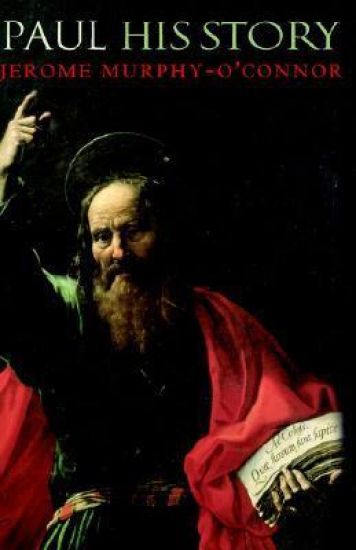
Paul

Paul

Jerome Murphy-O'Connor

Oxford University Press
2004
sidottu
For someone who has exercised such a profound influence on Christian theology, Paul remains a shadowy figure behind the barrier of his complicated and difficult biblical letters. Debates about his meaning have deflected attention from his personality, yet his personality is an important key to understanding his theological ideas. This book redresses the balance. Jerome Murphy-O'Connor's disciplined imagination, nourished by a lifetime of research, shapes numerous textual, historical, and archaeological details into a colourful and enjoyable story of which Paul is the flawed but undefeated hero. This chronological narrative offers new insights into Paul's intellectual, emotional, and religious development and puts his travels, mission, and theological ideas into a plausible biographical context. As he changes from an assimilated Jewish teenager in Tarsus to a competitive Pharisee in Jerusalem and then to a driven missionary of Christ, the sometimes contradictory components of Paul's complex personality emerge from the way he interacts with people and problems. His theology was forged in dialogue and becomes more intelligible as our appreciation of his person deepens. In Jerome Murphy-O'Connor's engaging biography, the Apostle comes to life as a complex, intensely human individual.
Paul

Paul

Jerome Murphy-O'Connor

Oxford University Press
2005
nidottu
For someone who has exercised such a profound influence on Christian theology, Paul remains a shadowy figure behind the barrier of his complicated and difficult biblical letters. Debates about his meaning have deflected attention from his personality, yet his personality is an important key to understanding his theological ideas. This book redresses the balance. Jerome Murphy-O'Connor's disciplined imagination, nourished by a lifetime of research, shapes numerous textual, historical, and archaeological details into a colourful and enjoyable story of which Paul is the flawed but undefeated hero. This chronological narrative offers new insights into Paul's intellectual, emotional, and religious development and puts his travels, mission, and theological ideas into a plausible biographical context. As he changes from an assimilated Jewish teenager in Tarsus to a competitive Pharisee in Jerusalem and then to a driven missionary of Christ, the sometimes contradictory components of Paul's complex personality emerge from the way he interacts with people and problems. His theology was forged in dialogue and becomes more intelligible as our appreciation of his person deepens. In Jerome Murphy-O'Connor's engaging biography, the Apostle comes to life as a complex, intensely human individual.
Paul Tillich and the Possibility of Revelation through Film
Since the birth of cinema at the end of the nineteenth century religion and film have been entwined. The Jesus-story and other religious narratives were the subject matter of some of the earliest cinema productions and this relationship has continued into the present. A recent proliferation of texts, conferences and courses bear witness to burgeoning academic interest in the relation between religion and film. In this study, Jonathan Brant explores the possibility that even films lacking religious subject matter might have a religious impact upon their viewers, the possibility of revelation through film. The book begins with a reading of Paul Tillich's theology of revelation through culture and continues with a qualitative research project which grounds this theoretical account in the experiences of a group of filmgoers. The empirical research takes place in Latin America where the intellectual puzzle and central research questions that drive the thesis arose and developed. Brant combines theoretical and empirical research in order to provide fresh insights into the way in which film functions and impacts its viewers and also offers an unusual perspective on the strengths and weaknesses of Tillich's theology of revelation, which is seen to focus on the saving and healing power of revelation rather than its communicative content. The grounding of the theory by the empirical data results in an increased appreciation of the sensitivity of Tillich's theology to the uniqueness of each film-to-viewer encounter and the data also suggests a new construal of the revelatory potential of film that is related to the community rather than the individual and to sustained life-practice rather than momentary experience. Brant reasons that Tillich's account is sensitive and compelling precisely because of its phenomenological attentiveness to real life experience, notably Tillich's own experience, of the power of art. However, Brant also suggests that it might be helpful to identify a stronger link than Tillich allows between the subject matter of the artwork, the content of revelation and the effect of revelation.
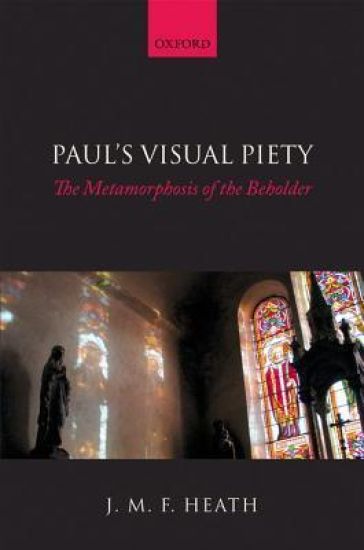
Paul's Visual Piety

Paul's Visual Piety

J. M. F. Heath

Oxford University Press
2013
sidottu
This book is at the interface between Visual Studies and Biblical Studies. For several decades, scholars of visuality have been uncovering the significance of everyday visual practices, in the sense of learnt habits of viewing and the assumptions that underpin them. They have shown that these play a key role in forming and maintaining relationships in religious devotion and in social life. The 'Visual Studies' movement brought issues such as these to the attention of most humanities disciplines by the end of the twentieth century, but until very recently made little impact on Biblical Studies. The explanation for this 'disciplinary blind-spot' lies partly in the reception of St Paul, who became Augustine's inspiration for platonising denigration of the material world, and Luther's for faith through 'scripture alone'. In the hands of more radical Reformers, the Word was soon vehemently opposed to the Image, an emphasis that was further fostered in the philologically-inclined university faculties where Biblical Studies developed. Yet Paul's piety is visual as well as verbal, even aside from his mystical visions. He envisages a contemplative focus on certain this-worldly sights as an integral part of believers' metamorphosis into Christ-likeness. This theme runs through Romans, but finds its most concise expression in his correspondence with the Corinthians: 'We all, with unveiled face, beholding in a mirror the glory of the Lord, are being metamorphosed into the same image, from glory to glory, as from the Lord, the Spirit' (2 Cor 3:18). Richly ambiguous and allegorical as this is, Paul shortly afterward defines an earthly site where this transformative, sacred gaze occurs. He insists that not mere death, but the death of Jesus is 'made manifest' in his suffering apostolic flesh. Rightly perceived, this becomes a holy spectacle for the sacred gaze, working life in those who behold in faith, but undoing those who see but do not perceive.
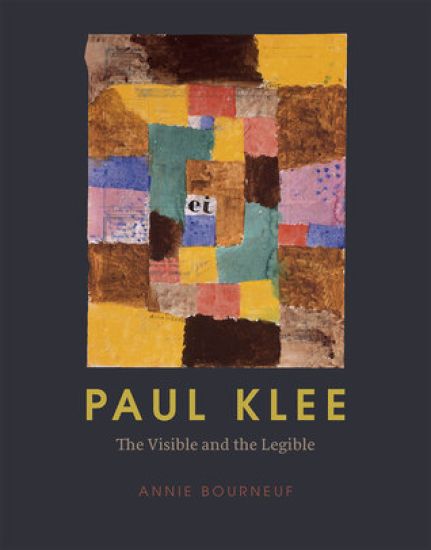
Paul Klee

Paul Klee

Annie Bourneuf

University of Chicago Press
2015
sidottu
The fact that Paul Klee (1879 - 1940) consistently intertwined the visual and the verbal in his art has long fascinated commentators from Walter Benjamin to Michel Foucault. However, the questions it prompts have never been satisfactorily answered - until now. In Paul Klee, Annie Bourneuf offers the first full account of the interplay between the visible and the legible in Klee's works from the 1910s and 1920s. Bourneuf argues that Klee joined these elements to invite a manner of viewing that would unfold in time, a process analogous to reading. From his elaborate titles to the small scale he favored to his metaphoric play with materials, Klee created forms that hover between the pictorial and the written, and his concern for literary aspects of visual art was both the motive for and the means of his ironic play with modernist art theories and practices. Through his unique approach, he subverted forms of modernist painting that were generally seen - along with film and other new technologies - as threats to a mode of slow, contemplative viewing. Tracing the fraught relations among seeing, reading, and imagining in early twentieth-century Germany, Bourneuf ultimately shows how Klee reimagined abstraction at a key moment in its development.
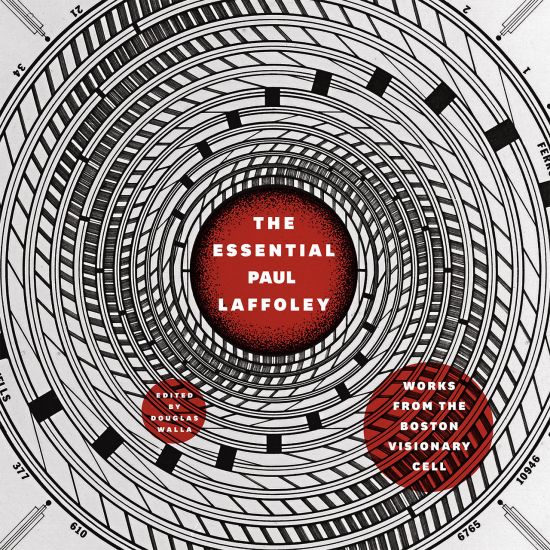
The Essential Paul Laffoley

The Essential Paul Laffoley

Paul Laffoley

University of Chicago Press
2016
sidottu
Paul Laffoley, who once worked for Frederick Kiesler and Andy Warhol, emerged in recent years as one of the leading visionary artists of our time. Lavishly illustrated, The Essential Paul Laffoley documents the evolution of his unique intellectual, spiritual, and artistic approaches. Living and working in a tiny space in Boston he called the “Boston Visionary Cell,” Laffoley became best known for his large mandala-like paintings filled with symbols and texts. Their titles range from the paranormal and arcane, such as The Ectoplasmic Man and The Sexuality of Robots, to the organic, as with Das Urpflanze Haus, to the erudite, including De Rerum Natura, a reference to the Roman poet Lucretius. Whether focused on working with plants to create living architecture or centered on the process of alchemy, these detailed, brilliantly colored works reflect Laffoley’s utopian hopes and transdisciplinary interests: throughout, he aimed to unite the boundless freedom of human imagination with the mathematical precision of the physical world. Nearly one hundred of Laffoley’s works are showcased here along with his accompanying “thought-forms,” texts specific to each painting that comment on its particular content. Together with an introduction by editor and gallerist Douglas Walla, a biography by fellow artist Steven Moskowitz, and essays by scholars Linda Dalrymple Henderson and Arielle Saiber, this book is a long-awaited celebration of the theories, writings, and artworks of an extraordinary mind.
Paul Ricoeur

Paul Ricoeur

Charles E. Reagan

University of Chicago Press
1998
nidottu
One of the major intellectual figures of the twentieth century, Paul Ricoeur has influenced a generation of thinkers. In this, the first philosophically informed biography of Ricoeur, student, colleague, and confidant Charles E. Reagan provides an unusually accessible look at both the philosophy of this extraordinary thinker and the pivotal experiences that influenced his development."A valuable introduction to Ricoeur; highly recommended."—Library Journal"[A] lively introduction to the life and thought of one of this century's most notable philosophers."—Norman Wirzba, Christian Century"Reagan lucidly explains Ricoeur's difficult philosophy while shining overdue light on the personality behind it."—Carlin Romano, Philadelphia Inquirer"Combines biographical and philosophical essays with a more personal memoir that makes Ricoeur's humane and magnanimous nature abundantly evident. Four revealing interviews, coupled with photographs, and an extensive bibliography of primary and secondary sources, complete this illuminating study."—Choice
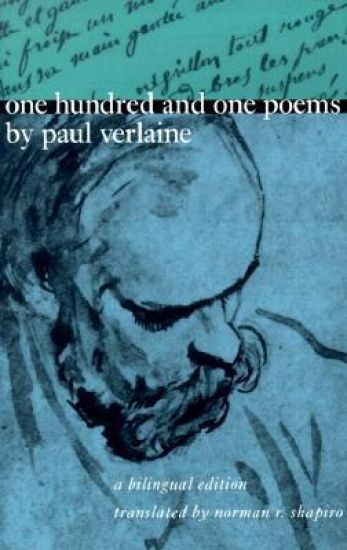
One Hundred and One Poems by Paul Verlaine

One Hundred and One Poems by Paul Verlaine

Paul Verlaine

University of Chicago Press
2000
nidottu
French poet Paul Verlaine was a major representative of the symbolist movement during the latter half of the 19th century. Norman Shapiro's translations seek to display Verlaine's ability to transform into verse the essence of everyday life and make evident the reasons for his renown in France and throughout the Western world. This selection provides the reader with a cross-section of Verlaine's repertoire. Shapiro has included a number of the poet's early works, showing him at his most capricious and lyrical; many poems from his middle period, which reflect his on-again, off-again conversion to Catholicism after his tumultuous relationship with Arthur Rimbaud; and poems from his late period, when he fell prey to poverty, dissipation, and disease. These later poems, rarely anthologized, and for the most part little known, mark an important shift in Verlaine's style and exhibit the biting wit and deep sincerity that characterize this entire collection. Biographical introductions and notes help explain the circumstances that gave rise to Verlaine's work. By spanning the poet's entire life work, Shapiro presents to scholars, students, and general readers of poetry the full range of Verlaine's achievement.
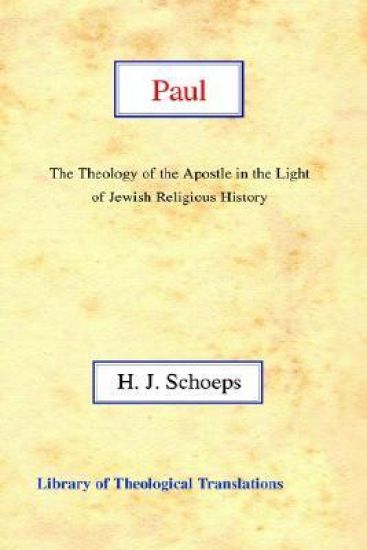
Paul

Paul

H.J. Schoeps

James Clarke Co Ltd
2003
nidottu
This study of the Apostle to the Gentiles combines scholarship with an unusual approach. Schoeps interprets Paul's theology in the light of his Jewish background, which coloured and conditioned his Christological teaching.
Paul

Paul

H.J. Schoeps

James Clarke Co Ltd
2002
sidottu
Since its first publication in German in 1959, Paul has been hailed as a major study of the apostle to the Gentiles, combining exceptional scholarship with an unusual approach. Schoeps interprets Paul's theology in the light of his Jewish background, which coloured and conditioned his Christological teaching. Paul's conception of Jesus differs from that of the Synoptics: what and how extensive the difference is and whence it is derived are among the questions Schoeps examines. After surveying major problems in Pauline research, the Author relates the apostle to primitive Christianity, discussing his eschatology and his teachings on salvation, the law, and saving history. The final chapter shows that Paul's distinctive doctrines result from two converging factors: that Paul never saw Jesus in the flesh, and the influence of Jewish teaching. The consequence was his concern with the resurrected Saviour of the world, the pre-existent and eternal Son of God. Schoeps shows that Paul betrayed a fundamental misconception of the law and the covenantal agreement between God and his chosen people. The result is a thought-provoking, and somewhat startling, study of the first, the greatest, and the most difficult of all Christian theologians.
Paul, the Apostle of Christ

Paul, the Apostle of Christ

Ferdinand Christian Baur

JAMES CLARKE CO LTD
2023
nidottu
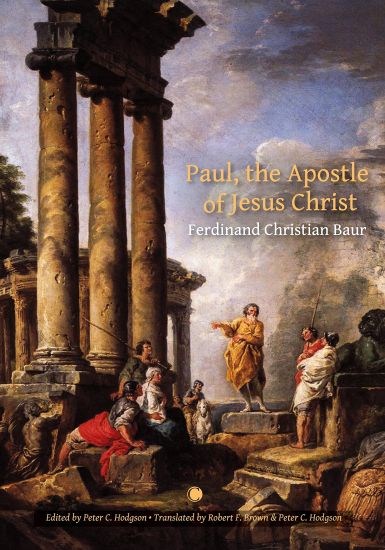
F.C. Baur's monumental study Paul, the Apostle of Jesus Christ (1845) is one of the greatest works of all time on the Apostle to the Gentiles. Laying the basis for modern Pauline scholarship, its three sections in turn thoroughly deconstruct the account of Paul found in Acts, examine the authentic, deuteron-Pauline and Pastoral Epistles, and draw the various strands of Paul's thought into a cohesive whole. In the first two parts Baur's historical-critical skills are at their finest, while in the third the influence of Hegel and Schleiermacher can be seen as Baur presents a comprehensive synthesis of Pauline theology. Since the original nineteenth-century English translation of Baur's masterpiece is no longer adequate, Hodgson and Brown's new edition will serve as the definitive resource for future scholarship. They not only present a new translation of the German, but also provide critical annotations and translations of all the scriptural passages originally quoted in Greek. Baur on Paul becomes truly available in English for the first time.
Paul Kane's Travels in Indigenous North America

Paul Kane's Travels in Indigenous North America

I.S. MacLaren

MCGILL-QUEEN'S UNIVERSITY PRESS
2024
sidottu
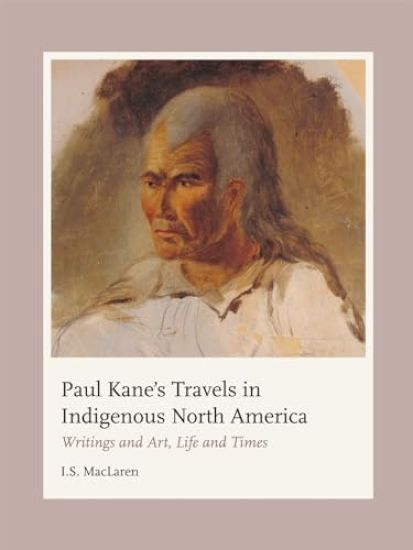
This is a four-volume set with a slip case.Paul Kane has been called the founding father of Canadian art, and Wanderings of an Artist among the Indians of North America a classic of Canadian literature. Yet his studio canvases are stereotypically generic, and his book is infamous: in word and in image, it depicts vain, vengeful, vicious, violent, and vanishing Indigenous people, disregarding its subjects’ lived experiences and providing little of ethnohistorical significance. Paul Kane’s Travels in Indigenous North America rediscovers the primary fieldwork underlying Kane’s studio art and book and the process by which his sketches and field writings evolved into damaging stereotypes with significant authority in the nineteenth century, in both popular and learned circles.In 1845 Kane travelled from Toronto to Lake Huron and Wisconsin; he continued from 1846 to 1848 to the upper Great Lakes, to the Prairies, across the Rockies, down the Columbia River, and through Oregon Territory to Puget Sound and Vancouver Island. The sketches he made constitute the first visual record of Indigenous life all the way from the Great Lakes to the Pacific Ocean. Paul Kane’s Travels in Indigenous North America, which reproduces nearly all his sketches as well as transcriptions of all his field writings, reveals him as a curious traveller fascinated by Indigenous lifeways. Together with a transcription of a draft manuscript for the book, which is not in his handwriting, the text of the first edition of Wanderings of an Artist, and a revised catalogue raisonné, these materials contextualize his travels in fur-trade history, book history, art history, and ethnohistory, offering scholarly understandings of the lives and histories of the real people Kane described and depicted while providing an authoritative biographical portrait of the artist. I.S. MacLaren reconstructs the colonial processes that turned Kane’s unique encounters with Indigenous peoples into benighted stereotypes, teaching us valuable lessons about what we thought we knew about Kane, how he let himself be turned into an Indian hater, and how historical society endowed him with authority.A painstaking, panoramic exploration, Paul Kane’s Travels in Indigenous North America also studies the artist’s oeuvre in terms of his contemporaries, his technique, and the complicated history of the provenance of the works. The whole lays the groundwork for future discussions of the pertinence of Paul Kane’s documentary record to Indigenous studies in North America.This is a shrink-wrapped four-volume set.Paul Kane has been called the founding father of Canadian art, and Wanderings of an Artist among the Indians of North America a classic of Canadian literature. Yet his studio canvases are stereotypically generic, and his book is infamous: in word and in image, it depicts vain, vengeful, vicious, violent, and vanishing Indigenous people, disregarding its subjects’ lived experiences and providing little of ethnohistorical significance. Paul Kane’s Travels in Indigenous North America rediscovers the primary fieldwork underlying Kane’s studio art and book and the process by which his sketches and field writings evolved into damaging stereotypes with significant authority in the nineteenth century, in both popular and learned circles.In 1845 Kane travelled from Toronto to Lake Huron and Wisconsin; he continued from 1846 to 1848 to the upper Great Lakes, to the Prairies, across the Rockies, down the Columbia River, and through Oregon Territory to Puget Sound and Vancouver Island. The sketches he made constitute the first visual record of Indigenous life all the way from the Great Lakes to the Pacific Ocean. Paul Kane’s Travels in Indigenous North America, which reproduces nearly all his sketches as well as transcriptions of all his field writings, reveals him as a curious traveller fascinated by Indigenous lifeways. Together with a transcription of a draft manuscript for the book, which is not in his handwriting, the text of the first edition of Wanderings of an Artist, and a revised catalogue raisonné, these materials contextualize his travels in fur-trade history, book history, art history, and ethnohistory, offering scholarly understandings of the lives and histories of the real people Kane described and depicted while providing an authoritative biographical portrait of the artist. I.S. MacLaren reconstructs the colonial processes that turned Kane’s unique encounters with Indigenous peoples into benighted stereotypes, teaching us valuable lessons about what we thought we knew about Kane, how he let himself be turned into an Indian hater, and how historical society endowed him with authority.A painstaking, panoramic exploration, Paul Kane’s Travels in Indigenous North America also studies the artist’s oeuvre in terms of his contemporaries, his technique, and the complicated history of the provenance of the works. The whole lays the groundwork for future discussions of the pertinence of Paul Kane’s documentary record to Indigenous studies in North America.This is a shrink-wrapped four-volume set.Paul Kane has been called the founding father of Canadian art, and Wanderings of an Artist among the Indians of North America a classic of Canadian literature. Yet his studio canvases are stereotypically generic, and his book is infamous: in word and in image, it depicts vain, vengeful, vicious, violent, and vanishing Indigenous people, disregarding its subjects’ lived experiences and providing little of ethnohistorical significance. Paul Kane’s Travels in Indigenous North America rediscovers the primary fieldwork underlying Kane’s studio art and book and the process by which his sketches and field writings evolved into damaging stereotypes with significant authority in the nineteenth century, in both popular and learned circles.In 1845 Kane travelled from Toronto to Lake Huron and Wisconsin; he continued from 1846 to 1848 to the upper Great Lakes, to the Prairies, across the Rockies, down the Columbia River, and through Oregon Territory to Puget Sound and Vancouver Island. The sketches he made constitute the first visual record of Indigenous life all the way from the Great Lakes to the Pacific Ocean. Paul Kane’s Travels in Indigenous North America, which reproduces nearly all his sketches as well as transcriptions of all his field writings, reveals him as a curious traveller fascinated by Indigenous lifeways. Together with a transcription of a draft manuscript for the book, which is not in his handwriting, the text of the first edition of Wanderings of an Artist, and a revised catalogue raisonné, these materials contextualize his travels in fur-trade history, book history, art history, and ethnohistory, offering scholarly understandings of the lives and histories of the real people Kane described and depicted while providing an authoritative biographical portrait of the artist. I.S. MacLaren reconstructs the colonial processes that turned Kane’s unique encounters with Indigenous peoples into benighted stereotypes, teaching us valuable lessons about what we thought we knew about Kane, how he let himself be turned into an Indian hater, and how historical society endowed him with authority.A painstaking, panoramic exploration, Paul Kane’s Travels in Indigenous North America also studies the artist’s oeuvre in terms of his contemporaries, his technique, and the complicated history of the provenance of the works. The whole lays the groundwork for future discussions of the pertinence of Paul Kane’s documentary record to Indigenous studies in North America.
Paul Kane's Travels in Indigenous North America

Paul Kane's Travels in Indigenous North America

I.S. MacLaren

MCGILL-QUEEN'S UNIVERSITY PRESS
2024
sidottu
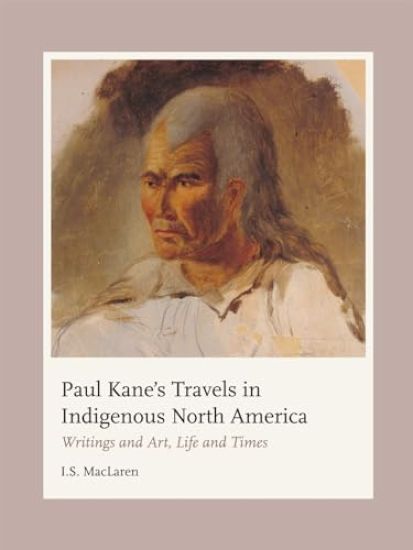
This is a shrink-wrapped four-volume set.Paul Kane has been called the founding father of Canadian art, and Wanderings of an Artist among the Indians of North America a classic of Canadian literature. Yet his studio canvases are stereotypically generic, and his book is infamous: in word and in image, it depicts vain, vengeful, vicious, violent, and vanishing Indigenous people, disregarding its subjects’ lived experiences and providing little of ethnohistorical significance. Paul Kane’s Travels in Indigenous North America rediscovers the primary fieldwork underlying Kane’s studio art and book and the process by which his sketches and field writings evolved into damaging stereotypes with significant authority in the nineteenth century, in both popular and learned circles.In 1845 Kane travelled from Toronto to Lake Huron and Wisconsin; he continued from 1846 to 1848 to the upper Great Lakes, to the Prairies, across the Rockies, down the Columbia River, and through Oregon Territory to Puget Sound and Vancouver Island. The sketches he made constitute the first visual record of Indigenous life all the way from the Great Lakes to the Pacific Ocean. Paul Kane’s Travels in Indigenous North America, which reproduces nearly all his sketches as well as transcriptions of all his field writings, reveals him as a curious traveller fascinated by Indigenous lifeways. Together with a transcription of a draft manuscript for the book, which is not in his handwriting, the text of the first edition of Wanderings of an Artist, and a revised catalogue raisonné, these materials contextualize his travels in fur-trade history, book history, art history, and ethnohistory, offering scholarly understandings of the lives and histories of the real people Kane described and depicted while providing an authoritative biographical portrait of the artist. I.S. MacLaren reconstructs the colonial processes that turned Kane’s unique encounters with Indigenous peoples into benighted stereotypes, teaching us valuable lessons about what we thought we knew about Kane, how he let himself be turned into an Indian hater, and how historical society endowed him with authority.A painstaking, panoramic exploration, Paul Kane’s Travels in Indigenous North America also studies the artist’s oeuvre in terms of his contemporaries, his technique, and the complicated history of the provenance of the works. The whole lays the groundwork for future discussions of the pertinence of Paul Kane’s documentary record to Indigenous studies in North America.
Paul Grice

Paul Grice

S. Chapman

Palgrave Macmillan
2005
nidottu
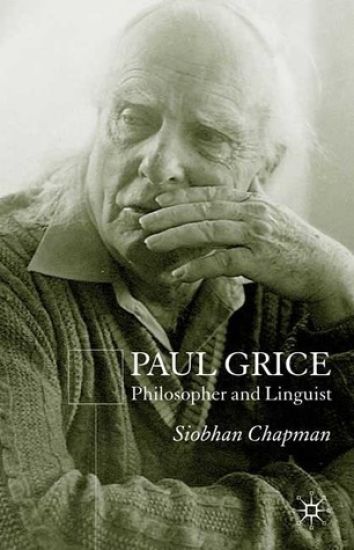
Paul Grice (1913-1988) is best known for his psychological account of meaning, and for his theory of conversational implicature, although these form only part of a large and diverse body of work. This is the first book to consider Grice's work as a whole. Drawing on the range of his published writing, and also on unpublished manuscripts, lectures and notes, Siobhan Chapman discusses the development of Grice's ideas and relates his work to the major events of his intellectual and professional life.