Kirjojen hintavertailu. Mukana 12 393 323 kirjaa ja 12 kauppaa.

Kirjahaku

Etsi kirjoja tekijän nimen, kirjan nimen tai ISBN:n perusteella.

1000 tulosta hakusanalla Paul Freeman

Campaign Advertising and American Democracy

Campaign Advertising and American Democracy

Michael M. Franz; Paul B. Freedman; Kenneth M. Goldstein; Travis N. Ridout

Temple University Press,U.S.
2007
pokkari
Campaign Advertising and American Democracy explores the relationship between exposure to political advertisements and voter behavior. Contrary to widely held beliefs, political ads do not turn people off to politics.
Porträtt : människor som formade sin samtid men som historien glömde

Porträtt : människor som formade sin samtid men som historien glömde

Armand D'Angour; Peter Frankopan; Jessica Frazier; Lawrence Freedman; Matthew Goodwin; Rob Johnson; Paul Lay; Alexander Lee; Rana Mitter; Andrew Roberts; Graham Stewart; Andrew Wilton; Adrian Wooldridge

Bokförlaget Stolpe
2022
muu
Porträttserien från Engelsberg Ideas höjer upp och ger plats åt de sidofigurer som har satt historiens hjul i rullning. Här finns bland andra Churchills halvt bortglämda högra hand, en av La Belle Epoques parisiska ledstjärnor som försvunnit i historiens dunkel och en tidig rymdpionjär som är nästan helt okänd utanför sitt hemland Ryssland. Historien tillhör inte bara de allmänt kända, utan också de andra: de män och kvinnor som plötsligt fann sig framdrivande i en flod av händelser eller som gjorde unika inlägg i sin tids stora debatter.Genom den här serien visar oss ledande skribenter hur individer har format den värld vi känner till, och undersöker deras framgångar lika mycket som deras misslyckanden. Den engelsk­tyska romanförfattaren W.G. Sebald skrev vid det senaste sekelskiftet "allting faller ständigt i glömska med varje utsläckt liv". I Porträtt ur historien hittar vi de dunkla spåren av spännande liv som levts och rekonstruerar dem omsorgsfullt för att de återigen ska få glänsa, starkt och levande, här och nu.
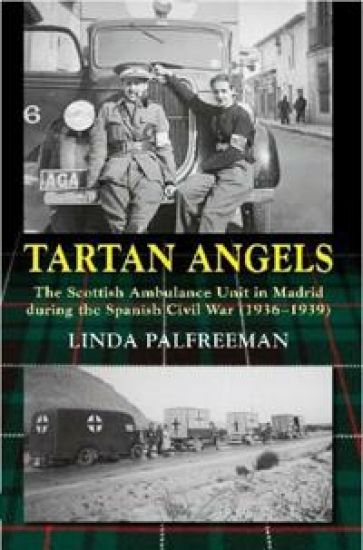
Tartan Angels

Tartan Angels

Linda Palfreeman

LIVERPOOL UNIVERSITY PRESS
2023
nidottu
Tartan Angels sheds light on the work of the Scottish Ambulance Unit (SAU) and the crucial part it played in British medical and humanitarian aid to Spain. In the eighty-five years since the outbreak of the civil war an immense historiography has developed. A steady widening of focus has seen the inclusion of studies that address the intense and prolonged suffering of a civilian population affected by political repression, relentless military bombardment, deprivation, and disease. Likewise, focus has shifted to those who provided assistance to victims during and after the conflict. To date, academic emphasis has been on the left-wing politics behind such endeavours, with too little attention given to the humanitarian responses themselves. Tartan Angels embraces this argument in its focus on the Scottish Ambulance Unit, an enterprise that was arguably apolitical in nature and comprised of individuals inspired, above all, by compassionate and unselfish motives. However, the reputation of the Unit suffered irreparable damage as a result of a series of incidents and events that still remain not fully explained or understood. Furthermore, there were those who used controversy and rumour to deliberately undermine the fundraising efforts of the Units patron and supporters. There is much still to be learned about the creation and the functioning of the SAU an outstanding but largely overlooked humanitarian gesture on behalf of the people of Scotland to those suffering the effects of a brutal civil war in Spain.
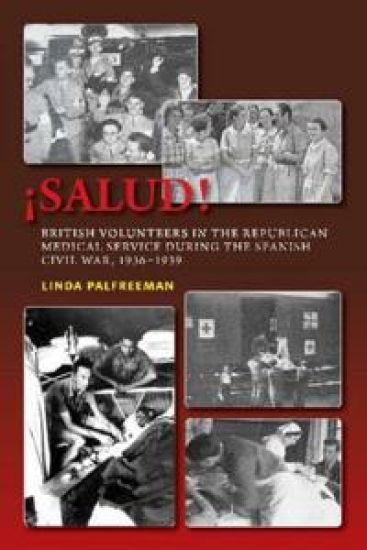
¡Salud!

¡Salud!

Linda Palfreeman

LIVERPOOL UNIVERSITY PRESS
2012
nidottu
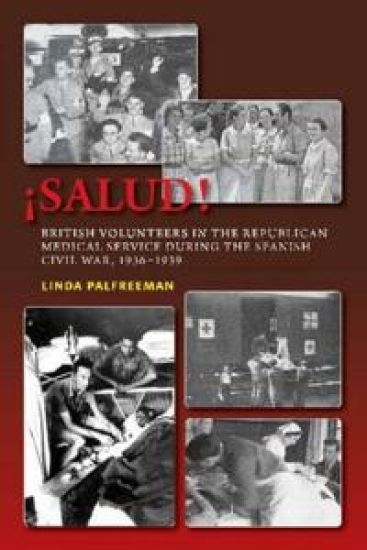
Salud! reviews the enormously valuable contribution of the volunteers who left Britain to serve with the Republican Medical Services during the Spanish Civil War. Acknowledgement is given to the immense effort and self-sacrifice made by men and women from all walks of life who, working ceaselessly in the rearguard, made it possible for the medical teams to function in Spain. Such was the case in Britain where, in spite of the government's official policy of non-intervention, there was a campaign of fervent support for the legitimate Republican government. The first British Medical Unit in Spain had immense political significance for the Spanish Republic. Barely a month into the start of the civil war and this small group was the first visible sign of international support. It would later become part of the Republican Medical Service and, within that, of the Medical Service of the International Brigades. Not only did volunteers help to create and to maintain an emergency medical service, some of the individuals involved were also responsible for important developments that were of relevance to later military-medical practice and also to the history of medicine in general. Medical personnel generally worked in dreadful conditions, for hours and even days without rest, and with a lack of equipment and provisions of all kinds. They were mostly young and inexperienced men and women who suddenly found themselves thrown together in desperate circumstances, with the task of salvaging something of life amidst the inhumanity and mayhem. That they rose to the challenge is, in itself, worthy of tribute. Published in association with the Canada Blanch Centre for Contemporary Spanish.
Aristocrats, Adventurers and Ambulances

Aristocrats, Adventurers and Ambulances

Linda Palfreeman

Sussex Academic Press
2013
sidottu
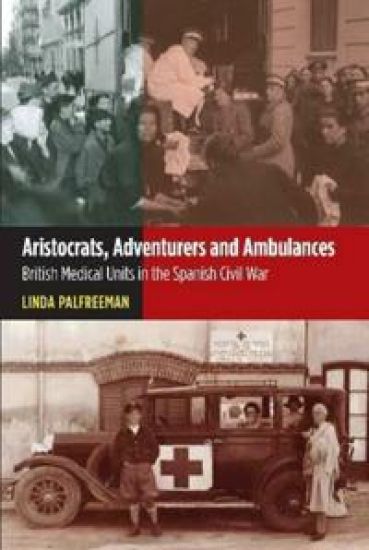
When a military coup provoked civil war in Spain in July 1936, many thousands of people around the world rallied to provide humanitarian aid. Britons were no exception. Collective efforts in Britain to provide aid for the Spanish Republic were vast in both scope and effect. Whilst such enterprise has formed the focus of a few previous studies, some of the most dramatic stories of the Spanish war have yet to be uncovered. This book seeks to shed light on the activities of two separate ventures that played important roles in British medical and humanitarian aid to Spain the Scottish Ambulance Unit and Sir George Young's Ambulance Unit. The volunteer members of these teams (those who went out to Spain and those who supported them in Britain) earned the unstinting praise of the Spanish government for their selfless commitment to the cause, as well as winning the respect and gratitude of the citizens whose welfare they strove so selflessly to protect. Recently discovered documentation reveals previously undisclosed details of these remarkably altruistic and, indeed, heroic enterprises, clarifying the reasoning behind their creation and documenting their endeavours in Spain endeavours of key relevance to the wider history of the conflict. In Spain, the volunteers of the Scottish Ambulance Unit and the George Young Ambulance Unit offered a heartening and inspiring antithesis to the suffering they sought to relieve. They deserve to be remembered for what they embodied during those days of untold cruelty and destruction outstanding examples of man's humanity to man.
Aristocrats, Adventurers and Ambulances

Aristocrats, Adventurers and Ambulances

Linda Palfreeman

Sussex Academic Press
2013
nidottu
When a military coup provoked civil war in Spain in July 1936, many thousands of people around the world rallied to provide humanitarian aid. Britons were no exception. Collective efforts in Britain to provide aid for the Spanish Republic were vast in both scope and effect. Whilst such enterprise has formed the focus of a few previous studies, some of the most dramatic stories of the Spanish war have yet to be uncovered. This book seeks to shed light on the activities of two separate ventures that played important roles in British medical and humanitarian aid to Spain the Scottish Ambulance Unit and Sir George Young's Ambulance Unit. The volunteer members of these teams (those who went out to Spain and those who supported them in Britain) earned the unstinting praise of the Spanish government for their selfless commitment to the cause, as well as winning the respect and gratitude of the citizens whose welfare they strove so selflessly to protect. Recently discovered documentation reveals previously undisclosed details of these remarkably altruistic and, indeed, heroic enterprises, clarifying the reasoning behind their creation and documenting their endeavours in Spain endeavours of key relevance to the wider history of the conflict. In Spain, the volunteers of the Scottish Ambulance Unit and the George Young Ambulance Unit offered a heartening and inspiring antithesis to the suffering they sought to relieve. They deserve to be remembered for what they embodied during those days of untold cruelty and destruction outstanding examples of man's humanity to man.
Spain Bleeds

Spain Bleeds

Linda Palfreeman

LIVERPOOL UNIVERSITY PRESS
2015
sidottu
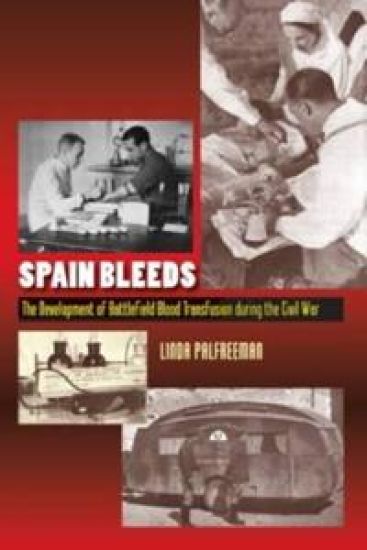
War is sometimes mistakenly construed as the chief impetus for medical innovation. Nevertheless, military conflict obliges the implementation of discoveries still at an experimental stage. Such was the case with the practice of blood transfusion during the Spanish Civil War, when massive demand for blood provoked immediate recourse to breakthroughs in transfusion medicine not yet integrated into standard medical practice. The Spanish Civil War marked a new era in blood transfusion medicine. Frederic Durán-Jordà and Carlos Elósegui Sarasoles, directors, respectively, of the blood transfusion services of the Republican Army and of the insurgent forces, were innovators in the field of indirect blood transfusion with preserved blood. Not only had they to create transfusion services, almost from scratch, capable of supplying campaigning armies with blood in wartime conditions, they also had to struggle against the medical establishment and to convince their medical peers of the value (not to mention the scientific significance) of what they were doing. The Blood Transfusion Service of the Republic was a truly international effort, with medical volunteers from all over the world carrying out transfusion work in primitive and often dangerous conditions. All took their lead from one man the young Catalan haematologist, Frederic Durán-Jordà, the indisputable pioneer of civil war blood transfusion medicine. From humble beginnings at the outbreak of war, blood transfusion services were created in Spain that would later become crucial in the treatment of casualties during the Second World War and would shape the future evolution of blood transfusion medicine throughout the developed world.
Spain Bleeds

Spain Bleeds

Linda Palfreeman

LIVERPOOL UNIVERSITY PRESS
2016
nidottu
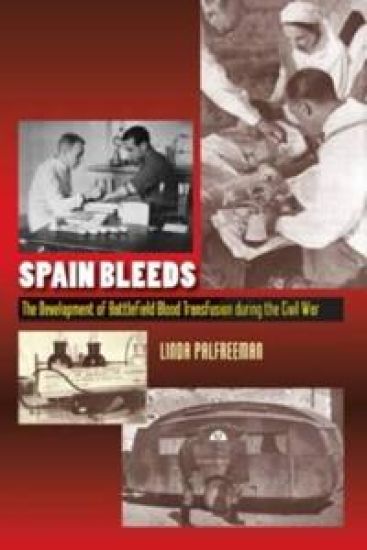
War is sometimes mistakenly construed as the chief impetus for medical innovation. Nevertheless, military conflict obliges the implementation of discoveries still at an experimental stage. Such was the case with the practice of blood transfusion during the Spanish Civil War, when massive demand for blood provoked immediate recourse to breakthroughs in transfusion medicine not yet integrated into standard medical practice. The Spanish Civil War marked a new era in blood transfusion medicine. Frederic Durán-Jordà and Carlos Elósegui Sarasoles, directors, respectively, of the blood transfusion services of the Republican Army and of the insurgent forces, were innovators in the field of indirect blood transfusion with preserved blood. Not only had they to create transfusion services, almost from scratch, capable of supplying campaigning armies with blood in wartime conditions, they also had to struggle against the medical establishment and to convince their medical peers of the value (not to mention the scientific significance) of what they were doing. The Blood Transfusion Service of the Republic was a truly international effort, with medical volunteers from all over the world carrying out transfusion work in primitive and often dangerous conditions. All took their lead from one man the young Catalan haematologist, Frederic Durán-Jordà, the indisputable pioneer of civil war blood transfusion medicine. From humble beginnings at the outbreak of war, blood transfusion services were created in Spain that would later become crucial in the treatment of casualties during the Second World War and would shape the future evolution of blood transfusion medicine throughout the developed world.
Friends in Flanders

Friends in Flanders

Linda Palfreeman

Sussex Academic Press
2017
nidottu
The Friends' Ambulance Unit (FAU) was created shortly after the outbreak of war. The idea of the unit's founder, Philip J. Baker, was that it would provide young Friends (Quakers) with the opportunity to serve their country without sacrificing their pacifist principles. The first volunteers went to Belgium on 31 October 1914, under the auspices of the Joint War Committee of the British Red Cross Society and the Order of St John of Jerusalem. The FAU made a sustained contribution to the military medical services of the Allied nations, establishing military hospitals, running ambulance convoys, and staffing hospital ships and ambulance trains, treating and transporting wounded men. Determined to bring succour to all those in need, the FAU also assisted civilians trapped in the war zone and living in desperate circumstances. Nowhere was this more acute than in the besieged and battered town of Ypres where thousands sheltered in the underground passage-ways of the towns ancient fortifications -- a subterranean population, 'hopeless, often lightless,' wrote Geoffrey Young, the Units young field commander, living on what they might and breeding disease. The Unit provided hospitals for the treatment of civilians, and worked intensively in the containment and treatment of the typhoid epidemic that swept the region, locating sufferers, providing them with medical care, and inoculating people against the disease. It played a major role in the purification of the town's contaminated drinking water, distributed milk for infants and food and clothing to the sick and needy. It helped found orphanages, made provision for schooling and organised gainful employment for refugees until, finally, it became responsible for the definitive evacuations of the civilian population.
A Gypsy and a Rebel

A Gypsy and a Rebel

Linda Palfreeman; Alicia García López

Clapton Press Limited
2024
pokkari
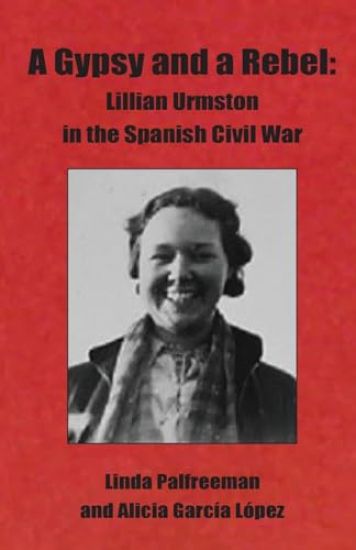
At the age of nineteen, Lillian Urmston volunteered her services as a nurse in the Spanish Civil War, because she believed it was 'the right thing to do.' Her lack of political affiliations and rebellious attitude] inevitably brought suspicion from some of her more ideological peers, while through her clinical work she earned the respect of some of the leading battlefield physicians of the day, including Len Crome, Chief Medical Officer of the 35th Army Corps and Dr Reggie Saxton, a pioneer of blood transfusion. Later, the civil and military authorities in Britain would draw on her practical expertise in the latest developments in trauma care as they made their preparations for the Second World War. This new biography by Linda Palfreeman and Alicia Garc a L pez brings alive Lillian's experiences working in front line field hospitals and drumming up support for the republic during her periods of leave back home in Britain.
¡Salud!

¡Salud!

Linda Palfreeman

Sussex Academic Press
2012
sidottu
Salud! reviews the enormously valuable contribution of the volunteers who left Britain to serve with the Republican Medical Services during the Spanish Civil War. Acknowledgement is given to the immense effort and self-sacrifice made by men and women from all walks of life who, working ceaselessly in the rearguard, made it possible for the medical teams to function in Spain. Such was the case in Britain where, in spite of the government's official policy of non-intervention, there was a campaign of fervent support for the legitimate Republican government. The first British Medical Unit in Spain had immense political significance for the Spanish Republic. Barely a month into the start of the civil war and this small group was the first visible sign of international support. It would later become part of the Republican Medical Service and, within that, of the Medical Service of the International Brigades. Not only did volunteers help to create and to maintain an emergency medical service, some of the individuals involved were also responsible for important developments that were of relevance to later military-medical practice and also to the history of medicine in general. Medical personnel generally worked in dreadful conditions, for hours and even days without rest, and with a lack of equipment and provisions of all kinds. They were mostly young and inexperienced men and women who suddenly found themselves thrown together in desperate circumstances, with the task of salvaging something of life amidst the inhumanity and mayhem. That they rose to the challenge is, in itself, worthy of tribute. Published in association with the Canada Blanch Centre for Contemporary Spanish.
Paul

Paul

E. P. Sanders

Oxford University Press
2001
nidottu
Paul is the most powerful human personality in the history of the Church. A missionary, theologian, and religious genius, in his epistles he laid the foundations on which later Christian theology was built. In his highly original introduction to Paul's life and thought, E. P. Sanders, whose research on Paul has substantially influenced recent scholarship, pays equal attention to Paul's fundamental convictions and the sometimes convoluted ways in which they were worked out. ABOUT THE SERIES: The Very Short Introductions series from Oxford University Press contains hundreds of titles in almost every subject area. These pocket-sized books are the perfect way to get ahead in a new subject quickly. Our expert authors combine facts, analysis, perspective, new ideas, and enthusiasm to make interesting and challenging topics highly readable.
Paul

Paul

Jerome Murphy-O'Connor

Oxford University Press
2004
sidottu
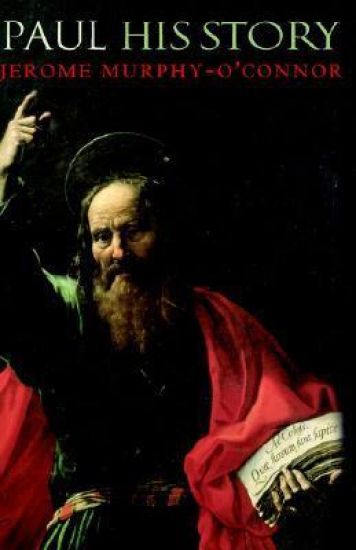
For someone who has exercised such a profound influence on Christian theology, Paul remains a shadowy figure behind the barrier of his complicated and difficult biblical letters. Debates about his meaning have deflected attention from his personality, yet his personality is an important key to understanding his theological ideas. This book redresses the balance. Jerome Murphy-O'Connor's disciplined imagination, nourished by a lifetime of research, shapes numerous textual, historical, and archaeological details into a colourful and enjoyable story of which Paul is the flawed but undefeated hero. This chronological narrative offers new insights into Paul's intellectual, emotional, and religious development and puts his travels, mission, and theological ideas into a plausible biographical context. As he changes from an assimilated Jewish teenager in Tarsus to a competitive Pharisee in Jerusalem and then to a driven missionary of Christ, the sometimes contradictory components of Paul's complex personality emerge from the way he interacts with people and problems. His theology was forged in dialogue and becomes more intelligible as our appreciation of his person deepens. In Jerome Murphy-O'Connor's engaging biography, the Apostle comes to life as a complex, intensely human individual.
Paul

Paul

Jerome Murphy-O'Connor

Oxford University Press
2005
nidottu
For someone who has exercised such a profound influence on Christian theology, Paul remains a shadowy figure behind the barrier of his complicated and difficult biblical letters. Debates about his meaning have deflected attention from his personality, yet his personality is an important key to understanding his theological ideas. This book redresses the balance. Jerome Murphy-O'Connor's disciplined imagination, nourished by a lifetime of research, shapes numerous textual, historical, and archaeological details into a colourful and enjoyable story of which Paul is the flawed but undefeated hero. This chronological narrative offers new insights into Paul's intellectual, emotional, and religious development and puts his travels, mission, and theological ideas into a plausible biographical context. As he changes from an assimilated Jewish teenager in Tarsus to a competitive Pharisee in Jerusalem and then to a driven missionary of Christ, the sometimes contradictory components of Paul's complex personality emerge from the way he interacts with people and problems. His theology was forged in dialogue and becomes more intelligible as our appreciation of his person deepens. In Jerome Murphy-O'Connor's engaging biography, the Apostle comes to life as a complex, intensely human individual.
Paul

Paul

H.J. Schoeps

James Clarke Co Ltd
2003
nidottu
This study of the Apostle to the Gentiles combines scholarship with an unusual approach. Schoeps interprets Paul's theology in the light of his Jewish background, which coloured and conditioned his Christological teaching.
Paul

Paul

H.J. Schoeps

James Clarke Co Ltd
2002
sidottu
Since its first publication in German in 1959, Paul has been hailed as a major study of the apostle to the Gentiles, combining exceptional scholarship with an unusual approach. Schoeps interprets Paul's theology in the light of his Jewish background, which coloured and conditioned his Christological teaching. Paul's conception of Jesus differs from that of the Synoptics: what and how extensive the difference is and whence it is derived are among the questions Schoeps examines. After surveying major problems in Pauline research, the Author relates the apostle to primitive Christianity, discussing his eschatology and his teachings on salvation, the law, and saving history. The final chapter shows that Paul's distinctive doctrines result from two converging factors: that Paul never saw Jesus in the flesh, and the influence of Jewish teaching. The consequence was his concern with the resurrected Saviour of the world, the pre-existent and eternal Son of God. Schoeps shows that Paul betrayed a fundamental misconception of the law and the covenantal agreement between God and his chosen people. The result is a thought-provoking, and somewhat startling, study of the first, the greatest, and the most difficult of all Christian theologians.
Paul

Paul

John M. G. Barclay

SPCK Publishing
2017
pokkari
'There is neither Jew nor Greek, there is neither slave nor free, there is no male and female; for you are all one in Christ Jesus.' (Galatians 3.28) The revolutionary writings of St Paul have had an incalculable impact on Western history, and continue to influence directly the two billion Christians living today. Written by a world authority, this brief history begins by assessing what we know about Paul's life and letters, and his impact on the Roman world of the first century. It concludes by highlighting the key elements of Paul's thought and considering their consequences as they have played out over two millennia.
Paul

Paul

Tom Wright

SPCK Publishing
2018
sidottu
This compelling reconstruction of the life and thought of St Paul paints a vivid picture of the Roman world in which he preached his revolutionary message and explains the significance of his lasting impact on both the Church and the world. Regarded by many as the founder of Christianity, Paul of Tarsus is one of the most controversial and powerful figures in history. His writings have had an incalculable influence on Western culture and beyond, and his words continue to guide the lives of over two billion Christians across the world today. In this superbly detailed biography Tom Wright traces Paul's career from zealous persecutor of the fledgling Church, through his journeys as the world's greatest missionary theologian, to his likely death as a Christian martyr at the hands of Nero in the mid 60s CE. Drawing judiciously on the latest research into the Jewish, Greek and Roman worlds, and enriched by a wealth of critical insight into Paul's own writings, this is the most rounded portrait of the apostle ever painted – his development, motivations, spiritual struggles and intellectual achievements, and his lasting impact over two millennia.
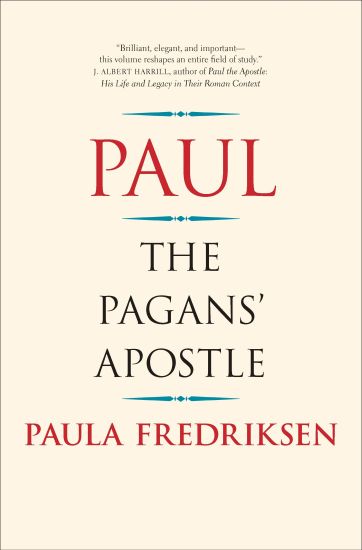
Paul

Paul

Paula Fredriksen

Yale University Press
2017
sidottu
A groundbreaking new portrait of the apostle Paul, from one of today’s leading historians of antiquity Often seen as the author of timeless Christian theology, Paul himself heatedly maintained that he lived and worked in history’s closing hours. His letters propel his readers into two ancient worlds, one Jewish, one pagan. The first was incandescent with apocalyptic hopes, expecting God through his messiah to fulfill his ancient promises of redemption to Israel. The second teemed with ancient actors, not only human but also divine: angry superhuman forces, jealous demons, and hostile cosmic gods. Both worlds are Paul’s, and his convictions about the first shaped his actions in the second. Only by situating Paul within this charged social context of gods and humans, pagans and Jews, cities, synagogues, and competing Christ-following assemblies can we begin to understand his mission and message. This original and provocative book offers a dramatically new perspective on one of history’s seminal figures.
Paul

Paul

Paula Fredriksen

Yale University Press
2018
pokkari
A groundbreaking new portrait of the apostle Paul, from one of today’s leading historians of antiquity Often seen as the author of timeless Christian theology, Paul himself heatedly maintained that he lived and worked in history’s closing hours. His letters propel his readers into two ancient worlds, one Jewish, one pagan. The first was incandescent with apocalyptic hopes, expecting God through his messiah to fulfill his ancient promises of redemption to Israel. The second teemed with ancient actors, not only human but also divine: angry superhuman forces, jealous demons, and hostile cosmic gods. Both worlds are Paul’s, and his convictions about the first shaped his actions in the second. Only by situating Paul within this charged social context of gods and humans, pagans and Jews, cities, synagogues, and competing Christ-following assemblies can we begin to understand his mission and message. This original and provocative book offers a dramatically new perspective on one of history’s seminal figures.