Kirjojen hintavertailu. Mukana 12 379 324 kirjaa ja 12 kauppaa.

Kirjahaku

Etsi kirjoja tekijän nimen, kirjan nimen tai ISBN:n perusteella.

1000 tulosta hakusanalla Pedro García Cuartango

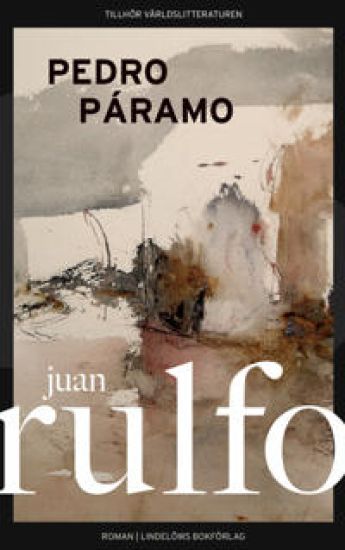
Pedro Páramo

Pedro Páramo

Juan Rulfo; Gabriel García Márquez; Anna Forné

Lindelöws bokförlag
2026
pokkari
Juan Rulfos roman Pedro Páramo är ett av världslitteraturens mästerverk, en föregångare till Latinamerikas magiska realism. Huvudpersonen Juan Preciado söker sin far Pedro Páramo i den lilla mexikanska byn Comala. När han kommer fram till byn är den öde och hans far och de andra byinvånarna är döda. Där finns istället vålnader. Juan får reda på att hans far Pedro varit byns despot. Han drevs samtidigt av ensamhet, av hämnd och våld. I byns ökenmiljö var skördetiden kort, arbetet hårt, fattigdom och hunger deras vardag. Mexikos nära förhållande till döden och de döda tar stor plats. I romanens andra del stiger röster upp ur gravarna på byns kyrkogård. Pedro Páramo utspelar sig under Mexikos revolutionära år under 1900-talets första decennier. Juan Rulfos korta koncentrerade meningar, de plötsliga utbrotten av våld, de döda som är närvarande, den uppbrutna kronologin, den mörka humorn – allt detta bidrar till dramatiken som så mästerligt gestaltas. Gabriel García Márquez inspirerades av romanen. I sin essä om Pedro Páramo, som publiceras i boken, skriver han: Den kvällen kunde jag inte somna förrän jag hade läst boken två gånger. Inte sedan den där oförglömliga kvällen nästan tio år tidigare, då jag i ett dystert studentrum i Bogotá läste Kafkas Förvandlingen, hade jag blivit så överväldigad. Själv inspirerades Juan Rulfo av flera nordiska författare, som Selma Lagerlöf och Halldór Laxness. "För 70 år sedan publicerades en roman på blott 130 sidor som skulle komma att förändra den latinamerikanska litteraturen: Juan Rulfos 'Pedro Páramo' ... Lämpligt nog har Göteborgsförlaget Lindelöws nu gett ut Rulfos samlade verk i ny svensk språkdräkt. / Christian Claesson – Dagens Nyheter Juan Rulfo föddes 1918 i byn Sayula på den mexikanska landsbygden. Hans far dog i det våldsamma inbördeskriget i Mexiko när Juan var sex år. När hans mor dog fyra år senare sattes han av sina släktingar i ett klosterinternat. Som ung vuxen flyttade han till Mexico City och kunde ge ut novellsamlingen Slätten i lågor (1953) och Pedro Páramo (1955). Han skrev också filmmanuskript, blev en etablerad fotograf, som skildrare av sin uppväxtmiljö på den fattiga mexikanska landsbygden. 1986 avled han 68 år gammal. 1980 gavs hans tredje och sista bok ut, Guldtuppen och andra berättelser, nu för första gången på svenska. Tidigt, 1960, översattes Pedro Páramo till svenska. Men Juan Rulfo omarbetade romanen flera gånger, han var sällan nöjd. Juan Rulfos sista versionen från 1982 har Yvonne Blank nu översatt. Förordet till denna nyöversatta bok har Anna Forné skrivit.
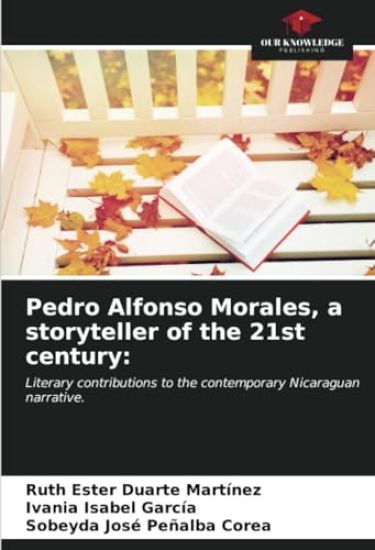
Pedro Alfonso Morales, a storyteller of the 21st century

Pedro Alfonso Morales, a storyteller of the 21st century

Ruth Ester Duarte Martínez; Ivania Isabel García; Sobeyda José Peñalba Corea

Our Knowledge Publishing
2023
pokkari
The literary study of Pedro Alfonso Morales is necessary to define his aesthetic contributions that mark the boundaries of the new narrative of the XXI Century. In this work we identify the literary contributions to the Nicaraguan narrative, through the analysis of three works of our author: "Le n es hoy a m , Pancho Ley y las Ceguas (cuentos Telique os) y El pa s de las aguas"; as well as the type of language used in the three works; as well as the extension of his narrations; which are short stories.
Pedro Alfonso Morales, ein Geschichtenerzähler des 21. Jahrhunderts

Pedro Alfonso Morales, ein Geschichtenerzähler des 21. Jahrhunderts

Ruth Ester Duarte Martínez; Ivania Isabel García; Sobeyda José Peñalba Corea

Verlag Unser Wissen
2023
pokkari
Die literarische Untersuchung von Pedro Alfonso Morales ist notwendig, um seine sthetischen Beitr ge zu definieren, die die Grenzen der neuen Erz hlung des 21. Jahrhunderts markieren. In dieser Arbeit werden die literarischen Beitr ge zur nicaraguanischen Erz hlung durch die Analyse von drei Werken unseres Autors identifiziert: "Le n es hoy a m , Pancho Ley y las Ceguas (cuentos Telique os) y El pa s de las aguas"; sowie die Art der in den drei Werken verwendeten Sprache und die L nge seiner Erz hlungen, die Kurzgeschichten sind.
Pedro Alfonso Morales, un conteur du 21e siècle

Pedro Alfonso Morales, un conteur du 21e siècle

Ruth Ester Duarte Martínez; Ivania Isabel García; Sobeyda José Peñalba Corea

Editions Notre Savoir
2023
pokkari
L' tude litt raire de Pedro Alfonso Morales est n cessaire pour d finir ses contributions esth tiques qui marquent les limites du nouveau r cit du XXIe si cle. Dans ce travail, nous identifions les contributions litt raires la narration nicaraguayenne, travers l'analyse de trois oeuvres de notre auteur: "Le n es hoy a m , Pancho Ley y las Ceguas (cuentos Telique os) y El pa s de las aguas"; ainsi que le type de langage utilis dans les trois oeuvres; de m me que la longueur de ses narrations; qui sont des histoires courtes.
Pedro Alfonso Morales, um contador de histórias do século XXI

Pedro Alfonso Morales, um contador de histórias do século XXI

Ruth Ester Duarte Martínez; Ivania Isabel García; Sobeyda José Peñalba Corea

Edicoes Nosso Conhecimento
2023
pokkari
O estudo liter rio de Pedro Alfonso Morales necess rio para definir as suas contribui es est ticas que marcam as fronteiras da nova narrativa do s culo XXI. Neste trabalho identificamos os contributos liter rios para a narrativa nicaraguense, atrav s da an lise de tr s obras do nosso autor: "Le n es hoy a m , Pancho Ley y las Ceguas (cuentos Telique os) y El pa s de las aguas"; bem como o tipo de linguagem utilizada nas tr s obras; assim como a extens o das suas narra es; que s o contos.
Pedro Alfonso Morales, un narratore del XXI secolo

Pedro Alfonso Morales, un narratore del XXI secolo

Ruth Ester Duarte Martínez; Ivania Isabel García; Sobeyda José Peñalba Corea

Edizioni Sapienza
2023
pokkari
Lo studio letterario di Pedro Alfonso Morales necessario per definire i suoi contributi estetici che segnano i confini della nuova narrativa del XXI secolo. In questo lavoro identifichiamo i contributi letterari alla narrativa nicaraguense, attraverso l'analisi di tre opere del nostro autore: "Le n es hoy a m , Pancho Ley y las Ceguas (cuentos Telique os) y El pa s de las aguas"; cos come il tipo di linguaggio utilizzato nelle tre opere, nonch la lunghezza delle sue narrazioni, che sono racconti brevi.
The Chinese in Cuba, 1847-Now

The Chinese in Cuba, 1847-Now

Mauro García Triana; Pedro Eng Herrera

Lexington Books
2009
sidottu
This book deals with Chinese immigrants' role in the struggle for Cuban liberation and in Cuba's twentieth-century revolutionary social movement; the history of the Chinese economy in Cuba; and the Chinese contribution to Cuban music, painting, food, sport, and language. The centerpiece of the book is a translation of a study by Mauro García Triana and Pedro Eng Herrera on the history of the Chinese presence in Cuba. Over many years, García and Eng have collaborated closely on scholarly research on the Chinese contribution to Cuban life and politics, although their work is not widely known. Both are well equipped for such an enterprise: Eng as a Cuban of Chinese descent and a participant in the ethnic-Chinese revolutionary movement in Cuba, starting in the 1950s; García as a participant in the struggle against Batista and Cuban Ambassador to China during the period of the Cultural Revolution. The study is supplemented by an extensive collection of archival photographs and of paintings on Cuban-Chinese themes by Pedro Eng, who is not just a chronicler of the community but a well-known worker-artist who paints in a style described by commentators as "naive." The volume has three appendices: excerpts from the Cuba Commission's 1877 report on Chinese emigration to Cuba; the rebel leader Gonzalo de Quesada y Aróstegui's pamphlet "The Chinese and Cuban Independence," translated from his book Mi primera ofrenda (My first offering), first published in 1892; and the chapter on "Coolie Life in Cuba" from Duvon Clough Corbitt's Study of the Chinese in Cuba, 1847-1947 (Wilmore 1971).
Knowledge Discovery from Archaeological Materials

Knowledge Discovery from Archaeological Materials

Pedro A. López García; Denisse L. Argote; Manuel A. Torres-García; Michael C. Thrun

Cambridge University Press
2024
pokkari
This Element highlights the employment within archaeology of classification methods developed in the field of chemometrics, artificial intelligence, and Bayesian statistics. These operate in both high- and low-dimensional environments and often have better results than traditional methods. The basic principles and main methods are introduced with recommendations for when to use them.
Knowledge Discovery from Archaeological Materials

Knowledge Discovery from Archaeological Materials

Pedro A. López García; Denisse L. Argote; Manuel A. Torres-García; Michael C. Thrun

Cambridge University Press
2024
sidottu
This Element highlights the employment within archaeology of classification methods developed in the field of chemometrics, artificial intelligence, and Bayesian statistics. These operate in both high- and low-dimensional environments and often have better results than traditional methods. The basic principles and main methods are introduced with recommendations for when to use them.
Determining Provenance from Compositional Data

Determining Provenance from Compositional Data

Pedro A. López-García; Denisse L. Argote

Cambridge University Press
2026
sidottu
Traditionally, classical multivariate statistical methods have been applied to relate cultural materials recovered at archaeological sites to their respective raw material sources. However, when reviewing published research, which usually claims to have reached a high degree of confidence in the assignment of materials, the authors have detected that those applying these methods can make serious errors that compromise the inferences made. This Element reconsiders the use of statistical methods to address the problem of provenance analysis of archaeological materials using a step-by-step procedure that allows the recognition of natural groups in the data, thus obtaining better quality classifications while avoiding the problems of total or partial overlaps in the chemical groups (common in biplots). To evaluate the methods proposed here, the challenge of group search in ceramic materials is addressed using algorithms derived from model-based clustering. For cases with partial data labeling, a semi-supervised algorithm is applied to obsidian samples.
Determining Provenance from Compositional Data

Determining Provenance from Compositional Data

Pedro A. López-García; Denisse L. Argote

Cambridge University Press
2026
pokkari
Traditionally, classical multivariate statistical methods have been applied to relate cultural materials recovered at archaeological sites to their respective raw material sources. However, when reviewing published research, which usually claims to have reached a high degree of confidence in the assignment of materials, the authors have detected that those applying these methods can make serious errors that compromise the inferences made. This Element reconsiders the use of statistical methods to address the problem of provenance analysis of archaeological materials using a step-by-step procedure that allows the recognition of natural groups in the data, thus obtaining better quality classifications while avoiding the problems of total or partial overlaps in the chemical groups (common in biplots). To evaluate the methods proposed here, the challenge of group search in ceramic materials is addressed using algorithms derived from model-based clustering. For cases with partial data labeling, a semi-supervised algorithm is applied to obsidian samples.
The Rule of Law in Retreat

The Rule of Law in Retreat

Diego García-Sayán; Pedro R. David

BLOOMSBURY PUBLISHING PLC
2022
sidottu
In the past decade the Rule of Law developments in the world have become contentious; its idea, concept, and global implementation have met growing resistance, which may soon shift the global balance of power, prompting international crisis.This book offers insights into the globally relevant Rule-of-Law ramifications for human rights, consitutional law, and philosophy of law in the time of such considerable challenges to it. From this legal perspective, the contributors analyze the questions of independence of judiciary, liberal education, freedom of mass media; populism, and corruption. They discuss global civic education, enhanced social inclusion, violence prevention, restorative justice and other methods of civic participation that can create larger opportunities for freedom in a UN world and help overcome increased ideological division between global North and South.