Exploring the origins and development of the labour theory of value, Peter Dooley examines its emergence from the natural law philosopher of the sixteenth and seventeenth century and its domination of the classical school of economics. This book will prove to be essential reading for all students of the history of economics.
The use of formulae has become widespread in recent years across most developed countries. In the UK, a conservative estimate is that annually £150 billion of public service expenditure is distributed using formulae, in services such as health care, local government, social security and higher education. This book offers a comprehensive introduction to the theory and practice underlying the use of such formulae as a basis for funding public services. The philosophy, design and economic consequences of funding formulae have become key policy issues worldwide. However, till now, there has been no text which brings together the economic, statistical and political issues underlying formula funding. This key book fills that gap.Written by a leading international expert on the design of funding formulae, this important book includes empirical evidence from a range of countries and will be a valuable resource for all those involved in this field.
First Published in 2005. The task of compiling a bibliography of the African slave trade is a difficult one as the literature comprises books, pamphlets and periodical articles in a variety of languages from the sixteenth century to the present day. This title aspires to present a representative selection of the material available and serve as a guide to the main categories of printed material on the subject in western languages. Due to their pre-existing availability and overwhelming quantity, government publications have been kept to a minimum.
The use of formulae has become widespread in recent years across most developed countries. In the UK, a conservative estimate is that annually £150 billion of public service expenditure is distributed using formulae, in services such as health care, local government, social security and higher education. This book offers a comprehensive introduction to the theory and practice underlying the use of such formulae as a basis for funding public services. The philosophy, design and economic consequences of funding formulae have become key policy issues worldwide. However, till now, there has been no text which brings together the economic, statistical and political issues underlying formula funding. This key book fills that gap.Written by a leading international expert on the design of funding formulae, this important book includes empirical evidence from a range of countries and will be a valuable resource for all those involved in this field.
Exploring the origins and development of the labour theory of value, Peter Dooley examines its emergence from the natural law philosopher of the sixteenth and seventeenth century and its domination of the classical school of economics. This book will prove to be essential reading for all students of the history of economics.
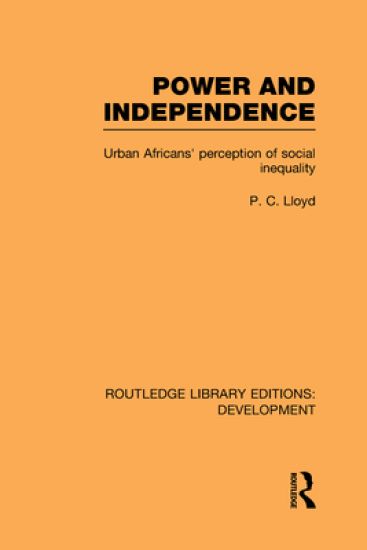
This reissue, first published in 1982, is concerned with the rapid contemporary metropolitan development in the Third World, at a time when manufacturing and public service sectors were expending at a terrific rate. Nevertheless, the phenomenal growth of the metropolitan cities brings with it an increase in social equalities, such that two thirds of the population of these cities may be described as the ‘urban poor’. This book concerns itself with the question: Can we describe these urban poor as a ‘proletariat’, or are such Western class terms totally inappropriate to the development of the Third World?Peter Lloyd examines the nature of Western class terminology derived largely from Marx and Weber, and assesses its utility in the analysis of Third World Urban society. An assessment is also made of the political strength of the urban poor, whether they are mobilising themselves or being mobilised from above. This reissue will be relevant to courses on Development studies and the Third World; it will also find a wider readership amongst social stratification and urban sociology.
First published in 1974, this study, by a social anthropologist who has lived, taught and researched in Nigeria, explores how the Yoruba of Nigeria living in Ibadan and Lagos perceive the society in which they live. Their views on stratification and social inequality in particular are related to traditional Yoruba concepts and to their experiences in education, migration and present social and occupational relationships. It is shown that, in general, these recent migrants and city dwellers see their society as open; they emphasise achievement rather than class opposition. Recent protest – industrial strikes in Lagos, the Agbekoya peasant rebellion in Ibadan – are assessed in the light of these attitudes.
Analytics is one of a number of terms which are used to describe a data-driven more scientific approach to management. Ability in analytics is an essential management skill: knowledge of data and analytics helps the manager to analyze decision situations, prevent problem situations from arising, identify new opportunities, and often enables many millions of dollars to be added to the bottom line for the organization.The objective of this book is to introduce analytics from the perspective of the general manager of a corporation. Rather than examine the details or attempt an encyclopaedic review of the field, this text emphasizes the strategic role that analytics is playing in globally competitive corporations today.The chapters of this book are organized in two main parts. The first part introduces a problem area and presents some basic analytical concepts that have been successfully used to address the problem area. The objective of this material is to provide the student, the manager of the future, with a general understanding of the tools and techniques used by the analyst.
Analytics is one of a number of terms which are used to describe a data-driven more scientific approach to management. Ability in analytics is an essential management skill: knowledge of data and analytics helps the manager to analyze decision situations, prevent problem situations from arising, identify new opportunities, and often enables many millions of dollars to be added to the bottom line for the organization.The objective of this book is to introduce analytics from the perspective of the general manager of a corporation. Rather than examine the details or attempt an encyclopaedic review of the field, this text emphasizes the strategic role that analytics is playing in globally competitive corporations today.The chapters of this book are organized in two main parts. The first part introduces a problem area and presents some basic analytical concepts that have been successfully used to address the problem area. The objective of this material is to provide the student, the manager of the future, with a general understanding of the tools and techniques used by the analyst.
Curing is one of those activities that every civil engineer and construction worker has heard of, but in reality does not worry about much. In practice, curing is often low on the list of priorities on the construction site, particularly when budgets and timelines are under pressure. Yet the increasing demands being placed on concrete mixtures also mean that they are less forgiving than in the past. Therefore, any activity that will help improve hydration and so performance, while reducing the risk of cracking, is becoming more important. Curing Concrete explains exactly why curing is so important and shows you how to best do it.The book covers:The fundamentals behind hydrationHow curing affects the properties of concrete, improving its long-term performanceWhat curing technologies and techniques you can use for different applicationsHow to effectively specify, provide, and measure curing in a projectThe author also gives numerous examples of how curing—or a lack of it—has affected concrete performance in real-world situations. These include examples from hot and cold climates, as well as examples related to high-performance concrete, performance parameters, and specifications and testing. Written for construction professionals who want to ensure the quality and longevity of their concrete structures, this book demonstrates that curing is well worth the effort and cost.
This reissue, first published in 1982, is concerned with the rapid contemporary metropolitan development in the Third World, at a time when manufacturing and public service sectors were expending at a terrific rate. Nevertheless, the phenomenal growth of the metropolitan cities brings with it an increase in social equalities, such that two thirds of the population of these cities may be described as the ‘urban poor’. This book concerns itself with the question: Can we describe these urban poor as a ‘proletariat’, or are such Western class terms totally inappropriate to the development of the Third World?Peter Lloyd examines the nature of Western class terminology derived largely from Marx and Weber, and assesses its utility in the analysis of Third World Urban society. An assessment is also made of the political strength of the urban poor, whether they are mobilising themselves or being mobilised from above. This reissue will be relevant to courses on Development studies and the Third World; it will also find a wider readership amongst social stratification and urban sociology.
First published in 1974, this study, by a social anthropologist who has lived, taught and researched in Nigeria, explores how the Yoruba of Nigeria living in Ibadan and Lagos perceive the society in which they live. Their views on stratification and social inequality in particular are related to traditional Yoruba concepts and to their experiences in education, migration and present social and occupational relationships. It is shown that, in general, these recent migrants and city dwellers see their society as open; they emphasise achievement rather than class opposition. Recent protest – industrial strikes in Lagos, the Agbekoya peasant rebellion in Ibadan – are assessed in the light of these attitudes.
First published in 1992, A Political Theory Primer is designed as an introductory course for students in the application of game theory to modeling political processes. Examining those very phenomena that power political machineries--elections, legislative and committee processes, and international conflict--the book attempts to answer fundamental questions about their nature and function. Included at the end of each chapter is a set of exercises designed to allow students to practice the construction and analysis of political models. Although the text assumes only training at the basic algebra level, the student who completes a course around this text will be equipped to read nearly all the professional literature that makes use of game-theoretic analysis. Each chapter also contains suggestiosn for further reading for those students who want to broaden their learning and expertise.
Congenital Adrenal Hyperplasia: A Comprehensive Guide, Second Edition maintains the approach used in the first edition written in a way which is accessible to patients and carers. This new fully illustrated edition outlines the basics of CAH and its interrelation with hormones and bodily function with fully updated chapters based on the latest clinical research. Many new topics have been added including a new chapter dedicated to gene therapy which includes principles of the concept, what the current status is, latest research developments and potential treatment for congenital adrenal hyperplasia. The book has updated patient profiles due to several new clinical studies in CAH to understand and manage the condition better and provides more practical information on how to deal with emergencies, medic alert emergency kits, emergency injection needles and new information on handling illness and surgery and more. In addition, new assays are incorporated for the analysis of pituitary and adrenal hormones for the determination of the disease. This new edition continues to be vital reference to pediatric endocrinologists as well as primary care providers to provide affected patients with an updated model of care and appropriate treatment. Patients and family members will continue to benefit from the new trend-forward information presented and will be empowered to approach their health care providers with the expectation of receiving individualized care and treatment of the disorder.
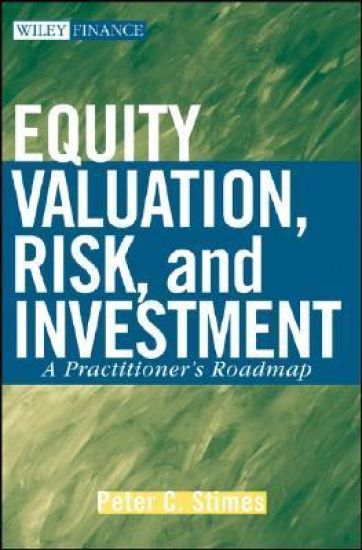
Author Peter Stimes’s analysis of the investment process has long been inspired by some of the best minds in the world of finance, yet some of the ways in which he approaches this discipline are truly unique. In Equity Valuation, Risk, and Investment, Stimes shares his extensive expertise with you and reveals how practitioners can integrate and apply both the theory and quantitative analysis found in finance to the day-to-day decisions they must make with regard to important investment issues.
The only nonprofit management book you must have-in an exciting new edition As a nonprofit manager, you have to be more effective and more efficient than ever to win funding and support to ensure your organization pursues its mission, meets community needs, and maintains its budget, while juggling the demands of funders, clientele, boards, staff, and community. This Third Edition of Mission-Based Management provides comprehensive, hands-on guidance that addresses your unique concerns as a nonprofit manager and policy-maker Addresses the effects of SOX, organizational transparency, new technologies, technology planning, and marketing in today's environmentIs written by a nationally recognized expert who has trained thousands of nonprofit managers in hundreds of seminars on the best practices in nonprofit managementIncludes in each chapter a recap and a list of questions for group discussion More than ever before, as a nonprofit manager, you want and need practical guidance on how to do your job and run your organization more effectively and efficiently. And more than ever before, Mission-Based Management, Third Edition provides the definitive answer.
A direct, practical guide revealing how you can lead your not-for-profit to success through mission-based marketing Now in a Third Edition, Mission-Based Marketing is a direct, practical guide showing how you can lead your not-for-profit to success in a more competitive world. This book provides the knowledge and skills you need to build a market-driven organization that holds onto its core values, does a better job of providing mission, and successfully competes for funding, clients, referral sources, staff, and board members. Includes new material on nonprofit websites, social networking and new methods of communication, advances in technology, customer service in today's world, and the effects of marketing on fundraisingGoes beyond the hows and whys to include lots of hands-on advice and real-world examplesOther titles by Brinckerhoff: Mission-Based Management: Leading Your Not-for-Profit In the 21st Century, Faith-Based Management: Leading Organizations That Are Based on More than Just Mission, and Social Entrepreneurship: The Art of Mission-Based Venture Development Filled with new material, this book appraises the trends that have dramatically affected the not-for-profit sector in the past several years, and explains how an organization can shape this shifting landscape to its ultimate benefit.
Praise for Energy & Environmental Hedge Funds: The New Investment Paradigm "I highly recommend this book for those investors interested in energy and environmental hedge funds. It is a great handbook on these topics. The authors make a difficult subject easy for investors to understand. Energy and Environmental Hedge Funds are both the newest and next area for hedge fund investment and diversification." —Lisa Vioni, President, HedgeConnection.com "Peter Fusaro and Gary Vasey have done a great jo9b in compiling all of the background information that a newcomer to energy investing should have. This insightful book helps in determining how best to gain exposure to the rapidly changing energy trading sector." —Raj Mahajan, President & Co-Founder, SunGard Kiodex "The entry of opportunistic hedge funds into the energy sector is creating a sea of change for the industry. Fueled by pension funds and institutional investors, hedge funds are attracted to the petroleum industry because the current price volatility provides generous returns for their investors. However, these investments are not without risk. Gary Vasey and Peter Fusaro explain the ins and outs of it all in their insightful narrative." —Don Stowers, Editor, Oil & Gas Financial Journal "Peter Fusaro and Gary Vasey write about energy and environmental hedge fund markets with greater style, aplomb, and insight that any other observers of financial high streets worldwide.... Outlining some of the early and provocative details of an industry's youthful achievement and potential, it is likely that this exposition by two of the energy and financial world's most credible experts will become a seminal work." —Ethan L. Cohen, Director, Utility and Energy Technology, UtiliPoint International, Inc.
Intended specifically for practicing professionals and advanced students in chemistry and biochemistry, this invaluable book covers the full range of the computer applications in these fields, including numerical, nonnumerical, and graphics applications. New material includes multiple linear regression using MREG, principal-components analysis, Monte Carlo integration, parameterization of the force field, and molecular modeling software. Major areas covered include: * Error, Statistics, and the Floating-Point Number System * Curve Fitting * Multiple Linear Regression Analysis * Numerical Integration * Numerical Solution of Differential Equations * Matrix Methods and Linear Equation Systems * Random Numbers and Monte Carlo Simulation * Simplex Optimization * Chemical Structure Information Handling * Mathematical Graph Theory * Substructure Searching * Molecular Mechanics and Molecular Dynamics * Pattern Recognition * Artificial Intelligence and Expert Systems * Spectroscopic Library Searching and Structure Elucidation * Graphical Display of Data and of Molecules Whatever your area of research, this comprehensive, lucidly written book offers an indispensable resource of computer applications that will facilitate your work.
This new edition of a successful, bestselling book continues to provide you with practical information on the use of statistical methods for solving real-world problems in complex industrial environments. Complete with examples from the chemical and pharmaceutical laboratory and manufacturing areas, this thoroughly updated book clearly demonstrates how to obtain reliable results by choosing the most appropriate experimental design and data evaluation methods. Unlike other books on the subject, Statistical Methods in Analytical Chemistry, Second Edition presents and solves problems in the context of a comprehensive decision-making process under GMP rules: Would you recommend the destruction of a $100,000 batch of product if one of four repeat determinations barely fails the specification limit? How would you prevent this from happening in the first place? Are you sure the calculator you are using is telling the truth? To help you control these situations, the new edition: *Covers univariate, bivariate, and multivariate data*Features case studies from the pharmaceutical and chemical industries demonstrating typical problems analysts encounter and the techniques used to solve them* Offers information on ancillary techniques, including a short introduction to optimization, exploratory data analysis, smoothing and computer simulation, and recapitulation of error propagation*Boasts numerous Excel files and compiled Visual Basic programs–no statistical table lookups required!*Uses Monte Carlo simulation to illustrate the variability inherent in statistically indistinguishable data setsStatistical Methods in Analytical Chemistry, Second Edition is an excellent, one-of-a-kind resource for laboratory scientists and engineers and project managers who need to assess data reliability; QC staff, regulators, and customers who want to frame realistic requirements and specifications; as well as educators looking for real-life experiments and advanced students in chemistry and pharmaceutical science.From the reviews of Statistical Methods in Analytical Chemistry, First Edition:"This book is extremely valuable. The authors supply many very useful programs along with their source code. Thus, the user can check the authenticity of the result and gain a greater understanding of the algorithm from the code. It should be on the bookshelf of every analytical chemist. "Applied Spectroscopy"The authors have compiled an interesting collection of data to illustrate the application of statistical methods . . . including calibrating, setting detection limits, analyzing ANOVA data, analyzing stability data, and determining the influence of error propagation." Clinical Chemistry"The examples are taken from a chemical/pharmaceutical environment, but serve as convenient vehicles for the discussion of when to use which test, and how to make sense out of the results. While practical use of statistics is the major concern, it is put into perspective, and the reader is urged to use plausibility checks."& mdash;Journal of Chemical Education"The discussion of univariate statistical tests is one of the more thorough I have seen in this type of book.... The treatment of linear regression is also thorough, and a complete set of equations for uncertainty in the results is presented.... The bibliography is extensive and will serve as a valuable resource for those seeking more information on virtually any topic covered in the book."Journal of American Chemical SocietyThis book treats the application of statistics to analytical chemistry in a very practical manner. [It] integrates PC computing power, testing programs, and analytical know-how in the context of good manufacturing practice/good laboratory practice (GMP/GLP).... The book is of value in many fields of analytical chemistry and should be available in all relevant libraries." Chemometrics and Intelligent Laboratory Systems