Kirjojen hintavertailu. Mukana 11 717 486 kirjaa ja 12 kauppaa.

Kirjahaku

Etsi kirjoja tekijän nimen, kirjan nimen tai ISBN:n perusteella.

1000 tulosta hakusanalla Peter Conrad

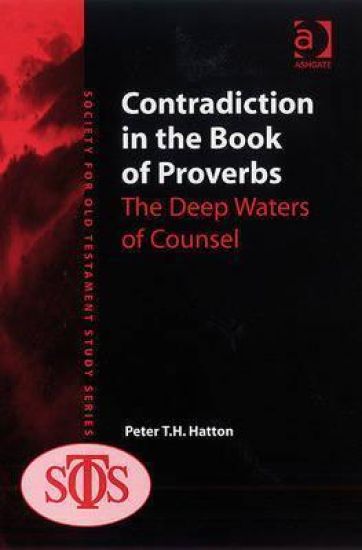
Contradiction in the Book of Proverbs

Contradiction in the Book of Proverbs

Peter Hatton

Ashgate Publishing Limited
2008
sidottu
Despite the welcome revival of scholarly interest in Biblical Wisdom, the Book of Proverbs remains neglected. It continues to be seen as a disorganised repository of traditional banalities, while Job and Qohelet are viewed as more exciting texts, in revolt against Proverbs' conventional wisdom. Contradiction in the Book of Proverbs argues that this misleading consensus owes more to scholarly presuppositions than to the content of Proverbs; it sees Proverbs as a challenging work, one that aims to provoke a critical appropriation of wisdom and in which diverse sources have been skilfully brought together by a creative final editor to form a complex unity. Many divergences from the Hebrew in the Greek witness to the translator's discomfort with his spikey, provocative original. Peter Hatton challenges many existing scholarly assumptions and calls for a re-evaluation of the role and significance of Proverbs in relation to the other biblical wisdom books and the whole canon.
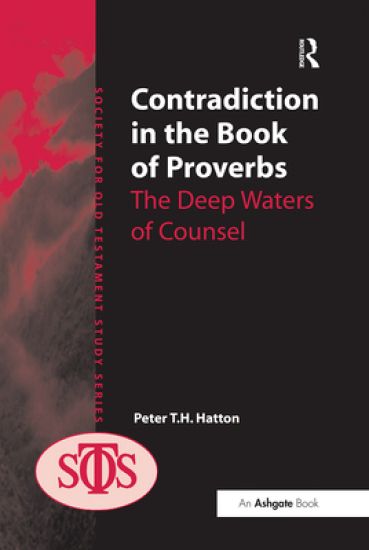
Contradiction in the Book of Proverbs

Contradiction in the Book of Proverbs

Peter Hatton

Taylor Francis Ltd
2021
nidottu
Despite the welcome revival of scholarly interest in Biblical Wisdom, the Book of Proverbs remains neglected. It continues to be seen as a disorganised repository of traditional banalities, while Job and Qohelet are viewed as more exciting texts, in revolt against Proverbs' conventional wisdom. Contradiction in the Book of Proverbs argues that this misleading consensus owes more to scholarly presuppositions than to the content of Proverbs; it sees Proverbs as a challenging work, one that aims to provoke a critical appropriation of wisdom and in which diverse sources have been skilfully brought together by a creative final editor to form a complex unity. Many divergences from the Hebrew in the Greek witness to the translator's discomfort with his spikey, provocative original. Peter Hatton challenges many existing scholarly assumptions and calls for a re-evaluation of the role and significance of Proverbs in relation to the other biblical wisdom books and the whole canon.
Joseph Conrad and the Narration of Silence

Joseph Conrad and the Narration of Silence

John Peters

EDINBURGH UNIVERSITY PRESS
2024
sidottu
Joseph Conrad and the Narration of Silence investigates how Conrad's narrators speak without speaking, focusing first on what is unsayable and then on what is unsaid. Silences (both literal and metaphorical) occur throughout Conrad's writings, and all connect in a meaningful manner to the speech of Conrad's narrators. Readers have frequently commended Conrad's distinct narrative style. These commentaries on narrative have made many valuable contributions. However, this book considers what happens when Conrad's narrators do not narrate when they are instead silent. In these gaps between what is said and what is unsaid, meaning may emerge. In short, the absence of speaking brings about meaningful moments of narrative memory when one discovers what cannot be contained within the narrator's narrative alone: An incremental progression toward questions concerning the nature of knowledge, the nature of human existence, and the nature of the universe.
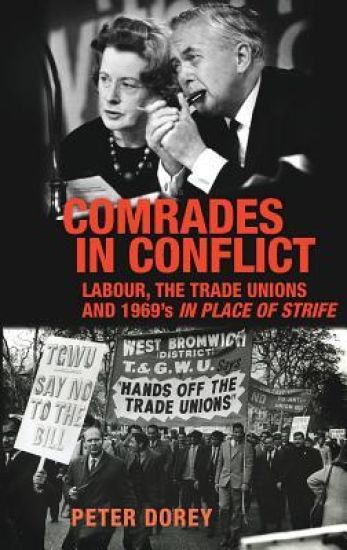
Comrades in Conflict

Comrades in Conflict

Peter Dorey

Manchester University Press
2019
sidottu
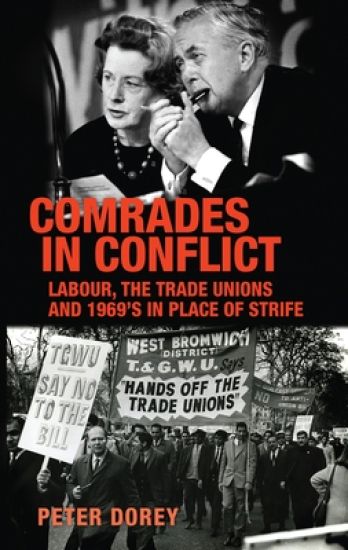
On the 50th anniversary of In Place of Strife, this scholarly study makes extensive use of previously unpublished archival and other primary sources to explain why Harold Wilson and Barbara Castle embarked on legislation to regulate the trade unions and curb strikes, and why this aroused such strong opposition, not just from the unions, but within the Cabinet and among backbench Labour MPs. This opposition transcended the orthodox ideological divisions, making temporary allies of traditional adversaries in the Party. Even Wilson’s threats either to resign, or call a general election, if his MPs and Ministers failed to support him and Castle, were treated with derision. His colleagues called Wilson’s bluff, and forced him to abandon the legislation, in return for a ‘solemn and binding’ pledge by the trade unions to ‘put their own house in order’ in tackling strikes.
Comrades in Conflict

Comrades in Conflict

Peter Dorey

Manchester University Press
2020
nidottu
On the 50th anniversary of In Place of Strife, this scholarly study makes extensive use of previously unpublished archival and other primary sources to explain why Harold Wilson and Barbara Castle embarked on legislation to regulate the trade unions and curb strikes, and why this aroused such strong opposition, not just from the unions, but within the Cabinet and among backbench Labour MPs. This opposition transcended the orthodox ideological divisions, making temporary allies of traditional adversaries in the Party. Even Wilson’s threats either to resign, or call a general election, if his MPs and Ministers failed to support him and Castle, were treated with derision. His colleagues called Wilson’s bluff, and forced him to abandon the legislation, in return for a ‘solemn and binding’ pledge by the trade unions to ‘put their own house in order’ in tackling strikes.
Duce: The Contradictions of Power

Duce: The Contradictions of Power

Peter J. Williamson

C HURST CO PUBLISHERS LTD
2023
sidottu
Eighty years after the fall of Benito Mussolini, controversy remains about what his dictatorship represented. This reflects the different sides to the Duce's leadership: while adept at nurturing and enforcing his personal political power, Mussolini's lack of insight into the requirements of governance prevented him from converting this power into influence to achieve his goals. His efforts to maintain the support of Italy's conservative elites--economic, social and political--also created tensions with his radical Fascist ambitions, diminishing the momentum behind his regime. Mussolini is frequently portrayed as a charismatic leader, but his rule was secured principally by coercion, violence and a 'spoils system'. Nonetheless, his personality cult had significant popular appeal, even if based upon a political myth. This enabled him to consolidate his position and to dominate his Fascist colleagues--but at a price of over-centralised, dysfunctional decision-making. In this book, the first comprehensive English- language study of Mussolini in nearly two decades, Peter J. Williamson brings to life the contradictions within the Duce's leadership. Using a wide range of sources, Williamson reveals how these conflicts impeded the dictator's ambitions, leaving him increasingly frustrated, all while most Italians endured the severe privations of both failure and Fascism.
Paradoxes and Contradictions

Paradoxes and Contradictions

Peter P. Lewicke

Independently Published
2018
nidottu
Paradoxes and Contradictions is the sequel to Harry's Time Tours. It an an expansive and humorous overview of human development. Harry D. Black was born in 1982 in a different space-time. He studied Physics, programming, and time travel in college. After graduation, he was hired by Ouranos Corporation, the big time travel company, and he wrote software for them for several years, then he was transferred to training and troubleshooting. In 2014 for unknown reasons he was ejected from that space-time into this one. He arrived with a time machine and much of the documentation for it. This volume of Harry's activities is primarily about what happened subsequent to the Gods complaining about belligerent behavior of humans. Harry improved the matter, but physics required that what had happened couldn't be changed in this space-time.Paradoxes and Contradictions further details the life and activities of Harry and his partner, Mary. Highlights include bringing some people from the past into the Twenty-first century to cure them of what killed them, including Pope Joan, Edgar Allan Poe, and H. P. Lovecraft. The Gods asked how the universe could be improved. Harry's opinion was that it would be difficult or impossible to improve it, because of the deterministic nature of space-time. Harry's Interstellar subsidiary develops all of the Earth-like planets available, making Harry even wealthier. There is more potential in the Interstellar division, but it also produces problems, and as Earthers seek to escape Earth in greater numbers, there certainly will be more problems. In his centuries long career, remember the advantage of the pandemic virus, Harry changes history in the hope of improving the present, but he had already told the clients (the Gods) that it wouldn't work right; it only causes the space-time to bifurcate, so this space-time would be unchanged, but the newly created space-time would have the change. As you should remember, the Really Great Pandemic created the situation behind most of Harry's activities, when it eliminated more than ninety percent of the Earth's population, and the enhancements to Everett's Universal Wave Theory that Devlin made in many versions of apace-time provided the tools that Harry needed. For fun and profit, he plunders buried loot, and Lovecraft recovers the actual Ark of the Covenant. And he even added to evolution, by accident.But Harry is more interested in the how and why, rather than simply the actions. In the course of other events, readers will also learn more about the Gods and Goddesses, such as what is the story with Ekwamedha? And does Hebe actually make people younger?Also learn the truth about some events in antiquity: What really happened to Atlantis? And where was it? You may not care what will happen in the twenty-seventh century, but some of that history lies at your fingertips, and saving people who had died in the past can be interesting. Pope Joan was a woman of her time, the Dark Ages, but that didn't prevent her from becoming educated, taking holy orders in the ninth century and being elected Pope, but it also resulted in her going into labor during a procession a few years later, and she would have died from injuries inflicted by people who didn't want the Pope bearing children. But after the Really Great Pandemic, there will be demand for women as priests, but Christianity will be dying by then, and the old Faith has no trouble accommodating women, but imagine how Pope Joan will think about that. readers regret that Edgar Allan Poe died as he did; Harry and Mary did something about that. T hey saved him from that original death and brought him to the twenty-second century to cure him of the underlying problems, and he has lived happily since then. H.P. Lovecraft was treated similarly. Paradoxes and Contradictions will expand your understanding of the past, present, and future, and of the philosophical underpinnings of all.
Joseph Conrad and the Narration of Silence

Joseph Conrad and the Narration of Silence

John Peters

EDINBURGH UNIVERSITY PRESS
2026
nidottu
Joseph Conrad and the Narration of Silence investigates how Conrad’s narrators speak without speaking, focusing first on what is unsayable and then on what is unsaid. Silences (both literal and metaphorical) occur throughout Conrad’s writings, and all connect in a meaningful manner to the speech of Conrad’s narrators. Readers have frequently commended Conrad’s distinct narrative style. These commentaries on narrative have made many valuable contributions. However, this book considers what happens when Conrad’s narrators do not narrate – when they are instead silent. In these gaps between what is said and what is unsaid, meaning may emerge. In short, the absence of speaking brings about meaningful moments of narrative memory when one discovers what cannot be contained within the narrator’s narrative alone: An incremental progression toward questions concerning the nature of knowledge, the nature of human existence, and the nature of the universe.
Theory of Bible Errors and contradictions
Theory of Bible Errors and Contradictions - Ministers' Essential Reference, will be of great importance to Christians who struggle with apparent contradictions in the Holy Scriptures. These apparent contradictions in the Holy Bible have also led many Christians to lose their faith and to backslide away from the fellowship and the church because they lack a way to understand the Bible's errors and contradictions.There are seven spiritual reasons why errors and contradictions are in the Bible There is no Holy Book on Earth, including the Bible and the Qur'an, written by the hands of men that have zero errors The holiest of all men will still misunderstand God, make mistakes, errors, omissions, corruptions, additions, and contradictions As a Minister of the Gospel of Jesus Christ, opponents of your faith will no longer put you to shame by pointing to apparent errors and contradictions in your Bible whereby you do not know how to respond because of your own ignorance in Bible Scholarship This book is the answer to the problems of Bible errors and contradictions, and they should therefore no more be the reason for you as a Christian to lose your Faith in Jesus Christ
Henrik Ibsens Peer Gynt

Henrik Ibsens Peer Gynt

Kåre Conradi

Cappelen Damm
2024
sidottu
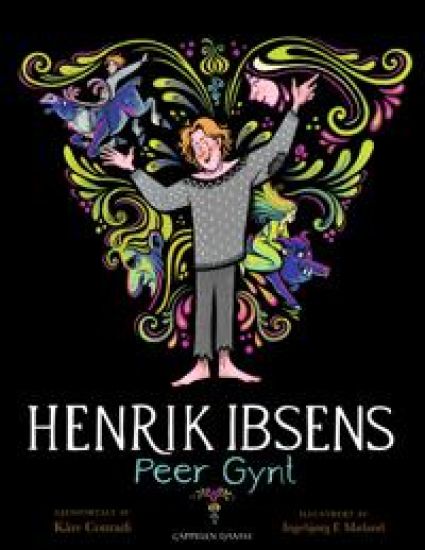
Peer Gynt er et av Henrik Ibsens mest berømte skuespill, nå gjenfortalt for barn, av skuespiller og kunsterisk leder for Ibsenkompaniet, Kåre Conradi. Boka er illustrert av Ingebjørg F. Mæland.Peer Gynt er en lystløgner og skrønemaker som vokser opp i en dal i Jotunheimen, omgitt av fjell og natur. Han er rastløs på gården og drømmer om et liv ute i det store utlandet. Men finner han seg selv der ute? Hvem er han, sånn egentlig? Og kommer hans Solveig til å vente på ham når han kommer hjem igjen?
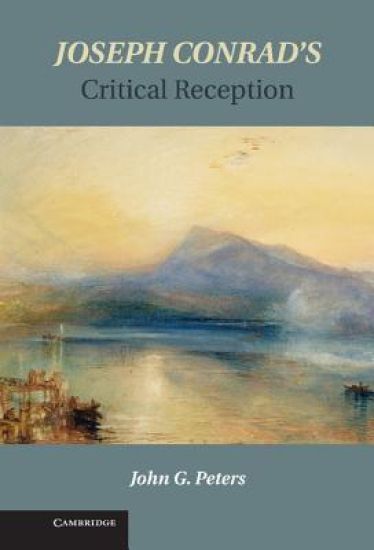
Joseph Conrad's Critical Reception

Joseph Conrad's Critical Reception

John G. Peters

Cambridge University Press
2013
sidottu
Throughout the twentieth and twenty-first centuries, Joseph Conrad's novels and short stories have consistently figured into - and helped to define - the dominant trends in literary criticism. This book is the first to provide a thorough yet accessible overview of Conrad scholarship and criticism spanning the entire history of Conrad studies, from the 1895 publication of his first book, Almayer's Folly, to the present. While tracing the general evolution of the commentary surrounding Conrad's work, John G. Peters's careful analysis also evaluates Conrad's impact on critical trends such as the belles lettres tradition, the New Criticism, psychoanalysis, structuralist and post-structuralist criticism, narratology, postcolonial studies, gender and women's studies, and ecocriticism. The breadth and scope of Peters's study make this text an essential resource for Conrad scholars and students of English literature and literary criticism.
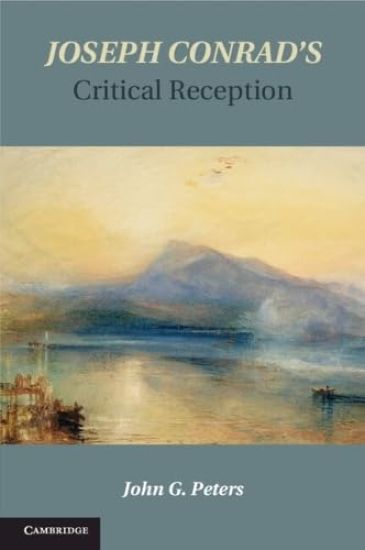
Joseph Conrad's Critical Reception

Joseph Conrad's Critical Reception

John G. Peters

Cambridge University Press
2023
nidottu
Throughout the twentieth and twenty-first centuries, Joseph Conrad's novels and short stories have consistently figured into - and helped to define - the dominant trends in literary criticism. This book is the first to provide a thorough yet accessible overview of Conrad scholarship and criticism spanning the entire history of Conrad studies, from the 1895 publication of his first book, Almayer's Folly, to the present. While tracing the general evolution of the commentary surrounding Conrad's work, John G. Peters's careful analysis also evaluates Conrad's impact on critical trends such as the belles lettres tradition, the New Criticism, psychoanalysis, structuralist and post-structuralist criticism, narratology, postcolonial studies, gender and women's studies, and ecocriticism. The breadth and scope of Peters's study make this text an essential resource for Conrad scholars and students of English literature and literary criticism.
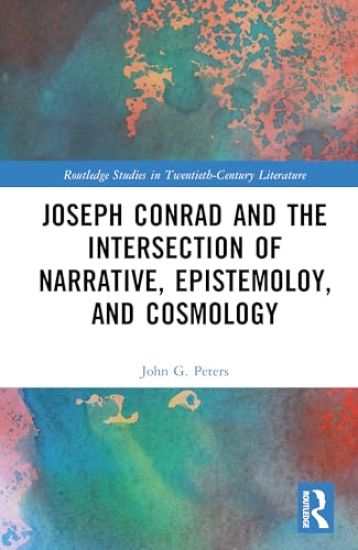
Joseph Conrad and the Intersection of Narrative, Epistemology, and Cosmology
This volume presents a comprehensive collection of critical essays on Joseph Conrad's works, developed over three decades of scholarly engagement. While addressing diverse aspects of Conrad's oeuvre, these studies are unified by a consistent methodological approach and thematic focus that distinguishes this collection from existing scholarship. Methodologically, this work employs an inductive hermeneutical framework that diverges from predominantly deductive approaches in contemporary literary criticism. Rather than imposing predetermined theoretical constructs, these analyses proceed from close examination of specific textual elements to derive broader interpretive conclusions, allowing for more nuanced readings of Conrad's complex narrative strategies. Thematically, the essays concentrate on three interconnected dimensions: narrative methodology, worldview, and epistemological concerns—elements constituting the foundational architecture of Conrad's fictional universe. The collection demonstrates how these aspects function as an integrated system of meaning-making within his works. The volume includes a substantial introduction elucidating the relationship between epistemology, cosmology, and narratology in Conrad's fiction. This framework reveals how Conrad's understanding of human knowledge's nature and limits finds expression through his distinctive narrative techniques, while his cosmological vision manifests in fundamental questions of what can and cannot be known within the Conradian cosmos.
Conrad and Impressionism

Conrad and Impressionism

John G. Peters

Cambridge University Press
2007
pokkari
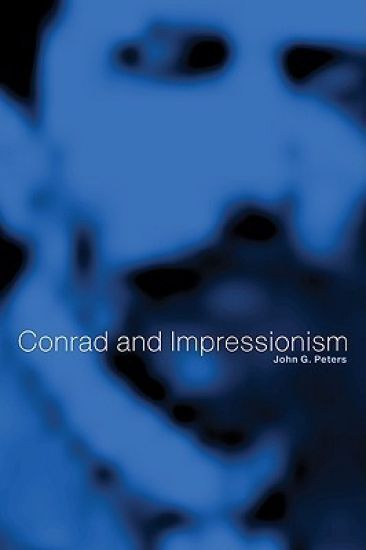
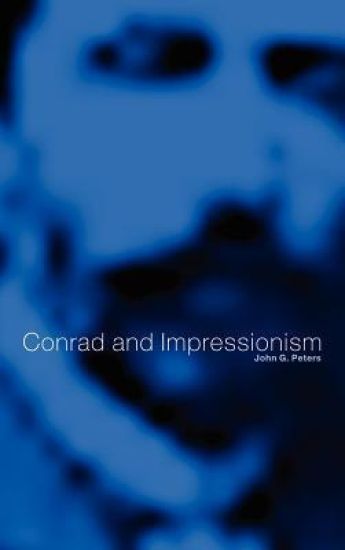
In this 2001 book, John Peters investigates the impact of Impressionism on Conrad and links this to his literary techniques as well as his philosophical and political views. Impressionism, Peters argues, enabled Conrad to encompass both surface and depth not only in visually perceived phenomena but also in his narratives and objects of consciousness, be they physical objects, human subjects, events or ideas. Though traditionally thought of as a sceptical writer, Peters claims that through Impressionism Conrad developed a coherent and mostly traditional view of ethical and political principles, a claim he supports through reference to a broad range of Conrad's texts. Conrad and Impressionism investigates the sources and implications of Conrad's impressionism in order to argue for a consistent link between his literary technique, philosophical presuppositions and socio-political views. The same core ideas concerning the nature of human experience run throughout his works.
Conrad and Impressionism

Conrad and Impressionism

John G. Peters

Cambridge University Press
2001
sidottu
In this 2001 book, John Peters investigates the impact of Impressionism on Conrad and links this to his literary techniques as well as his philosophical and political views. Impressionism, Peters argues, enabled Conrad to encompass both surface and depth not only in visually perceived phenomena but also in his narratives and objects of consciousness, be they physical objects, human subjects, events or ideas. Though traditionally thought of as a sceptical writer, Peters claims that through Impressionism Conrad developed a coherent and mostly traditional view of ethical and political principles, a claim he supports through reference to a broad range of Conrad's texts. Conrad and Impressionism investigates the sources and implications of Conrad's impressionism in order to argue for a consistent link between his literary technique, philosophical presuppositions and socio-political views. The same core ideas concerning the nature of human experience run throughout his works.