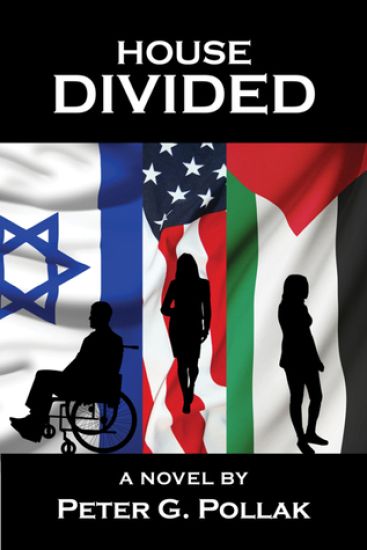
In House Divided, Peter G. Pollak's fifth thriller, Leonard and Alison Robbins disagree how big a mistake their college student daughter is making by joining the radical Students for Palestinian Justice (SPJ). Alison believes Courtney needs to be allowed to make her own decisions, but retired CIA agent Leonard Robbins, who heads up a counterterrorism task force, fears she's being used. Neither, however, foresee the real danger. Anti-Israeli terrorists are recruiting SPJ members to bomb Jewish organizations.Can Robbins' task force find and stop the terrorists before they claim more innocent victims? Will Courtney Robbins figure out the truth about SPJ before it's too late? House Divided is the story of a war no family should have to fight.
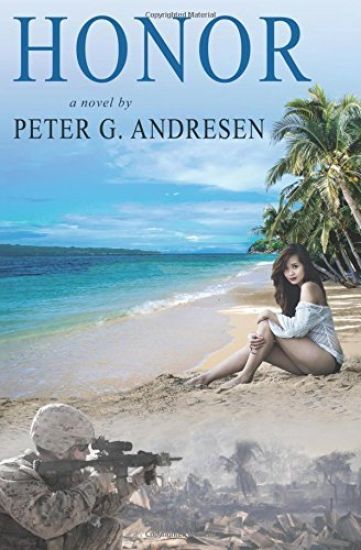
Garth Ericson is a Marine Corps infantry veteran with years of service. He's recovering from the wounds of a friendly-fire accident in Iraq. Coming home to rural California is harder than he thought. His wife has left him, and he is grappling with post traumatic stress disorder. After restarting his work as an investment advisor he feels disconnected from amoral corporate America, and the civilian world seems insane. Then he meets a Filipina-American, the widow of his friend, and the whole world changes. Honor is a hard-hitting novel about the changing American experience, and the conflicts of tradition, commitment, and new freedoms. It offers a deep examination of our shifting values, and the challenges those changes bring into all our lives.
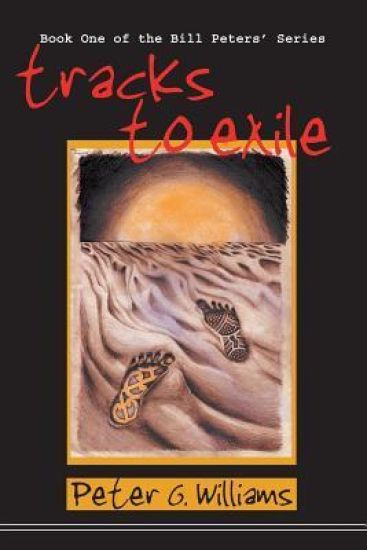
"Tracks to Exile" is book 1 of a contemporary crime action series starring the Authors fictional son Bill Peters as a strong but inevitably flawed male hero. The Author has pre written the next 4 books of the Tracks series which are currently being edited for publication in the near future so that the reader will have a series of five completed books. "Tracks of the Purple Camel" "Back Tracks" "Angel Tracks" and "Tracks from Tamworth to the Taliban" will follow Bill's rollicking fast paced adventures as he battles the baddies all over the world based from Australia and his original home of New Zealand. With the Author compared by some to the successful Aussie Author Robert G Barrett and his hero Les Norton the appeal is to both men and woman readers and the total literary works have been described by a significant Australian literary agent as "an accomplished work." In Book 1 we are introduced to Bill Peters as a young man with a tragic past and an uncertain future. He is inserted as an undercover agent into New Zealand's foremost criminal gang the Te Kuri (the dogs) and following the terrible conclusion of that operation he is sent to Australia. Once there Bill is caught in bed with the New South Wales Police Commissioners wife and is forced to run for his life from the corrupt commissioner and his forces.The fast paced tale takes Bill to Kalgoorlie to Perth and to Broome in Western Australia as he endures diverse adventures and seeks to avenge the deaths of those he most loved.
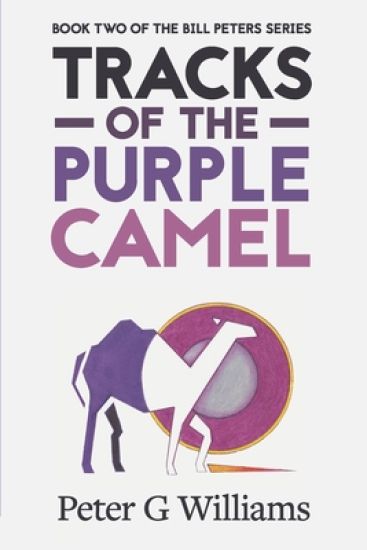
Tracks of the Purple Camel follows Bill Peter's exploits in Broome, north-west Australia. Bill is tasked by the Australian Federal Police to assist them to investigate a mass murder at a concert in Sydney NSW by fatally tainted ecstasy pills from Amsterdam, Holland. But, typically for Bill, his efforts are stymied by unexpected tribulations, often brought about by his own somewhat flawed character. Peter G Williams' trademark black humour adds spice and moments of hilarity to this rollicking tale set in one of the world's most beautiful locations.
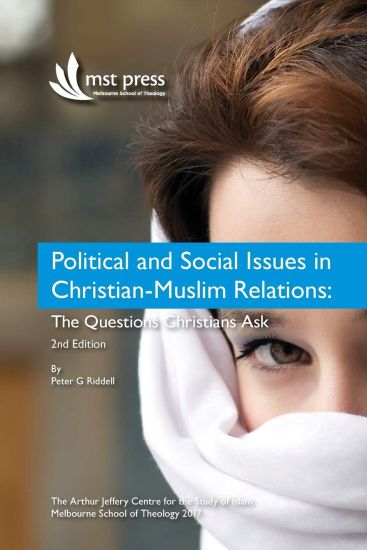
The first edition of this work appeared as Chapter 6 in my book, Christians and Muslims: Pressures and potential in a post-9/11 world (Leicester: Inter-Varsity Press, 2004).1 That volume represented the published version of the London Lectures in Contemporary Christianity for 2003, for which the late Rev Dr John Stott was Patron and which I delivered at the London Institute for Contemporary Christianity. The period of those 2003 lectures was especially dynamic in terms of Christian-Muslim relations, coming in the wake of the Al-Qaeda terrorist attacks on the World Trade Centre in New York and the Pentagon on September 11, 2001. The audiences for the 2003 lectures were particularly interested to pose questions on political and social issues as they relate to Christian-Muslim relations. The 9/11 terrorist attacks did not represent the beginning of the current wave of Islamic resurgence. In fact, the dynamic resurgence of Islamic identity that we are witnessing today has been underway across the world since the 1970s. This has been fuelled by rapidly increasing revenue for the Islamic world from oil income, and new or resurrected expressions of Islam have come to the fore. On the one hand, some Muslims have pushed at the boundaries of liberal thinking, seeking to bring the world of Islam into the era of human rights, the digital age and cyberspace. At the same time, rapid progress has produced a throwback mentality among some Muslims, expressed in threatening terms by fundamentalist movements, including radical groups such as the notorious Al-Qaeda, the IslamicState in Iraq and Syria and the lesser known Hizbut Tahrir. At the same time, dramatic movements of Muslim populations have led to the rise of significant Muslim minority communities hosting these various expressions of Islamic faith in Western countries. In Britain, for example, the Muslim community has grown from around 400,000 in the mid-1970s to well over 3,000,000 today. Australia has seen its Muslim minority grow during the same period from barely 20,000 to over 600,000. Similar growth has taken place in other Western countries.
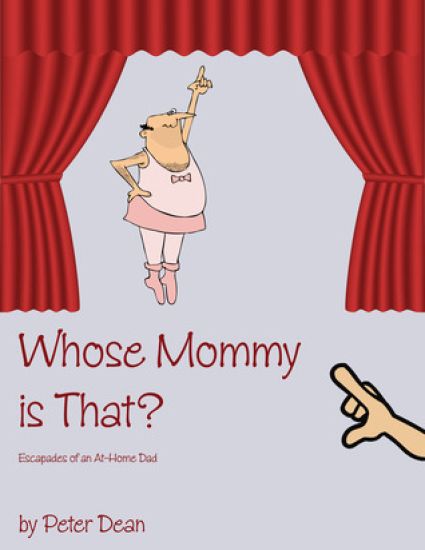
"Don't let him stay home," was what author Peter Dean's mother advised his future wife in the months prior to their wedding. Unusual advice from a future mother-in-law but it was her constant refrain. But stay home is exactly what Peter did with the birth of their first child. Peter joined the small but growing ranks of At-Home Dads. A couple of years later, the Dean roster expanded and now he had a child for each hand. "Whose Mommy Is That?" is Peter's humorous memoir from the early years of what he likes to call "The Greatest Job on the Planet." For Peter's young children, each day was an adventure and even the most mundane activity could quickly become an eye-popping experience. "Whose Mommy Is That?" captures the fun, exuberance, and wonder of his children's younger years.
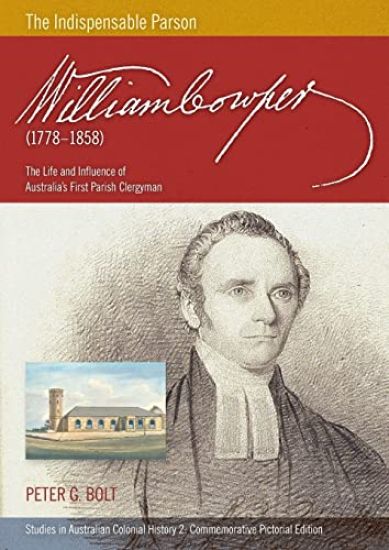
A short biography of Rev. William Cowper (1778-1858), Australia's first Parish Clergyman, illustrated with pictures of his times. The minister of St Philip's Sydney, Cowper exercised a profound influence on nineteenth century Sydney, and left an abiding legacy on the Anglican Diocese of Sydney. The illustrations bring nineteenth-century Sydney to life for contemporary readers.
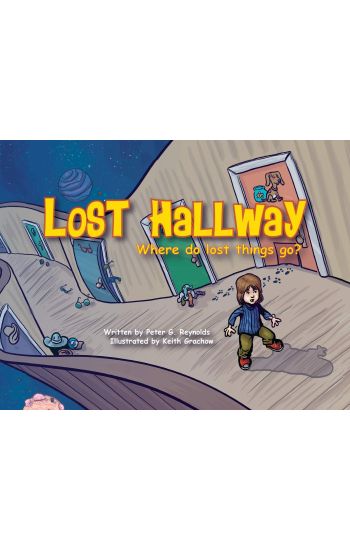
"Hail to Canada's Dr Seuss Peter G. Reynolds and Keith Grachow have produced a charming children's book that will make a perfect gift. Bravo " Robert J. Sawyer (Hugo and Nebula Award-winning author).Lost Hallway is a modern-day fairy tale that asks the question: Where do lost things go?Join Griffin as he searches for his dog and his ball and discovers the magical world of the Lost Hallway.
American-Soviet Relations (1993) is a study of American policy towards the Soviet Union from 1917 to the fall of Communism. It attempts to understand what precisely were the roots of the Cold War and an analysis of the later relationship in the light of the Soviet Union’s evolution since the Revolution. It argues that American policy was shaped not only by the external threat from the USSR but also by internal forces within American society, domestic politics, economic interests, emotional and psychological attitudes and images of the Soviet Union.
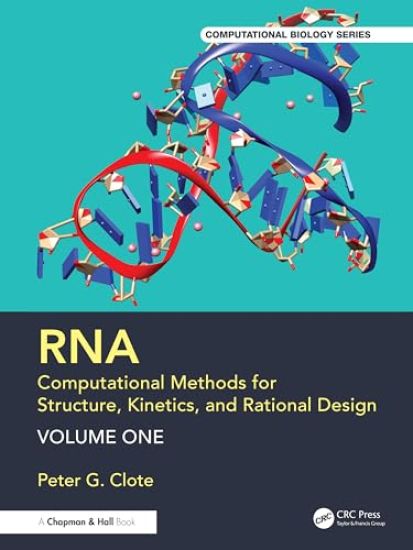
Comprising two volumes, RNA: Computational Methods for Structure, Kinetics, and Rational Design is a comprehensive treatment of computational methods concerning the secondary structure, folding kinetics and rational design of RNA.Volume One concerns energy and structure and is divided into five chapters. Chapter 1 describes the molecular structure of ribonucleotides, basic classes of RNA and databases of RNA sequences and structure. Chapter 2 presents the basic concepts of thermodynamics, since thermodynamics-based algorithms constitute an essential tool in rational design of functional RNA molecules. Chapter 3 describes how empirical secondary structure energy parameters are obtained from ultraviolet absorbance experiments via Van 't Hoff plots and least-squares data fitting. Chapter 4 describes methods from combinatorics, automata and formal language theory, and complex analysis. Chapter 5 provides an overview of some of the most important thermodynamics-based algorithms related to secondary structure. Exercises and solutions are provided at the end of every chapter and source code is available at the book's website (sometimes including computer programs using Python and extensions Numpy and Scipy).This book provides the nuts, bolts and tools to take the next steps in computational RNA synthetic biology. It is perfect for advanced undergraduate, graduate and post-graduate readers having analytical interests and skills from areas such as physical chemistry, physics, mathematics, computer science, and statistics.