Kirjojen hintavertailu. Mukana 11 342 296 kirjaa ja 12 kauppaa.

Kirjahaku

Etsi kirjoja tekijän nimen, kirjan nimen tai ISBN:n perusteella.

1000 tulosta hakusanalla Peter J. Perry

Unruly Complexity

Unruly Complexity

Peter J. Taylor

University of Chicago Press
2005
nidottu
Ambitiously identifying fresh issues in the study of complex systems, Peter J. Taylor, in a model of interdisciplinary exploration, makes these concerns accessible to scholars in the fields of ecology, environmental science, and science studies. Unruly Complexity explores concepts used to deal with complexity in three realms: ecology and socio-environmental change; the collective constitution of knowledge; and interpretations of science as they influence subsequent research. For each realm Taylor shows that unruly complexity - situations that lack definite boundaries, where what goes on "outside" continually restructures what is "inside," and where diverse processes come together to produce change - should not be suppressed by partitioning complexity into well-bounded systems that can be studied or managed from an outside vantage point. Using case studies from Australia, North America, and Africa, he encourages readers to be troubled by conventional boundaries - especially between science and the interpretation of science - and to reflect more self-consciously on the conceptual and practical choices researchers make.
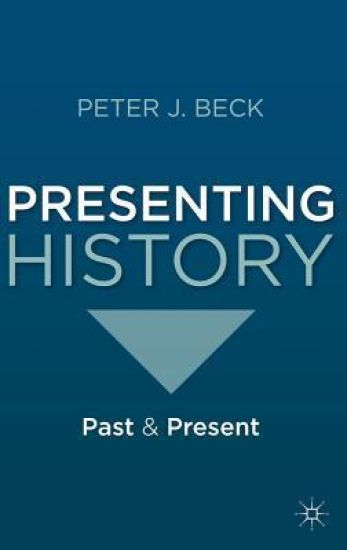
Presenting History

Presenting History

Peter J. Beck

Red Globe Press
2011
sidottu
Who reads academic histories? Should historians reach out more beyond academia to the general public? Why do Hollywood films, historical novels and television histories prove more successful in presenting the past to a wider audience? What can historians do to improve their effectiveness in reaching and engaging their target audience in a digital age?The way history is presented to an audience is often taken for granted, even ignored. Presenting History explores the vital role played by presenters in both establishing why history matters in today's world and communicating the past to audiences within and outside academia. Through case studies of leading historians, historical novelists, Hollywood filmmakers and television history presenters, this book looks critically at alternative literary and visual ways of presenting the past as both academic history and popular history.Historians discussed include Stephen Ambrose, Niall Ferguson, Eric Hobsbawm, Robert A. Rosenstone, Simon Schama, Joan Wallach Scott and A.J.P. Taylor. Chapter topics include Hollywood and history; Michael Bellesiles' controversial history of gun rights in the USA; Philippa Gregory's historical novels; historians and the David Irving trial; and Terry Deary's 'Horrible Histories'.Raising serious questions about the nature, study and communication of history, Presenting History is an essential text for historians and history students, as well as anyone involved in listening to, reading, or watching presenters of the past.
Presenting History

Presenting History

Peter J. Beck

Red Globe Press
2011
nidottu
Who reads academic histories? Should historians reach out more beyond academia to the general public? Why do Hollywood films, historical novels and television histories prove more successful in presenting the past to a wider audience? What can historians do to improve their effectiveness in reaching and engaging their target audience in a digital age?The way history is presented to an audience is often taken for granted, even ignored. Presenting History explores the vital role played by presenters in both establishing why history matters in today's world and communicating the past to audiences within and outside academia. Through case studies of leading historians, historical novelists, Hollywood filmmakers and television history presenters, this book looks critically at alternative literary and visual ways of presenting the past as both academic history and popular history.Historians discussed include Stephen Ambrose, Niall Ferguson, Eric Hobsbawm, Robert A. Rosenstone, Simon Schama, Joan Wallach Scott and A.J.P. Taylor. Chapter topics include Hollywood and history; Michael Bellesiles' controversial history of gun rights in the USA; Philippa Gregory's historical novels; historians and the David Irving trial; and Terry Deary's 'Horrible Histories'.Raising serious questions about the nature, study and communication of history, Presenting History is an essential text for historians and history students, as well as anyone involved in listening to, reading, or watching presenters of the past.
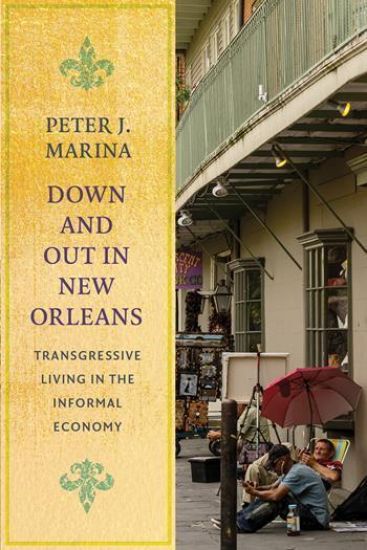
Down and Out in New Orleans

Down and Out in New Orleans

Peter J. Marina

Columbia University Press
2017
sidottu
In the years since Hurricane Katrina, the modern-day bohemians of New Orleans have found themselves forced to the edges of poverty by the new tourist economy. Modeling his work after George Orwell's Down and Out in Paris and London, the sociologist and ethnographer Peter J. Marina explores this unfamiliar side of the gentrifying "new" New Orleans. In 1920s Paris, Orwell witnessed an influx of locals and outsiders seeking authenticity while struggling to live with bourgeois society. Marina finds a similar ambivalence in New Orleans: a tourism-dependent city whose commerce caters largely to well-heeled natives and upper-class travelers, where many creative locals and wanderers have remained outsiders, willingly or otherwise. Marina does not merely interview these spirited urban misfits-he lives among them. Down and Out in New Orleans follows their journeys, depicting the lives of those on the social fringes of a resilient city. Marina finds work as a bartender, street mime, and poet. Along the way, he visits homeless shelters, squats in abandoned buildings, attends rituals in cemeteries, and befriends writers, musicians, occultists, and artists as they look for creative solutions to the contradictory demands of late capitalism. Marina does for New Orleans what Orwell did for Paris a century earlier, providing a rigorous, unrelenting, and original glimpse into the subcultures of a city in rapid change.
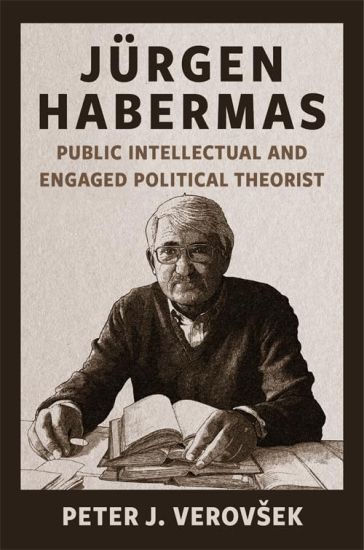
Jürgen Habermas

Jürgen Habermas

Peter J. Verovšek

Columbia University Press
2026
sidottu
Ju¨rgen Habermas is Germany’s most important postwar philosopher, the leading figure of the Frankfurt School in this period. He is best known for the concept of the public sphere, which forms the basis of his communicative understanding of democratic politics. Habermas has not only theorized the public sphere—he has also taken part in it through frequent commentary on current social, political, and cultural issues. Yet since Habermas’s extensive public-facing writings have been overlooked, his philosophy has often been criticized as apolitical. This book transforms our understanding of Habermas by focusing on his work as a public intellectual, showing how he has shaped debates far beyond the ivory tower. Peter J. Verovšek argues that while Habermas maintains a strict separation between his academic and his public-facing writings, he has also ensured that these two aspects of his work are part of a consistent whole. The book highlights the development of Habermas’s views over time and the changing nature of his public interventions. His early political writings focused on questions tied to the particular situation of postwar West Germany, but since 1989 he has increasingly turned his attention to the future of Europe and global politics more broadly. Verovšek sheds light on the interrelationship between Habermas’s participation in the public sphere and his theoretical work, demonstrating that his political engagement is crucial to understanding his philosophy. In a moment when public debate is under threat, this book offers timely new insight into Habermas’s lifelong project of defending the public sphere—both in theory and in practice.
Jürgen Habermas

Jürgen Habermas

Peter J. Verovšek

Columbia University Press
2026
pokkari
Ju¨rgen Habermas is Germany’s most important postwar philosopher, the leading figure of the Frankfurt School in this period. He is best known for the concept of the public sphere, which forms the basis of his communicative understanding of democratic politics. Habermas has not only theorized the public sphere—he has also taken part in it through frequent commentary on current social, political, and cultural issues. Yet since Habermas’s extensive public-facing writings have been overlooked, his philosophy has often been criticized as apolitical. This book transforms our understanding of Habermas by focusing on his work as a public intellectual, showing how he has shaped debates far beyond the ivory tower. Peter J. Verovšek argues that while Habermas maintains a strict separation between his academic and his public-facing writings, he has also ensured that these two aspects of his work are part of a consistent whole. The book highlights the development of Habermas’s views over time and the changing nature of his public interventions. His early political writings focused on questions tied to the particular situation of postwar West Germany, but since 1989 he has increasingly turned his attention to the future of Europe and global politics more broadly. Verovšek sheds light on the interrelationship between Habermas’s participation in the public sphere and his theoretical work, demonstrating that his political engagement is crucial to understanding his philosophy. In a moment when public debate is under threat, this book offers timely new insight into Habermas’s lifelong project of defending the public sphere—both in theory and in practice.
Eat Right for Blood Type O

Eat Right for Blood Type O

Peter J. D'Adamo

Penguin Books Ltd
2011
nidottu
Stay healthy and achieve your ideal weight with the help of this portable and personal blood type guide. ___________It's science! Different blood types mean different body chemistries. Eating foods that your blood type can process easily can help you lose weight and ward off illness - as well as giving you bags of energy.Based on your genetic make-up, EAT RIGHT 4 YOUR BLOOD TYPE means eating foods that are compatible with your individual chemistry. For example, if your blood type is O, then you will enjoy your best health on a high protein, low carbohydrate diet. Carry this handy checklist with you wherever you go, so you can make the right food choices in the supermarket, while eating out or on holiday. Inside are comprehensive listings of what's right for Type O in all of the main food, drink and supplement categories, so you can avoid putting on those extra pounds or feeling unwell from eating the wrong thing.Soon you'll be on your way to developing the perfect prescription plan for your type.
Eat Right for Blood Type A

Eat Right for Blood Type A

Peter J. D'Adamo

Penguin Books Ltd
2011
nidottu
Stay healthy and achieve your ideal weight with the help of this portable and personal blood type guide. ___________It's science! Different blood types mean different body chemistries. Eating foods that your blood type can process easily can help you lose weight and ward off illness - as well as giving you bags of energy.Based on your genetic make-up, EAT RIGHT 4 YOUR BLOOD TYPE means eating foods that are compatible with your individual chemistry. For example, if your blood type is A, then you will enjoy your best health on a vegetarian diet.Carry this handy checklist with you wherever you go, so you can make the right food choices in the supermarket, while eating out or on holiday. Inside are comprehensive listings of what's right for Type A in all of the main food, drink and supplement categories, so you can avoid putting on those extra pounds or feeling unwell from eating the wrong thing.Soon you'll be on your way to developing the perfect prescription plan for your type.
Eat Right For Blood Type B

Eat Right For Blood Type B

Peter J. D'Adamo

Penguin Books Ltd
2011
nidottu
Stay healthy and achieve your ideal weight with the help of this portable and personal blood type guide. ___________It's science! Different blood types mean different body chemistries. Eating foods that your blood type can process easily can help you lose weight and ward off illness - as well as giving you bags of energy.Based on your genetic make-up, EAT RIGHT 4 YOUR BLOOD TYPE means eating foods that are compatible with your individual chemistry. For example, if your blood type is B, then you will enjoy your best health on a varied diet, including plenty of protein and some dairy. Carry this handy checklist with you wherever you go, so you can make the right food choices in the supermarket, while eating out or on holiday. Inside are comprehensive listings of what's right for Type B in all of the main food, drink and supplement categories, so you can avoid putting on those extra pounds or feeling unwell from eating the wrong thing.Soon you'll be on your way to developing the perfect prescription plan for your type.
Eat Right for Blood Type AB

Eat Right for Blood Type AB

Peter J. D'Adamo

Penguin Books Ltd
2011
nidottu
Stay healthy and achieve your ideal weight with the help of this portable and personal blood type guide. ___________It's science! Different blood types mean different body chemistries. Eating foods that your blood type can process easily can help you lose weight and ward off illness - as well as giving you bags of energy.Based on your genetic make-up, EAT RIGHT 4 YOUR BLOOD TYPE means eating foods that are compatible with your individual chemistry. For example, if your blood type is AB, then you will enjoy your best health on a mainly vegetarian diet, with some fish and seafood. Carry this handy checklist with you wherever you go, so you can make the right food choices in the supermarket, while eating out or on holiday. Inside are comprehensive listings of what's right for Type AB in all of the main food, drink and supplement categories, so you can avoid putting on those extra pounds or feeling unwell from eating the wrong thing.Soon you'll be on your way to developing the perfect prescription plan for your type.
Keeping Them Flying

Keeping Them Flying

Peter J. W. Jones

Lulu.com
2020
nidottu
The author joined the Fleet Air Arm in December 1950. During his 13+ years of service, he worked on many interesting Naval aircraft. A few years later, the 'jet' propelled aircraft would make their appearance, and to make room for those, his beloved piston-engine aircraft would have to go. By chance, the author spent a comparatively short time on aircraft carriers, due to his rapid selection for regular higher maintenance training, rising from Air Mechanic (2nd Class) to the top as Chief Petty Officer (Air Mechanician 1st Class).As his career drew to a close, larger Naval aircraft were entering service, and helicopters were becoming larger. Those marvellous aircraft, and talented pilots, were unable to fly without the efforts of maintenance personnel; the author's role was to assist in 'Keeping Them Flying'. His career finalised taking charge of a maintenance crew for a helicopter unit at the Dartmouth Britannia Naval College.
Poetry From The Countryside

Poetry From The Countryside

Peter J. W. Jones

Lulu.com
2019
nidottu
If you enjoy the country-side, reading or poetry, you will find 40 poems in this book that will interest you, which are enjoyable to read, covering topics that many readers will relate to.The collection has been written over the past 50 years whilst the author dwelt in rural surroundings, which inspired him to put into verse life as he witnessed it.If an interest in poetry has escaped you, this book will allow an ideal opening to the genre. Each poem, or verse, has been written in a manner that makes reading them a pleasure for all age groups. They span a variety of themes as diverse as the 'Trials of an Umpire' to a visit to 'Stow Horse Fair' or from a 'February Freeze' to a 'Summer's Dream'.Give in to temptation and open the book and begin reading to-day.
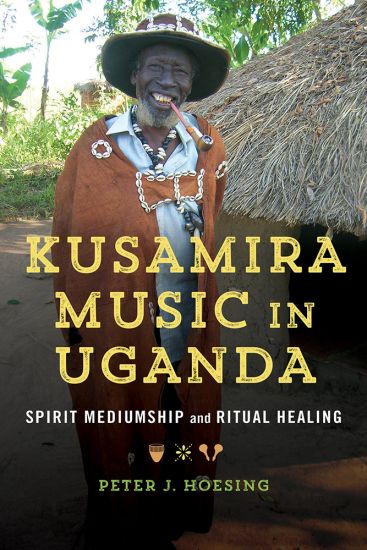
Kusamira Music in Uganda

Kusamira Music in Uganda

Peter J. Hoesing

University of Illinois Press
2021
sidottu
A performance culture of illness and wellness In southern Uganda, ritual healing traditions called kusamira and nswezi rely on music to treat sickness and maintain well-being. Peter J. Hoesing blends ethnomusicological fieldwork with analysis to examine how kusamira and nswezi performance socializes dynamic processes of illness, wellness, and health. People participate in these traditions for reasons that range from preserving ideas to generating strategies that allow them to navigate changing circumstances. Indeed, the performance of kusamira and nswezi reproduces ideas that remain relevant for succeeding generations. Hoesing shows the potential of this social reproduction of well-being to shape development in a region where over 80 percent of the population relies on traditional healers for primary health care. Comprehensive and vivid with eyewitness detail, Kusamira Music in Uganda offers insight into important healing traditions and the overlaps between expressive culture and healing practices, the human and other-than-human, and Uganda's past and future.
Light Through the Trees

Light Through the Trees

Peter J. Vagt

UNIVERSITY OF ILLINOIS PRESS
2022
sidottu
“I don’t compose pictures, I find them in the colors, patterns, and shadows of the trees in front of me. While I walk, I let my feelings well up in my consciousness. My feelings guide me to find what I’m seeing and feeling and distill it into a picture.”A beloved and popular Illinois institution, The Morton Arboretum welcomes one million annual visitors to walk its trails and view the 4,200 tree species on the grounds. Peter Vagt has photographed the Arboretum for over twenty years. This collection showcases eighty-five of his favorite works, each one in full color. Vagt's close attention to place and time reflects both his profound connection to the Arboretum and its preeminence as a sanctuary for anyone in search of transcendence in nature.A celebration of The Morton Arboretum in its centenary year, Light Through the Trees is the perfect keepsake or gift for anyone who admires trees and believes in their restorative power.
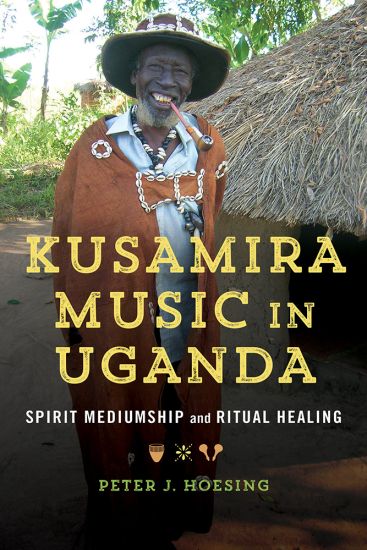
Kusamira Music in Uganda

Kusamira Music in Uganda

Peter J. Hoesing

University of Illinois Press
2021
nidottu
A performance culture of illness and wellness In southern Uganda, ritual healing traditions called kusamira and nswezi rely on music to treat sickness and maintain well-being. Peter J. Hoesing blends ethnomusicological fieldwork with analysis to examine how kusamira and nswezi performance socializes dynamic processes of illness, wellness, and health. People participate in these traditions for reasons that range from preserving ideas to generating strategies that allow them to navigate changing circumstances. Indeed, the performance of kusamira and nswezi reproduces ideas that remain relevant for succeeding generations. Hoesing shows the potential of this social reproduction of well-being to shape development in a region where over 80 percent of the population relies on traditional healers for primary health care. Comprehensive and vivid with eyewitness detail, Kusamira Music in Uganda offers insight into important healing traditions and the overlaps between expressive culture and healing practices, the human and other-than-human, and Uganda's past and future.
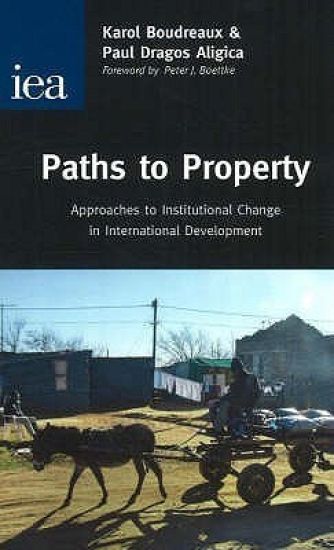
Paths to Property

Paths to Property

Peter J. Boettke

Institute of Economic Affairs
2007
nidottu
Sub-Saharan Africa has received tens of billions of dollars in foreign aid over the last fifty years, yet economic development has remained elusive. In many countries absolute poverty has increased and life expectancy has declined. Karol Boudreaux and Paul Aligica argue that instead of traditional approaches to development policy, the focus needs to be on adoption of sound political and legal institutions, with clearly defined and enforced private property rights to encourage entrepreneurship and economic growth. The authors examine several case studies of property rights reform in the developing world and suggest that universal policies applied regardless of local culture and tradition tend to fail. Reforms are more likely to succeed when they evolve gradually and are tailored to local norms and values rather than imposed from above by governments, aid agencies and supranational institutions.
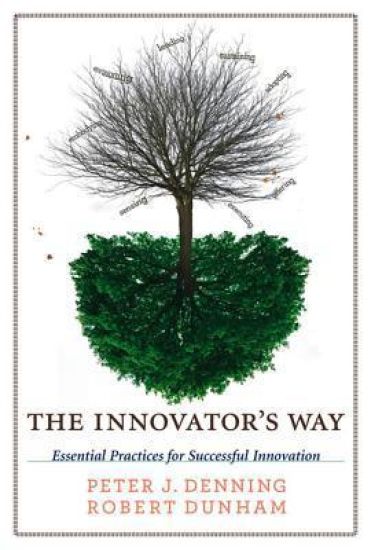
The Innovator's Way

The Innovator's Way

Peter J. Denning; Robert Dunham

MIT Press
2012
pokkari
Two experts show that innovation is a skill that can be learned and describe eight essential practices for achieving success.Innovation is the ruling buzzword in business today. Technology companies invest billions in developing new gadgets; business leaders see innovation as the key to a competitive edge; policymakers craft regulations to foster a climate of innovation. And yet businesses report a success rate of only four percent for innovation initiatives. Can we significantly increase our odds of success? In The Innovator's Way, innovation experts Peter Denning and Robert Dunham reply with an emphatic yes. Innovation, they write, is not simply an invention, a policy, or a process to be managed. It is a personal skill that can be learned, developed through practice, and extended into organizations.Denning and Dunham identify and describe eight personal practices that all successful innovators perform: sensing, envisioning, offering, adopting, sustaining, executing, leading, and embodying. Together, these practices can boost a fledgling innovator to success. Weakness in any of these practices, they show, blocks innovation. Denning and Dunham chart the path to innovation mastery, from individual practices to teams and social networks.
Great Principles of Computing

Great Principles of Computing

Peter J. Denning; Craig H. Martell; Vint Cerf

MIT Press
2015
pokkari
A new framework for understanding computing: a coherent set of principles spanning technologies, domains, algorithms, architectures, and designs.Computing is usually viewed as a technology field that advances at the breakneck speed of Moore's Law. If we turn away even for a moment, we might miss a game-changing technological breakthrough or an earthshaking theoretical development. This book takes a different perspective, presenting computing as a science governed by fundamental principles that span all technologies. Computer science is a science of information processes. We need a new language to describe the science, and in this book Peter Denning and Craig Martell offer the great principles framework as just such a language. This is a book about the whole of computing-its algorithms, architectures, and designs.Denning and Martell divide the great principles of computing into six categories: communication, computation, coordination, recollection, evaluation, and design. They begin with an introduction to computing, its history, its many interactions with other fields, its domains of practice, and the structure of the great principles framework. They go on to examine the great principles in different areas: information, machines, programming, computation, memory, parallelism, queueing, and design. Finally, they apply the great principles to networking, the Internet in particular.Great Principles of Computing will be essential reading for professionals in science and engineering fields with a "computational" branch, for practitioners in computing who want overviews of less familiar areas of computer science, and for non-computer science majors who want an accessible entry way to the field.
Computational Thinking

Computational Thinking

Peter J. Denning; Matti Tedre

MIT Press
2019
pokkari
An introduction to computational thinking that traces a genealogy beginning centuries before the digital computer.A few decades into the digital era, scientists discovered that thinking in terms of computation made possible an entirely new way of organizing scientific investigation; eventually, every field had a computational branch: computational physics, computational biology, computational sociology. More recently, “computational thinking” has become part of the K–12 curriculum. But what is computational thinking? This volume in the MIT Press Essential Knowledge series offers an accessible overview, tracing a genealogy that begins centuries before digital computers and portraying computational thinking as pioneers of computing have described it. The authors explain that computational thinking (CT) is not a set of concepts for programming; it is a way of thinking that is honed through practice: the mental skills for designing computations to do jobs for us, and for explaining and interpreting the world as a complex of information processes. Mathematically trained experts (known as “computers”) who performed complex calculations as teams engaged in CT long before electronic computers. The authors identify six dimensions of today's highly developed CT—methods, machines, computing education, software engineering, computational science, and design—and cover each in a chapter. Along the way, they debunk inflated claims for CT and computation while making clear the power of CT in all its complexity and multiplicity.