Cousin Phillis - And other Tales is an unchanged, high-quality reprint of the original edition of 1865. Hansebooks is editor of the literature on different topic areas such as research and science, travel and expeditions, cooking and nutrition, medicine, and other genres. As a publisher we focus on the preservation of historical literature. Many works of historical writers and scientists are available today as antiques only. Hansebooks newly publishes these books and contributes to the preservation of literature which has become rare and historical knowledge for the future.
Cousin Phillis - A Story of English Love is an unchanged, high-quality reprint of the original edition of 1895. Hansebooks is editor of the literature on different topic areas such as research and science, travel and expeditions, cooking and nutrition, medicine, and other genres. As a publisher we focus on the preservation of historical literature. Many works of historical writers and scientists are available today as antiques only. Hansebooks newly publishes these books and contributes to the preservation of literature which has become rare and historical knowledge for the future.
The book "" Aunt Phillis's Cabin; Or, Southern Life As It Is "" has been considered important throughout the human history, and so that this work is never forgotten we have made efforts in its preservation by republishing this book in a modern format for present and future generations. This whole book has been reformatted, retyped and designed. These books are not made of scanned copies and hence the text is clear and readable.
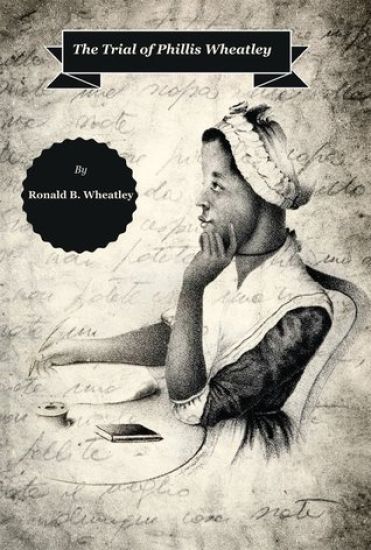
This beautifully illustrated story is a fictionalized version of the life story of Phillis Wheatley who was captured from the Senegambia area of West Africa. Although sold into slavery, she very quickly learnt to read and write. She became the first African-American to publish a book of poetry. This story about her life introduces her to young readers by highlighting some of her struggles as well as major accomplishments.
Cranford depicts the lives and preoccupations of the inhabitants of a small village - their petty snobberies and appetite for gossip, and their loyal support for each other in times of need. The village is dominated by women, from the kindly spinster Miss Matty, living in genteel poverty with her redoubtable sister, to Lady Glenmire, who shocks everyone by marrying the doctor. When men do appear, such as 'modern' Captain Brown or Matty's suitor from the past, they bring disruption and excitement to the everyday life of Cranford. This volume includes the novella Cousin Phillis, which depicts a fleeting love affair in a rural community at a time when old values are being supplanted by the new. Both works are exquisitely observed tragicomedies of human nature, told with great delicacy and affection.
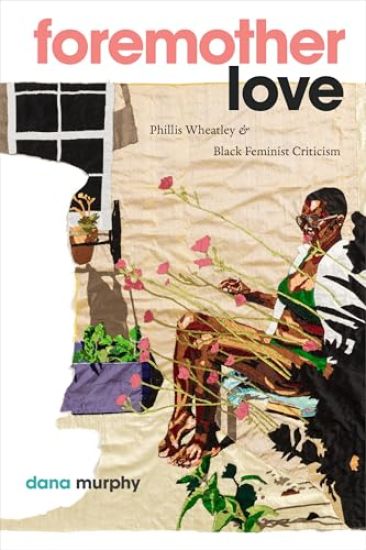
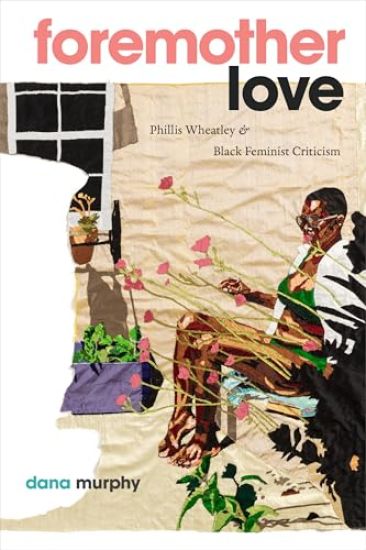
In Foremother Love, Dana Murphy examines the importance of eighteenth-century poet Phillis Wheatley as a foundational figure for Black feminist criticism. Murphy establishes Phillis (as she refers to her) as a writer who wrote in response to and in conversation with other creators as well as a critic who was invested in sharing, explaining, and evaluating her own and others' work and contexts. Indeed, Phillis played a key role in the development of what Murphy calls "foremother love"--the Black feminist depiction of the love of an unrelated feminist ancestor as a legitimate relation for the practice of inheritance, mourning, liberation, and friendship. Drawing on the work of Barbara Christian, June Jordan, Audre Lorde, Barbara Smith, and others, Murphy shows that Black feminist criticism becomes a transhistorical theorization when read in conjunction with Phillis's labor and vision. Revealing how Phillis lives on in Black feminist criticism, Murphy contends that foremother love is an ethic of critical care that implores readers to recognize the affective labor of all those working in the field.
In Foremother Love, Dana Murphy examines the importance of eighteenth-century poet Phillis Wheatley as a foundational figure for Black feminist criticism. Murphy establishes Phillis (as she refers to her) as a writer who wrote in response to and in conversation with other creators as well as a critic who was invested in sharing, explaining, and evaluating her own and others' work and contexts. Indeed, Phillis played a key role in the development of what Murphy calls "foremother love"--the Black feminist depiction of the love of an unrelated feminist ancestor as a legitimate relation for the practice of inheritance, mourning, liberation, and friendship. Drawing on the work of Barbara Christian, June Jordan, Audre Lorde, Barbara Smith, and others, Murphy shows that Black feminist criticism becomes a transhistorical theorization when read in conjunction with Phillis's labor and vision. Revealing how Phillis lives on in Black feminist criticism, Murphy contends that foremother love is an ethic of critical care that implores readers to recognize the affective labor of all those working in the field.
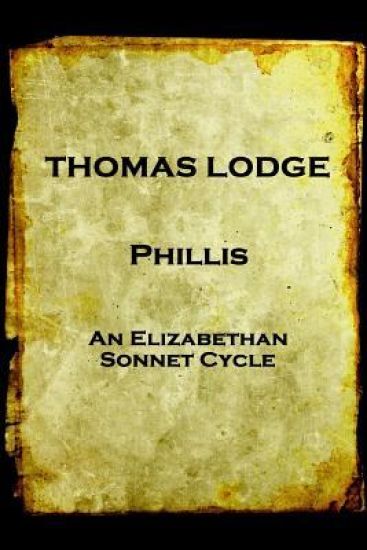
As can be easily understood presenting an exact chronicle of the facts in the life of a 16th Century playwright is often difficult. Thomas Lodge is no exception. Thomas Lodge, born around 1558 in west Ham, was the second son of Sir Thomas Lodge, the Lord Mayor of London, and his third wife Anne. Lodge was educated at Merchant Taylors' School and thence to Trinity College, Oxford; taking his BA in 1577 and his MA in 1581. Lodge, disregarded his parents career wishes in order to take up literature. When the penitent Stephen Gosson published his Schoole of Abuse in 1579, Lodge responded with Defence of Poetry, Music and Stage Plays (1579 or 1580). His pamphlet was banned, but appears to have been circulated privately. Already in 1580 Lodge had published a volume of poems entitled Scillaes Metamorphosis, Enterlaced with the Unfortunate Love of Glaucus, also more briefly known as Glaucus and Scilla. Lodge seems to have married his first wife Joan in or shortly before 1583, when, "impressed with the uncertainty of human life", he made a will. The marriage of Lodge and Joan produced a daughter, Mary. The debate in pamphlets between Lodge and Gosson continued with Gosson's Playes Confuted in Five Actions; and Lodge retorting with his Alarum Against Usurers (1585)-a "tract for the times". Lodge appears to have been at sea on a number of long voyages. Many nations endorsed these tactics and it seems fairly safe to suggest that these voyages were a source of revenue which would keep Joan and Mary with their heads above water. During the expedition to Terceira and the Canaries (around 1586), to set aside the tedium of his voyage, Lodge composed his prose tale of Rosalynde, Euphues Golden Legacie, which, printed in 1590, would later be used by Shakespeare as the basis for As You Like It. Before starting on his next voyage, this time to South America, Lodge published a historical romance, The History of Robert, Second Duke of Normandy, surnamed Robert the Devil; and he left behind him for publication Catharos Diogenes in his Singularity, a discourse on the immorality of Athens (London). Both appeared in 1591. It is thought that in 1590, together with Greene, he wrote A Looking Glass for London and England (published 1594). He had already written The Wounds of Civil War (produced perhaps as early as 1587, and published in 1594, and put on as a play reading at the Globe Theatre on 7 February 1606), a good second-rate piece in the half-chronicle fashion of its age. The composition of Phillis, a volume and an early sonnet cycle sequence (an increasingly popular format in Elizabethan times), was published with the narrative poem, The Complaynte of Elsired, in 1593. A Fig for Momus was published in 1595 and gained him the accolade of being the earliest English satiristIn the latter part of his life-possibly about 1596, when he published his Wits Miserie and the World's Madnesse, which is dated from Low Leyton in Essex, and the religious tract Prosopopeia (if, as seems probable, it was his), in which he repents of his "lewd lines" of other days-he became a Catholic and engaged in the practice of medicine, for which Wood says he qualified himself by a degree at Avignon, in France, in 1600. Two years later he received the degree of M.D. from Oxford University. Over the years he was increasingly recognized as a distinguished physician and finally worked from Old Fish Street in the parish of St. Mary Magdalen. Thomas Lodge died in London, most probably during an outbreak of the plague, in 1625.
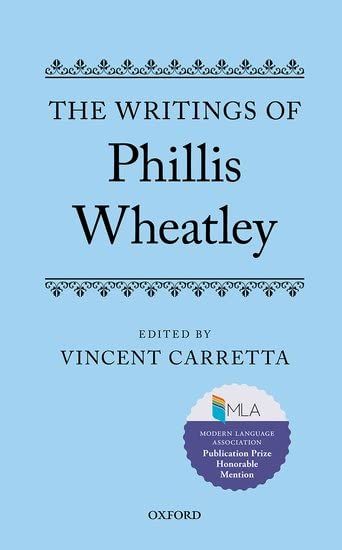
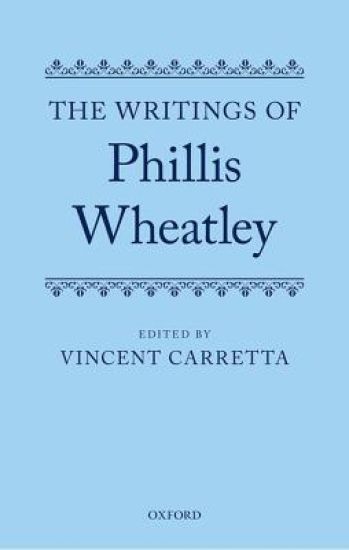
Honorable Mention, Modern Language Association Prize for a Scholarly Edition, Modern Language Association This edition includes all of the known surviving writings of the poet Phillis Wheatley Peters (1753-1784), several of which have been discovered since the last attempt at a complete edition was published in 2001. Of the fifty-seven poems, as well as their authoritative variants, forty-six were published during her lifetime. Versions of nine of them were published before September 1773. Wheatley Peters published thirty-eight works in Poems on Various Subjects, Religious and Moral (London, 1773). Only seven of her poems were published between 1773 and her death in 1784. Eleven poems survive only in manuscript versions. This edition also includes all of Wheatley Peters' extant prose writings: twenty-three letters and four subscription proposals. It includes as well the three known surviving letters written to Wheatley Peters. Wheatley Peters' writings are accompanied by an Introduction to her life and times, as well as extensive textual and explanatory notes.
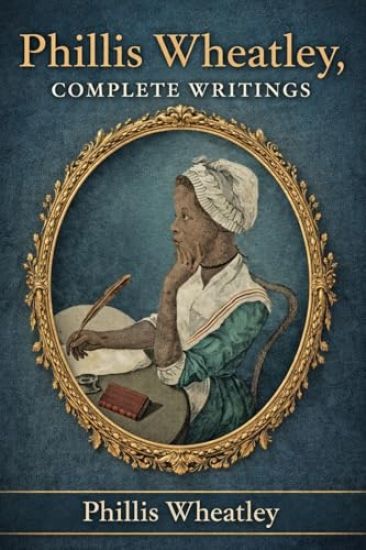
This edition includes all of the known surviving writings of the poet Phillis Wheatley (1753-1784), several of which have been discovered since the last attempt at a complete edition was published in 2001. Of the fifty-seven poems, as well as their authoritative variants, forty-six were published during her lifetime. Versions of nine of them were published before September 1773. Wheatley published thirty-eight works in Poems on Various Subjects, Religious and Moral (London, 1773). Only seven of her poems were published between 1773 and her death in 1784. Eleven poems survive only in manuscript versions. This edition also includes all of Wheatley's extant prose writings: twenty-three letters and four subscription proposals. It includes as well the three known surviving letters written to Wheatley. Wheatley's writings are accompanied by an Introduction to her life and times, as well as extensive textual and explanatory notes.
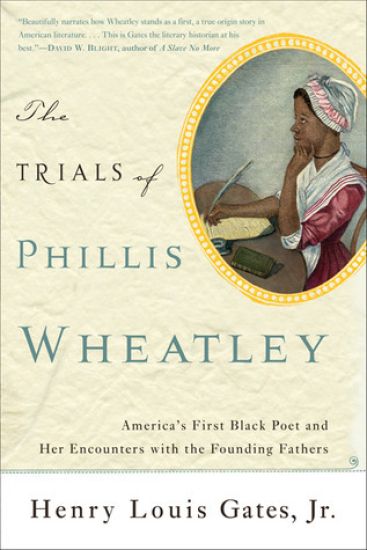
In 1773, the slave Phillis Wheatley literally wrote her way to freedom. The first person of African descent to publish a book of poems in English, she was emancipated by her owners in recognition of her literary achievement. For a time, Wheatley was the most famous black woman in the West. But Thomas Jefferson, unlike his contemporaries Ben Franklin and George Washington, refused to acknowledge her gifts as a writer,a repudiation that eventually inspired generations of black writers to build an extraordinary body of literature in their efforts to prove him wrong. In The Trials of Phillis Wheatley , Henry Louis Gates Jr. explores the pivotal roles that Wheatley and Jefferson played in shaping the black literary tradition. Writing with all the lyricism and critical skill that place him at the forefront of American letters, Gates brings to life the characters, debates, and controversy that surrounded Wheatley in her day and ours.