The O.R.B. Saga continues with O.R.B.: 330A.L. - Rise of the Dark Lord.It has been thirty years since that fateful night that changed their lives - but not necessarily for the better.Back then, the last known prophecy they found decreed that the cycle would list two lifetimes. As it was written, the prophecy began at the sight of FAITH. They first lost sight and later, hope. All seemed lost, all became right at the end of the first lifetime, and the rested.And as it was written, when the time comes, the black rose will lead them to light.That time has arroved.
The five volumes of papers exploring the major themes of research surrounding the capacious oeuvre of Dr B.R. Ambedkar provide a summary evaluation of the state of Ambedkar studies internationally, highlight research trends both about and inspired by Ambedkar, and open up lines of future enquiry. Volume 1 focuses specifically on the theme of political justice, including explorations in political theory inspired by Ambedkarite thought. Volume 2 examines key issues in social justice, especially in terms of Indian democracy, and provides a wide range of perspectives all anchored in Ambedkar's work and writings. Volume 3 covers legal and economic justice. The first part explores literature on the Constitution of India and its institutions, the idea of constitutional morality, rights and the rule of law, and Ambedkarite jurisprudence. The second part turns to a variety of issues in economic justice anchored in Ambedkar's economic philosophy. Volume 4 focuses on gender justice and racial justice. The first part explores Ambedkar's impact on efforts to achieve gender justice in India, and effects various readings of Ambedkar as a feminist. The second part turns to comparisons of race and caste and explores the ways in which the movements for racial justice and caste equality can learn from one another and seek strategies of synergy. Volume 5 treats of religious justice and cultural justice. It covers topics such as conversion, Navayana Buddhism, and liberation theology. The second part explores timely issues in cultural justice inspired by Ambedkar's own activism and struggles.
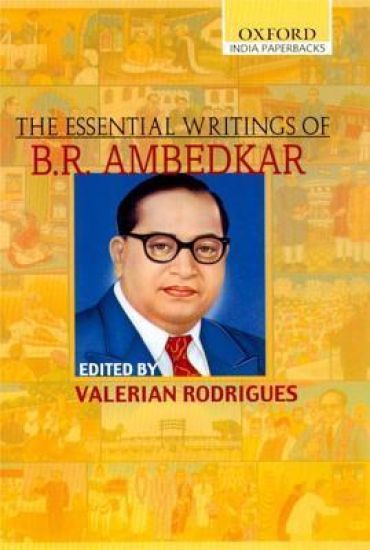
Dr Bhimrao Ramji Ambedkar (1891-1956) is both the towering symbol of protest against age-old and contemporary forms of exploitation in India and a scholar-sage proposing fair terms of social association. An untouchable himself, he led a resolute and adroit struggle against untouchability and attempted to reformulate the terms of nationalist discourse in India. This selection draws from his major works, speeches, letters and memoranda. These writings span across forty years (1915-1956) and are organised into eleven sections: reminiscences, concepts, methodology, ideology, religion, caste, untouchability, identity, economics, nationalism, constitutionalism and law. The introduction by the editor Valerian Rodrigues provides a glimpse of his momentous life,the framework and content of his writings, and the reasons for his growing stature in India over the years. Every section and excerpts included within it are introduced and endnotes support citations and incomplete references in the excerpts. Suggestions for further readings are offered through a classification of all his writings and speeches and writings on him and his work. The chronology of events anchors the context of the writings. The work is the first of its kind on Ambedkar and is a representative collection of the whole range of issues that engaged his attention. as the most comprehensive compilation on him and his works, this volume is going to be an indispensable reference for concerned students, scholars and activists.
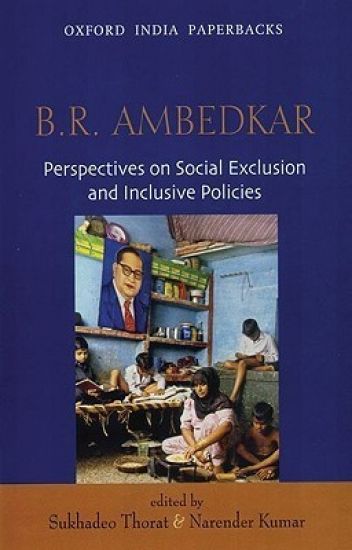
The contribution of social activist and thinker B.R. Ambedkar in the development of inclusive policies during the British rule and its culmination into the reservation policy in the Constituent Assembly is immense. In this volume original documents, memorandums, and writings by Ambedkar are put together to highlight the process of development in these policies and his thinking. A comprehensive Introduction discusses both the historical context and the present controversy regarding reservations in a proper perspective. The paperback edition carries a new afterword which surveys the recent writings on the subject.
Archie Morningstar fights crime across the universe alongside his dad and a talking cat. In this book, Archie is taken to the criminal organization B.U.R.P.'s mothership where he must outsmart evil masterminds!
Archie Morningstar fights crime across the universe alongside his dad and Pockets the talking cat. In this book, Pockets is in a panic: all the tuna fish sandwiches on the space station have been stolen! Pockets thinks it's the fault of the irritating head of his alien fan club, but Archie suspects the mystery goes much deeper. Get ready for another thrilling and hilarious space adventure.
E.M.B.R.A.C.E. is a Motivational Non-Fiction Book, written for individuals so they can acknowledge that pain, downfalls, struggles, and mistakes are a part of life but with perseverance, self-will, and simply effort are acquired, Success will be conquered Empower, Motivate, Build, Respect, Assert, Communicate, and Execute all positive ambitions and endeavors all the days of your life
This book revisits the philosophy of B.R Ambedkar in the context of the present socio-economic-political realities of India. It examines the philosophical and theoretical interventions of Ambedkar, as well as his egalitarian principles of equality, liberty, fraternity and morality. Noting the current shift in state policy from welfarism to neoliberalism, the book argues that the measures, interventions and recommendations that Ambedkar made are highly appropriate and concrete to face challenges and can be considered as practical solutions to existing problems. It studies various themes that form a part of his oeuvre such as Buddhism, federalism, justice, social exclusion, representation, anti-caste system, women’s equality, among others. It also discusses his impact on literature, visual arts, and literary, democratic and cultural movements throughout history.The volume positions Ambedkar as a theoretician, social reformer, and a real visionary of social justice and democratization. It will be of great interest to scholars and researchers of social exclusion, politics, especially Indian political thought, sociology and South Asian studies.
This book examines Ambedkar the economist. It foregrounds his economic ideas within the context of post-independence India. It also studies the socio-economic status of Dalits in the country focusing on Ambedkar’s views on inclusive and equitable growth. The volume:· Focuses on the economic writings of Ambedkar and looks at his views on caste and its economic implications, monetary and fiscal systems, as well as exchange rate and trade;· Discusses issues like land reforms and agrarian change, poverty, higher education and human rights from a Dalit perspective;· Examines the relevance of Ambedkar’s economic ideas for contemporary India. Drawing on interdisciplinary research methods, this book will be of great interest to scholars and researchers of economics, political science, development studies, history, human rights, and South Asian studies.
This book examines Ambedkar the economist. It foregrounds his economic ideas within the context of post-independence India. It also studies the socio-economic status of Dalits in the country focusing on Ambedkar’s views on inclusive and equitable growth. The volume:· Focuses on the economic writings of Ambedkar and looks at his views on caste and its economic implications, monetary and fiscal systems, as well as exchange rate and trade;· Discusses issues like land reforms and agrarian change, poverty, higher education and human rights from a Dalit perspective;· Examines the relevance of Ambedkar’s economic ideas for contemporary India. Drawing on interdisciplinary research methods, this book will be of great interest to scholars and researchers of economics, political science, development studies, history, human rights, and South Asian studies.
Jordan thought her life was ordinary and almost boring. She had great friends and a great job with a lot of responsibility. That all changed in a sudden power surge. Strange men were at the H2O Plant. The people she worked with and knew were acting strangely. Was she powerful enough to fight off these strangers? Or was she going to fall in love with their leader? This page turner will give you the answers to what B.R.I.T. really IS, what will happen to the H2O Plant, and what Jordan will do about these intruders. But was any of it real? You will have to join Jordan in her action packed adventure to find out...
Broken Promises is the story of the political and cultural enslavement of South Sudan that deteriorated with the departure of the British and the declaration of Sudanese independence on August 18, 1955. The domination of the Arab forces of the North over the culturally diverse South lead to an uprising and the development of a sustained Liberation Movement that, after much pain and bloodshed, led to the independence of South Sudan on 9 July 2011.Back in 1955, a handful of MPs from the South fought for federalism from within but political and military forces proved too strong for most except from a courageous former Catholic priest, Father Dominic Muorwel Malow. He fought for the South's freedom until his dying breath.
While laying in an empty bathtub in a Motel 6 in Vermont, Mike takes a handful of OxyContin and waits for the heart palpitations to kill him. As he starts to fade he reads a text on his phone, "Son, I love you and I need to know that you're OK." Struggling to understand why anyone would care about him because of his years of drug abuse, he responds, "Mom, no one can help me." Then, in a moment of clarity, he decides he wants there to be a tomorrow and to be a part of his family again. He makes the call for help to his mother; the call that saves his life. S.O.B.E.R.*, an acronym for "Son Of a Bitch Everything's Real" describes the moment Anita Devlin and her son Mike realize that denying his addiction to pain pills is destroying him. It is the defining moment when they commit to the courageous fight to get their lives back. This is when their family's road to recovery begins. S.O.B.E.R.* offers a rare glimpse at the daily, all consuming relationship between family and addiction, told simultaneously from a mother's view and an addict's perspective. Everyone thinks Mike has it all because he is a star varsity lacrosse player, does well in school and is popular with the girls. However, Mike feels completely alone on the inside. When sports related surgeries introduce him to the world of pain pills, he uses them to mask his insecurities and spirals downward. Once in treatment, he learns that drugs are the least of his problems. The real problem is his mind. The drugs aren't making his demons disappear, they are only masking them and burying them down deeper. Mike is confident that he can be sober but he is not convinced that he can be sober and happy. Anita thinks that being a mother gives her the right to negotiate with God for her child. She sits in church and pleads, "God, I don't care what happens to me, please just take care of my son." She lets go of everything that makes her strong until she has nothing to hold on to but fear. She is afraid of what will happen if she focuses on anything but her son. This is an addiction itself. Anita becomes sick physically and spiritually. She is ashamed that she is afraid of what people will think instead of helping her only son, and she is faced with yet another hurdle... a confrontation with the truth that she herself needs to get healthy and learn to let go. We are allowed a glimpse into the family's recovery through powerful "cost" letters including one from Mike's sister and from the innocent voice of the family dog. Despite an avalanche of life's misfortunes, nothing else matters as long as they don't lose Mike. Anita, her husband Michael and their daughter Alex join forces with the Caron Treatment Center where "the patient is the family, and the family is the patient." "Addiction is an octopus" says Anita, "Whose tentacles wrap tightly around us all choking the life out of everyone in its way. The whole family needs to recover together."
Ethnomusicologist Eric Charry’s innovative and road-tested textbook is an introduction to Rock and R&B suitable for general education courses in music and also accessible for general readers interested in a novel approach to gaining a historically rich, yet concise understanding of these genres. The book is organized around a series of timelines, tables, and figures created by the author, and provides fresh perspectives that bring readers into the heart of the social and cultural import of the music. Charry lays out key theoretical issues, covers the technical foundations of the music industry, and provides a capsule history of who did what when, with particular emphasis on the rapid emergence of distinct genres in the music industry. The book’s figures distill the history and provide new insight into understanding trends. Over 1000 artists, albums, and songs are included here, such as Muddy Water, Elvis Presley, Bob Dylan, Aretha Franklin, The Velvet Underground, Janis Joplin, Jimi Hendrix, Stevie Wonder, Prince, Madonna, Talking Heads, and Public Enemy.