Negli ultimi decenni si assistito a un grande progresso nello sviluppo di nuove tecnologie che consentono di identificare le condizioni ambientali di una determinata localit . Se da un lato questi nuovi strumenti apportano innegabili contributi agli studi sull'ambiente, dall'altro si perde ci che l'educazione ambientale ha cercato di ottenere negli ultimi anni: il recupero e la valorizzazione dell'esperienza umana nell'identificazione dei cambiamenti ambientali nel tempo e nello spazio. Questo libro tratta dei contributi della memoria e dell'esperienza degli anziani nella valutazione degli impatti ambientali e del loro rapporto con l'ambiente, intendendo la questione ambientale anche come una riflessione sul tempo. La storia orale, come metodologia, pu essere utilizzata per catturare le esperienze di vita, sapendo che le interviste sul tempo dell'infanzia, del lavoro e della vita cittadina coinvolgono, di per s , la tematica "ambientale", rivelando la dimensione storica dei fatti e ampliando le possibilit di intervento dello Stato.
This research, conducted through the Graduate Program in Education at the University of Santa Cruz do Sul (UNISC) in the Education, Work, and Emancipation Research Line, sought to understand, through teaching experiences, how the process of restructuring secondary education took place with the implementation of polytechnic education in two schools in the state education network in the city of Santa Cruz do Sul, Rio Grande do Sul. In addition to the experiences in these schools, the research proposed to reflect on the current panorama of public policies aimed at this last stage of basic education, problematizing the relationship between education and work seen as an educational principle in a neoliberal national and international context and how such reforms contribute or not to emancipatory education from the perspective of Critical Theory. A case study was used for this reflection to reflect on teaching practices in a diagnosis of the realities of polytechnic secondary education through its curricular restructuring. A book aimed at basic education teachers, academics, and the community in general.
""Abierto hac a el Vac o, gozo el sagrado secreto del porvenir." La primera frase del libro que relata la historia de Wekoa un maestro Olmeca que viaja en el tiempo. El primero de una serie de Trece, donde recorreremos distintas pocas del M xico antiguo. La gran aventura de un viaje m stico, que forjo y forjar las Leyendas de Anawak. Este libro pretende ir un poco mas all de una novela y servir como curso de introducci n al "Arte para Vivir" tolteca, taller de calendario maya, introducci n a la teoman a o meditaci n tolteca, un acercamiento al nahuatl cl sico as como una recopilaci n de leyendas y conceptos que describen la cosmovisi n de mesoamericana a lo largo de su historia.
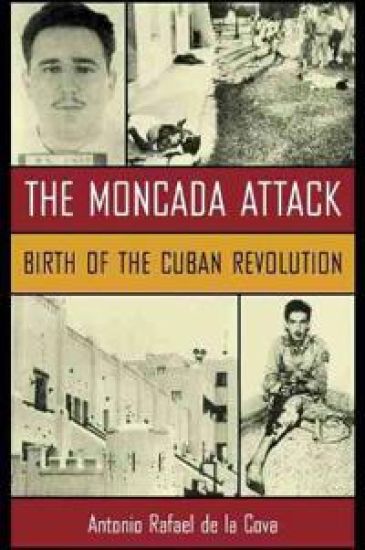
No account of Fidel Castro's rise to power is complete without mention of the failed attacks of July 26, 1953, on the Cuban army garrisons at Moncada and Bayamo. Yet no single volume to date has offered a comprehensive assessment of the assault that set the Cuban Revolution into motion and for which the 26 of July Movement was named. In this thorough study, Antonio Rafael de la Cova views this initial overthrow attempt as a propaganda victory that marked the start of Castro's ascent to national power. Drawing from three decades of interviews with more than one hundred participants - including surviving rebels, military and government personnel, and politicians - de la Cova screens historical facts from popular fictions to build an accurate account of this turning point in Cuban history and the Cold War. In July of 1953, aided by his brother Raul, Fidel Castro led 160 sparsely armed and poorly trained followers in simultaneous assaults on two Cuban army posts, declaring as his goal the restoration of constitutional democracy on the island. Skirmishes lasted only minutes on both fronts as the insurgents failed to take the garrisons and were killed, captured, or dispersed without contingency plans. A master of manipulation, Castro was later able to recast this humiliating military defeat as a political victory when Major General Fulgencio Batista's troops summarily executed more than fifty rebel prisoners, garnering the ire of the people. De la Cova chronicles the assaults and their aftermath, with a special focus on countering false statements later made by Castro at his subsequent trial and in his published defense speech History Will Absolve Me - a required text for Cuban schoolchildren to this day. Through research and interviews, de la Cova brings to light the persistent falsehoods told of atrocities committed by Batista's soldiers and Castro's rebels. The myths surrounding the assault provided superb fodder for building support for the successful guerrilla campaign that brought Castro to power in 1959. Assessing the impact of this mythology, de la Cova presents a detailed survey of the lasting importance of the Moncada attack and its place in history as the birth of the Cuban revolution.
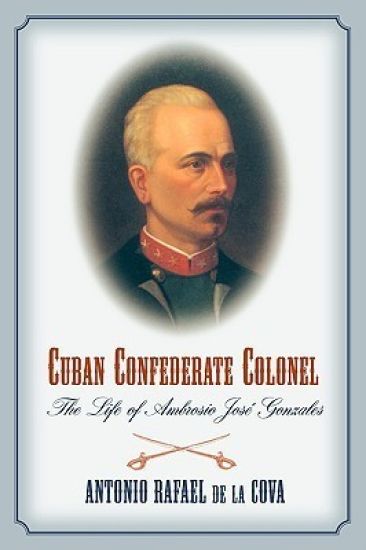
This is the definitive biography of a Cuban and Confederate rebel. ""Cuban Confederate Colonel"" tells the story of a revolutionary who figured prominently in both his native country's struggle against Spain and the Confederacy's fight for secession. Immortalized as the first Cuban to shed blood in the effort to oust the Spanish, Ambrosio Jose Gonzales (1818-1893) placed himself in the center of hostilities in both his homeland and in the United States. In this biography Antonio Rafael de la Cova examines the Cuban filibuster movement of the 1840s and 1850s, the American Civil War, and Southern Reconstruction from Gonzales' unusual perspective as both a Cuban and Confederate rebel. In doing so, de la Cova sheds new light on the connections between Southern and Cuban society, the workings of coastal defenses during the Civil War, and the vicissitudes of Reconstruction for a Cuban expatriate. With the failure of the 1854 filibuster attempts, Gonzales settled in the United States and married into South Carolina's prominent Elliott family. The author traces Gonzales' significant role in Confederate coastal defenses, his costly feud with Jefferson Davis, and his finest hour as a Confederate - as artillery commander at the battle of Honey Hill. Following the war, the colonel pursued a variety of vocations, all of which were marginally successful, but like many others he never provided the security he sought for his extended family. De la Cova points out that while Gonzales' connections to Cuba's economy may have made his postwar entrepreneurial endeavors distinctive, his efforts were similar to those of other formerly wealthy Southerners who sought to recover their estates and social status.
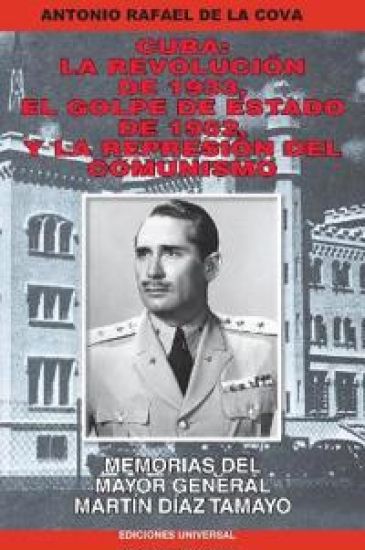
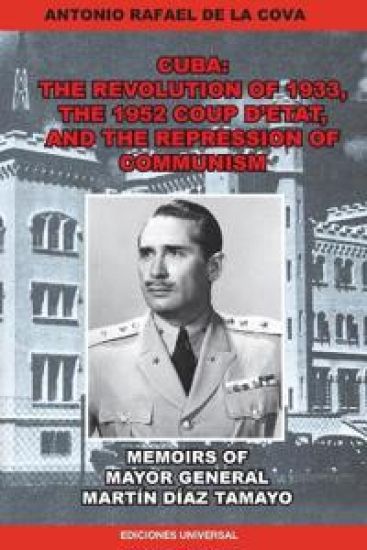
Antonio Rafael de la Cova was born in Havana in 1950 and departed for exile on February 1, 1961. He has a Ph.D. in History from West Virginia University (1994). Since then, he has been a professor of History and Latin American Anthropology at Jacksonville University, Indiana University-Bloomington, and currently, the University of South Carolina-Columbia. He is the author of Cuban Confederate Colonel: The Life of Ambrosio JosE Gonzales (2003), The Moncada Attack: Birth of the Cuban Revolution (2007), Colonel Henry Theodore Titus: Antebellum Soldier of Fortune and Florida Pioneer (2016), La guerra aErea en Cuba en 1958: Memorias del Teniente Carlos Lazo Cuba (2017), and more than a dozen essays on Cuban history published in the academic journals Harvard Latino Law Review, The Florida Historical Quarterly, The Journal of the Early Republic, The Journal of Mississippi History and other publications, including six encyclopedias. Martin DIaz Tamayo (1904-1995) was an illiterate peasant from Pinar del Rio, Cuba, who joined the Cuban army at the age of sixteen and rose to the rank of major general. During his lengthy military career, he participated in the Revolution of September 4, 1933, in Fulgencio Batista's coup d'Etat on March 10, 1952 and three years later was later chosen and trained by the Central Intelligence Agency (CIA) to lead the Bureau for the Repression of Communist Activities (BRAC) in Havana. His memoirs describe his relationship with Batista during 25 years, providing a new perspective on how he became the military leader of the Revolution of 1933 and details the planning of the 1952 coup d'Etat during six months and its implementation. DIaz Tamayo was the chief of Regiment No. 1 in Santiago de Cuba on November 30, 1956, during the rebel uprising and the landing two days later of Fidel Castro's Granma expedition. He describes how the revolt was suppressed as why Castro survived and triumphed two years later. In late 1958, the general participated in a failed CIA conspiracy to capture Batista with some 30 officers from Camp Columbia as well as members of the 26 of July movement who were plotting a transitional government. In exile, he collaborated with the CIA to overthrow the communist regime from 1959 to 1962.
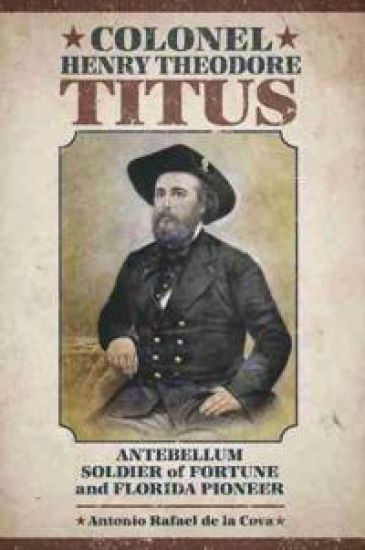
Henry Theodore Titus (1822-1881) was the quintessential adventurer, soldier of fortune, and small-time entrepreneur, a man for whom any frontier--geographical, cultural, social--was an opportunity for advancement. Although born in Trenton, New Jersey, and raised in New York and Pennsylvania, Titus bore no allegiance to his native soil or the Yankee values of his ancestors. In the 1850s he became a staunch defender of southern slavery, United States expansionism into the Caribbean Basin, and ultimately the Confederacy's war of disunion. In Colonel Henry Theodore Titus, the first full-length biography of Titus, Antonio Rafael de la Cova reveals a man whose life and adventures offer glimpses into nineteenth-century America not often examined; these indicate the extent to which personal and collective violence, racial prejudice, and moral ambiguities shaped the country at the time.Belligerent, intemperate, egomaniacal, and of imposing stature, Titus was the bete noire of the abolitionist press. Despite his northern roots, he became a caricature of the southern braggart and frontier opportunist. National newspapers followed his reckless exploits during most of his adult life. Titus fought brawls in the saloons of luxury hotels and narrowly escaped the hangman's noose as a Border Ruffian leader in Bleeding Kansas, a Nicaraguan firing squad as a filibuster, and death in a Comanche ambush in Texas. He nearly prompted an international incident between the United States and Great Britain when he was arrested in Nicaragua for threatening to shoot a British naval officer and disparaging the queen of England. The colonel was jailed in New York City for disorderly conduct and trying ""to organize the desperate classes for a riot.""During his lifetime Titus held more than a dozen occupations, including sawmill owner, postal inspector, soldier of fortune, grocer, planing mill salesman, farmer, slave overseer, turtler, bartender, land speculator, and hotel keeper. He pursued silver mining in the Gadsden Purchase portion of the Arizona Territory where his brother was killed and their hacienda destroyed by Apaches. Despite his violent character and his pro-Confederate values, Titus was politically savvy. He did not take up arms during the Civil War. After a brief stint as assistant quartermaster in the Florida militia, he returned to civilian life and sold foodstuffs and slave labor to the Confederacy. Florida Reconstruction governors later appointed him as notary public and justice of the peace.Rheumatism and gout kept Titus bound to a wheelchair during the last few years of his life when he became an avid civic leader. His greatest legacy was ironically his most benign. Borrowing today's equivalent income value sum of half a million dollars, he established a grocery store and a sawmill in a hardscrabble Florida frontier settlement that became the city of Titusville, the county seat of Brevard County and tourist gateway to Cape Canaveral and the Kennedy Space Center.
Chevalier Rafael Hugo Maria de Weryha-Wysoczanski-Pietrusiewicz was born in Poland in 1975 of diverse European ancestry. In a series of vignettes he looks at his life, beginning with his family history, then birth and childhood in Poland after which he fled Communist Poland and was stranded in the spheres of upper class life of Western Europe.
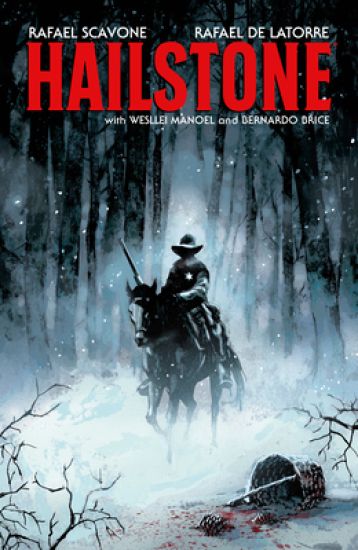
In the isolated Montana town of Hailstone, cut off from the outside world by a brutal winter, food is running low and people are going missing. Desperate townsfolk turn to Sheriff Denton Ross and the nearby Military factory for help. But why is the factory here, so far from the war? And how is it able to supply the Union forces with the town cut off by snow? In their search for answers, Sheriff Ross and his deputy Tobias will discover dark secrets about the mysterious factory, their seemingly sleepy town, and Ross' own past that will change their lives forever...if they survive.
Capitulo 1 - Avalia o da Atividade Antibacteriana de Extratos Etan licos de Babosa (Aloe Vera).Capitulo 2 - Avalia o da Toxicidade Dohidrocarboneto Polic clico Arom ticobenzo(a) Pireno em Seres Humanos: uma revis o integrativa.Capitulo 3 - Caracteriza o de Est gios Funcionais na Disfun o Renal Cr nica: uma prospec o cient fica.Capitulo 4 - An lise dos Marcadores Inflamat rios e Imunol gicos Presentes na Doen a de Alzheimer: uma revis o integrativa da literatura.Capitulo 5 - Atividade Neuroprotetora da Melissa Officinalis.
We introduce a geometric mechanism for diffusion in a priori unstable nearly integrable dynamical systems. It is based on the observation that resonances, besides destroying the primary KAM tori, create secondary tori and tori of lower dimension. We argue that these objects created by resonances can be incorporated in transition chains taking the place of the destroyed primary KAM tori. We establish rigorously the existence of this mechanism in a simple model that has been studied before.The main technique is to develop a toolkit to study, in a unified way, tori of different topologies and their invariant manifolds, their intersections as well as shadowing properties of these bi-asymptotic orbits. This toolkit is based on extending and unifying standard techniques. A new tool used here is the scattering map of normally hyperbolic invariant manifolds. The model considered is a one-parameter family, which for $\varepsilon = 0$ is an integrable system. We give a small number of explicit conditions the jet of order $3$ of the family that, if verified imply diffusion.The conditions are just that some explicitely constructed functionals do not vanish identically or have non-degenerate critical points, etc. An attractive feature of the mechanism is that the transition chains are shorter in the places where the heuristic intuition and numerical experimentation suggests that the diffusion is strongest.
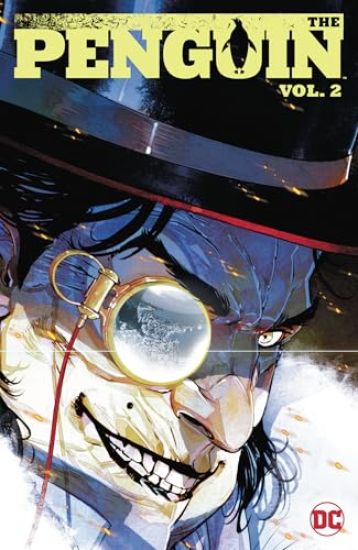
The Penguin is dead, long live the Penguin! Since his death and subsequent return to Gotham City, Oswald Cobblepot s world has been anything but mundane. Now he finds himself in the perfect position to make the ultimate power grab for Gotham s underworld, but it won t come without a price! Are the risks worth the potential rewards? Or will Oswald s gambit prove to be a deadly miscalculation with even deadlier consequences? Collects The Penguin #7-12.