Kirjojen hintavertailu. Mukana 11 348 577 kirjaa ja 12 kauppaa.

Kirjahaku

Etsi kirjoja tekijän nimen, kirjan nimen tai ISBN:n perusteella.

1000 tulosta hakusanalla Raymond De Block

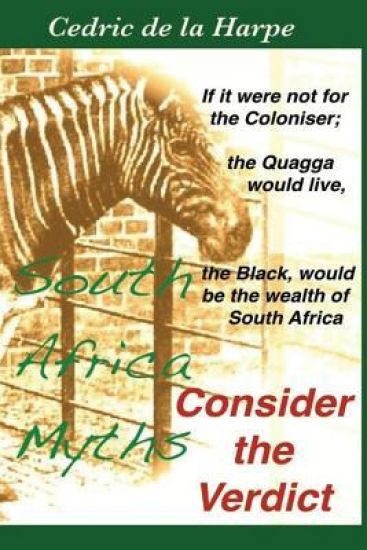
Consider the Verdict: South Africa Myths

Consider the Verdict: South Africa Myths

Cedric Raymond de la Harpe

Createspace Independent Publishing Platform
2016
nidottu
South Africa, 22 years in the Rainbow Nation new democracy, racism and economic segregation start to cause social media to rumble. The Author, having devoted ten years to Social Reform, takes the bull by the horns, and as protagonist, he challenges the reader to Consider the Verdict.The author equates the damage caused by the Coloniser to the African people, with the #holocaust, asking, "Is it equal to, Is it greater than, or, is it lesser than?"In the author's opinion, if it was not for the Coloniser, the Black groups, and here he includes all groups, would be the wealth of South Africa, and Townships would not exist. Black poverty would not exist.Among the South Africa Myths that he attempts to dispel are: 1: "If it was not for us whites, the blacks would still be living in mud huts, with chickens on the roof. 2: Born in Africa = African. 3: Mfecane cleared the land. 4: Shaka was evil. 5: No slave trade. 6: Nothing was stolen. 7: Project Hammer 8: Hintsa killed while escaping. 9: Apartheid started in 1948.10: Apartheid is dead.11: In the name of democracy. XConsider the Verdict allows all to participate, either as Accuser, or Defendant, with the objective of developing a new dimension in the Race Debate.The Author is a self-confessed racist, however, claiming to be in recovery, like an alcoholic, he believes he can never heal, always careful not to fall off the wagon.He accepts he is a Coloniser, to having white privilege, and questions whether he has ever felt any guilt for his contribution. He attributes this to the fact that no black person, has, on a personal level, expressed antipathy towards what he as a coloniser did to them.Read the evidence, and Consider the Verdict;Cedric de la Harpe
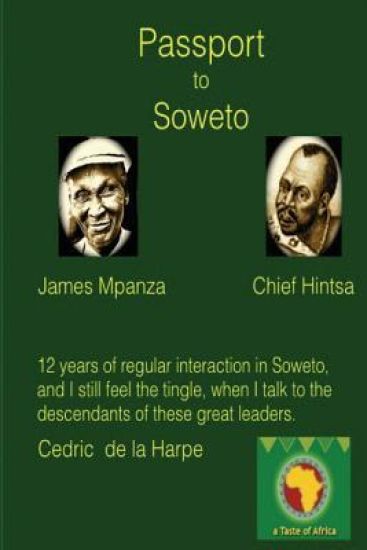
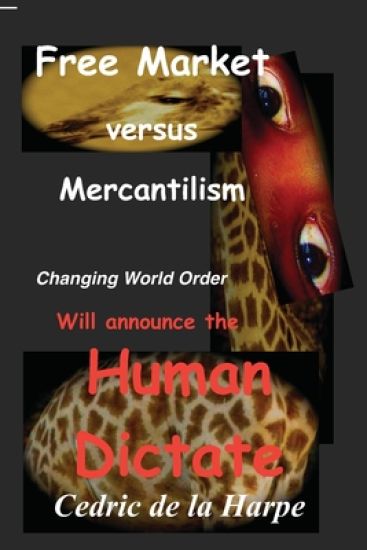
Human Dictate

Human Dictate

Cedric Raymond de la Harpe

Independently Published
2019
nidottu
The third revision of 2028 Human Democracy, leads to an energetic discussion in Orlando East, Soweto and as the Human, and the latipac. the 1% of the Western World how owns 50% of the wealth of the world, is debated, this uMlungu, answering all the questions from the poverty black community, puts on the table, how the South African mining industry, has continued to benefit, following the celebrated New Democracy, and the demise of what the world knows as Apartheid. Thus uMlungu, white man, for the first time in his life needs to apologise, to the dark-skinned people of South Africa, and to my children and grandchildren. I have failed to understand, I have allowed myself to be dictated to, and off this, the birth of Human Dictate, takes place. Cedric de la Harp
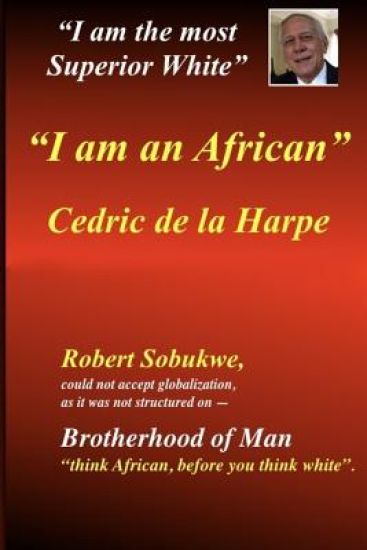
I am an African: Brotherhood of Man

I am an African: Brotherhood of Man

Cedric Raymond de la Harpe

Createspace Independent Publishing Platform
2018
nidottu
The author, having integrated in the African community, as a white South African, born in 1947, lived through Apartheid, was never anti-Apartheid, often referred to by the locals as the 'Black Zulu', or, a 'Black man in a white skin', refused to make any claim to being an African. Then, when he gets involved in the Pan Africanist philosophy, while analysing the failures of the Africanist, he first understands that an African's lifestyle is embodied in humanity, a cultivated humanity, that results in a behaviour that is compulsive. When I become alert to this definition, for the first time I start to see our community, no longer as 'black and white', I see the groups as African and Non-African. I discover that I am an African.
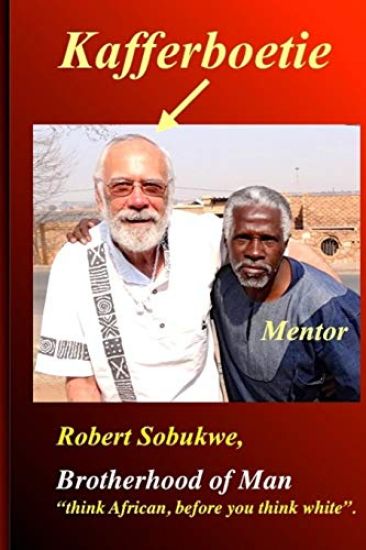
Kafferboetie: I am an African

Kafferboetie: I am an African

Cedric Raymond de la Harpe

Createspace Independent Publishing Platform
2018
nidottu
This manuscript introduces you to the authors claim to be an African, the rejection, and what he finds is the answer to what a white South African needs to achieve in order to be accepted as an African.
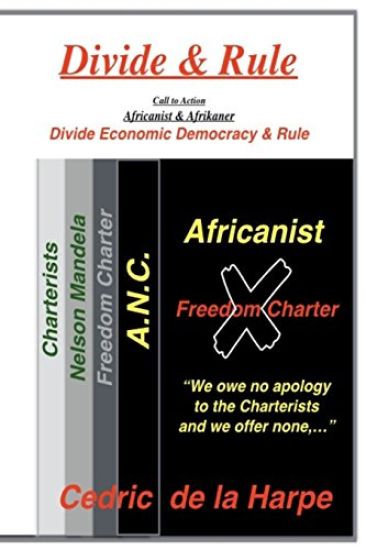
Divide & Rule: Economic Democracy by Nelson Mandela

Divide & Rule: Economic Democracy by Nelson Mandela

Cedric Raymond de la Harpe

Createspace Independent Publishing Platform
2017
nidottu
Nelson Mandela's South Africa's 1994 New Democracy and Peace Settlement is under pressure, as the ANC leaders contest places for the 2019 general election. On the one extreme, is the majority, unhappy with President Jacob Zuma, the state capture, corruption, yet unable to participate in the change of politics, let alone, contribute to changes in their lives. Divide & Rule takes the reader back to 1949, when the ANC were a united African group, seeking self-determination. By 1953, Nelson Mandela, through unidentified motives, elects to abandon the African struggle as defined by the 1949 Programme of Action, including a powerful Bill of Rights, ratified by the ANC annual conference. The ANC, during the period 1953 to 1958, is in great conflict, as the Charterists, Nelson Mandela's new management team, draft the Freedom Charter, and those in the ANC, the Africanists, reject the Freedom Charter. On November 1, 1958, the new management team, expelled the Africanist dissenters, and the once powerful African group, pushing for African self-determination, is split. Divide & Rule reflects on the Sharpeville Massacre, the ANC's thrust to regain supporters, Nelson Mandela and the ANC critical of the PAC anti-pass campaign. The questions are asked; Was Nelson Mandela conned, or a collaborator? Had Nelson Mandela and the ANC not attacked the PAC in the aftermath of the Sharpeville Massacre, would white rule have survived in South Africa? Did our Economic Democracy, extend white rule in South Africa, beyond 1963? Was the choice of Economic Democracy, in the interests of the majority?
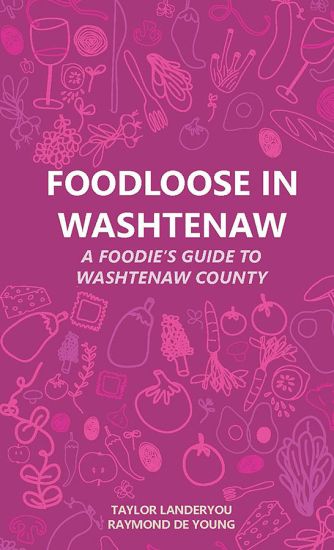
Foodloose in Washtenaw

Foodloose in Washtenaw

Taylor Landeryou; Raymond De Young

Michigan Publishing Services
2018
nidottu
Inspired by a classic walking guidebook of the area, Foodloose in Washtenaw County takes readers on tours to discover food-related treasures throughout the county. What better way to get to know this place—or experience something new—than to bike, bus, carpool, walk, even kayak your way through food-filled Washtenaw County?From centennial farms to trendy upscale restaurants, the self-guided tours of Foodloose offer an opportunity to explore where our food is grown, produced, distributed, and enjoyed in Washtenaw County. Within these pages lies a chance to celebrate the local food community, learn more about our unique food system, and maybe even find a new favorite place to dine.