The book ""International Bank For Reconstruction And Development, 1944-1949: The International Monetary Fund, 1944-1949"" by Antonin Basch provides a comprehensive account of the establishment and early years of two important international financial institutions, the International Bank for Reconstruction and Development (IBRD) and the International Monetary Fund (IMF). The book covers the period from their creation in 1944 to 1949, a time when the world was recovering from the devastation of World War II and faced major economic challenges.The author, Antonin Basch, was a key figure in the creation of these institutions and provides a unique perspective on their formation and early years. He describes the negotiations and debates that led to the creation of the IBRD and IMF, as well as the challenges they faced in their early years. Basch also provides insights into the personalities and motivations of the key players involved in the establishment of these institutions.The book covers a wide range of topics related to the IBRD and IMF, including their roles in promoting economic development, their lending practices, and their relationships with member countries. It also discusses the debates and controversies that surrounded these institutions in their early years, such as the role of gold in the international monetary system and the question of how to balance the needs of borrowers and lenders.Overall, ""International Bank For Reconstruction And Development, 1944-1949: The International Monetary Fund, 1944-1949"" is a valuable resource for anyone interested in the history of international finance and the creation of these important institutions. It provides a detailed and insightful account of their formation and early years, and sheds light on the challenges and debates that continue to shape the global financial system today.International Conciliation, No. 455, November, 1949.This scarce antiquarian book is a facsimile reprint of the old original and may contain some imperfections such as library marks and notations. Because we believe this work is culturally important, we have made it available as part of our commitment for protecting, preserving, and promoting the world's literature in affordable, high quality, modern editions, that are true to their original work.
We all long for peace within ourselves, families, communities, countries, and throughout the world. We wonder what we can do about the multitude of con?icts currently wreaking havoc across the globe and the continuous reports of violence in communities as well as within families. Most of the time, we contemplate solutions beyond our reach, and overlook a powerful tool that is at our disposal: forgiveness. As a genocide survivor, I know something about it. As the genocide unfolded in Rwanda in 1994, I was devastated by what I believed to be the inevitable deaths of my loved ones. The news that my parents and my seven siblings had indeed been killed was simply unbearable. Anger and bitterness became my daily companions. Likewise, I continued to wonder how the Hutus and Tutsis in Rwanda could possibly reconcile after one of the most horrendous genocides of the 20th century. It was not until I came to understand the notion of forgiveness that I was able to see the light at the end of the tunnel. Common wisdom suggests that forgiveness comes after a perpetrator makes a genuine apology. This wisdom informs us that in the aftermath of a wrongdoing, the offender must acknowledge the wrong he or she has done, express remorse, express an apology, commit to never repeating said harm, and make reparations to theextentpossible.Onlythencanthevictimforgiveandagreetoneverseekrevenge.
We all long for peace within ourselves, families, communities, countries, and throughout the world. We wonder what we can do about the multitude of con?icts currently wreaking havoc across the globe and the continuous reports of violence in communities as well as within families. Most of the time, we contemplate solutions beyond our reach, and overlook a powerful tool that is at our disposal: forgiveness. As a genocide survivor, I know something about it. As the genocide unfolded in Rwanda in 1994, I was devastated by what I believed to be the inevitable deaths of my loved ones. The news that my parents and my seven siblings had indeed been killed was simply unbearable. Anger and bitterness became my daily companions. Likewise, I continued to wonder how the Hutus and Tutsis in Rwanda could possibly reconcile after one of the most horrendous genocides of the 20th century. It was not until I came to understand the notion of forgiveness that I was able to see the light at the end of the tunnel. Common wisdom suggests that forgiveness comes after a perpetrator makes a genuine apology. This wisdom informs us that in the aftermath of a wrongdoing, the offender must acknowledge the wrong he or she has done, express remorse, express an apology, commit to never repeating said harm, and make reparations to theextentpossible.Onlythencanthevictimforgiveandagreetoneverseekrevenge.
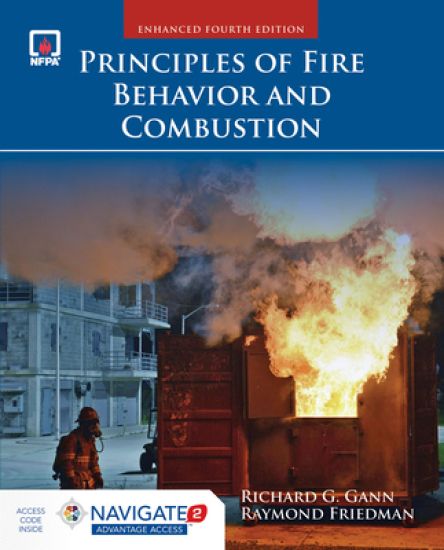
Based on the National Fire Academy's Fire Behavior and Combustion model curriculum. Without a comprehensive grasp of how fires start and spread, informed decisions on how to best control and extinguish fires can not be made. Principles of Fire Behavior and Combustion, Fourth Edition will provide readers with a thorough understanding of the chemical and physical properties of flammable materials and fire, the combustion process, and the latest in suppression and extinguishment. The Fourth Edition of this time-tested resource is the most current and accurate source of fire behavior information available to fire science students and on-the-job fire fighters today.
Each new print copy of Principles of Fire Behavior and Combustion, Enhanced Fourth Edition also includes Navigate 2 Advantage Access that unlocks a complete eBook, Study Center, homework and Assessment Center, and a dashboard that reports actionable data. Experience Navigate 2 today at www.jblnavigate.com/2. Based on the National Fire Academy’s Fire Behavior and Combustion model curriculum. Without a comprehensive grasp of how fires start and spread, informed decisions on how to best control and extinguish fires can not be made. Principles of Fire Behavior and Combustion, Enhanced Fourth Edition Includes Navigate 2 Advantage Access will provide readers with a thorough understanding of the chemical and physical properties of flammable materials and fire, the combustion process, and the latest in suppression and extinguishment. The Fourth Edition of this time-tested resource is the most current and accurate source of fire behavior information available to fire science students and on-the-job fire fighters today. The Enhanced Fourth Edition features: Complete coverage of the National Fire Academy’s Fire and Emergency Services Higher Education (FESHE) Fire Behavior and Combustion model curriculum. A clear, reader-friendly style to help simplify even the most challenging subject matter. Practice problems incorporated throughout the text to help bridge the gap between theory and application on the fireground.
This book brings together for the first time in a single volume a complete survey of the theoretical foundations of economic aid policies and a critical analysis of aid programs and practices. The book focuses on the contributions of familiar economic growth models and other economic and social theories of development to foreign aid practices, and provides a broad and penetrating overview of the economics of foreign aid.At the macroanalytical level, the author investigates the savings constraint and the foreign exchange constraint approaches and the models employed for determining the quantity of external capital required for achieving growth goals under varying economic conditions in the recipient economies. The author examines other approaches to aid requirements (including the capital absorptive approach), analyzes debt service capacity, and reviews various debt cycle models. The nature and significance of indicators of economic performance are investigated, and both theoretical and practical policy issues relating to the employment of aid as a means of influencing domestic policies are analyzed. In his final chapter, the author applies his theoretical conclusions to the formulation of an integrated approach to foreign aid, encompassing the major foreign assistance problems faced today.A clear and comprehensive text for every student of development economics, as well as the most thorough reference of its kind for professional economists, the book, a volume in the Aldine Treatises in Modem Economics series, will be useful to all who are concerned with the analysis, development, and execution of aid programs.
This book brings together for the first time in a single volume a complete survey of the theoretical foundations of economic aid policies and a critical analysis of aid programs and practices. The book focuses on the contributions of familiar economic growth models and other economic and social theories of development to foreign aid practices, and provides a broad and penetrating overview of the economics of foreign aid.At the macroanalytical level, the author investigates the savings constraint and the foreign exchange constraint approaches and the models employed for determining the quantity of external capital required for achieving growth goals under varying economic conditions in the recipient economies. The author examines other approaches to aid requirements (including the capital absorptive approach), analyzes debt service capacity, and reviews various debt cycle models. The nature and significance of indicators of economic performance are investigated, and both theoretical and practical policy issues relating to the employment of aid as a means of influencing domestic policies are analyzed. In his final chapter, the author applies his theoretical conclusions to the formulation of an integrated approach to foreign aid, encompassing the major foreign assistance problems faced today.A clear and comprehensive text for every student of development economics, as well as the most thorough reference of its kind for professional economists, the book, a volume in the Aldine Treatises in Modem Economics series, will be useful to all who are concerned with the analysis, development, and execution of aid programs.