Reginald Bathurst Birch (May 2, 1856 - June 17, 1943) was an English-American artist and illustrator. He was best known for his depiction of the titular hero of Frances Hodgson Burnett's 1886 novel Little Lord Fauntleroy, which started a craze in juvenile fashion. While his illustrated corpus has eclipsed his other work, he was also an accomplished painter of portraits and landscapes......... Robert William Chambers (May 26, 1865 - December 16, 1933) was an American artist and fiction writer, best known for his book of short stories entitled The King in Yellow, published in 1895.He was born in Brooklyn, New York, to William P. Chambers (1827-1911), a corporate and bankruptcy lawyer, and Caroline Smith Boughton (1842-1913). His parents met when Caroline was twelve years old and William P. was interning with her father, Joseph Boughton, a prominent corporate lawyer. Eventually the two formed the law firm of Chambers and Boughton which continued to prosper even after Joseph's death in 1861. Robert's great-grandfather, William Chambers (birth unknown), a lieutenant in the British Royal Navy, was married to Amelia Saunders, (1765-1822), the great grand daughter of Tobias Saunders, of Westerly, Rhode Island. The couple moved from Westerly, to Greenfield, Massachusetts and then to Galway, New York, where their son, also William Chambers, (1798-1874) was born. The second William graduated from Union College at the age of 18, and then went to a college in Boston, where he studied to be a doctor. Upon graduating, he and his wife, Eliza P. Allen (1793-1880), a direct descendant of Roger Williams, the founder of Providence, Rhode Island were among the first settlers of Broadalbin, New York. His brother was architect Walter Boughton Chambers. Robert was first educated at the Brooklyn Polytechnic Institute, and then entered the Art Students' League at around the age of twenty, where the artist Charles Dana Gibson was his fellow student. Chambers studied at the cole des Beaux-Arts, and at Acad mie Julian, in Paris from 1886 to 1893, and his work was displayed at the Salon as early as 1889. On his return to New York, he succeeded in selling his illustrations to Life, Truth, and Vogue magazines. Then, for reasons unclear, he devoted his time to writing, producing his first novel, In the Quarter (written in 1887 in Munich). His most famous, and perhaps most meritorious, effort is The King in Yellow, a collection of Art Nouveau short stories published in 1895. This included several famous weird short stories which are connected by the theme of a fictitious drama of the same title, which drives those who read it insane.E. F. Bleiler described The King in Yellow as one of the most important works of American supernatural fiction.It was also strongly admired by H. P. Lovecraft and his circle. Chambers returned to the weird genre in his later short story collections The Maker of Moons, The Mystery of Choice and The Tree of Heaven, but none earned him as much success as The King in Yellow. Some of Chambers's work contains elements of science fiction, such as In Search of the Unknown and Police , about a zoologist who encounters monsters. Chambers later turned to writing romantic fiction to earn a living. According to some estimates, Chambers had one of the most successful literary careers of his period, his later novels selling well and a handful achieving best-seller status. Many of his works were also serialized in magazines. His novel The Man They Hanged was about Captain Kidd, and argued that Kidd was not a pirate, and had been made a scapegoat by the British government...............
Reginald Bathurst Birch (May 2, 1856 - June 17, 1943) was an English-American artist and illustrator. He was best known for his depiction of the titular hero of Frances Hodgson Burnett's 1886 novel Little Lord Fauntleroy, which started a craze in juvenile fashion. While his illustrated corpus has eclipsed his other work, he was also an accomplished painter of portraits and landscapes. Edith Nesbit (married name Edith Bland; 15 August 1858 - 4 May 1924) was an English author and poet; she published her books for children under the name of E. Nesbit. She wrote or collaborated on more than 60 books of children's literature. She was also a political activist and co-founded the Fabian Society, a socialist organisation later affiliated to the Labour Party. Nesbit was born in 1858 at 38 Lower Kennington Lane in Kennington, Surrey (now part of Greater London), the daughter of an agricultural chemist, John Collis Nesbit, who died in March 1862, before her fourth birthday. Her sister Mary's ill health meant that the family travelled around for some years, living variously in Brighton, Buckinghamshire, France (Dieppe, Rouen, Paris, Tours, Poitiers, Angoul me, Bordeaux, Arcachon, Pau, Bagn res-de-Bigorre, and Dinan in Brittany), Spain and Germany, before settling for three years at Halstead Hall in Halstead in north-west Kent, a location which later inspired The Railway Children (this distinction has also been claimed by the Derbyshire town of New Mills). At eighteen, Nesbit met the bank clerk Hubert Bland in 1877. Seven months pregnant, she married Bland on 22 April 1880, though she did not immediately live with him, as Bland initially continued to live with his mother. Their marriage was a stormy one. Early on Nesbit discovered that another woman believed she was Hubert's fiancee and had also borne him a child. A more serious blow came later when she discovered that her good friend, Alice Hoatson, was pregnant with Hubert's child. She had previously agreed to adopt Hoatson's child and allow Hoatson to live with her as their housekeeper. After she discovered the truth, they quarrelled violently and she suggested that Hoatson and the baby should leave; her husband threatened to leave Edith if she disowned the baby and its mother. Hoatson remained with them as a housekeeper and secretary and became pregnant by Bland again 13 years later. Edith again adopted Hoatson's child. Nesbit's children were Paul Bland (1880-1940), to whom The Railway Children was dedicated; Iris Bland (1881-1950s); Fabian Bland (1885-1900); Rosamund Bland (1886-1950), to whom The Book of Dragons was dedicated; and John Bland (1898-1971) to whom The House of Arden was dedicated. Her son Fabian died aged 15 after a tonsil operation; Nesbit dedicated a number of books to him: Five Children and It and its sequels, as well as The Story of the Treasure Seekers and its sequels. Nesbit's adopted daughter Rosamund collaborated with her on the book Cat Tales....
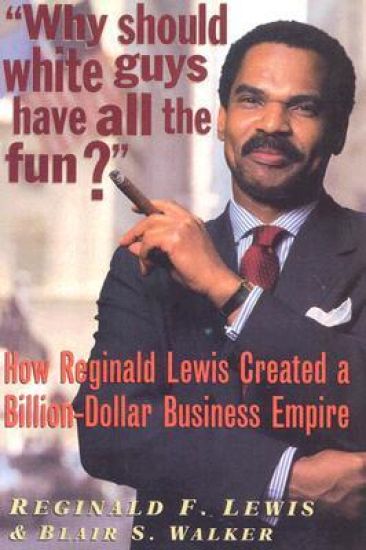
Why Should White Guys Have All the Fun? is the inspiring story of Reginald Lewis: lawyer, Wall Street wizard, philanthropist - and the wealthiest black man in American history.When six-year-old Reginald Lewis overheard his grandparents discussing employment discrimination against African Americans, he asked, "Why should white guys have all the fun?" This self-assured child would grow up to become the CEO of Beatrice International and one of the most successful entrepreneurs ever. At the time of his death in 1993, his personal fortune was estimated in excess of $400 million and his vast commercial empire spanned four continents. Despite the notoriety surrounding Lewis's financial coups, little has been written about the life of this remarkable man. Based on Lewis's unfinished autobiography, as well as scores of interviews with family, friends, and colleagues, the book cuts through the myth and media hype to reveal the man behind the legend. What emerges is a vivid portrait of a proud, fiercely determined individual with a razor-sharp tongue - and an intellect to match - who would settle for nothing less than excellence from himself and others. Blair S. Walker completed Lewis's memoir after his death.
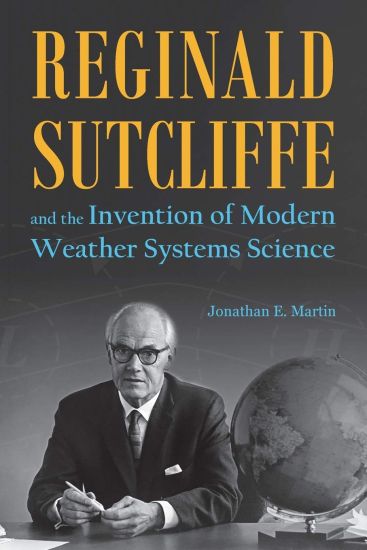
Despite being perhaps the foremost British meteorologist of the twentieth century, Reginald Sutcliffe has been understudied and underappreciated. His impact continues to this day every time you check the weather forecast. Reginald Sutcliffe and the Invention of Modern Weather Systems Science not only details Sutcliffe's life and ideas, but it also illuminates the impact of social movements and the larger forces that propelled him on his consequential trajectory. Less than a century ago, a forecast of the weather tomorrow was considered a practical impossibility. This book makes the case that three important advances guided the development of modern dynamic meteorology, which led directly to the astounding progress in weather forecasting-and that Sutcliffe was the pioneer in all three of these foundational developments: the application of the quasi-geostrophic simplification to the equations governing atmospheric behavior, adoption of pressure as the vertical coordinate in analysis, and development of a diagnostic equation for vertical air motions. Shining a light on Sutcliffe's life and work will, hopefully, inspire a renewed appreciation for the human dimension in scientific progress and the rich legacy bequeathed to societies wise enough to fully embrace investments in education and basic research. As climate change continues to grow more dire, modern extensions of Sutcliffe's innovations increasingly offer some of the best tools we have for peering into the long-term future of our environment.
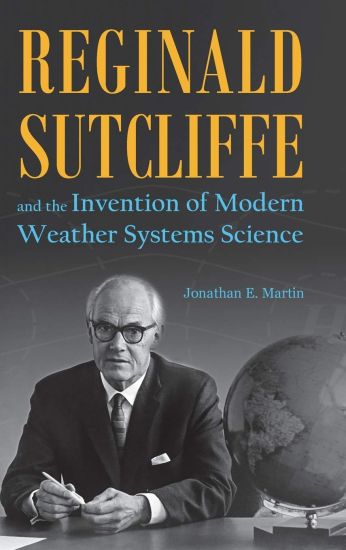
Despite being perhaps the foremost British meteorologist of the twentieth century, Reginald Sutcliffe has been understudied and underappreciated. His impact continues to this day every time you check the weather forecast. Reginald Sutcliffe and the Invention of Modern Weather Systems Science not only details Sutcliffe's life and ideas, but it also illuminates the impact of social movements and the larger forces that propelled him on his consequential trajectory. Less than a century ago, a forecast of the weather tomorrow was considered a practical impossibility. This book makes the case that three important advances guided the development of modern dynamic meteorology, which led directly to the astounding progress in weather forecasting-and that Sutcliffe was the pioneer in all three of these foundational developments: the application of the quasi-geostrophic simplification to the equations governing atmospheric behavior, adoption of pressure as the vertical coordinate in analysis, and development of a diagnostic equation for vertical air motions. Shining a light on Sutcliffe's life and work will, hopefully, inspire a renewed appreciation for the human dimension in scientific progress and the rich legacy bequeathed to societies wise enough to fully embrace investments in education and basic research. As climate change continues to grow more dire, modern extensions of Sutcliffe's innovations increasingly offer some of the best tools we have for peering into the long-term future of our environment.
Notion Press proudly brings to you timeless classics from ancient texts to popular modern classics. This carefully chosen collection of books is a celebration of literature, our tribute to the pioneers, the legends and the giants of the literary world. Apart from being the voice of indie writers, we also want to introduce every reader to read all kinds of literature. In this series, you will find a wide range of books-from popular classics like the works of Shakespeare and Charlotte Bront to rare gems by the likes of Edith Wharton and James Fenimore Cooper.
Reginald in Russia was written in 1910 by Hector Hugh Munro (18 December 1870 - 14 November 1916), better known by the pen name Saki and also frequently as H. H. Munro. He was a British writer whose witty, mischievous and sometimes macabre stories satirize Edwardian society and culture. Influenced by Oscar Wilde, Lewis Carroll and Rudyard Kipling, he himself influenced A. A. Milne, No l Coward and P. G. Wodehouse.
This children's story follows the adventures of Dorothy, a young girl in her wanderings through a fantasy world. The book was illustrated by Reginald B. Birch.Reginald Bathurst Birch (May 2, 1856 - June 17, 1943) was an English-American artist and illustrator. He was best known for his depiction of the titular hero of Frances Hodgson Burnett's 1886 novel Little Lord Fauntleroy, which started a craze in juvenile fashion. While his illustrated corpus has eclipsed his other work, he was also an accomplished painter of portraits and landscapes......................... Charles Edward Caryl (December 30, 1841 - July 3, 1920) was an American children's literature author. Biography Born in New York, Carryl became a second-generation successful businessman; and a stockbroker, who for 34 years starting in 1874 held a seat on the New York Stock Exchange. In 1869 he married Mary Wetmore. Their elder child was the poet and humorist Guy Wetmore Carryl. In 1882 Charles E. Carryl published his first work: Stock Exchange Primer. In 1884 he published the children's fantasy Davy and the Goblin; or, What Followed Reading "Alice's Adventures in Wonderland", serialized in the magazine St Nicholas. His work includes the children's nonsense poem "The Walloping Window Blind", published in 1885, in a verse style similar to Lewis Carroll's: A capital ship for an ocean trip/Was the Walloping Window-Blind;/No wind that blew dismayed her crew/Or troubled the captain's mind. A second novel, The Admiral's Caravan, also serialized in St Nicholas beginning in December 1891, was dedicated to his daughter Constance.
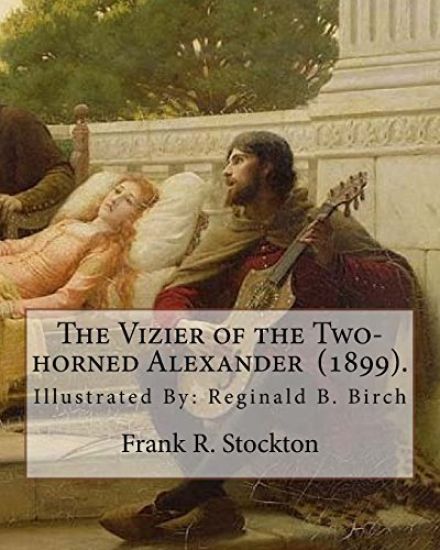
Reginald Bathurst Birch (May 2, 1856 - June 17, 1943) was an English-American artist and illustrator. He was best known for his depiction of the titular hero of Frances Hodgson Burnett's 1886 novel Little Lord Fauntleroy, which started a craze in juvenile fashion. While his illustrated corpus has eclipsed his other work, he was also an accomplished painter of portraits and landscapes......................... Frank Richard Stockton (April 5, 1834 - April 20, 1902) was an American writer and humorist, best known today for a series of innovative children's fairy tales that were widely popular during the last decades of the 19th century. Life: Born in Philadelphia in 1834, Stockton was the son of a prominent Methodist minister who discouraged him from a writing career. After marrying Mary Ann Edwards Tuttle, he and his wife moved to Burlington, New Jersey, where he produced some of his first literary work. The couple then moved to Nutley, New Jersey. For years he supported himself as a wood engraver until his father's death in 1860. In 1867, he moved back to Philadelphia to write for a newspaper founded by his brother. His first fairy tale, "Ting-a-ling," was published that year in The Riverside Magazine; his first book collection appeared in 1870. He was also an editor for Hearth and Home magazine in the early 1870s.Around 1899, he moved to Charles Town, West Virginia. He died in 1902 of cerebral hemorrhage and is buried at The Woodlands in Philadelphia. Writings: Stockton avoided the didactic moralizing common to children's stories of the time. Instead, he humorously poked fun at greed, violence, abuse of power and other human foibles, describing his fantastic characters' adventures in a charming, matter-of-fact way in stories like "The Griffin and the Minor Canon" (1885) and "The Bee-Man of Orn" (1887). These last two stories were republished in 1963 and 1964, respectively, in editions illustrated by Maurice Sendak. "The Griffin and the Minor Canon" won a Lewis Carroll Shelf Award in 1963. His most famous fable, "The Lady, or the Tiger?" (1882), is about a man sentenced to an unusual punishment for having a romance with a king's beloved daughter. Taken to the public arena, he is faced with two doors, behind one of which is a hungry tiger that will devour him. Behind the other is a beautiful lady-in-waiting, whom he will have to marry, if he opens that door. While the crowd waits anxiously for his decision, he sees the princess among the spectators, who points him to the door on the right. The lover starts to open the door and ... the story ends abruptly there. Did the princess save her love by pointing to the door leading to the lady-in-waiting, or did she prefer to see her lover die rather than see him marry someone else? That quandary has made the story a staple in English classes in American schools, especially since Stockton was careful never to hint at what he thought the ending would be (according to Hiram Collins Haydn in The Thesaurus of Book Digests, ISBN 0-517-00122-5). He also wrotea sequel to the story, "The Discourager of Hesitancy." His 1895 adventure novel The Adventures of Captain Horn was the third-best selling book in the United States in 1895. The Bee Man of Orn and several other tales were incorporated in a book published in 1887 by Charles Scribner's Sons entitled The Bee Man of Orn. Stories included "The Bee-man of Orn," "The Griffin and the Minor Canon," "Old Pipes and The Dryad," "The Queen's Museum," "Christmas Before Last," "Prince Hassak's March," "The Battle of the Third Cousins," "The Banished King," and "Philopena." Like his contemporary Mark Twain, Stockton often pokes gentle fun at people's credulity and irrationality.....