
Kirjahaku
Etsi kirjoja tekijän nimen, kirjan nimen tai ISBN:n perusteella.
1000 tulosta hakusanalla Reginald Dwayne Betts


Reginald Cruden A Tale of City Life
Talbot Baines Reed
Createspace Independent Publishing Platform
2015
nidottu
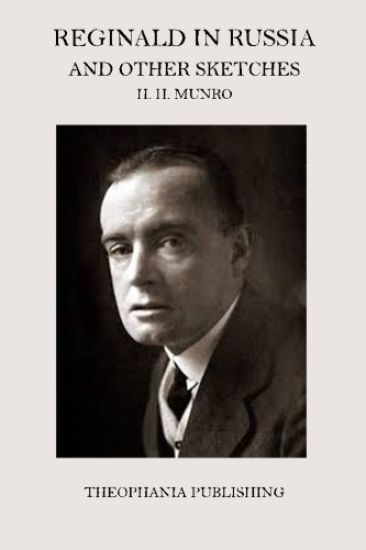
Reginald in Russia and Other Stories
H. H. Munro
Createspace Independent Publishing Platform
2015
nidottu
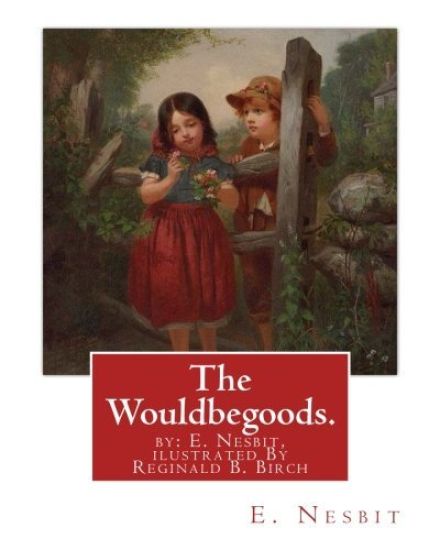
The Wouldbegoods. by: E. Nesbit, ilustrated By Reginald B. Birch: Reginald Bathurst Birch (May 2, 1856 - June 17, 1943) was an English-Ameri
Reginald B. Birch; E. Nesbit
Createspace Independent Publishing Platform
2016
nidottu

Little Lord Fauntleroy. By: Frances Hodgson Burnett, illustrations: By: Reginald B.(Bathurst) Birch (May 2, 1856 - June 17, 1943) was an English-A
Reginald B. Birch; Frances Hodgson Burnett
Createspace Independent Publishing Platform
2016
nidottu
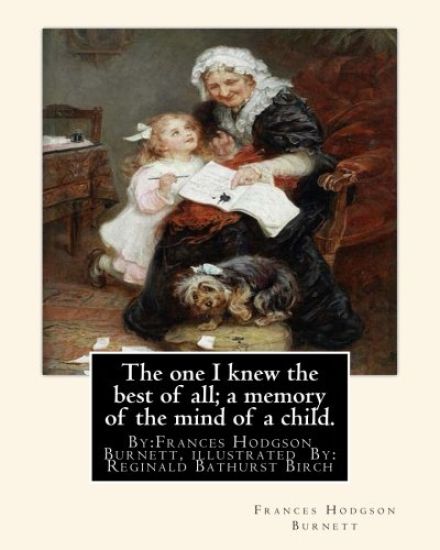
The one I knew the best of all; a memory of the mind of a child.: By: Frances Hodgson Burnett, illustrated By: Reginald B(Bathurst) Birch (May 2, 1856
Reginald B. Birch; Frances Hodgson Burnett
Createspace Independent Publishing Platform
2016
nidottu
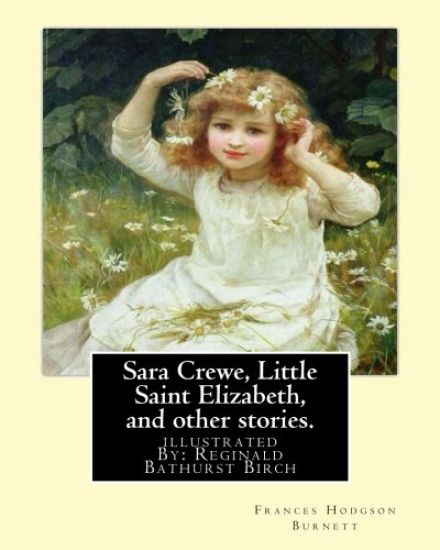
Sara Crewe, Little Saint Elizabeth, and other stories.By: Frances Hodgson Burnett: illustrated By: Reginald B.(Bathurst) Birch (May 2, 1856 - June 17,
Reginald B. Birch; Frances Hodgson Burnett
Createspace Independent Publishing Platform
2016
nidottu
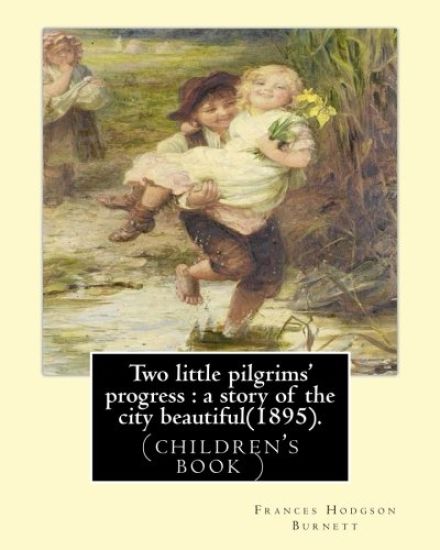
Two little pilgrims' progress: a story of the city beautiful(1895).: By: Frances Hodgson Burnett, illustrated By: Reginald B. Birch (May 2, 1856 - Ju
Reginald B. Birch; R. W. Macbeth; Frances Hodgson Burnett
Createspace Independent Publishing Platform
2016
nidottu

"In the quarter," (1894). By: Robert W. Chambers To my friend Reginald Bathurst Birch: Novel (Original Classics) Reginald Bathurst Birch (May 2, 185
Reginald Bathurst Birch; Robert W. Chambers
Createspace Independent Publishing Platform
2016
nidottu
Reginald Bathurst Birch (May 2, 1856 - June 17, 1943) was an English-American artist and illustrator. He was best known for his depiction of the titular hero of Frances Hodgson Burnett's 1886 novel Little Lord Fauntleroy, which started a craze in juvenile fashion. While his illustrated corpus has eclipsed his other work, he was also an accomplished painter of portraits and landscapes......... Robert William Chambers (May 26, 1865 - December 16, 1933) was an American artist and fiction writer, best known for his book of short stories entitled The King in Yellow, published in 1895.He was born in Brooklyn, New York, to William P. Chambers (1827-1911), a corporate and bankruptcy lawyer, and Caroline Smith Boughton (1842-1913). His parents met when Caroline was twelve years old and William P. was interning with her father, Joseph Boughton, a prominent corporate lawyer. Eventually the two formed the law firm of Chambers and Boughton which continued to prosper even after Joseph's death in 1861. Robert's great-grandfather, William Chambers (birth unknown), a lieutenant in the British Royal Navy, was married to Amelia Saunders, (1765-1822), the great grand daughter of Tobias Saunders, of Westerly, Rhode Island. The couple moved from Westerly, to Greenfield, Massachusetts and then to Galway, New York, where their son, also William Chambers, (1798-1874) was born. The second William graduated from Union College at the age of 18, and then went to a college in Boston, where he studied to be a doctor. Upon graduating, he and his wife, Eliza P. Allen (1793-1880), a direct descendant of Roger Williams, the founder of Providence, Rhode Island were among the first settlers of Broadalbin, New York. His brother was architect Walter Boughton Chambers. Robert was first educated at the Brooklyn Polytechnic Institute, and then entered the Art Students' League at around the age of twenty, where the artist Charles Dana Gibson was his fellow student. Chambers studied at the cole des Beaux-Arts, and at Acad mie Julian, in Paris from 1886 to 1893, and his work was displayed at the Salon as early as 1889. On his return to New York, he succeeded in selling his illustrations to Life, Truth, and Vogue magazines. Then, for reasons unclear, he devoted his time to writing, producing his first novel, In the Quarter (written in 1887 in Munich). His most famous, and perhaps most meritorious, effort is The King in Yellow, a collection of Art Nouveau short stories published in 1895. This included several famous weird short stories which are connected by the theme of a fictitious drama of the same title, which drives those who read it insane.E. F. Bleiler described The King in Yellow as one of the most important works of American supernatural fiction.It was also strongly admired by H. P. Lovecraft and his circle. Chambers returned to the weird genre in his later short story collections The Maker of Moons, The Mystery of Choice and The Tree of Heaven, but none earned him as much success as The King in Yellow. Some of Chambers's work contains elements of science fiction, such as In Search of the Unknown and Police , about a zoologist who encounters monsters. Chambers later turned to writing romantic fiction to earn a living. According to some estimates, Chambers had one of the most successful literary careers of his period, his later novels selling well and a handful achieving best-seller status. Many of his works were also serialized in magazines. His novel The Man They Hanged was about Captain Kidd, and argued that Kidd was not a pirate, and had been made a scapegoat by the British government...............


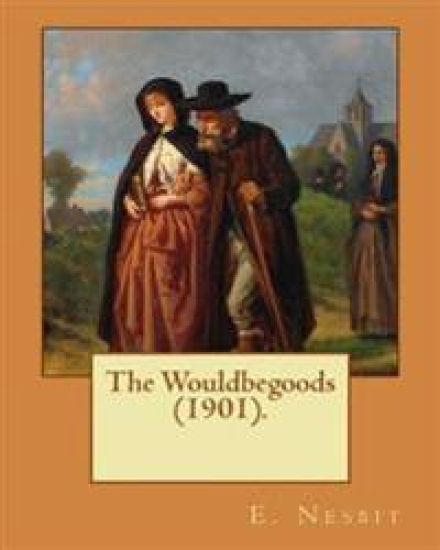
The Wouldbegoods (1901). By: E. Nesbit, illustrated By: REGINALD B. BIRCH: (children's book )
Reginald B. Birch Birch; E. Nesbit
Createspace Independent Publishing Platform
2017
nidottu
Reginald Bathurst Birch (May 2, 1856 - June 17, 1943) was an English-American artist and illustrator. He was best known for his depiction of the titular hero of Frances Hodgson Burnett's 1886 novel Little Lord Fauntleroy, which started a craze in juvenile fashion. While his illustrated corpus has eclipsed his other work, he was also an accomplished painter of portraits and landscapes. Edith Nesbit (married name Edith Bland; 15 August 1858 - 4 May 1924) was an English author and poet; she published her books for children under the name of E. Nesbit. She wrote or collaborated on more than 60 books of children's literature. She was also a political activist and co-founded the Fabian Society, a socialist organisation later affiliated to the Labour Party. Nesbit was born in 1858 at 38 Lower Kennington Lane in Kennington, Surrey (now part of Greater London), the daughter of an agricultural chemist, John Collis Nesbit, who died in March 1862, before her fourth birthday. Her sister Mary's ill health meant that the family travelled around for some years, living variously in Brighton, Buckinghamshire, France (Dieppe, Rouen, Paris, Tours, Poitiers, Angoul me, Bordeaux, Arcachon, Pau, Bagn res-de-Bigorre, and Dinan in Brittany), Spain and Germany, before settling for three years at Halstead Hall in Halstead in north-west Kent, a location which later inspired The Railway Children (this distinction has also been claimed by the Derbyshire town of New Mills). At eighteen, Nesbit met the bank clerk Hubert Bland in 1877. Seven months pregnant, she married Bland on 22 April 1880, though she did not immediately live with him, as Bland initially continued to live with his mother. Their marriage was a stormy one. Early on Nesbit discovered that another woman believed she was Hubert's fiancee and had also borne him a child. A more serious blow came later when she discovered that her good friend, Alice Hoatson, was pregnant with Hubert's child. She had previously agreed to adopt Hoatson's child and allow Hoatson to live with her as their housekeeper. After she discovered the truth, they quarrelled violently and she suggested that Hoatson and the baby should leave; her husband threatened to leave Edith if she disowned the baby and its mother. Hoatson remained with them as a housekeeper and secretary and became pregnant by Bland again 13 years later. Edith again adopted Hoatson's child. Nesbit's children were Paul Bland (1880-1940), to whom The Railway Children was dedicated; Iris Bland (1881-1950s); Fabian Bland (1885-1900); Rosamund Bland (1886-1950), to whom The Book of Dragons was dedicated; and John Bland (1898-1971) to whom The House of Arden was dedicated. Her son Fabian died aged 15 after a tonsil operation; Nesbit dedicated a number of books to him: Five Children and It and its sequels, as well as The Story of the Treasure Seekers and its sequels. Nesbit's adopted daughter Rosamund collaborated with her on the book Cat Tales....
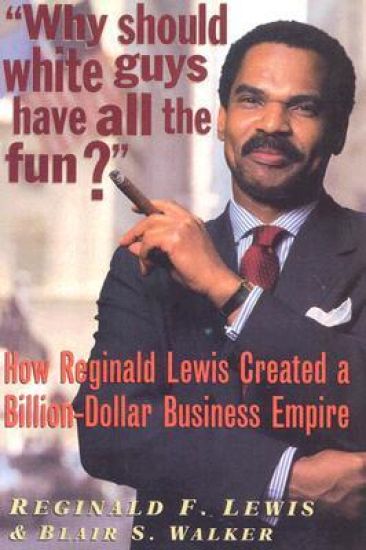
Why Should White Guys Have All the Fun?: How Reginald Lewis Created a Billion-Dollar Business Empire
Reginald F. Lewis; Blair S. Walker
BLACK CLASSIC PRESS
2005
nidottu
Why Should White Guys Have All the Fun? is the inspiring story of Reginald Lewis: lawyer, Wall Street wizard, philanthropist - and the wealthiest black man in American history.When six-year-old Reginald Lewis overheard his grandparents discussing employment discrimination against African Americans, he asked, "Why should white guys have all the fun?" This self-assured child would grow up to become the CEO of Beatrice International and one of the most successful entrepreneurs ever. At the time of his death in 1993, his personal fortune was estimated in excess of $400 million and his vast commercial empire spanned four continents. Despite the notoriety surrounding Lewis's financial coups, little has been written about the life of this remarkable man. Based on Lewis's unfinished autobiography, as well as scores of interviews with family, friends, and colleagues, the book cuts through the myth and media hype to reveal the man behind the legend. What emerges is a vivid portrait of a proud, fiercely determined individual with a razor-sharp tongue - and an intellect to match - who would settle for nothing less than excellence from himself and others. Blair S. Walker completed Lewis's memoir after his death.

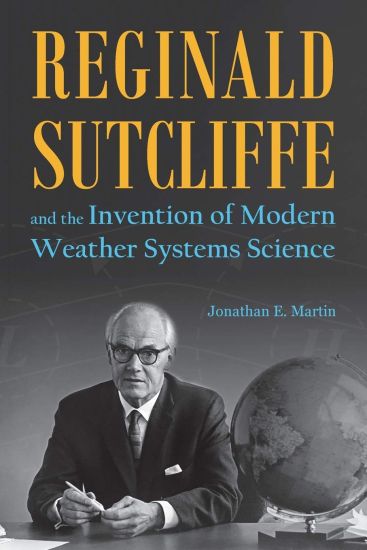
Reginald Sutcliffe and the Invention of Modern Weather Systems Science
Jonathan E. Martin
Purdue University Press
2021
nidottu
Despite being perhaps the foremost British meteorologist of the twentieth century, Reginald Sutcliffe has been understudied and underappreciated. His impact continues to this day every time you check the weather forecast. Reginald Sutcliffe and the Invention of Modern Weather Systems Science not only details Sutcliffe's life and ideas, but it also illuminates the impact of social movements and the larger forces that propelled him on his consequential trajectory. Less than a century ago, a forecast of the weather tomorrow was considered a practical impossibility. This book makes the case that three important advances guided the development of modern dynamic meteorology, which led directly to the astounding progress in weather forecasting-and that Sutcliffe was the pioneer in all three of these foundational developments: the application of the quasi-geostrophic simplification to the equations governing atmospheric behavior, adoption of pressure as the vertical coordinate in analysis, and development of a diagnostic equation for vertical air motions. Shining a light on Sutcliffe's life and work will, hopefully, inspire a renewed appreciation for the human dimension in scientific progress and the rich legacy bequeathed to societies wise enough to fully embrace investments in education and basic research. As climate change continues to grow more dire, modern extensions of Sutcliffe's innovations increasingly offer some of the best tools we have for peering into the long-term future of our environment.